
Growing up in Britain, few things captured the magic of a seaside holiday quite like the sweets and treats we enjoyed along the promenade.
From the first glimpse of a candy floss stall to the satisfying crunch of a stick of rock, these confections were as much a part of our coastal adventures as building sandcastles and paddling in the waves.
Traditional seaside treats like candy floss, toffee apples, ice creams, and sticks of rock have been delighting British holidaymakers since the Victorian era, becoming an essential part of our seaside culture.
These simple pleasures weren’t just about satisfying a sweet tooth—they represented something deeper.
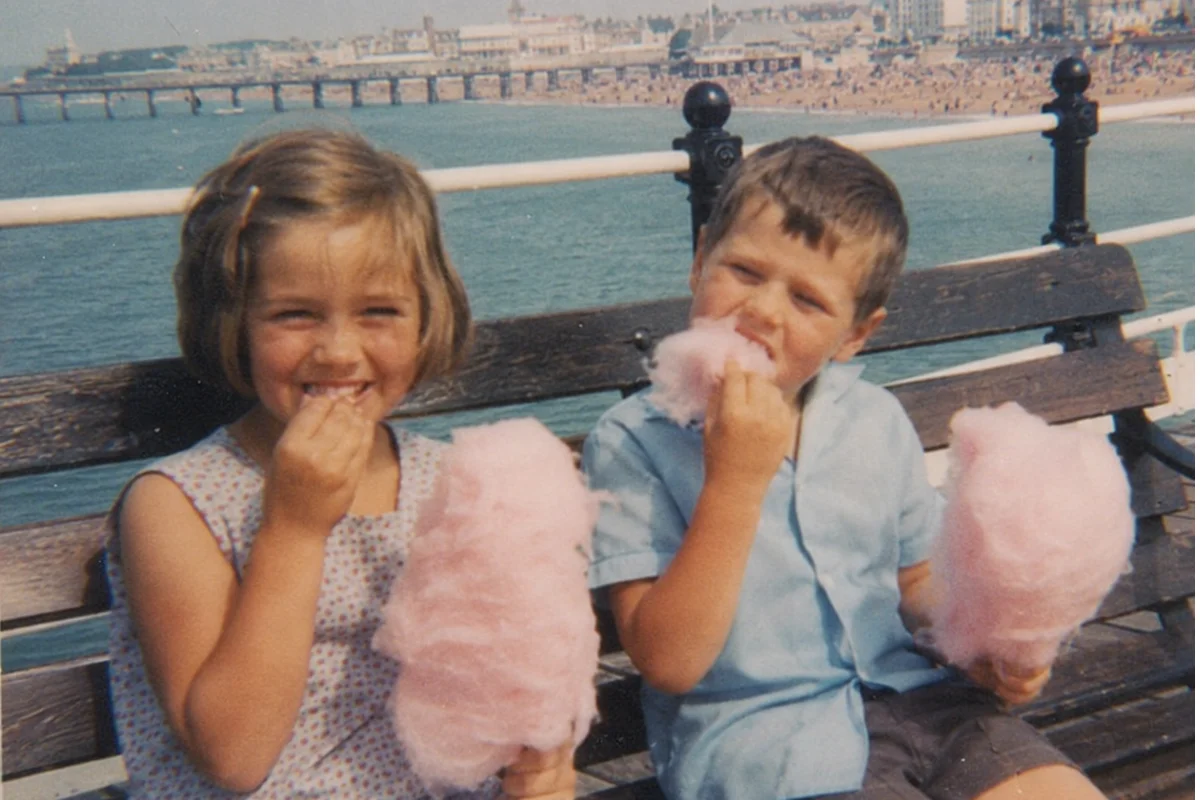
The tastes, smells, and textures of these treats became woven into our childhood memories.
We can still recall the sticky sweetness of toffee apples, the way candy floss dissolved on our tongues, and the challenge of finishing a 99 ice cream before it melted down our hands.
Each seaside resort had its own character, but the food offerings remained wonderfully consistent across the country.
Classic Seaside Sweets: Candy Floss, Sticks of Rock, and More
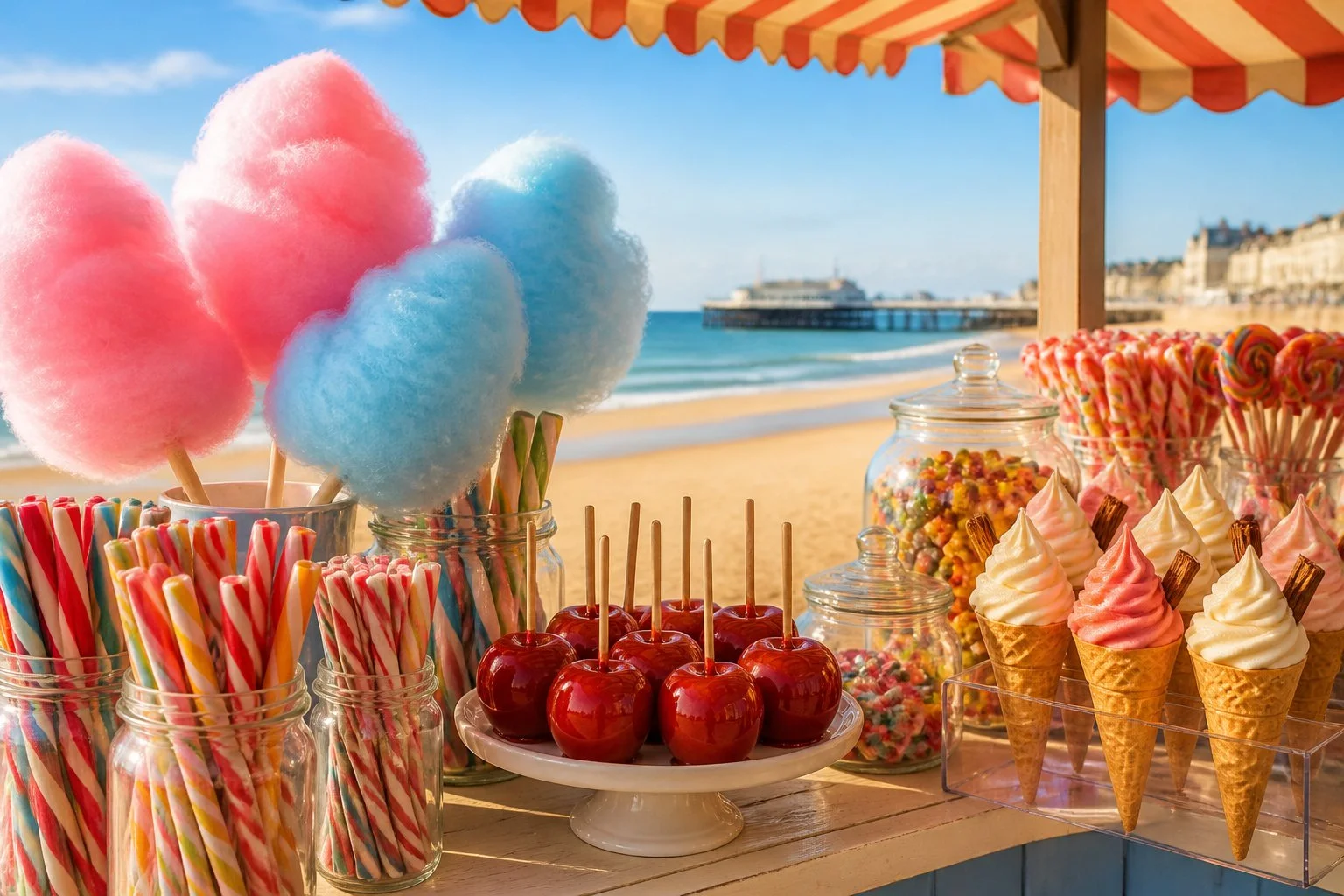
British seaside holidays have long featured distinctive sweet treats that capture the spirit of coastal fun.
Candy floss offers instant sugary delight, whilst sticks of rock represent a traditional craft that has evolved over nearly two centuries.
The Magic of Candy Floss and Cotton Candy
Candy floss creates a unique sensory experience at seaside resorts across Britain.
The spun sugar dissolves instantly on the tongue, leaving behind pure sweetness that we associate with fairgrounds and beach holidays.
Vendors spin this confection using heated sugar that melts and forms thin threads through centrifugal force.
The threads collect on a paper cone or wooden stick, creating a cloud-like mass.
Most candy floss appears in bright pink, though blue and multicoloured varieties add visual appeal at seaside stands.
We often use the terms candy floss and cotton candy interchangeably, though candy floss remains the preferred British term.
The treat costs little to produce but delivers significant joy, making it a staple at coastal resorts from Brighton to Blackpool.
The Story Behind Sticks of Rock and Seaside Rock
Seaside rock is a hard, stick-shaped boiled sugar confection that typically measures 20-25 centimetres long.
We most commonly find it flavoured with peppermint or spearmint at tourist resorts throughout the United Kingdom and Ireland.
The traditional stick of rock uses a simple mixture of three parts sugar to one part glucose syrup.
Manufacturers boil this mixture to approximately 147°C before pouring it onto water-cooled steel plates.
The process creates a hard, long-lasting sweet that survives the journey home in holiday bags.
Morecambe became the first town to produce rock with letters running through it in the 1830s.
This innovation transformed seaside rock from a simple sweet into a personalised souvenir.
From Lettered Rock to Blackpool Rock: Traditions and Variations
Lettered rock requires skilled workers to create patterns that remain visible throughout the entire stick.
We make the letters by hand, combining thin strips of coloured and white toffee before stretching the assembled piece.
The lettering process follows specific rules:
- Square letters (B, E, F, H, J, K, L, M, N, P, R, T, W, X, Y, Z) are made first
- Triangle letters (A, V) come next
- Round letters (C, D, G, O, Q, S, U) are formed last to maintain their shape
Blackpool rock stands out as particularly impressive, reaching up to 17 centimetres in diameter for special displays.
The town’s rock industry has created a recognisable product that tourists seek specifically.
Workers stretch the thick boiling through a process called “spinning out” to achieve the final thin dimensions we recognise today.
Handmade Confectionery Favourites
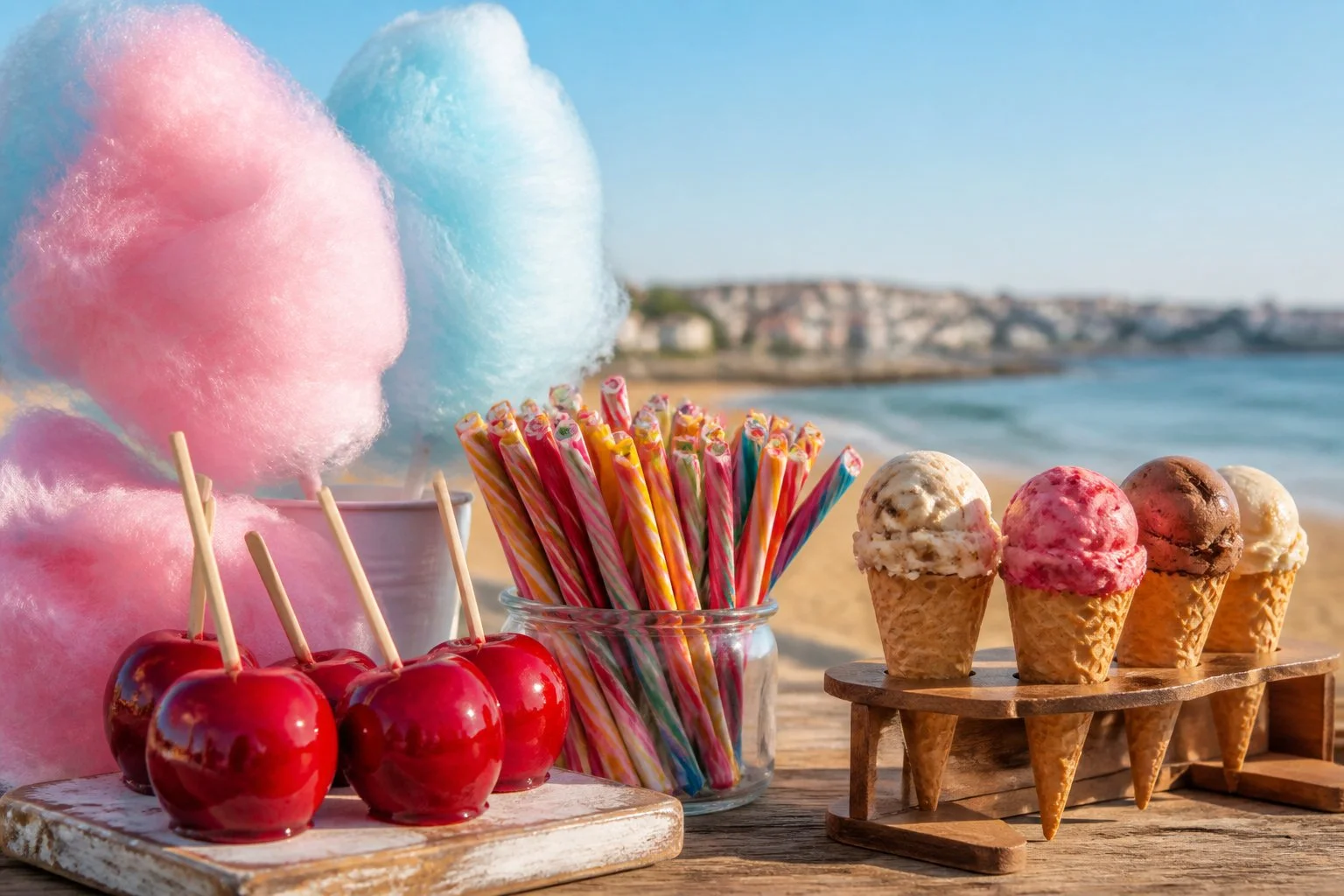
Traditional seaside sweets require skilled craftsmanship and time-honoured techniques passed down through generations.
From the glossy coating on toffee apples to the smooth texture of fudge, these treats depend on expert sugar work and careful attention to detail.
Toffee Apples: A Sweet and Crunchy Treat
Toffee apples have been a staple of British seaside stalls and fairgrounds for over a century.
We make them by dipping whole apples into hot toffee mixture, creating a hard, glossy red coating that cracks when bitten.
The process starts with cooking sugar, golden syrup, and water to the hard crack stage at 150°C.
Fresh eating apples, typically Granny Smiths, get pushed onto wooden sticks before being dunked into the molten toffee.
The coating sets within minutes, forming that characteristic crunch.
Getting the temperature right is crucial.
If the toffee is too cool, it won’t coat properly.
Too hot, and it slides off the apple completely.
Many traditional sweet makers add red food colouring to achieve the classic bright crimson finish we associate with seaside treats.
The Role of the Sugar Boiler in Seaside Sweets
The sugar boiler is the skilled craftsperson behind most handmade seaside confectionery.
These specialists understand how sugar behaves at different temperatures and can judge consistency by eye and touch alone.
Their work involves heating sugar mixtures to precise temperatures for different sweets.
Rock requires temperatures around 145°C, whilst fudge needs just 116°C.
A sugar boiler monitors the mixture constantly, testing it by dropping small amounts into cold water or using traditional copper pans that distribute heat evenly.
This trade takes years to master.
Sugar boilers must work quickly once the mixture reaches the right temperature, as it begins setting almost immediately.
Many seaside confectionery businesses still employ experienced sugar boilers who learnt their craft through apprenticeships.
Seaside Fudge: Creamy Delights from Coastal Towns
Seaside fudge differs from chocolate fudge through its smooth, crystalline texture and traditional flavours.
We find vanilla, clotted cream, and rum and raisin varieties in most coastal sweet shops, sold in thick slabs or pre-cut squares.
The traditional method involves heating butter, sugar, and condensed milk together whilst stirring continuously.
The mixture must reach the soft ball stage before being beaten vigorously as it cools.
This beating creates the fine sugar crystals that give fudge its characteristic grainy-smooth texture.
Coastal towns became famous for fudge because many had access to fresh dairy products from nearby farms.
Some seaside fudge makers still prepare batches in copper pans over open flames, following recipes unchanged for decades.
Savoury Seaside Delicacies

British seaside towns offer classic savoury foods that define coastal visits.
Fish and chips stands as the most beloved option, while prawn cocktail and fresh crab sandwiches round out the traditional seaside menu.
Fish and Chips: A British Coastal Classic
Fish and chips represents the most iconic seaside food in Britain.
The dish pairs battered white fish with thick-cut chips, creating a meal that has fed beachgoers since the Victorian era.
We typically find fish and chips served in paper wrappings at seafront shops and pier stalls.
The batter should be crispy and golden, whilst the fish inside stays moist and flaky.
Cod and haddock are the most common choices, though some coastal towns use locally caught fish.
The chips come thick-cut and soft inside.
Many of us add salt and vinegar, which creates that distinctive seaside aroma.
Some prefer mushy peas or curry sauce on the side.
The meal tastes best eaten straight from the wrapper whilst sitting on the beach or pier.
The combination of hot, freshly fried fish with the sea air makes it a defining coastal experience.
Prawn Cocktail and the Iconic Marie Rose Sauce
Prawn cocktail emerged as a popular starter at seaside restaurants and cafés during the mid-20th century.
The dish features cold prawns served on shredded lettuce with Marie Rose sauce.
Marie Rose sauce combines mayonnaise, tomato ketchup, Worcestershire sauce and lemon juice.
The pink sauce provides a tangy, slightly sweet flavour that complements the prawns.
Some recipes add a dash of Tabasco or brandy for extra depth.
We often find prawn cocktail served in tall glass dishes or on plates with bread and butter.
The presentation includes a wedge of lemon and sometimes a sprinkle of paprika on top.
Coastal towns use fresh local prawns when available, which makes the dish particularly special at the seaside.
Crab Sandwiches: Freshness by the Shore
Crab sandwiches showcase the fresh seafood available at British coastal towns.
White crab meat gets mixed with mayonnaise and placed between slices of soft white or brown bread.
The best crab sandwiches use locally caught crab, picked fresh that morning.
The meat should taste sweet and delicate, with just enough mayonnaise to bind it together.
Some shops add a squeeze of lemon juice or a touch of black pepper.
We see these sandwiches sold at beach cafés, fishmongers and seaside stalls.
They cost more than other sandwich options because of the labour involved in picking crab meat.
The price reflects the quality and freshness of the ingredients, making them a special treat during a coastal visit.
Quintessential Flavours and Nostalgia
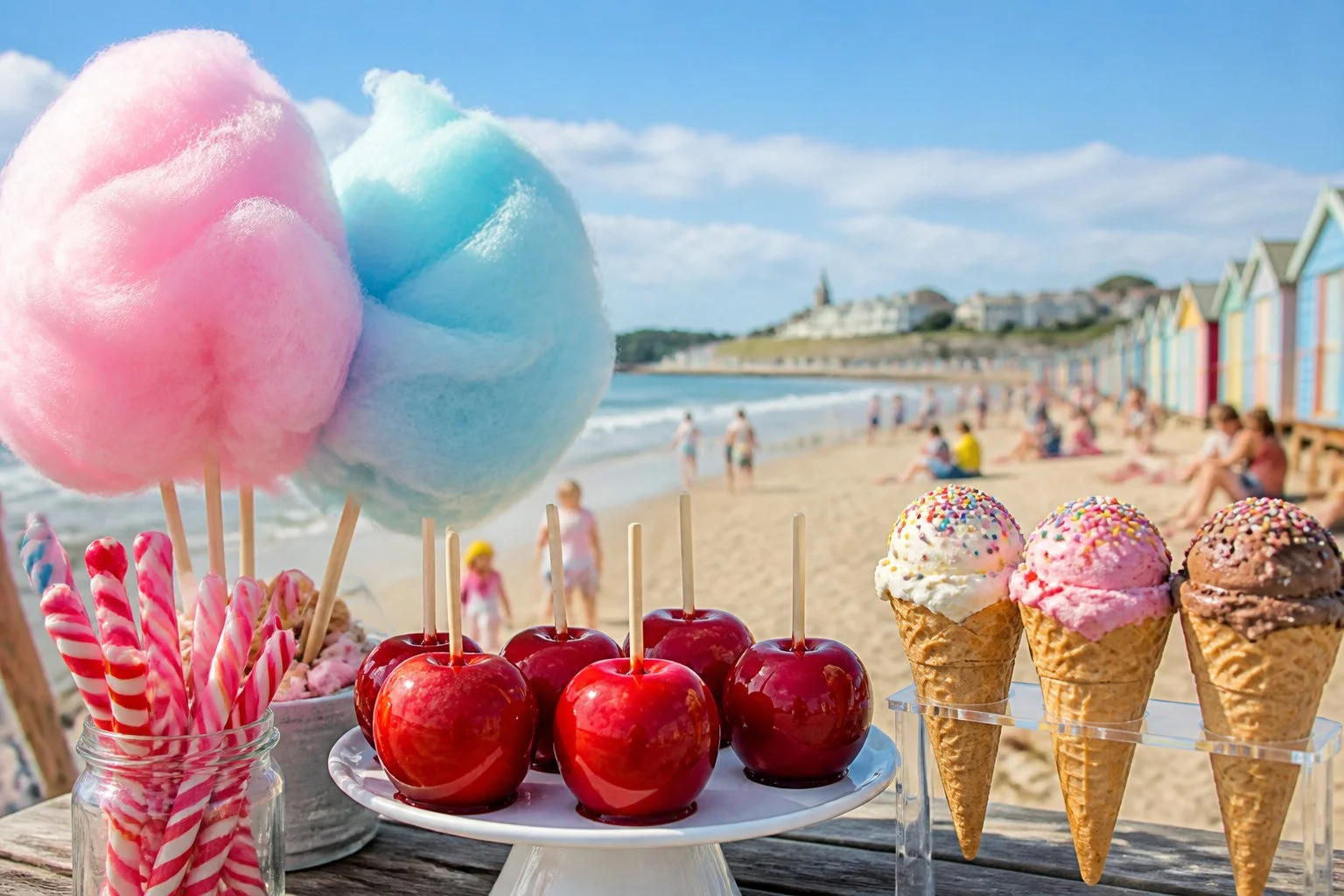
The taste of seaside rock and candy floss transports us back to childhood holidays.
Sticky fingers and salty air became part of every trip to the coast.
These traditional treats hold memories that go far beyond their simple ingredients.
How Seaside Specials Evoke Childhood Memories
Peppermint seaside rock remains one of the most recognisable flavours from our youth.
The hard, cylindrical sticks often bore the name of resorts like Blackpool or Brighton running through their centre.
We can still recall the satisfying crack of breaking off a piece.
The intense minty taste quickly followed.
Candy floss brought its own sensory experience.
The pink or blue clouds dissolved instantly on our tongues, leaving behind pure sugar and the memory of fairground stalls.
Our faces always ended up sticky, just like after eating toffee apples with their glossy red coating.
We moved from savoury to sweet without hesitation.
Sugared doughnuts and mint humbugs were enjoyed between visits to the beach.
Each flavour connected directly to specific moments: the first lick of a 99 Flake ice cream, the chewiness of fresh fudge, or biting into cinder toffee that stuck to our teeth.
Seaside Shopfronts and Holiday Rituals
Traditional sweet shops lined every promenade we visited. Their windows displayed jars filled with colourful confections and rows of wrapped sticks of rock.
We pressed our noses against the glass, selecting which treats to buy with our pocket money.
These shops became essential stops during our holidays. We’d visit them after spending hours on the beach, still in our sandy shoes and sun hats.
The individually wrapped rock sticks served as souvenirs we could take home. Their “views” showed landmarks from the towns we visited, making them small pieces of our holidays we could share with friends and family.


Leave a Reply