
Before mobile phones and video games took over, kids spent most of their free time outside. Streets, pavements, and neighbourhoods became sprawling playgrounds where you could run, hide, and play for hours with nothing but a ball or a bit of chalk.
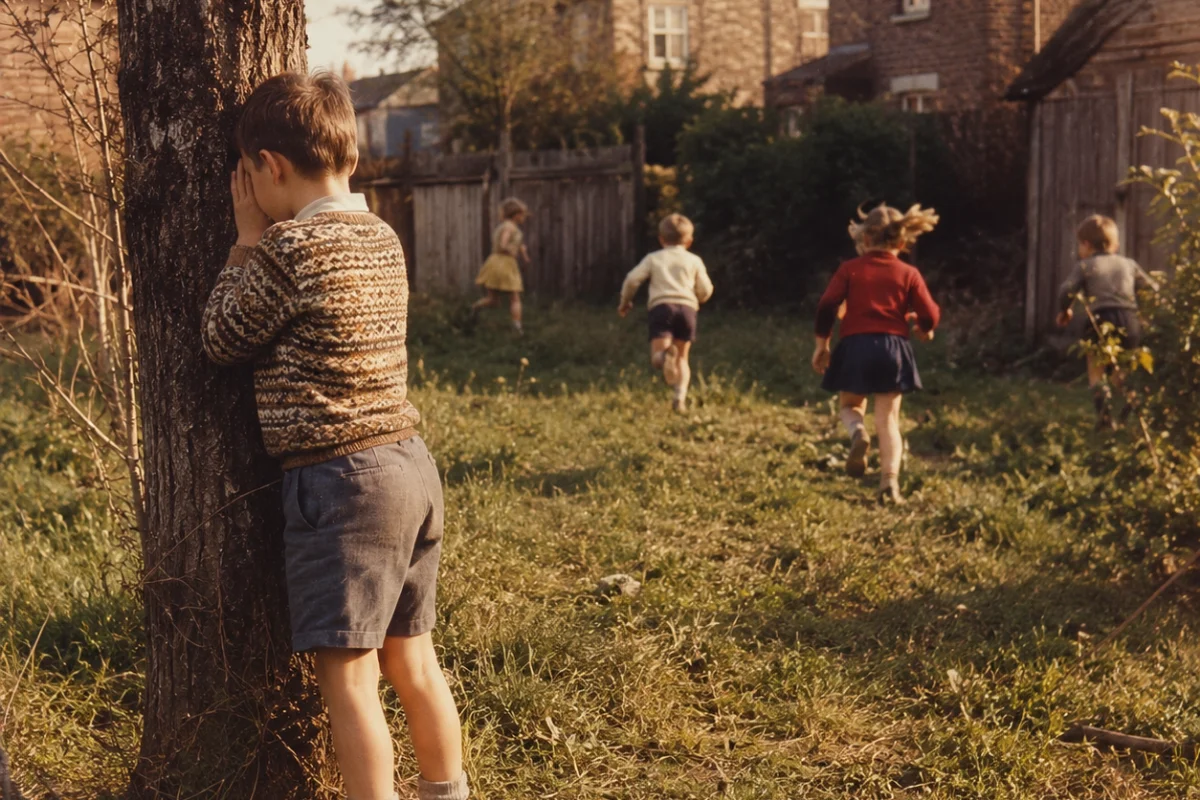
These outdoor games shaped entire generations, teaching us how to work together, solve problems, and stay active without fancy equipment.
From hopscotch scrawled on pavement stones to wild games of British Bulldog that pulled in the whole gang, these activities created memories and friendships that still linger for many of us.
Street play wasn’t just fun; it was freedom. It sparked creativity and helped us pick up life skills through games anyone could join. These simple activities brought neighbours together and helped us build confidence in ways modern entertainment just can’t quite replicate.
The Joy and Freedom of Playing on the Streets

Street play gave us something organised activities never really did—total freedom to invent our own adventures. Ordinary pavements turned into magical worlds ruled by imagination and the sorts of friendships that felt unbreakable.
How Streets Became Our Playgrounds
Back before cars crowded every road, we claimed the streets for ourselves. Pavements became racetracks for homemade scooters, lampposts turned into goalposts, and every step or wall was fair game for climbing.
Most families lived in cramped homes—small gardens if you were lucky. So the street was the only place you could really run, jump, and play without bumping into furniture or grown-ups.
Common street spaces included:
- Wide pavements for hopscotch and skipping
- Quiet side roads for ball games
- Steps and walls for climbing games
- Corners and doorways for hiding games
Nobody needed permission. You just stepped outside and the day unfolded. No adults hovered or set out rules. We made it up as we went along.
Neighbourhood Bonds and Lasting Friendships
Street play pulled us together in ways modern playgrounds rarely manage. Betty Phillips remembered her “really good gang of kids” from 1930s St John’s Wood—they played every day, rarely arguing.
Boys and girls mixed in together, and older kids naturally looked out for the little ones. Age didn’t matter much when we all shared the same patch of pavement.
Street friendships stuck because:
- We saw each other every day
- We shared adventures and secrets
- Games needed teamwork and trust
- Arguments usually sorted themselves out fast
Those bonds lasted. Even now, plenty of us can still name our old street mates. That daily contact made friendships that classroom buddies just couldn’t match.
Role of Creativity and Imagination Outdoors
With barely any toys, we got creative—sometimes astonishingly so. Cherry stones became marbles, old rope morphed into skipping games, and a cap could spark a dozen different competitions.
Norman Douglas noticed this back in 1916. He asked London kids to jot down their game rules and ended up with 950 different games, verses, and songs—all dreamed up by children.
We made toys from:
- Scrap wood for scooters and go-carts
- Stones for throwing games
- Bottle caps for flicking contests
- String for cat’s cradle and jumping games
Seasonal games just appeared. Nobody announced marble season or whip-and-top time; we all just knew. It’s funny how we tuned into the rhythms of the neighbourhood like that.
Classic Outdoor Games That Defined Our Childhood

These games turned every street, playground, or back garden into an adventure zone. Friendships grew, and sometimes you found a bit of courage you didn’t know you had. From chasing friends to those heart-thumping dashes across “enemy lines,” these activities shaped generations of outdoor play.
Playing Tag and Its Many Variations
Tag’s probably the most enduring playground game ever. You just chase each other, with “it” trying to catch someone else.
But tag came in all sorts of flavours. Shadow Tag meant you had to step on someone’s shadow. Freeze Tag made you freeze until a pal rescued you.
Chain Tag had everyone linking hands to hunt down the rest. TV Tag let you shout out a TV programme for a bit of safety.
Each version kept things fresh, and we had to be quick on our feet, always dodging and weaving, plotting escapes.
Tag taught us speed, agility, and a bit about fairness. Best of all, you only needed open space and a handful of willing mates.
Hide and Seek: The Ultimate Game of Stealth
Hide and seek could turn any ordinary street into a land of secrets. One person counted while everyone else scattered, hunting for the best hiding spot.
We learned to see our surroundings in new ways. Sheds, behind trees, under staircases—suddenly, all these places became treasure.
Sardines put a twist on things: one person hid, and every finder squeezed in with them. The more people, the funnier it got—stifled giggles, elbows in ribs, trying not to give the game away.
Hide and seek built our problem-solving skills and taught us patience. There’s something magical about waiting in a good hiding spot, heart pounding, hoping you wouldn’t be found.
British Bulldog: A Test of Bravery
British Bulldog was always a bit wild. You’d line up at one end, the “bulldog” crouched in the middle, ready to tackle anyone dashing past.
We’d sprint for it, hoping not to get caught. Every round, the bulldog team grew, until only one was left trying to make it across.
It took guts and quick thinking. You’d watch the bulldog’s movements, trying to pick the perfect moment to run.
Safety worries eventually got it banned at a lot of schools—bumps and scrapes were part of the deal, and sometimes a few tears too.
Still, British Bulldog built a kind of camaraderie you don’t forget. Facing the challenge together made playground legends out of ordinary kids.
Timeless Playground Favourites
Some games never went out of style. All you needed was basic equipment—chalk, a rope, maybe a ball—and you could fill an afternoon.
Hopscotch Grids on Pavements
We’d draw hopscotch courts with chalk, or use the ones already painted at school. A stone or coin became your marker.
You’d toss the marker onto a square, then hop through the course, skipping the square with your marker.
Basic Hopscotch Rules:
- Hop on one foot for single squares
- Jump with both feet for side-by-side squares
- Skip the square with your marker
- Step on a line or lose balance? Your turn’s over
The winner was whoever managed to land their marker on every number. Sometimes we made up our own rules or got creative with the court shape.
Skipping Rope with Friends
Skipping rope brought everyone together. Two kids turned the rope while others jumped in, chanting silly rhymes or counting songs.
Popular Skipping Activities:
- Individual skipping—just you and your rope
- Group jumping—how many could fit in at once?
- Speed challenges—how many jumps in a row?
- Trick jumping—crossing arms, spinning, whatever you could manage
If you didn’t have a proper rope, you’d knot together elastic bands or old tights. Skipping kept us fit and sharpened our timing.
Kerby: The Kerbside Ball Game
Kerby was simple: two players stood on opposite sides of a quiet road, aiming their ball at the kerb across the way.
Hit the kerb and you scored a point. Nail it and you got to move to the middle for a closer shot.
If someone shouted “CAR!”—everyone scrambled to the pavement. Whoever had the most points when the game stopped was the winner.
Tennis balls made it tricky, but bigger balls worked too. Kerby was best when cars were few and far between.
Strategy and Teamwork Street Games

Some games weren’t just about running—they needed planning and teamwork.
Capture the Flag Rivalries
Capture the flag turned quiet streets into battlegrounds. Two teams, two flags, each hidden somewhere in their territory.
We split into defenders and attackers. The clever ones came up with plans—lookouts, distractions, rescue missions.
Get tagged in enemy territory and you landed in “jail.” Teammates had to risk it to set you free. That rescue bit made things really exciting.
The best teams worked together, timing attacks and trusting each other. Sometimes, you’d create a diversion so someone else could sneak off with the flag.
Kick the Can Adventures
Kick the can was part hide-and-seek, part teamwork. One kid guarded a tin can in the middle of the street while everyone else hid.
Hidden players tried to distract the guard—maybe by showing themselves or making noise—while someone else crept in for the winning kick.
The guard had to keep their eyes peeled in every direction. They had to spot hiders, tag them, and protect the can all at once.
You couldn’t win alone. The fastest runner needed teammates to draw the guard away. The best victories came from sneaky, well-timed group efforts.
Why Outdoor Play Mattered Then and Now
Playing outside taught us more than just games—it kept us healthy, active, and brought families together. These moments became lasting memories we still talk about.
Skills Learnt Through Classic Games
Street games taught us teamwork and problem-solving. Hide and seek made us think fast and pick clever hiding spots. Tag trained us to run and change direction on a dime.
Hopscotch helped with balance and counting, and you had to aim carefully, hopping on one foot without toppling over.
Social skills grew with every group game. We learned to take turns, follow rules, and be fair. Deciding on rules before a game? That took some negotiation.
Arguments happened, sure, but we sorted them out ourselves. Leadership popped up naturally—someone picked the next game, others followed, and everyone found their place.
Physical and Mental Benefits of Outdoor Play
Outdoor games always kept our bodies strong and healthy, didn’t they? Running, jumping, and climbing—those were the things that built strong muscles and bones back in the day. Hearts got a workout too, just from all that endless movement.
There was something about fresh air and sunlight—maybe it was the vitamins, maybe just the feeling of being out there. After a long day outside, kids usually slept like rocks.
And honestly, being outdoors just made us feel better. Less stress, less worry—especially when we got to play with friends. All that running around seemed to flip a switch in our brains, bringing on a kind of happiness you can’t get from sitting inside.
Somehow, after a day of outdoor play, focusing in school didn’t feel so impossible. Moving around seemed to wake up our brains, making it a bit easier to sit still and listen in class.
Social confidence? That grew too, slowly but surely, as we played with different kids. Making new friends, learning to talk to people—that stuff stuck with us, for better or worse, long after childhood ended.
Passing Traditions to a New Generation
Parents and grandparents would pass down the games they played as kids, teaching them to the next wave of little ones. There was something magical about those moments—stories about marbles, hopscotch, or skipping ropes, all swirling together and pulling families a bit closer.
Traditional games weren’t just a way to pass the time; they tied kids to the rhythms and quirks of the places they grew up. Some street games popped up in one corner of a city and, before you knew it, spread like wildfire to other blocks. Kids felt a certain pride in being part of something that stretched back before their own parents’ childhoods.
Family gatherings? Oh, those afternoons in the yard or on the pavement, everyone laughing and running around. Grandparents would get down on one knee to show the little ones how to flick a marble just right, or how to keep a skipping rope from tangling. Those afternoons—honestly—stick with you long after the games end.
Older kids usually took charge, showing the younger ones the ropes. It wasn’t always smooth sailing, but it did teach the older kids a bit of patience and responsibility. And the younger ones? They looked up to their big siblings and cousins, hoping to impress.
When kids played those same old games, something shifted in the neighborhood. Parents chatted across fences, and everyone kept an eye out for each other’s kids. Maybe that’s why those streets felt safer, and the faces felt friendlier. Or maybe I’m just remembering it that way.






Leave a Reply