
The gentle clink of glass bottles on doorsteps at dawn—if you grew up in postwar Britain, you probably remember it. In the 1950s, families would stumble to the front door, often still rubbing sleep from their eyes, to find fresh milk waiting outside. The milkman—always on time, always cheery—seemed to know everyone and what they liked best. There was something about this ritual, a kind of quiet magic, that stitched neighborhoods together and left a mark on childhoods everywhere.
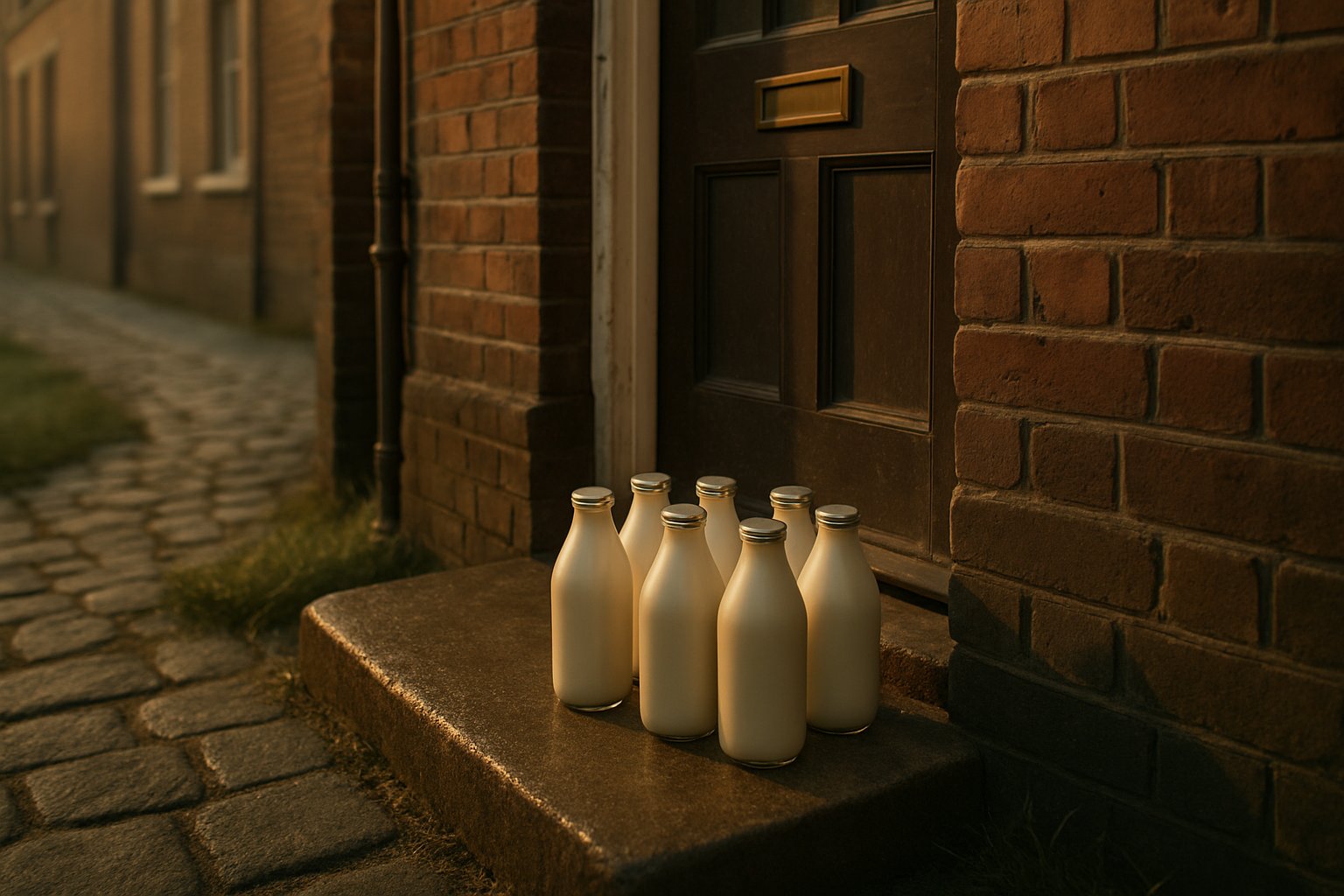
Let’s wander back and poke around in those early mornings, with their humming milk floats and the thrill of collecting empties before anyone else got to them. The milkman wasn’t just dropping off bottles—he was part of the neighborhood’s heartbeat, a living thread in the daily tapestry. Supermarkets? They couldn’t hold a candle to that kind of connection.
Funny thing—after decades of being almost forgotten, doorstep deliveries have been sneaking back. Maybe we’re all just a bit hungry for that old-school magic. Or maybe it never really left us.
The Dawn Ritual: Milk Bottles on the Doorstep

Fresh milk arriving in the cool blue light of morning set the pace for the day. Glass bottles clinked against each other, and the milkman’s footsteps echoed down quiet streets. It wasn’t just about getting dairy—it was about feeling like you belonged.
Morning Magic and the Clink of Glass
That unmistakable clink—if you know, you know. Sometimes the sound of the milkman’s float would wake us before our alarms. Those old electric vehicles glided by so quietly, you’d almost miss them if not for the bottles rattling in their crates.
We’d dash to the door, often still in pajamas, peeking through curtains for a glimpse of the milkman. The bottles, lined up like little glass soldiers, waited for us to rescue them from the cold.
Winter made the whole thing even more special. Remember the cream forcing up the foil caps, frozen into funny shapes? Snow never stopped the rounds. Our milkmen—heroes in flat caps—somehow always made it through.
The Cream Line and Silver Foil Tops
Glass bottles wore silver foil caps that we’d peel off with chilly fingers. Underneath, a thick cream line promised the richest part of the milk. Supermarket milk just didn’t compare—this was the real deal.
The foil tops weren’t just practical:
- They kept the milk clean and safe
- Showed if someone had tampered
- Came in different colors for kids to collect
- Kept birds and bugs at bay
Of course, the birds eventually figured it out. Blue-tits and robins would poke little holes for a taste, leaving evidence of their mischief. We didn’t mind much—everyone deserved a treat.
Notes for the Milkman: Personalised Deliveries
Milk delivery felt personal, almost like a secret club. We’d scribble notes—sometimes just a scrawled “2 pints please” or “no milk tomorrow”—and tuck them under the empties.
Requests ranged from extra bottles for visiting relatives to skipping a week for holidays. The milkman always seemed to remember who liked what and when.
Paying was a simple, honest affair. Coins in an envelope or tucked inside a bottle, and somehow it always worked out. If you needed a favor, the milkman would usually sort it out with a nod.
When we went away, a quick note—“please stop milk until Monday”—kept things ticking along. No fuss. Just a neighborly understanding.
The Heart of the Neighbourhood: The Local Milkman

The milkman wasn’t just a delivery guy—he was part of the neighborhood’s soul. He bridged the gap between families and the local dairy, and those connections ran deep.
Community Bonds and Friendly Service
Our milkman knew us all by name. He’d remember who wanted extra cream, who needed an early drop-off, and who might appreciate a quick chat on a lonely morning.
He’d sometimes leave birthday cards for the kids or check in on neighbors who hadn’t been seen in a while. It was more than a job—it was a calling, almost.
Daily routines meant:
- Quick chats about the weather or football
- Adjusting orders on the fly
- Collecting payments with a grin
- Swapping neighborhood news
If something seemed off—papers piling up, curtains drawn for days—the milkman noticed. That kind of watchfulness made us feel safe.
The Role of the Local Dairy Farms
Local farms kept the whole system going. Their milk traveled just a few miles before landing on our steps, still fresh from the cows.
The milkman would sometimes share stories about the farms, or even the cows themselves. There was a sense that you knew where your food came from—no faceless supply chains here.
Buying local meant jobs stayed in the area, and the old ways of farming survived a bit longer. Milkmen and farmers often worked together for decades, building up trust and a kind of quiet pride.
Trusted Faces and Lifelong Memories
Some milkmen served the same streets for decades. We watched them grow older alongside us. Those familiar faces became woven into our routines.
Kids would get up early just to see the float, maybe help carry a bottle or two. There’s something sweet about those memories—maybe a bit blurry now, but golden all the same.
What made them special?
- They always showed up, rain or shine
- They did small kindnesses without being asked
- They remembered everyone’s quirks
- Sometimes, they’d even go above and beyond the call
Our milkman was part of the family, really. He’s probably in more old photo albums than half our relatives.
Behind the Delivery: Glass Bottles, Floats, and the Route
Getting milk to every doorstep took a bit of magic and a lot of organization. Glass bottles, silent floats, and carefully plotted routes all played their part.
Reusable Glass Bottles and Recycling
Glass bottles were the unsung heroes. Thick, sturdy, and endlessly reusable, they’d make their way from dairy to doorstep and back again, sometimes dozens of times.
We’d rinse them out, line them up, and the milkman would whisk them away for cleaning and refilling. Each bottle bore the dairy’s name, a little badge of local pride.
Bottles came in pints or half-pints, and the raised lettering felt good under your fingers. The system just worked.
How it went:
- Empties got collected each morning
- Dairies washed and sterilized them
- Fresh milk went in, and out they went again
Waste? Hardly any. Some bottles probably lasted longer than the kitchen table.
Foil caps had their own afterlife—kids would collect them, flatten them, or use them in games at school.
The Electric Milk Float and Horse-Drawn Days
Electric floats were a revelation, but plenty of places still had horse-drawn carts. The floats, with their open sides and humming motors, glided through the streets almost silently.
Electric models appeared in the 1930s, but after the war, they really took off. By the late ‘50s, there were tens of thousands on the roads, zipping along at a gentle 15mph.
1950s floats had:
- Batteries that lasted all day
- Hand brakes for constant stopping
- Shelves for hundreds of bottles
- A bit of shelter for the driver
In some neighborhoods, the horses knew the route better than the milkman. They’d stop at the right houses without being told.
Switching to electric floats meant fewer breakdowns and bigger loads. Still, there’s something lovely about the memory of a horse clopping along at sunrise.
Route Planning and Early Starts
Milkmen started before dawn—sometimes as early as 4am. Planning the route was almost an art form, making sure every house got its milk before breakfast.
Each milkman covered hundreds of homes, winding through streets in a pattern that made sense only to them. They’d load up at the dairy, then set off while the world still slept.
A typical morning:
- Load the float before sunrise
- Follow a memorized route
- Pick up empties and notes
- Drop off milk, cream, eggs—sometimes even bread
- Jot down any changes for tomorrow
Customers left notes—sometimes barely legible—asking for more or less, or just letting the milkman know they were away.
Rain, snow, thick fog—didn’t matter. The milk always came. Efficient routes meant less doubling back, and the milk stayed cold and fresh.
Why It Felt Magical: Childhood Memories of 1950s Britain
The magic wasn’t in the milk, really—it was in those little moments that made mornings feel special. We learned a lot, even if we didn’t realize it at the time.
Anticipation and Surprise at Breakfast
Every day started with a sense of anticipation. The clinking bottles, the quiet wheels on the road—it felt like a secret delivery, just for us.
We’d try to beat our siblings to the door, the cold glass making our hands tingle as we carried bottles into the kitchen.
Silver tops were the norm, but spotting a gold top? That was something else—extra cream, a real treat.
Sometimes, we’d find a note wedged under the foil. Messages between neighbors and milkmen, little secrets we’d try to decipher.
We’d hold the bottles up to the window, admiring the cream line. It looked almost too good to disturb.
The Special Treats: Cream and Holiday Delights
The “top of the milk” was the best part. We’d pour it carefully over cereal, watching the cream swirl and mix.
On birthdays or holidays, our parents might order gold top milk. The cream was so thick, it sometimes felt like you’d struck gold.
Winter brought its own surprises—holes in the foil where birds had helped themselves. We didn’t mind much. If anything, we felt a little proud.
School milk came in tiny bottles, warm from sitting by the radiator. It tasted odd, but we all drank it together, making faces and jokes.
Foil tops became toys—pressed onto coins, or flicked across the table when teachers weren’t watching.
Learning to Return the Empties
Returning empty bottles was our first real chore. We rinsed them, lined them up, and sometimes added our own notes.
We’d feel grown-up writing “one extra pint, please” or “no milk today.” It was a small thing, but it mattered.
Collecting foil tops for charity became a ritual. We’d stash them in tins, knowing they’d help someone, somewhere.
The milkman always noticed if we’d done our bit. His smile or quick “thank you” meant more than we let on.
Shifting Times: The Rise of Supermarkets and the Decline of the Milkmen
The 1960s and 1970s changed everything. Suddenly, milk came in plastic bottles on supermarket shelves. Prices dropped, and local dairies couldn’t keep up. The world moved on, but for those who remember, the old ways still linger in the back of our minds—warm, a little bittersweet, and always just a clink away.
The Supermarket Revolution
Supermarkets really shook things up in the 1960s and 1970s. Suddenly, there was this big, bright store where you could grab milk while picking up the rest of your groceries—no waiting around for the clink of bottles on your doorstep, no coins tucked under the mat.
By 1990, plastic containers and cartons lined the fridge aisles. The price gap was hard to ignore—supermarket milk could be about 30p less per pint than what the milkman brought. For a lot of families, it just didn’t make sense to keep paying more, not when milk was right there with everything else.
The change came fast. In 1970, milkmen handled almost all the milk sales. By 2020? Less than 5%. That’s a blink, really.
New Packaging: Plastic Versus Glass
Packaging changed the whole milk ritual. Up until 1975, about 94% of milk came in those sturdy glass bottles. Milkmen would collect the empties, and there was something nice about that little cycle.
But glass was heavy, fragile, and not the easiest thing to lug around. Plastic containers and cartons, on the other hand, were light, cheap, and you could stack them without worry. Supermarkets loved that.
The foil-topped bottles faded out, and with them, that familiar pop when you opened a fresh one. We traded a bit of charm for convenience, I suppose.
Back then, hardly anyone thought about the environmental cost. Turns out, those old glass bottles were much kinder to the planet than the throwaway plastics we all got used to.
Impact on Local Dairies and Communities
Local dairies took a real hit as doorstep deliveries faded. Big suppliers could sell milk to supermarkets for less, and a lot of small family farms just couldn’t keep up.
We lost more than a service. The milkman was a friendly face, sometimes the only visitor an elderly neighbor might see all day. They’d notice if something was amiss, maybe check in if a bottle was left untouched.
Some dairies, like Dairy Crest, managed to pivot and supply supermarkets instead. But plenty just closed up shop, ending long family traditions.
Rural spots felt it hardest. Farms that had served the same families for generations suddenly watched those connections vanish.
Neighborhoods got a little less familiar, a little less personal. The daily rhythm changed, and with it, so did a bit of our community spirit.
Retro to Revival: The Modern Milk Delivery Comeback
Now, somehow, milk delivery is making a comeback. Maybe it’s nostalgia, maybe it’s the urge to cut down on plastic, or just wanting to help out local farms. Whatever it is, glass bottles are popping up on doorsteps again, and people are rediscovering the charm of the old ways—this time with a modern twist.
Sustainability with Glass Bottle Return
Reusable glass bottles are back in style. Unlike plastic, they don’t just get tossed—they’re washed, refilled, and sent out again and again.
It’s hard to argue with the numbers. One glass bottle can stand in for up to 50 plastic ones over its life. Rinse it out, leave it outside, and it’s off for another round.
Apparently, 75,000 new customers signed up with delivery companies in the past year. Some credit David Attenborough and his documentaries for the nudge. Who can blame them?
The bottles still look much the same—pint-sized, foil-topped, a little throwback sitting in the fridge. But now, better processing keeps the milk fresh for longer.
Every glass bottle delivered means one less plastic bottle in the rubbish. That’s something to feel good about, even if it’s just a small step.
Supporting Local Dairy Farms Today
Home milk delivery now connects us straight to nearby farms. Instead of anonymous supermarket brands, we’re actually supporting the folks down the road.
Local dairies try to make it personal. Some offer organic milk, different fat levels, even cream or yoghurt. A few can deliver milk just hours after it’s left the cow.
Shorter journeys mean fresher milk and fewer miles on the road. That’s a win for taste and for the environment.
Supporting local dairy farms keeps rural communities going. The regular orders help these small businesses stay afloat, even as big companies keep growing.
A lot of delivery services have apps now, so you can tweak your order, pause it for holidays, or add extras. That mix of old-school and new tech makes it surprisingly easy to support local farms these days.
The Return of the Modern Milkman
Today’s milkmen and women still start their rounds before dawn, just like folks did back in the day. Only now, they’re steering electric vans and juggling smartphone apps, all while clinking those familiar glass bottles.
Milk delivery services have really branched out. Now you can toss bread, eggs, fruit, and veggies into your weekly order, not just milk. Some even sneak in a few household essentials—handy, right?
There’s something special about the personal touch. Our milkman remembers if we like skim or whole, tweaks the order when we’re on holiday, and somehow always brings a smile, even in this tech-obsessed world.
Modern routes stretch way beyond the old neighborhood loops from the ’50s. With electric floats, they can cover more ground and still stay green.
Honestly, this mix of old-school charm and clever updates seems to hit home for a lot of young families. There’s a comfort in getting that doorstep delivery our grandparents loved, but with a nod to today’s need for convenience and a bit of eco-friendliness.







Leave a Reply