
The winter of 1978-79 hit Britain like a punch to the gut: strikes everywhere, snow piling up, and rubbish bags turning city streets into obstacle courses.
During this period, the so-called Winter of Discontent, striking binmen left waste festering in the gutters while relentless snow and bone-chilling cold made just getting by feel like a victory.
There were moments that felt almost surreal—unburied bodies, hospitals barely ticking over, and whole communities forced to dump their rubbish in parks when the bins overflowed.
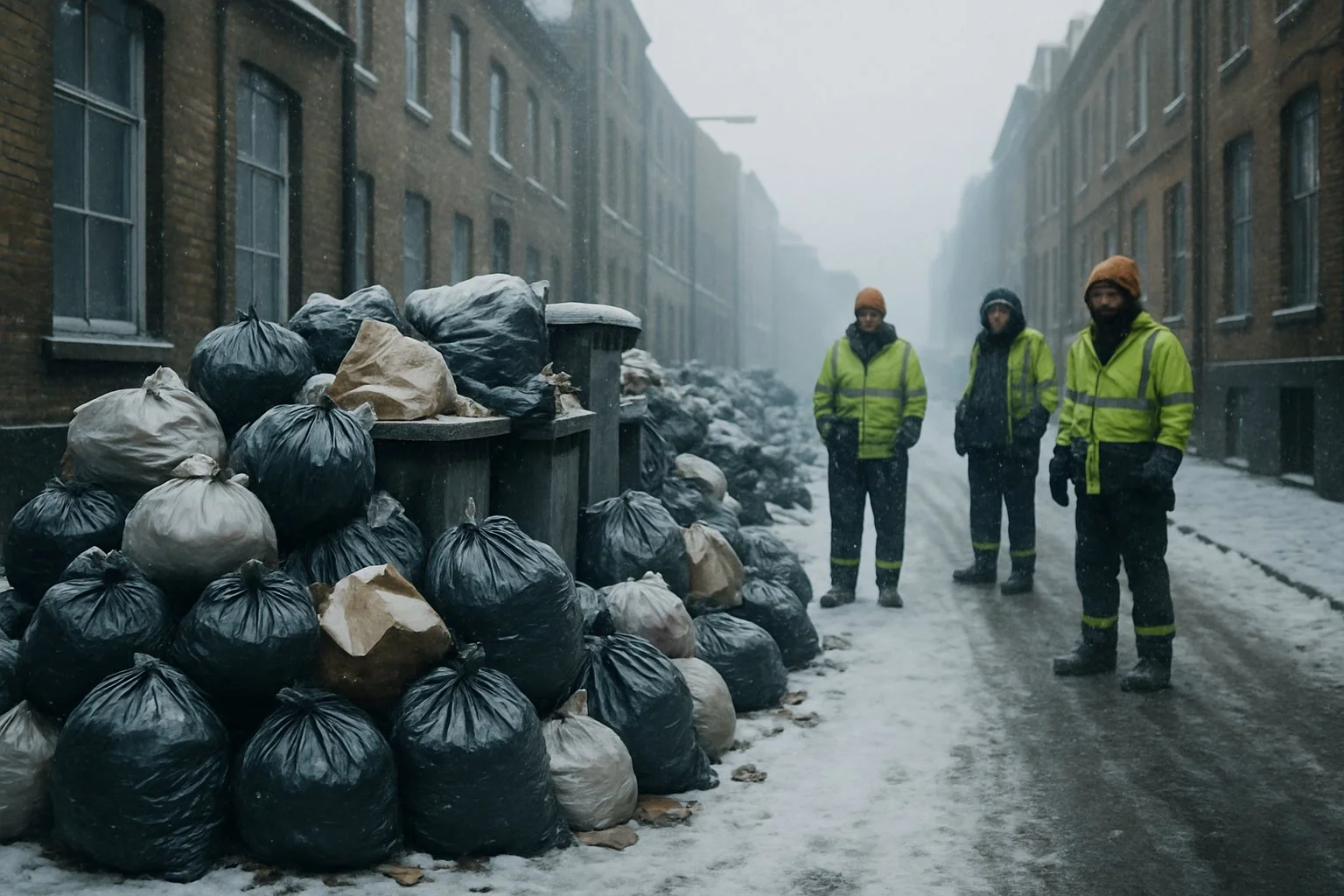
It all started with wage disputes but quickly snowballed into something bigger—a crisis that changed the course of British politics. The Labour government’s attempts to keep inflation down by capping pay just made things worse. Strikes broke out everywhere, right as the coldest winter in ages settled in. Ford workers wanted a 17% pay rise, gravediggers refused to work, and newspapers filled up with photos that now seem almost impossible: rubbish mountains, picket lines, and a country teetering.
But what was it like to actually live through it? Let’s look at how people made do, the stories behind the headlines, and the ways communities pulled together—or didn’t—when everything seemed to fall apart.
Origins of the Winter of Discontent

You can trace the Winter of Discontent back to years of economic bad luck and broken deals between the Labour government and the unions. Inflation kept climbing, wage caps got tighter, and frustration just kept bubbling up.
Economic Struggles and Wage Caps
Labour swept into power in October 1974, promising to Get Britain Back to Work. There was real hope in the air for working people.
The Social Contract was supposed to be the answer: unions would keep wage demands down, and the government would give them more control over industry and better welfare. It sounded good on paper.
But the economy just wouldn’t cooperate. Prices soared, the pound tanked, and by the end of 1975, the government was dipping into IMF reserves just to keep things going.
By 1976, it got even worse. Britain had to ask the IMF for a loan, and the strings attached were brutal. The government scrapped plans for more public control and dropped social welfare improvements. Unions felt utterly let down—betrayed, really.
Rise of Industrial Action
Ford car workers fired the opening shot on 24 August 1978, demanding a £20 weekly pay bump and a 35-hour week. That worked out to a 25% pay rise.
The government offered a measly 5%. No surprise, the workers walked out by September.
After nine weeks on strike, Ford workers won a 16.5% raise. Suddenly, everyone else realised: striking worked.
Early strikes that set the pace:
- Ford car workers (September 1978)
- Railway workers (January 1979)
- Haulage drivers
- Petrol tank drivers
Each win inspired another walkout. It started to feel like no one wanted to be left behind.
Public Sector Discontent
Council workers, especially, had it rough. Years of pay freezes meant their wages lagged far behind the cost of living.
On 22 January 1979, 1.25 million public sector workers staged a massive one-day strike. The country ground to a halt—hospitals on skeleton staff, rubbish collection gone, schools closed as caretakers joined in.
The gravediggers’ strike on Merseyside was maybe the most shocking. Bodies just stayed unburied, and the press tore into the unions for it.
Public services hit hardest:
- Hospitals – skeleton crews
- Schools – closed doors
- Rubbish collection – bins overflowing
- Cemeteries – funerals put on hold
By the end of 1978, unions had given up on wage restraint. After years of broken promises and rising prices, who could blame them?
The Impact of Rubbish Piles in British Cities

Suddenly, Britain’s cities looked like something out of a disaster film—rubbish everywhere, from posh London squares to the smallest local parks.
Overflowing Streets and Public Health Concerns
With binmen on strike, the streets filled up fast. In some places, the piles of rubbish bags reached six feet high.
Rats loved it, of course. They showed up in droves, feasting on rotting food and making everyone nervous.
Biggest health worries:
- Rats and vermin spreading disease
- Water getting contaminated from leaking rubbish
- The stench—honestly, it was awful
- Drains and gutters blocked up
It messed up daily life in ways you don’t really expect. Families tried to keep their own rubbish at home, but it wasn’t enough. Businesses struggled too, with rubbish blocking doors and pavements.
Local councils just couldn’t keep up. Without their workers, they were swamped.
Leicester Square’s ‘Fester Square’
Leicester Square turned into the poster child for the whole rubbish crisis. Westminster Council dumped bags there by the tonne, right in the heart of London’s nightlife.
The press dubbed it ‘Fester Square.’ Tourists and locals were horrified—who’d want to see a West End show when you have to wade through garbage?
The place became a media circus, with photographers snapping away and tourists complaining. Pest control teams worked overtime, but it barely made a dent.
What happened at Leicester Square:
- Hundreds of tonnes of rubbish stacked up
- Constant media coverage
- Tourists cancelling plans
- Emergency pest control
It was a real eye-opener: even the fanciest parts of the city weren’t safe from the mess.
Council Parks as Makeshift Dumps
When the bins overflowed, councils started dumping rubbish in parks. Football pitches, car parks, playgrounds—you name it, it got buried under black bags.
Parks that should’ve been full of kids were suddenly no-go zones. The grass died, the soil got contaminated, and the smell hung around for months.
Typical park dumping spots:
- Sports fields
- Car parks
- Open grass
- Around pavilions
Losing those green spaces hit people hard, especially in winter when you needed somewhere to stretch your legs. It took ages for some parks to recover.
Key Strikes That Defined the Crisis
Three walkouts really turned things upside down: lorry drivers stopped fuel deliveries just as the cold bit, binmen let rubbish pile up, and gravediggers left families in limbo.
Lorry Drivers Walkout
When lorry drivers walked out in December 1978, Britain felt it straight away. Petrol stations ran dry, and heating oil deliveries just stopped.
What people faced:
- Petrol shortages everywhere
- No heating oil, right when it was freezing
- Shops running out of food
- Even ambulances and fire engines struggled to get fuel
The timing couldn’t have been worse. It was the coldest winter in years, and some families were left shivering with no way to heat their homes.
Refuse Collectors on Strike
The binmen’s strike kicked off in January 1979, and the effects were impossible to ignore. In Liverpool alone, over 2,000 workers joined in, and rubbish bags just sat there, week after week.
Rats became a common sight. The smell got into everything, and health officials started to worry about disease. Tourism took a nosedive.
We watched our streets change overnight, with bin bags crowding the pavements. Some areas looked like they’d been abandoned. The government, for whatever reason, refused to call a state of emergency.
Gravediggers and Crematorium Disputes
Then there were the gravediggers. In places like Liverpool, burials just stopped. Families were left waiting, grief turning to anger as the days dragged on.
It wasn’t just burials—cremations got delayed too. Some bodies had to be stored in temporary facilities, and suddenly the human cost of all the strikes hit home.
These strikes showed:
- Pay freezes hurt even the most crucial jobs
- Unions were determined to smash wage caps
- The government wouldn’t budge
- Public support started to slip
Seeing the dead left unburied was a step too far for a lot of people.
Life in Snow and Shortages: Survival Stories
That winter, it felt like everything that could go wrong did. People had to get creative—no regular rubbish collection, heating fuel running out, power cuts that seemed never-ending. But somehow, neighbours found ways to help each other out.
Coping with Power Cuts and Fuel Shortages
Candlelight became the new normal when the lights went out. Families kept torches and batteries close, and some dug out old oil lamps or paraffin heaters.
Petrol was so scarce, you couldn’t just drive to a warm café or community hall. A lot of families huddled in one room, sharing whatever warmth they could from a coal fire or gas heater.
The must-haves:
- Candles, matches, torches
- Battery radios for news and music
- Blankets, jumpers, hot water bottles
- Tinned food—always tinned food
- Bottled water, just in case
Old wartime habits came back. People swapped tips on keeping warm, stretching out rations, and cooking over open fires if the gas went off.
Daily Routines Amid Piled-Up Waste
With rubbish everywhere, families tried to keep their own bins from overflowing—sometimes piling bags in the garden or shed.
Shopping got trickier, with piles of rubbish blocking the pavements and the smell turning your stomach. Rats were a real worry, especially if you had kids.
Hygiene was a battle:
- Water sometimes ran short
- Washing clothes less often
- Worries about germs from all the rubbish
- Drains clogged and flooding
People started buying less fresh food, relying on tins and packets that didn’t make as much mess.
Community Adaptation and Support
Neighbours became a lifeline. People shared food, fuel, and even their living rooms when the power went out.
Churches and community centres opened up as makeshift warming stations. Younger folks made sure the elderly had what they needed, whether it was groceries or just a bit of company.
How communities coped:
- Sharing heaters and generators
- Taking rubbish to tips in groups
- Setting up neighbourhood watches
- Clubbing together for bulk buys
There was a surprising amount of spirit. Some streets even held bonfire parties around old oil drums, and kids found ways to have fun—sledging down hills, even if those hills were piled with black bags.
Political Responses and Social Unrest
James Callaghan’s Labour government took a beating as the strikes spread, unions dug in, and the military quietly got ready for the worst.
James Callaghan’s Government Under Pressure
Callaghan’s team found themselves stuck—soaring inflation on one side, angry unions on the other. The Prime Minister tried to cap pay rises at 5%, hoping to keep inflation in check, but that plan fell apart fast.
When Ford workers smashed through the cap and got a 17% raise in November 1978, everyone else followed. By December, miners, council workers, and NHS staff were all demanding 40% pay rises. The government just watched as their whole strategy unraveled.
Margaret Thatcher, then opposition leader, wasted no time attacking Labour. She hammered Callaghan for not declaring a state of emergency, especially as rubbish piled up and the country seemed to grind to a halt.
With every new strike, the government’s grip slipped. What started as an economic fight turned into a political disaster—one that would haunt Labour for years.
Union-Political Tensions
The relationship between trade unions and Callaghan’s government just fell apart that winter. Unions had always backed Labour, but that 5% pay cap? It split everyone right down the middle.
Hospital workers started blockading entrances with their picket lines. Hospitals turned away all but the most urgent cases. People were stunned, and support for the unions took a real hit.
The Trades Union Congress (TUC) pushed back against the wage restrictions from day one. Union leaders felt pretty let down by a Labour government they thought would always be in their corner.
Council workers stopped collecting rubbish altogether, and the piles just grew and grew in big cities. Leicester Square earned the nickname ‘Fester Square’—the smell was something else.
Gravediggers in places like Tameside walked off the job, so bodies just stayed unburied. In Liverpool, by the end of January, 225 unburied corpses sat in an empty factory. It was grim—no one could quite believe it.
Operation Drumstick and Army Readiness
With fuel strikes threatening to grind Britain to a halt, the government quietly drew up Operation Drumstick. They planned to send in the Army to take over from the striking tanker drivers, right in the middle of the coldest winter in ages.
Army units waited on standby, ready to keep fuel moving. Petrol stations shuttered one after another, and folks struggled to stay warm in their homes as temperatures dropped.
But for the Army to step in, the government would have to declare a state of emergency—basically admitting they’d lost their grip on things.
Callaghan’s cabinet argued about it for hours. They realized that using emergency powers would look like a political disaster and could make things even uglier with the unions.
In the end, they backed off from Operation Drumstick. The risk felt too high—military involvement might’ve blown up Labour’s relationship with the unions for good.
And so, Britain just limped along without fuel, the strikes dragging on as winter refused to let up.
Cultural Reflections and Lasting Legacies
The Winter of Discontent left a mark on British culture that never really faded. The strikes seeped into music, changed how the media covered labour unrest, and—let’s be honest—helped sweep Margaret Thatcher into power.
Influence on Punk and The Clash
Those filthy, rubbish-strewn streets became punk’s calling card. The Clash, of course, nailed the mood perfectly in their songs from that era.
White Man in Hammersmith Palais echoed the social tensions swirling all around us. The band sang about unemployment and working-class struggles, with bags of trash literally piling up outside their studio windows.
Punk fashion took cues from the chaos, too. People wore bin bags as clothes. Safety pins became a weird badge of honor—everyone just made do with whatever they could find.
That whole DIY vibe? It wasn’t just music. Families everywhere had to get creative just to keep going when basic services vanished.
Media Coverage and Public Memory
TV news beamed out those wild images of uncollected rubbish stacked higher than parked cars. If you saw it, you probably never forgot it—those scenes summed up a country in decline.
Papers threw around phrases like “Britain’s breakdown” and “chaos on our streets.” The headlines focused on the drama, not the messy details of union talks.
The Sun and Daily Mail stamped it all into memory with their front pages. “Crisis? What Crisis?” stuck to the era, even though Callaghan never actually said it.
Every time there’s a modern strike, those old photos and headlines pop up again. People still draw the same comparisons. It’s funny how those memories just refuse to fade away.
From Crisis to Political Change
The strikes swung the 1979 election in Margaret Thatcher’s favor. People were just fed up after seeing uncollected rubbish piling up and even bodies left unburied in London. It was a mess, honestly—a kind of chaos you don’t easily forget.
After that, trade unions started losing their grip. The government pushed through new laws in the 1980s, making it a lot tougher for workers to strike. You could really feel the tide turning.
Key political changes included:
- Stricter union legislation
- Privatisation programmes
- Reduced public sector influence
- New Conservative dominance
Looking back, it’s wild how much of today’s British political mood traces back to that one bitter winter, when everything just seemed to fall apart.






Leave a Reply