
British shopping has always been about more than just buying things.
For nearly 200 years, our corner shops, high street queues, and carefully saved coupons have shaped the fabric of community life across the UK.
From the Victorian era through rationing and into modern times, these everyday experiences have created memories that connect us all.
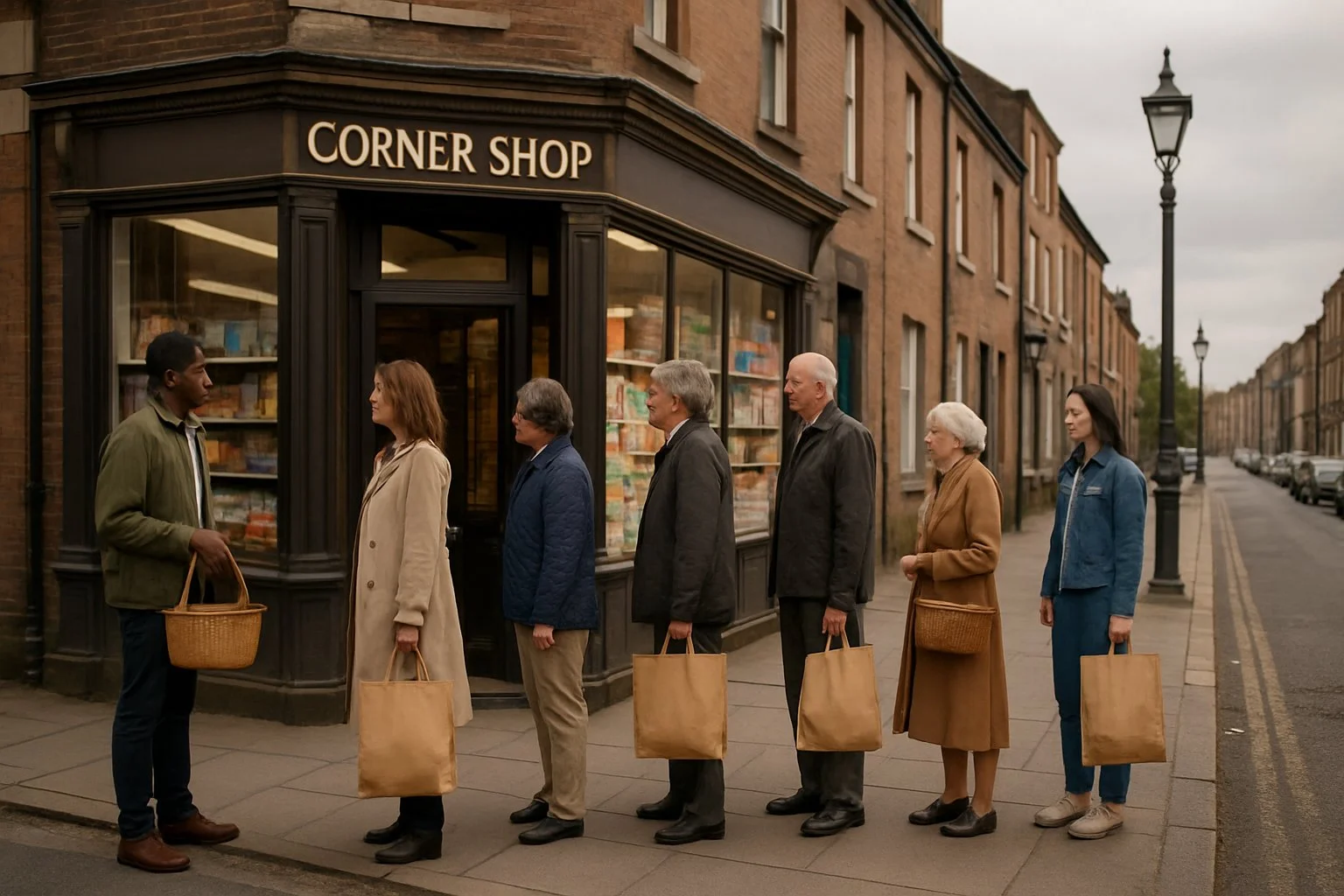
I bet most of us have a story or two about nipping down to the local shop for penny sweets, waiting in a slow-moving queue, or watching a grandparent snip coupons from the back of the paper. These moments, so ordinary at the time, end up telling the bigger story of British life.
Corner shops weren’t just places to buy things—they were little hubs where the shopkeeper always remembered your name, and you’d end up chatting about the weather or the latest local gossip while picking up a pint of milk.
That whiff of pipe tobacco from behind the counter, the shelves stacked with chocolate bars you’d eye hungrily, and the shopkeeper who somehow always knew your favourite treat—those little details stick with you. Whether it was the thrill of a 10p mix-up or the serious business of ration books, shopping here was never just a transaction. It was about the people, the places, and the small rituals that made every visit feel like a slice of home.
The Heart of British Shopping: Corner Shops

Corner shops have stood at the centre of British communities for generations, serving as gathering spots where neighbours catch up and daily needs get sorted. These family businesses have weathered rationing, supermarket competition, and even global pandemics, somehow still hanging on to their spot at the heart of local life.
Origins and Rise of the Corner Shop
The corner shop as we know it started popping up in Victorian times. Back then, families opened small stores on street corners, answering the simple need for nearby essentials. No one wanted to trek across town for flour or tea.
Victorian corner shops ran differently than today’s shops. You had:
- Proper counter service (no wandering the aisles)
- Shorter opening hours (definitely no late-night snacks)
- Just the basics—flour, sugar, tea
- Real relationships between the shopkeeper and customers
By the early 20th century, these shops were everywhere. They made it through two world wars, adapting to rationing and shortages. Shopkeepers kept tabs on everyone’s ration allowances, scribbling notes behind the counter.
After the war, things changed. Shops moved from counter service to self-service, letting customers browse and pick up what they wanted instead of asking for every little thing.
Role in Local Communities
Even now, corner shops serve as anchors in their neighbourhoods in a way supermarkets just can’t. Studies say a third of us know our local shop workers pretty well.
These shops fill real gaps. Around 33% of people reckon they’d have trouble getting food or essentials quickly if their corner shop shut its doors.
Corner shops offer:
- Early and late opening hours
- Quick top-ups for forgotten groceries
- Friendly, personal service
- Notice boards and a spot to bump into neighbours
- Emergency supplies when things get tough
When COVID-19 hit, corner shops proved their worth again. While supermarkets saw panic buying and empty shelves, local shops stayed open and organised supplies for charities and NHS staff.
Shops constantly adapt to what’s needed. One shop might double as a grocery, hardware store, newsagent, and even a parcel pick-up point.
Corner Shopkeepers and Their Stories
Every corner shop has a shopkeeper with a story worth hearing. Plenty are immigrants who started from scratch, working all hours to serve their communities.
Shopkeepers often open every day of the year, from dawn till late. They know regulars by name and remember what everyone usually buys.
Shopkeepers put up with:
- Long hours and hardly any breaks
- Supplier costs that seem to rise every week
- Worries about theft or security
- Supermarket chains muscling in
- The occasional tricky customer
Even with all that, most take real pride in what they do. They celebrate birthdays, offer credit when times are tough, and lend a sympathetic ear.
The relationship between shopkeeper and customer can last decades. Kids who once bought penny sweets come back with their own kids. That kind of continuity just doesn’t happen in the big chains.
Quintessential Experiences: Queues and Quirks

Queuing—now there’s something we’ve truly made our own. Over the years, the queue has become more than just a line; it’s a symbol of fairness and patience that’s woven into our daily shopping stories.
The British Art of Queuing
We’ve turned queuing into almost an art. Every shop, market stall, or bus stop has its own unwritten rules, but we all seem to know them.
The basics are simple: join at the back, wait your turn, and definitely don’t push ahead. Break these rules and you’ll feel the chilly stares of your fellow shoppers.
It’s not just about standing in line. There’s a whole etiquette—giving people space, acknowledging new arrivals with a polite nod, and gently correcting queue-jumpers with a raised eyebrow.
Kids learn by watching the grown-ups. Newcomers pick it up quickly, usually after a gentle nudge or two.
Even when there’s no official line, we somehow know who’s next. At the bus stop or the butcher, there’s this invisible order that keeps things ticking along.
Queues During Wartime and Rationing
World War II really cemented our queuing habits. Ration books made orderly queues essential—otherwise, chaos would have reigned.
Corner shops became the places where neighbours waited together for their rations. These weren’t just shopping trips; they were times to catch up, share news, and help each other out.
Rationing taught us that queues meant fairness. It didn’t matter how much money you had—everyone waited their turn.
You had to register for certain goods at specific shops, so queues often formed at the same places, week after week. Over time, these regular meetings built relationships that lasted for years.
Even after rationing ended, the queuing habit stuck. Pushing in? Still considered downright un-British.
The Social Side of the Queue
Queues aren’t just about waiting—they’re social spaces. You end up chatting with strangers about the weather, comparing notes on what’s in stock, or sharing a laugh about how long the line is.
At the corner shop, the queue often becomes a mini community meeting. Regulars catch up, pass on local gossip, or trade tips about what’s good this week.
You hear about sales, new products, or changes in opening hours from others in line. In smaller towns, this word-of-mouth is gold.
During the Christmas rush, queues become shared challenges. We grumble together, swap jokes, and maybe even let someone with a tired toddler go ahead. That little bit of British humour makes the wait easier.
Shopping on a Shoestring: Coupons, Ration Books, and Credit
Making ends meet has always taken a bit of ingenuity. From ration books to “tick” at the corner shop, we found ways to stretch every penny and keep the cupboards stocked.
The Role of Ration Books and Coupons
During the war, ration books were our ticket to the essentials. Every person got a book full of coupons, and you had to hand over the right ones for meat, sugar, butter, and the like.
You’d register with a specific grocer or butcher, and that was that—no hopping around for better deals.
A typical weekly ration:
- Meat: about two small chops
- Bacon: 4oz
- Sugar: 8oz
- Butter: 2oz
- Cheese: 2oz
The points system let you choose some extras—tinned goods, rice, or sardines if you fancied them.
Kids got extra milk, but less of other things. We queued up, coupons in hand, hoping the shopkeeper wouldn’t run out before our turn.
The Tick Book: Buying on Credit
Many corner shops ran “tick books” or “slates”—a sort of informal credit. Shopkeepers jotted down what you took, and you’d pay back on payday, usually Friday or Saturday.
It all ran on trust. The shopkeeper knew who was good for it and who might need a bit more time. Most didn’t charge interest, seeing it as part of looking after their neighbours.
This system helped families bridge the gap between pay packets. If you had an unexpected bill, you could still get bread and tea, knowing the shopkeeper had your back.
Bulk Purchasing and Psychological Selling
Shopkeepers knew a thing or two about getting us to buy more. Seasonal goods showed up right where you couldn’t miss them, and “three for two” offers tempted even the most careful shopper.
They’d put sweets at kids’ eye level, or keep the pricier stuff behind the counter. During rationing, regulars sometimes got a little extra, or the shopkeeper would save something special for a family with young children.
In some places, neighbours joined forces to buy in bulk, splitting up the goods to save a few bob.
Inside the Shops: Goods, Services, and Setting
Corner shops and local stores created spaces packed with familiar goods and little touches that made each visit unique. The way everything was arranged—well, it shaped how we shopped and what we remembered.
Layout and Product Selection
Corner shops squeezed every last bit of space for maximum effect. Sweets lined the counter, just begging for a last-minute splurge.
The most popular things sat within easy reach. Cigarettes and collectible cards stayed behind the counter, bread near the door—ready for the morning rush.
Shelves ran floor to ceiling, making browsing feel like a bit of an adventure.
Shops usually had:
- Counters with impulse buys
- Window displays for seasonal treats
- Bulk goods tucked away at the back
- Narrow aisles just wide enough to squeeze through
Each shop developed its own character, stocking whatever locals wanted most.
The Sweets, Toys, and Treats
Sweet shops felt downright magical. Glass jars of boiled sweets lined the shelves, and you’d press your nose to the glass, agonising over which penny sweet to pick.
A lot of shops sold both bread and sweets, so that smell of baking mixed with sugar—unforgettable.
Sweet shop highlights:
- Pick-and-mix in paper bags
- Chocolate bars by brand
- Easter eggs and other seasonal goodies
- Little toys and novelties near the till
Shopkeepers remembered your favourites and sometimes nudged you to try something new. That personal touch made all the difference.
Furniture and Homewares
Furniture shops set up whole rooms so you could imagine them in your own house. The classic three-piece suite took pride of place, showing off the latest patterns.
Manchester house stores specialised in linens—bedding, curtains, towels—often arranged by room or colour.
Furniture shop staples:
- Living room suites set up for show
- Bedroom sets grouped together
- Kitchen gadgets and small appliances
- Carpet samples and home accessories
Staff walked you through options and payment plans. Hire purchase made bigger buys possible for working families.
Memorable People and Places in British Shopping History
Behind every high street and corner shop were the people who turned shopping into something memorable. Folks like Mrs Fenton on Devon Street, or countless other shopkeepers who always knew your name, gave British retail its real heart.
Mrs Fenton and Devon Street
Mrs Fenton ran her corner shop on Devon Street like clockwork. She remembered every customer and their usual order. Her shop sat next to the Shaftsbury Cinema, the perfect stop for sweets before a Saturday matinee.
Kids queued outside her door every weekend. The ABC Minors club would pour out of the cinema and straight into her shop. Jars of humbugs, sherbet lemons, and liquorice allsorts stood in neat rows, almost like a little army.
Mrs Fenton never forgot a face—or a debt. She kept a notebook under the till, jotting down what families owed. Trust was everything on Devon Street. Everyone knew she’d always be fair with her prices and her portions.
Unique Characters and Local Legends
Every neighbourhood had its shopping legends. There was always that one shopkeeper who could fix anything, find any item, or quietly extend credit when times got tough. Folks around here still talk about them like local celebrities.
Some shops had their own odd rules. Mr Thompson’s hardware store insisted you wipe your feet three times before coming in. Mrs Davies at the bakery? She saved her best loaves for regulars, no matter how early you arrived. These quirks made shopping feel like a personal ritual.
Famous local characters included:
- The fishmonger who sang while filleting
- The butcher who remembered every family’s Sunday roast
- The newsagent who tucked away comics for certain kids
Neighbourhood Landmarks
Corner shops meant more than just groceries. They were where you met neighbours, caught up on gossip, or just lingered outside with a bag of crisps, watching the world go by.
Handwritten notices cluttered the windows—lost cats, rooms to let, random treasures for sale. That notice board was our social media, long before anyone had a computer.
Traditional corner shops often squeezed in the local post office, too. Pensioners collected their benefits there, families mailed letters, and the red pillar box out front was a fixture. These places really anchored the neighbourhood.
Specialist Shops and Traditional Trades
British high streets used to buzz with skilled tradespeople—folks who fixed your shoes, cut your keys, or just knew how to keep you looking sharp. You can’t really compare that to today’s chain stores, can you? There’s something irreplaceable about those crafts and the relationships they built.
The Cobbler’s Shop and Shoe Repairs
The cobbler’s shop, now that was essential. These craftsmen could take a battered pair of shoes and make them last another decade. If you ever walked in with worn-out heels, the cobbler would study the wear and just know how you walked.
Traditional cobbler tools included:
- Cast iron last for shaping shoes
- Leather cutting knives
- Hammers and nails
- Rubber sole materials
We didn’t toss shoes at the first sign of wear. Instead, we’d bring them in for new soles or a polish. The smell of leather and glue hung in the air, and sometimes you’d wait while they fixed your shoes on the spot. Cobblers usually sold polish, laces, and brushes too—little things that kept your shoes going.
Key Cutters and Upholsterers
Before alarms and key cards, you needed a good key cutter. They’d take your worn old key and, with a few careful turns of the machine, hand you a perfect copy. Some sharpened knives and scissors on the side.
The upholsterer’s shop was where you took sagging armchairs or tired sofas. These experts could:
- Re-cover sofas and chairs
- Replace worn springs
- Repair wooden frames
- Match fabric patterns
Over time, you got to know these specialists. They’d remember your taste in fabrics, sometimes even pull out a sample from years ago to match a repair. Proper upholstery work meant you could keep that favourite chair in the family for generations.
The Barber’s Shop and the Nit Nurse
The barber’s shop wasn’t just for haircuts. Men gathered there for a shave, a chat, and maybe a bit of local news. The place buzzed with conversation.
Traditional barber services included:
- Hot towel shaves
- Hair washing and cutting
- Beard trims
- Basic advice—sometimes medical, sometimes not
The nit nurse—now there’s a memory—visited schools to check for head lice. She’d go through hair with a fine-toothed comb and a sharp eye, spotting trouble before it spread.
The nit nurse gave parents practical tips for treatment and prevention. Her visits were just a normal part of school life, and somehow, you always hoped she’d skip your class.
These roles—barber and nit nurse—wove personal care right into the fabric of the community.
Everyday Stories and Lasting Legacies
Corner shops hold a thousand memories for British families. The routines, the faces behind the counter, even the slow changes on the high street—they all left their mark. These everyday moments built the kind of bonds that stick in your mind.
Memories of Weekly Shopping
Shopping trips had their own rhythm. Mum would send us down with a scribbled list and just enough coins. You’d queue behind Mrs Smith, who always counted out her pennies for bread and milk, and the shop owner would greet everyone by name.
Common weekly essentials included:
- Fresh bread, still warm most mornings
- Bottled milk from the dairy
- Tea, sugar, and biscuits
- Newspapers and magazines
- Sweets, if you had any pocket money left
Rationing made corner shops even more crucial. The Ministry of Food handed out coupons, and what you could buy depended on what you had left that week.
Shopkeepers kept careful records about who’d picked up their malt and cod liver oil supplements. Those orange bottles lined the shelves, a reminder of how families tried to stay healthy when times were tough.
Family Life Around the Corner Shop
Corner shops felt like an extension of home. Kids would run in after school, clutching coins for sherbet dabs and liquorice wheels.
Parents sent us on errands with notes asking for credit until payday. Shop owners knew which families were struggling and, more often than not, quietly helped out.
The shop served as:
- The notice board for lost pets or jumble sales
- The place to catch up on news and gossip
- The go-to when you ran out of tea or bread
- A safe spot for kids to learn about money and trust
Many immigrant families found their footing through corner shops, working long hours, opening early, closing late. They became part of the neighbourhood’s story, celebrating with us, helping out when things got rough.
Those shopkeepers? They weren’t just behind the counter—they became part of our extended families.
The Changing Face of British High Streets
Our high streets—remember them?—they’ve been morphing for decades. Once, you could stroll past a parade of independent shops, each with its own quirks. Now, it’s a patchwork of empty units and those familiar chain stores that seem to multiply like rabbits.
Corner shops? They didn’t just sit back and watch. They hustled. Suddenly, you could grab a mobile top-up, a scratchcard, or a surprisingly good cup of coffee, all while picking up your bread and milk.
The Dig for Victory campaign during wartime nudged families into growing their own veg, and corner shops got in on it, selling seeds and a jumble of gardening bits and bobs.
Changes we’ve witnessed:
- Those old-fashioned sweet jars? Gone—now it’s all pre-packaged treats.
- No more jingling coins for every purchase; card machines beep instead.
- Local bakers and dairies faded out, replaced by big distributors.
- Shops started opening longer, trying to keep up with the supermarket giants.
Many corner shops turned into multicultural meeting points. British Asian families, for example, took these businesses and made them into places where different worlds met, right on the high street.
Even now, corner shops stick around for us. When the pandemic hit and big stores emptied out, they kept their doors open, steady and familiar. Funny how the smallest places end up meaning the most.






Leave a Reply