
Remember dashing to the corner shop with coins jingling in your pocket, desperate to cram as many sweets as possible into a crinkly paper bag?
The dawn of decimal currency brought a sort of golden age for penny sweets—especially Flying Saucers, which somehow always felt like the best deal for any kid with a sweet tooth and a bit of spare change.
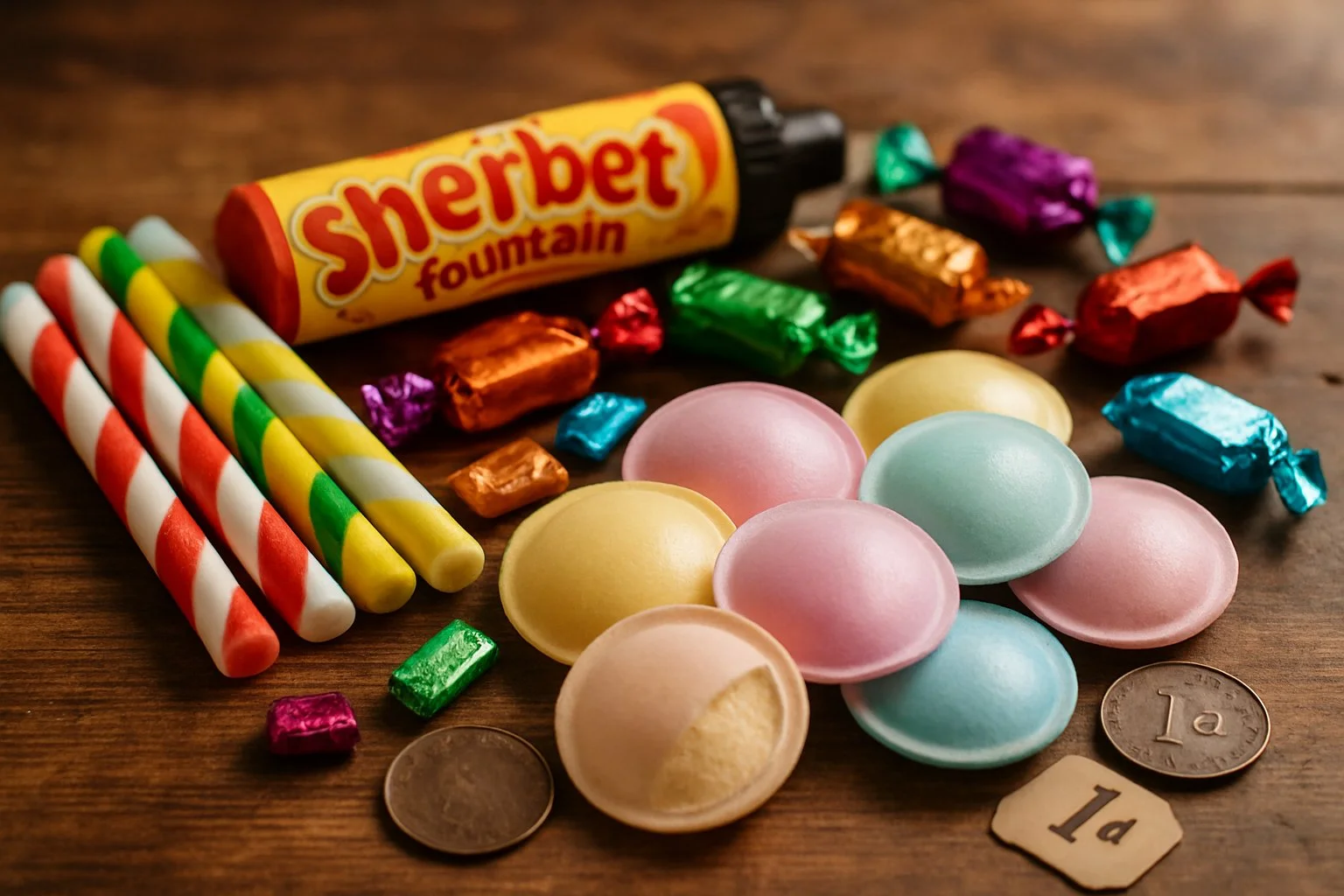
Flying Saucers—those pastel rice paper discs bursting with fizzy sherbet—really did capture our imaginations at a time when everything else seemed to be changing. These little UFOs, first popping up in the 1950s and then riding the wave of Space Race fever through the ’60s and ’70s, offered a lot of fun for just a penny.
Let’s take a wander down memory lane and see how these oddball treats survived decades of inflation, all while holding onto their special place in the hearts (and taste buds) of British kids. There’s more to them than meets the eye—communion wafers, space-age dreams, and that unmistakable tang of sherbet.
The Rise of Decimal Sweets and Penny Treats
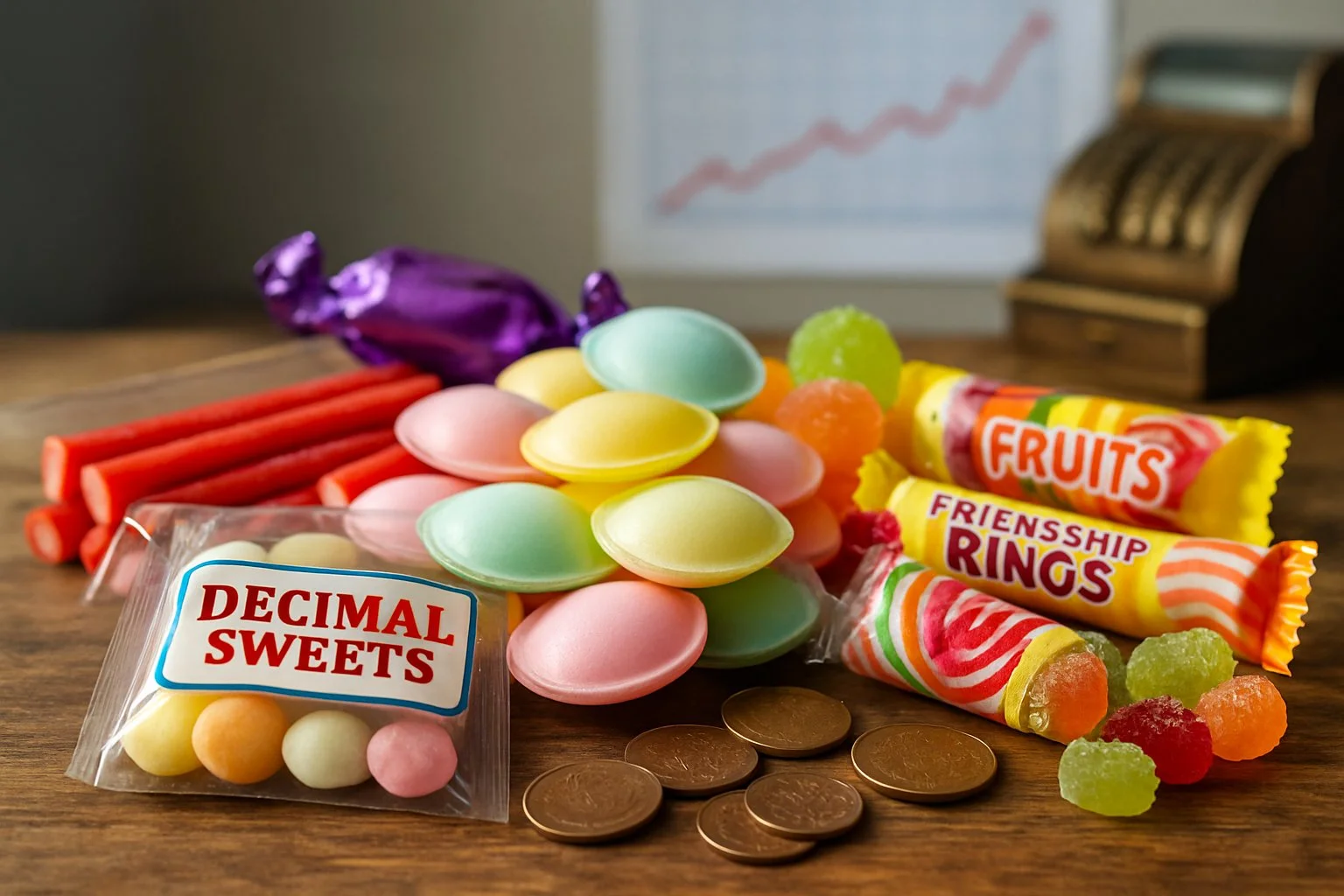
Britain’s switch to decimal currency in 1971 didn’t just change maths lessons—it totally reshaped the way we bought sweets. Suddenly, the new penny became the magic ticket for affordable treats that would define childhoods for years.
The Move to Decimalisation and Its Impact on Sweets
When the country swapped pounds, shillings, and pence for a shiny new decimal system on 15th February 1971, sweet shops had to scramble. The old penny had real buying power, while the new decimal penny felt almost like a token.
Sweet makers quickly re-jigged their prices. Loads of treats that had cost a halfpenny or penny in old money became “penny sweets” in the new world. For kids, that meant more sweets for the same pocket money—or at least, it felt that way.
It took a while for everyone to get the hang of it. Shopkeepers fumbled with the new coins at first, but by ‘72, most had settled into a penny-per-sweet rhythm.
Popular decimal penny sweets included:
- Fruit Salads
- Blackjacks
- Flying Saucers
- Sherbet Lemons
- Love Hearts
The new system made life easier for shopkeepers and kids alike. No more complicated sums—just count your pennies and fill your bag.
How Penny Treats Became a Childhood Staple
In the ‘70s and ‘80s, penny sweets weren’t just a treat—they were practically a rite of passage. Corner shops devoted whole shelves to jars and tubs of these tiny treasures.
The ritual? Stand in front of the counter, eyes wide, weighing up your options for ages. With only a few coins, you had to make every choice count.
Sweet shops became little hubs where we learned about money, patience, and maybe a bit of negotiation. Counting out your pennies and picking favourites was an early lesson in maths, even if you didn’t realise it.
Flying Saucers, with their odd shape and fizzy centre, became the go-to for many. They were cheap, colourful, and just a bit mysterious.
By the 1980s, some sweets crept up to two or three pence, but “penny sweet” stuck as a name. It was more about the spirit of affordable fun than the actual price.
Flying Saucers: Nostalgic Icon of the Sweet Shop
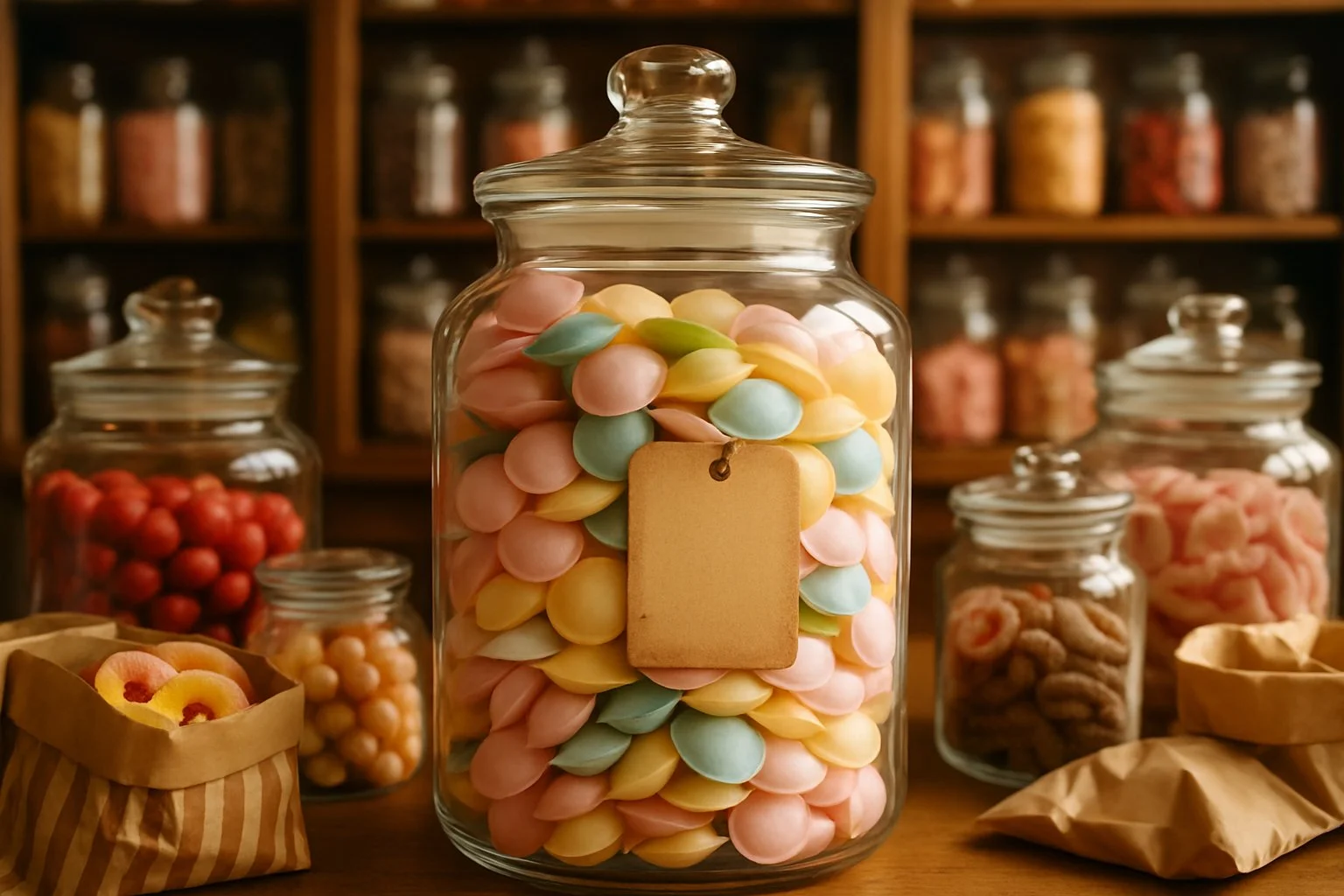
Flying Saucers landed in Britain from Belgium in the 1950s and quickly became a staple of school tuck shops. There’s something about their shape and fizz that just worked—kids couldn’t get enough.
Origins of Flying Saucers and Their Unique Flavour
Belgium in the 1950s gave us these oddball sweets. The Belgica company in Brussels, already experts at making communion wafers, figured out how to use their skills for something a bit more fun.
The timing couldn’t have been better. Sputnik went up in 1957, and suddenly everyone was obsessed with space. A sweet shaped like a UFO? Perfect.
What set flying saucers apart:
- That rice paper shell—melts away on your tongue
- Fizzy sherbet inside
- Bright pastel colours
- That light, crunchy texture
The sherbet centre—always a surprise—came in flavours like cherry, lemon, orange, and raspberry. Some kids would bite the edge to get at the sherbet, others just popped the whole thing in and waited for the fizz.
Flying Saucers in School Tuck Shops
Tuck shops and flying saucers went hand-in-hand. At break time, you could always count on finding them in the glass jars behind the counter. Cheap, cheerful, and impossible to resist.
Kids had all sorts of ways to eat them—some would try to split them open, others just crunched right in. The fizzy sherbet made every mouthful a little adventure.
Why tuck shops kept stocking them:
- Cheap and easy to sell
- Lasted ages on the shelf
- Universally popular
- Bright, inviting colours
In a 2009 poll, flying saucers came in 12th among Britain’s top sweets. They’re still around, still bright, still fizzy—and still bringing back memories of playgrounds and sticky fingers.
A Deep Dive Into Flying Saucers
Flying saucers owe their existence, weirdly enough, to a communion wafer dilemma in 1950s Belgium. Astra Sweets later picked up the baton, turning these sherbet-filled UFOs into the iconic treats we know.
The Belgian Connection and Communion Wafer Origins
The story starts in Antwerp. Belgica made communion wafers for churches, but then the Catholic Church decided wafers had to be made on consecrated ground. Suddenly, Belgica’s machines and recipes were left gathering dust.
Instead of shutting up shop, Belgica got creative. They used their wafer know-how to make sweet capsules, filling them with sherbet powder instead of, well, nothing.
They used:
- Wafer paper (rice paper)
- Sherbet powder
- Food colourings
The world was space-mad, and these little discs looked just like flying saucers from sci-fi movies. The timing couldn’t have been better.
How Astra Sweets Shaped Modern Flying Saucers
Astra Sweets took over and started making flying saucers on a bigger scale. They tweaked the recipe, made the shells more colourful, and tried out new sherbet flavours.
Modern flying saucer specs:
- About 2 inches wide
- Crisp rice/wafer paper shell
- Fizzy sherbet filling
- Colours: green, yellow, pink, blue, and more
Flying saucers are now officially recognised as a traditional product of Flanders—sort of a badge of honour for a sweet that started out as a workaround.
In Britain, they really took off in the ‘60s and ‘70s, thanks to the Space Race and a growing love of all things sci-fi. That 2009 poll? Still 12th place.
Astra Sweets still makes them, but plenty of others have jumped in too. The formula hasn’t changed much—wafer shell, fizzy sherbet, and that unmistakable zing.
Retro Sweets: Penny Favourites Through the Decades
If you grew up in the ‘70s or ‘80s, penny sweets were more than just a treat—they were a way of life. Flying Saucers led the charge, turning a trip to the shop into something almost magical.
Popular Sweets Alongside Flying Saucers
You can’t really talk about penny sweets without mentioning the classics that shared shelf space with Flying Saucers. Fruit Salads and Black Jacks—chewy, bold, and just a little bit mysterious—were everywhere.
Every sweet cost a penny, so with just a few coins, you could try a bit of everything.
Sherbet Lemons brought a different kind of thrill—the hard shell always gave way to that tongue-tingling sherbet inside.
Other favourites:
- Fruit Salads (fruity chews)
- Black Jacks (aniseed hits)
- Fizzy Cola Bottles
- Love Hearts
- Refreshers
Swizzels Matlow and Barratt made sure these treats were never in short supply. A few pence went a long way.
The Allure of Sherbet and Edible Paper
Flying Saucers flipped the script by wrapping sherbet in edible paper. That rice paper shell dissolved almost instantly, leaving just the tangy sherbet to fizz away.
They weren’t the only ones. Sherbet Fountains used liquorice sticks for dipping, and Dip Dabs let you scoop sherbet with a lollipop.
What made these sweets special? They were interactive. Eating them was half the fun—you got to play, taste, and sometimes make a mess.
Rice paper wafers turned up in other retro sweets too. Some brands experimented with new shapes and colours, but nothing quite matched the feeling of a Flying Saucer melting on your tongue.
Ingredients, Flavours, and Dietary Information
Flying Saucers keep things simple—mostly sugar and maize starch, so most versions are vegan by accident. They’re colourful, tangy, and dissolve before you know it.
What’s Inside: Typical Ingredients of Flying Saucers
There’s not much to them, really. Sugar, maize starch, water, and dextrose do most of the heavy lifting.
Main ingredients:
- Sugar
- Maize starch (for the shell)
- Water
- Dextrose
The sherbet gets its zing from tartaric acid or E334, and sodium hydrogen carbonate balances out the tartness.
Manufacturers toss in some flavourings and colourings—sometimes natural, sometimes those mysterious E-numbers.
The rice paper shell melts fast, making way for that fizzy centre. It’s mostly maize starch and water, pressed into that classic UFO shape.
Vegan-Friendly and Gluten-Free Sweets
Most flying saucers skip animal products—no gelatine, no fuss. That makes them a solid choice for vegans, though it’s always worth checking the label just in case.
Vegan notes:
- No gelatine in the basic recipe
- Plant-based colours like beetroot and curcumin
- Maize starch instead of wheat
They’re usually gluten-free too, thanks to the maize starch, but if you’re coeliac, it’s smart to watch for cross-contamination.
Supermarket versions tend to stick to the same formula, so you’ll find vegan-friendly flying saucers right next to other old-school treats like fizzy laces.
Tangy Flavours and Texture
Eating a flying saucer is a two-part experience. The shell disappears almost instantly, and then the sherbet does its thing—fizz, tang, and a quick sugar rush.
The outer shell doesn’t taste like much, which just makes the sherbet centre pop even more. Classic flavours lean citrusy, thanks to the tartaric acid.
Flavour notes:
- Mild rice paper start
- Sharp, tangy sherbet hit
- Fizzy, almost ticklish sensation
- Sweet finish
Some newer versions pack in even more sourness or brighter colours, but the basic formula hasn’t changed much.
That texture contrast—the crisp shell and powdery centre—makes flying saucers stand out from the crowd. It’s half nostalgia, half sensory adventure.
Penny Sweets and Childhood Memories
Penny sweets weren’t just about sugar—they were about growing up. We learned to count coins, make choices, and share (or not) with friends. For a few pence, you got a taste of independence and a pocketful of memories.
Sweets and School Life in Britain
Back then, nothing beat the thrill of penny sweet shopping as soon as the bell rang. We’d spill out onto the pavement, pockets jangling, arguing over which sugary treasures deserved our precious coins.
Flying Saucers—those were a hit on the playground. The sherbet would fizz and pop in your mouth, and half the fun was swapping with a mate if you’d picked something you didn’t really want. Some of us secretly hoped for a trade-up, though that rarely happened.
Popular school-time choices included:
- Blackjacks and Fruit Salads in their bright wrappers
- White chocolate mice (honestly, almost too adorable to eat)
- Rainbow flying saucers full of fizzy powder
- Chews that’d last a whole lesson if you didn’t chomp too fast
Retro sweets like these somehow stitched us together as classmates. Sharing a paper bag of penny mix was practically an unspoken ritual. Sometimes we’d scrape together our coins for a bigger haul—felt like we were clever little entrepreneurs.
That sweet shop just down from school? It was our unofficial clubhouse. We’d memorized which jars hid the best stuff and exactly how much we could get for the change in our pockets. Funny how those memories stick.
The Lasting Influence of Pocket Money Treats
Our first lessons in budgeting came from managing sweet money. We’d count out coins with sticky fingers, sometimes agonizing over which penny sweets to get.
Some of us hoarded coins all week for a Friday splurge. Others, well, the money barely made it past the corner shop door. Those early choices—save or spend?—stuck with us, probably more than we realized.
Key money lessons from penny sweets:
- Counting change without messing it up
- Weighing up saving against that itch for something sweet
- Picking favorites when you can’t have everything
- Realizing pretty fast that money runs out
Seeing retro sweets in shops now, it’s hard not to feel a pang of nostalgia. They tug at memories of simpler days, when the biggest dilemma was flying saucers or chocolate mice. Those treats, small as they were, ended up woven into the fabric of growing up British.




Leave a Reply