
Just before the six o’clock news each evening, British families huddled around their TVs for five minutes of pure whimsy. The Magic Roundabout first aired on BBC Television on 18 October 1965 and ran until 1977, charming viewers with its peculiar characters, surreal humour, and dreamlike garden setting. The show started as a French stop-motion series, but Eric Thompson’s witty English narration turned it into something only Britain could’ve produced.
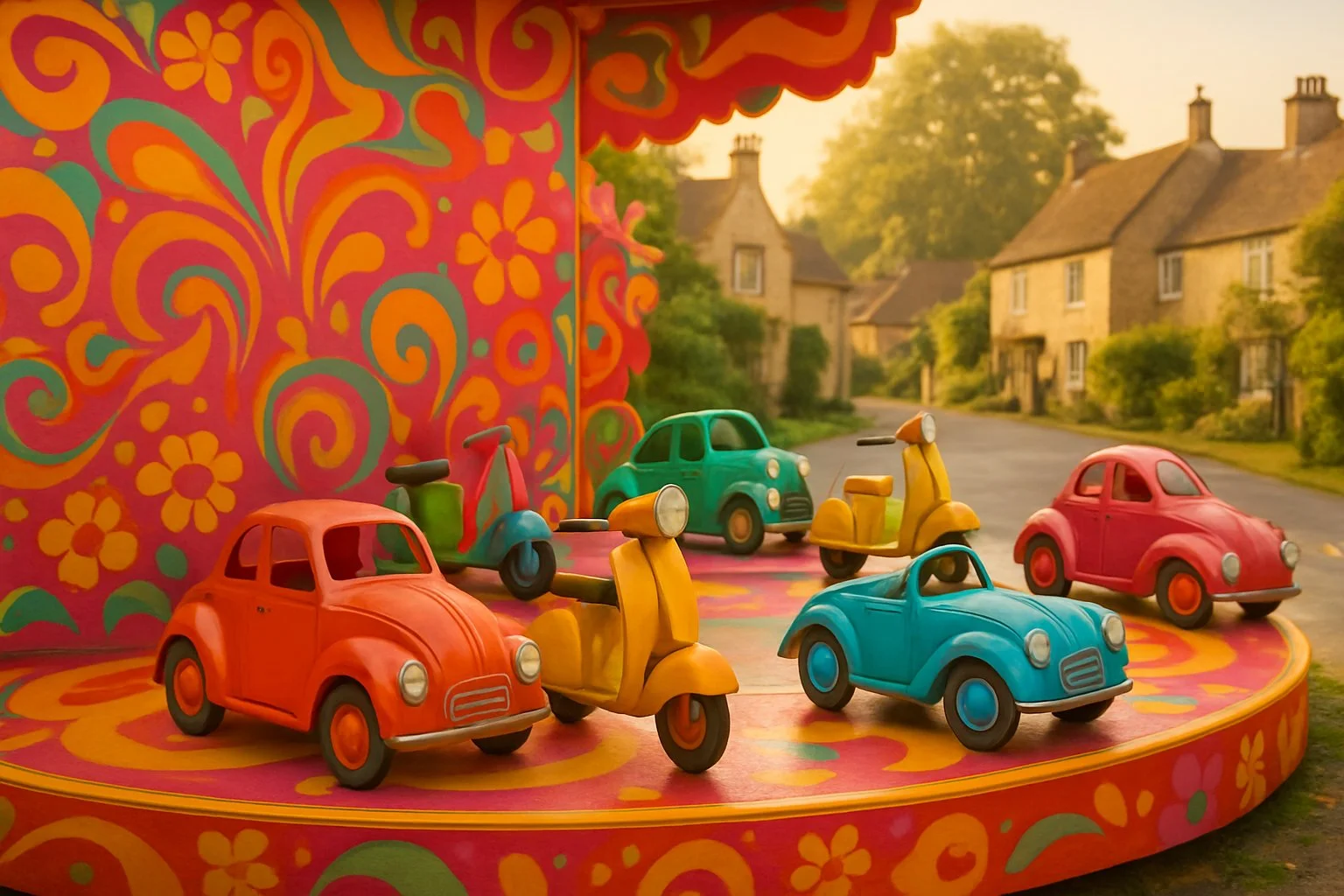
The programme’s blend of innocent children’s entertainment and sly wordplay somehow managed to hook both kids and their parents. Dougal the dog, Dylan the rabbit, and Zebedee—just to name a few—became staples in households up and down the country. There was just something about that odd visual style and offbeat storytelling; it felt a bit like a dream you could tune into, and honestly, maybe it was.
Even now, The Magic Roundabout sits in a special corner of TV history. Its magic went far beyond those five-minute slots before tea, sparking films, toys, and a heap of memories for anyone who still grins at the sound of Zebedee’s catchphrase.
The Magic Roundabout: Format, 1960s Appeal, and Psychedelic Allure

The Magic Roundabout didn’t just entertain; it cast a spell. Five-minute episodes, bursting with colour, surreal characters, and a sort of unhurried charm, grabbed British audiences and never really let go. Kids and adults alike found themselves waiting for the news, but secretly hoping the Roundabout would never end.
Iconic Five-Minute Episodes and Visual Style
Every episode zipped by in just five minutes. The BBC slotted them in at 5:50 pm on weekday evenings, right before the news—prime time for a nation’s tea and telly ritual.
Serge Danot, the French creator, built the sets and filmed the puppets painstakingly, frame by frame. Stop-motion gave the show a chunky, three-dimensional look that just didn’t exist in other children’s programmes back then. Everything glowed in bold, saturated colours, almost like someone had cranked up the brightness just for fun.
Dougal, the shaggy orange dog with a sugar habit; Zebedee, the magical jack-in-the-box; Dylan, the laid-back, guitar-strumming rabbit; Ermintrude, the pink cow with red spots; Florence, the sensible girl; and Brian, the ever-optimistic yellow snail—they all had looks you couldn’t mistake for anyone else.
Eric Thompson didn’t bother translating the French scripts. He just watched the footage and wrote entirely new dialogue for British viewers, which, frankly, is exactly the sort of thing you’d expect in the 1960s.
1960s Psychedelia: Colours, Music, and Surrealism
The Magic Roundabout soaked up the 1960s counterculture, even if the kids didn’t quite get the joke. Parents, though? They knew. The show’s surreal mood and sideways humour gave it a psychedelic edge that felt right at home with the times.
Dylan the rabbit, for example—he wore clothes, strummed his guitar, and had a vibe that made you wonder if he was up to more than carrot gardening. The character designs themselves, with their dreamy, almost oddball looks, only added to the trippy atmosphere.
That barrel organ theme tune? Once you heard it, you couldn’t forget it. The music, the colours, the way the characters bounced off each other—it all just fit, somehow, into the wild spirit of the decade.
The stories barely bothered with traditional plots. Most episodes wandered through five minutes of nonsense, which, looking back, feels like a perfect match for the anything-goes attitude of 1960s Britain.
Cult Status and BBC Teatime Legacy
At its peak, over eight million people tuned in. Adults watched while waiting for the news, but let’s be honest—they weren’t just passing time. The show’s sly commentary and gentle pokes at the real world kept everyone amused.
When the BBC tried moving the show to 4:55 pm in 1966, working adults kicked up such a fuss that the network had to move it back. That’s real devotion.
Eric Thompson packed his scripts with topical jokes and cheeky political nods. Dougal once took his case to Parliament, proposing a four-day week and a 47-minute hour—a wink at Britain’s three-day week policy. He even threatened to “tell NATO” when he got cross, and slipped in the odd joke about voting Conservative.
The show ran for 450 episodes from 1965 to 1977, and its cult status just kept growing. Even after the original run, films and revivals popped up, and the fondness never really faded.
Characters and Unforgettable Voices

The cast of characters was as odd as it was lovable. Eric Thompson didn’t just dub the French voices; he reinvented them, turning these puppets into British icons with quirks and personalities you couldn’t forget.
Dougal: The Grumpy Yet Endearing Star
Dougal, with his shaggy orange fur and insatiable sweet tooth, made a career out of demanding sugar lumps. He grumbled and moaned, but somehow, that only made him more endearing—especially to adults who recognized his dry wit.
He’d riff on the news of the day, sometimes proposing outlandish ideas like a four-day week, all so he could have more time to lounge in the sun. When things didn’t go his way, he’d mutter about telling NATO, and honestly, who could blame him?
Underneath it all, Dougal cared about his friends, even if he’d never admit it. That mix of grumpiness and heart made him the unlikely hero of teatime.
Florence, Ermintrude, and Brian: The Enchanting Ensemble
Florence kept her blue dress neat and her friends in line. She was the sensible one, always ready to smooth things over when tempers flared.
Ermintrude, the pink cow with red spots and a fancy hat, brought a touch of glamour and a lot of laughs. She could be a bit vain, but she meant well.
Brian, the yellow snail, always saw the bright side—even if he moved at his own pace. His optimism played off Dougal’s grumpiness perfectly.
Zebedee: The Iconic Spring-Loaded Guide
Zebedee bounced into scenes with a “boing” that still echoes in a lot of memories. That spring base, wild moustache, and sudden arrivals gave him an otherworldly vibe. He’d pop up just when things needed nudging along, usually to announce, “Time for bed.” For plenty of kids, that was the last word before lights out.
Dylan and Mr Rusty: Counterculture and Originality
Dylan, the rabbit, was the show’s nod to 1960s counterculture. He wore clothes, strummed his guitar, and spoke with a laid-back, almost sleepy charm. Parents sometimes wondered about his garden, but the kids just thought he was cool.
Mr Rusty ran the roundabout at the centre of it all. He was older, patient, and the closest thing to a grown-up in this madcap world. His calm presence balanced out the chaos, and honestly, every neighbourhood could use a Mr Rusty.
The Show’s Creators and Narrators
The Magic Roundabout owes its start to a French animator, but it really found its soul in the hands of a British actor who tossed the script and started anew. The show’s look and sound came from a small team of creative oddballs who, somehow, made magic.
Serge Danot and the French Origins
Serge Danot dreamed up Le Manège enchanté in France back in 1964. He’d been working in advertising before pitching his puppet show to French TV in 1963.
Money was tight, so Danot found a backer in Claude Refabert from Clodrey factories, who agreed to help at a toy fair. Their partnership led to DANOT (Distribution Animation New Technical Organisation).
The French series ran for 750 episodes, each five minutes long, starting in October 1964 on ORTF’s first channel.
Eric Thompson’s British Reimagining
Eric Thompson didn’t just adapt the show for British audiences—he reinvented it. The BBC initially called the French series “charming but difficult to dub,” but when they changed their minds, Thompson ran with it.
He watched the French footage, ignored the scripts, and wrote his own dialogue. The result? A version that sounded nothing like the original, but somehow made perfect sense to British ears.
The BBC aired 441 episodes from 18 October 1965 to 25 January 1977 on BBC1. Thompson voiced every character and narrated the whole thing himself. His daughter, Emma Thompson, later said he felt most like Brian, and based Ermintrude’s quirks on his wife, Phyllida Law.
Thompson’s dry humour and sharp writing made the show a hit with grown-ups and kids alike. At its peak, eight million viewers tuned in.
Ivor Wood and the Animation Team
Ivor Wood teamed up with Danot to bring the puppets to life. Wood and his French wife Josiane helped launch the original series in 1964, working side by side with animator Enrique Nicamor to shift those tiny dolls, frame by frame.
Jean-François Corneille and Raphaël Estève built the sets, while Aline Lafargue wrote more than 200 scripts for the first batch of episodes.
Stop-motion was fiddly and slow, but the results were worth it. That hand-crafted, slightly wobbly look became the show’s signature.
Notable Voices and Family Connections
Fenella Fielding lent her voice to Madam Blue in the 1972 English film Dougal and the Blue Cat, while Eric Thompson handled the rest. After Thompson passed away, Nigel Planer picked up narration for Channel 4’s reruns in the 1990s, mimicking Thompson’s style for 52 episodes in 1991 and 43 more in 1993.
Patricia Danot voiced Margote in the French version. The Thompson family kept its ties to the show strong, with Emma Thompson penning forewords for her dad’s stories in 1998.
Legacy, International Reach, and Later Adaptations
The Magic Roundabout’s charm didn’t stop at the BBC or even at Britain’s borders. It found new fans abroad, got dusted off for reboots in the ‘90s, and even starred in a feature film. Not bad for a five-minute puppet show.
Global Influence and Broadcasts on BBC, Rai, and More
From 1965 to 1977, the show became a fixture of British teatime viewing, slotted snugly before the six o’clock news. Kids, parents—everyone seemed to tune in, just as the kettle boiled.
Other countries caught on too. Broadcasters across Europe and beyond picked up the series, letting Dougal, Florence, and Zebedee loose in new languages. Each country could add its own twist to the narration, but kept the original French animation.
Eric Thompson’s BBC version, though, became the gold standard for English-speaking fans. His witty, slightly weary scripts turned Le Manège Enchanté into a cultural phenomenon that stuck around long after the last “boing” faded.
New Episodes, Remakes, and A Film
After Eric Thompson passed away, Channel 4 decided to bring the magic back in 1992 with new episodes. Nigel Planer stepped in as narrator, and you could tell he was really trying to channel Thompson’s unmistakable warmth. Still, something about those newer episodes just didn’t quite capture the old spark for most of us who grew up with the original.
Then there was Dougal and the Blue Cat in 1972. That movie took the familiar five-minute burst of whimsy and unraveled it into a whole adventure—full-length, no less. Somehow, the characters managed to hold their own, stretching out into this bigger world but never really losing that little spark that made them special. Funny how some things just stick with you.
Collectibles, Nostalgia, and Enduring Fan Community
The Magic Roundabout sparked a devoted following that just won’t let go, even all these years after the original broadcasts faded from the airwaves. Folks who grew up with the show still light up at the mention of its offbeat characters or Zebedee’s classic “time for bed.” Honestly, who could forget that?
Merchandise and collectibles kept the spirit alive, scattered across shelves and attics everywhere. DVDs have given new generations a chance to stumble onto those original episodes, and somehow Eric Thompson’s scripts still find their way into living rooms. The show’s cult status—well, it’s hard to overstate how it lingers as a beloved piece of 1960s and 1970s British children’s TV.






Leave a Reply