
From 1955 to 1976, the BBC television series Dixon of Dock Green shaped how an entire generation of British children viewed the police, largely through the comforting greeting “Evening All” delivered by its kind-hearted protagonist, PC George Dixon. Actor Jack Warner brought the character to life with such warmth that parents would invoke Dixon’s name to encourage good behaviour, reminding their children that the friendly bobby was always watching over the neighbourhood.
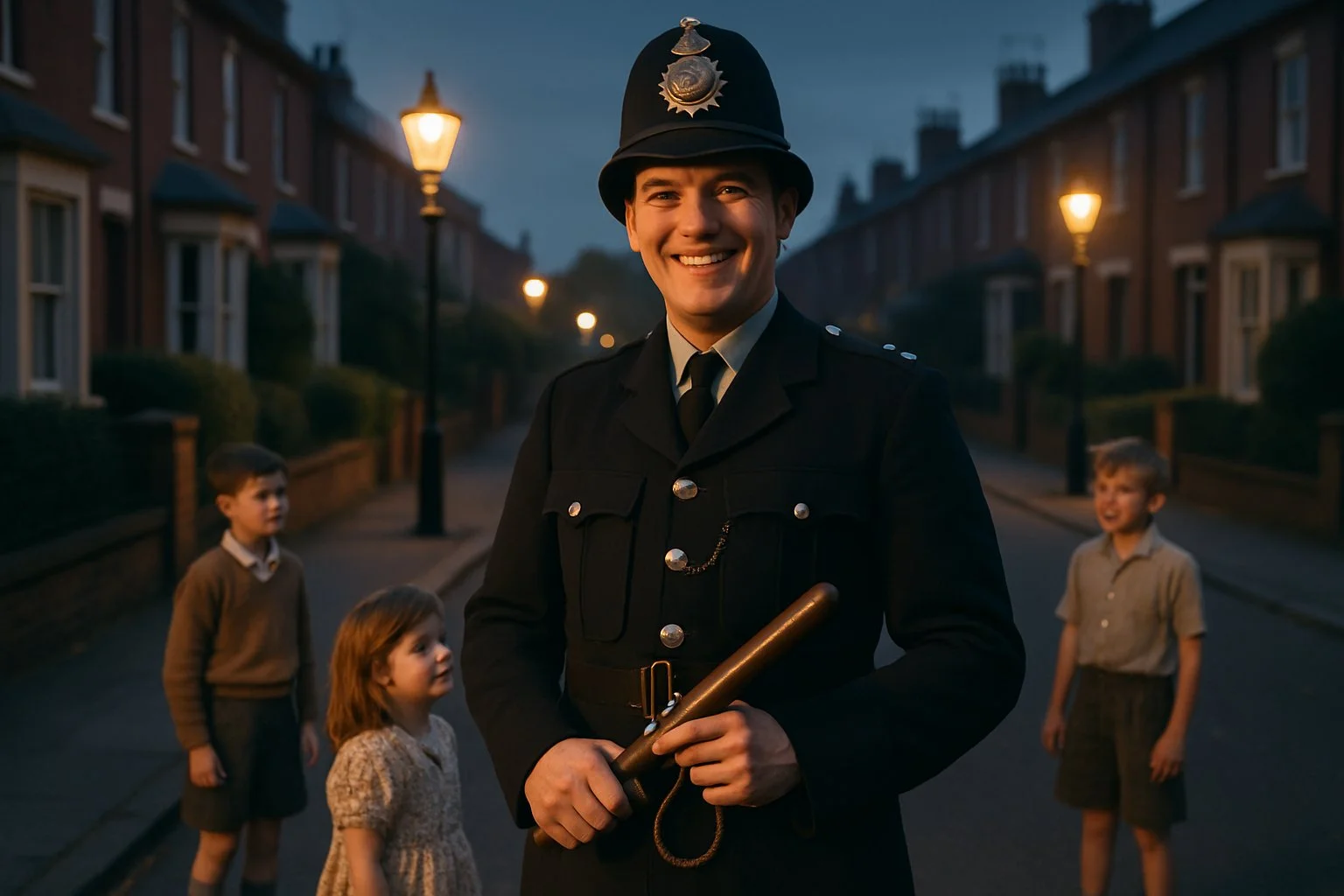
Back then, the show offered a version of policing that felt downright comforting, especially as Britain tried to patch itself together after the war. PC Dixon didn’t need to throw his weight around; he leaned on common sense and a knack for understanding people. He’d sort out small-time trouble with a gentle word and a knowing smile—honestly, it was the sort of approach families wanted to believe could keep the peace.
The series ran for a whopping 432 episodes, and somewhere along the way, it became more than just a bit of telly. For many, it shaped how they thought about community policing—maybe even what they expected from those in uniform. “Evening All” still echoes in the minds of folks who remember those quieter evenings, when the telly flickered with black and white reassurance.
The Origins of Dixon of Dock Green

Dixon of Dock Green sprang from a 1950 film and then became one of Britain’s most beloved television fixtures, with Jack Warner donning the bobby’s helmet week after week for over two decades.
Creation of the Series
The BBC rolled out Dixon of Dock Green in 1955 as a half-hour drama that quickly turned into a Saturday night ritual for families across the country.
Jack Warner took on the role of PC George Dixon, the friendly neighbourhood bobby who patrolled Dock Green—a fictional patch of East End London. Funny to think Warner was already 60 when he started. He kept at it until he was 80, which is a run you don’t see much these days.
The show lasted 21 years, from 1955 to 1976, with the BBC churning out hundreds of episodes. Dixon stood for a kind of policing rooted in community connections, not chase scenes or shootouts.
Ted Willis and the Inspiration Behind the Show
Ted Willis, the man behind the curtain, created George Dixon and penned many of the scripts over the years. He pulled from his own childhood in working-class London, wanting to show that policing could be about service, not just enforcement.
Willis believed police officers could be the sort of folks who helped solve everyday headaches. He based Dixon on real coppers he’d known—ordinary blokes who walked their beats and actually remembered your name.
The Blue Lamp and TV Adaptation
George Dixon first wandered onto screens in the 1950 Ealing Studios film The Blue Lamp, though in that story, he didn’t make it out alive—a young criminal shot him.
But the film struck a chord, so the BBC asked Willis to bring Dixon back for telly. They just… pretended his death hadn’t happened. On TV, Dixon was alive and well, as if nothing had ever gone wrong.
The Blue Lamp had already set Dixon up as a symbol of decent, community-first policing. The BBC knew people wanted more of that, so Jack Warner stepped right back into the role, bringing the same warmth and steady hand that worked so well on the big screen.
Jack Warner as George Dixon

Jack Warner really became George Dixon—there’s no other way to say it. For 21 years, he played the sort of copper you wished would stroll down your street. His Dixon wasn’t just a character; he was a fixture in British living rooms, quietly shaping how people saw the police and maybe even each other.
Casting and Long-Term Impact
Warner was 60 when he first pulled on the uniform in 1955. That was a bit unusual—most police dramas leaned on younger, flashier actors. But Warner’s age gave Dixon a fatherly air, and honestly, it worked. People trusted him.
He stuck with the role for 367 episodes over 21 years, which is wild when you think about it. Whole generations grew up with the same steady face on their screens. “Evening all”—his catchphrase—became so famous that it nearly swallowed up the rest of his career. Before Dixon, Warner had his share of film and stage roles, but this was the one that stuck.
Character Traits That Resonated with Viewers
George Dixon wasn’t chasing hardened criminals. He dealt with the small stuff—petty squabbles, lost dogs, the odd bit of mischief. He acted as a community helper, not some hard-nosed detective.
He showed patience, offered advice, and helped sort out neighbourhood spats. Dixon never reached for violence or intimidation. He just used his head and a bit of kindness.
Warner brought genuine warmth to the role. Dixon felt like a father figure who truly cared about his patch. That gentle authority? It matched what people wanted to believe about their own local bobbies.
Jack Warner’s Influence on Public Perception
Warner’s steady presence shaped how folks saw the police for years. He made the constable seem approachable—someone you’d nod to on the street, not cross the road to avoid. Kids who watched the show grew up thinking coppers were there to help, not hassle.
That idealised version of policing stuck in people’s minds, even as the real world changed around them. Dixon stood for order and safety, and Warner’s performance made you believe problems could be sorted out with a chat and a handshake.
Later police dramas went grittier and more realistic, but that gentle, reassuring copper? He set the standard.
The Reassuring ‘Evening All’ and Life in the 1950s
Dixon of Dock Green brought a familiar, friendly face into British homes. Through its gentle stories and that famous opening greeting, it painted a world where community policing meant knowing your neighbours and handling trouble with a bit of understanding.
The Famous Greeting and Its Meaning
Every episode started with PC George Dixon’s modest salute and those two words: “Evening All.” Simple, but it stuck. Across the country, families recognised it instantly.
It wasn’t just a hello. It said Dixon was one of them, someone you could trust. Kids in the 1950s heard it week after week, and it became part of the background noise of family life.
Warner played Dixon as a fatherly sort, genuinely invested in the people on his beat. That warm “Evening All” set the tone for everything that followed. It reassured viewers that the police were there to help, not to frighten.
Building Trust in the Local Community
The show made Dixon someone who actually knew the folks around the London police station. He understood their problems and treated them as people, not just another case. That approach made the whole thing feel safe, almost cozy.
Dixon worked as a neighbourly bobby, not some distant authority. He’d chat with shopkeepers, help the elderly, and call the local children by name. For 1950s families, it was reassuring to see the police on their side.
The programme focused on those small, everyday moments between officers and the people they served. Dixon sorted things out with a bit of conversation and a lot of understanding. Parents didn’t mind the kids watching—law enforcement came across as helpful, not heavy-handed.
Policing Petty Crime with Common Sense
Most of the time, the show dealt with minor offences—shoplifting, vandalism, a bit of petty theft. Dixon handled these with patience and a bit of old-fashioned wisdom.
He’d use common sense to get to the bottom of things. Sometimes, a stern talking-to was all a young troublemaker needed. It taught kids that rules mattered, but also that adults could be fair.
There weren’t any wild shootouts or car chases. Instead, the police kept the peace through respect and by actually knowing the people in their care.
Cultural Impact on British Society and Policing
Dixon of Dock Green didn’t just entertain—it shaped how families saw the police for over twenty years. The programme left a mark, creating an image of law enforcement that stuck around long after the credits rolled.
The Show’s Influence on Children and Families
Parents all over Britain pointed to Dixon as an example—polite, fair, and always ready to help. The friendly constable became a household name, and families often watched together.
“Evening all” slipped into everyday talk. Kids copied Dixon’s manners and learned that the police were helpers, not something to fear.
The show’s clear moral compass fit right in with post-war British values. Dixon never used violence unless there was no other way and always treated people with dignity. Families used the stories to talk about right and wrong at home.
Plenty of kids who grew up in the 1950s and 1960s saw Dixon as a role model. Some even joined the police because of him—imagine that.
Enduring Legacy in Popular Culture
Over 432 episodes, from 1955 to 1976, Dixon chronicled social changes in a Britain that was shifting fast, but he held onto his core values.
Dixon’s blue lamp and salute became icons—everybody knew them. Other shows and comedians borrowed from Dixon, and he’s still a touchstone for anyone feeling a bit nostalgic for those old black-and-white evenings.
Before the TV series, the character had already popped up in films. That just made his influence even bigger, cementing him as a fixture in British cultural memory.
Changing Perceptions of the Police Force
The programme painted a picture of policing that, honestly, just didn’t match up with the messier reality. Dixon was that neighbourhood bobby everyone seemed to know, always ready with a nod or a quiet word at the station. It’s hard not to look back and smile at that idea—even if it was a bit of wishful thinking.
Over time, though, things shifted. You didn’t see as many officers living right above the station anymore. The days of the friendly, familiar constable slowly faded, replaced by these more distant, centralised systems that felt a bit colder and, well, less personal.
Then came the ’70s, and TV started to catch up. Shows like Z Cars brought a sharper edge, tossing aside the comforting simplicity of Dixon’s world. Suddenly, police officers on screen faced real messes—moral grey areas, complicated cases, and a public that didn’t always trust them. Maybe it was inevitable, given how much British society was changing, but sometimes I miss the old stories, even if they were too neat.






Leave a Reply