
When Doctor Who first hit the airwaves in the 1960s, nobody really thought a family show about time travel would end up scaring kids so much they’d hide behind their sofas.
Those Daleks, with their shrill battle cries, turned countless British living rooms into makeshift fortresses—kids everywhere diving for cover behind the nearest bit of furniture whenever those metal nightmares rolled onto the screen.
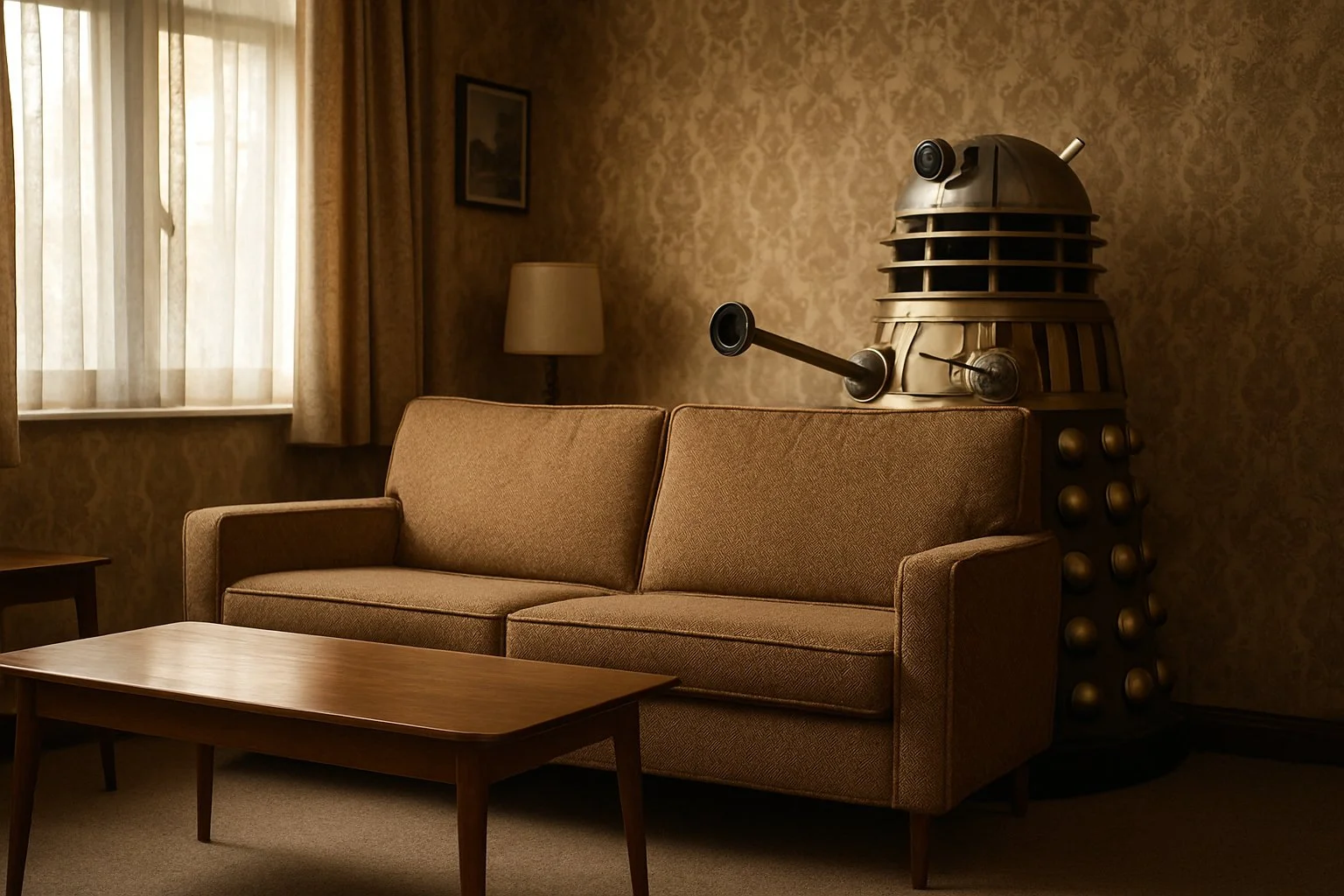
It all started back in 1963, when the Daleks stomped onto the scene and, almost overnight, captured everyone’s imagination. Doctor Who had begun as an educational show, but the Daleks changed everything. Families gathered round the telly, some of us peeking out from behind the cushions, others pretending we weren’t scared at all.
That old phrase—”hiding behind the sofa”—got so tangled up with Doctor Who that it’s now a piece of British nostalgia, right up there with jam sandwiches and rainy Saturday afternoons. Honestly, it’s wild how these pepper pot-shaped aliens managed to both terrify and fascinate a whole generation, sparking a craze that still echoes through British pop culture even now.
Dalek Terrors: The 1960s Living Room Phenomenon
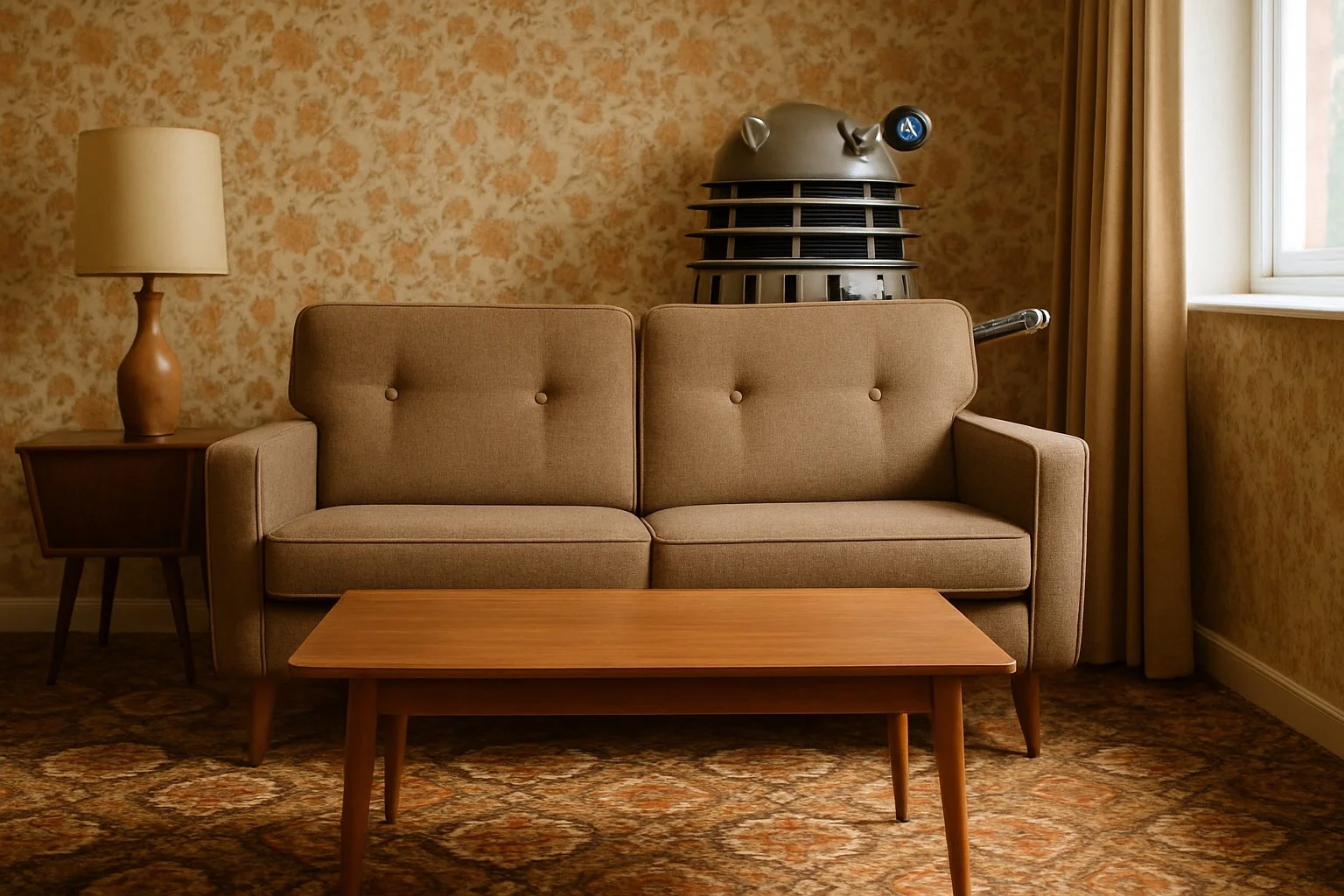
The Daleks didn’t just appear—they took over. Suddenly, Doctor Who wasn’t just a Saturday teatime show; it was a national obsession. Those metallic voices barking “EXTERMINATE!” sent kids tumbling behind settees, while parents probably pretended not to be rattled themselves.
Early Encounters With the Daleks
When the Daleks first rolled across our screens in 1963, they caught the BBC completely off guard. These weren’t the usual monsters, not by a long shot.
What made them special:
- That bizarre, robotic look—almost like nothing else on TV
- Voices that sounded like angry toasters
- That unforgettable battle cry: “EXTERMINATE!”
- The way they glided, not walked, across the studio
Kids everywhere couldn’t decide if they were more scared or fascinated. The Daleks just looked and sounded so different from the usual baddies.
And then, right when you thought they’d been dealt with, back they came in 1964. You just couldn’t keep them down, and honestly, that’s how they cemented their spot in the nation’s imagination.
Why the Sofa Became a Sanctuary
That whole “hiding behind the sofa” thing? It wasn’t just a joke. It was real, even if we all exaggerated how much we did it. The Daleks genuinely freaked us out, but we couldn’t look away.
Where we hid:
- Wedged behind the settee cushions
- Under the coffee table (if the dog wasn’t already there)
- Peeking out from behind an armchair
- Through gaps in our fingers, like that would actually help
Those chunky old sofas and thick curtains made perfect hiding spots. The living room became a fortress, and the sofa was our shield against those relentless Daleks.
Parents, bless them, watched us more than the show sometimes. It became a weird sort of family ritual—everyone sharing the same shivers and laughs.
Family Watching Traditions and Shared Fears
Saturday teatimes in the 1960s had a kind of magic. Families gathered round the telly—sometimes still black and white, sometimes with the odd bit of static—and Doctor Who was the main event.
How we watched:
- The whole family crammed on the sofa
- Whispered debates during the breaks
- Giddy anticipation all week long
- Squeals and gasps when the Daleks showed up
Parents would get just as drawn in as the kids. The Daleks brought real suspense, and everyone felt it. Some families even made little traditions out of it—special snacks, or someone always turning the lights up when things got too tense.
The TV sat at the heart of the living room, and back then, the way the furniture was set up, everyone faced the same direction. When the Daleks appeared, the whole room seemed to hold its breath.
Birth of a Monster: The Arrival of the Daleks
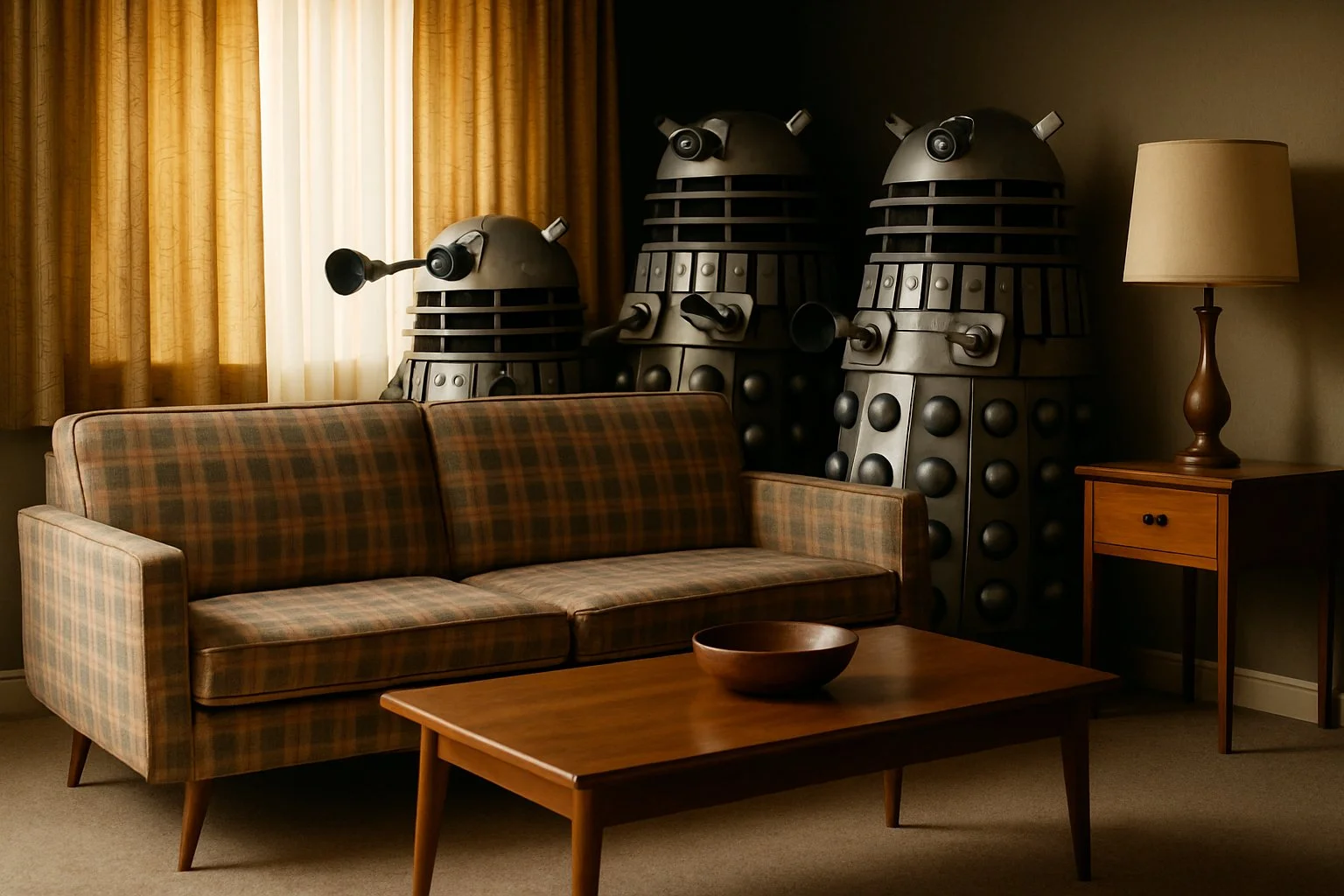
The Daleks didn’t just show up—they exploded onto the scene in 1963, and suddenly Doctor Who was a phenomenon. Terry Nation’s oddball creation became the show’s most famous villains, and those voices could send a shiver down anyone’s spine.
Introduction of the Daleks in Doctor Who
The Daleks made their debut in the second Doctor Who story, ‘The Dead Planet.’ The First Doctor, along with Ian, Susan, and Barbara, landed on Skaro and ran straight into these metal nightmares.
That first story painted them as ruthless, tank-like creatures—mutants hiding inside metal shells. We only got the briefest glimpse of what was inside, just enough to fuel our nightmares.
The Daleks proved so popular, they basically saved Doctor Who from getting the axe. Viewership shot up, and suddenly everyone was talking about the show.
There’s that one scene—burned into my memory—where Ian climbs inside an empty Dalek shell to help the group escape. It felt almost taboo, seeing what was inside.
Distinctive Design and Chilling Voices
Raymond Cusick came up with the Daleks’ look, and honestly, he nailed it. Even now, you can spot a Dalek a mile away: domed head, eyestalk, plunger, gunstick—the works.
They don’t walk, they glide, which makes them feel so alien and unstoppable. That metal shell? It just screamed “don’t mess with me.”
But it was the voices that really got under your skin. That flat, mechanical drone, barking out “EXTERMINATE!”—it’s enough to make anyone duck for cover.
They didn’t show emotion, ever. That made them even scarier. You couldn’t reason with them, couldn’t beg for mercy. They just kept coming.
Terry Nation’s Inspiration
Terry Nation dreamed up the Daleks as the ultimate bad guys. He pulled from the horrors of World War II—especially the Nazis and their obsession with purity.
He wanted villains that embodied pure hatred and the urge to wipe out anything different. Every Dalek story has a bit of that philosophy baked in.
As for the name “Dalek,” well, Nation claimed he spotted it in an encyclopedia—”DAL” to “LEK”—but I’m not sure anyone really buys that. The story kept changing, which just adds to the legend.
Funny thing is, Nation mostly wrote comedy before this. Maybe that’s why the Daleks have such perfect timing—their entrances always seemed to hit just right.
Sofa Shielding: Children’s Reactions and Rituals
The Daleks didn’t just invade our screens—they took over our living rooms. Kids everywhere became experts at hiding and inventing new rituals to survive those Saturday night scares.
Memorable Hiding Techniques
Sure, behind the sofa was the classic move, but we got creative. Some of us clutched cushions like shields, peeking just far enough to catch the action.
Others mastered the peek-and-cover—watching until that voice started up, then vanishing behind the nearest chair. Coffee tables turned into bunkers, and blankets became makeshift armor.
Where we hid:
- Armchairs, if you could claim one
- Under blankets (bonus points for bringing a torch)
- Doorways for a quick getaway
- Right behind mum or dad—safest spot in the house
A lot of us watched through our fingers. Somehow, it felt safer that way, like the Daleks couldn’t get you if you squinted.
Stories From 1960s Viewers
Families got wise to the Dalek routine pretty fast. Parents would settle in knowing they’d soon have a small child glued to their side.
Some kids would check the TV listings in advance, bargaining for the best hiding spot if Daleks were on that week. There were even families who rearranged the living room just for Doctor Who night.
How families coped:
- Older siblings acting as lookouts
- Parents narrating to keep things light
- Younger kids sitting closest to the door, just in case
- Lights staying on for the really scary bits
Sometimes, all it took was a quiet “they’re gone now” from mum or dad, and you’d dare to look again.
Impact on Childhood Imagination
All that hiding and peeking shaped us in ways we probably didn’t realize. We learned how to manage fear—just enough to get the thrill, but not so much we couldn’t sleep.
Those little rituals made watching Doctor Who almost interactive. It wasn’t just sitting there; it was an event, a game, a challenge.
What we got out of it:
- Figuring out how to face scary stuff, even if just a bit
- Making up new hiding games for playtime
- Bonding with family, even if it meant squishing together on one sofa
- Letting our imaginations run wild—Dalek chases in the garden, anyone?
Even now, I can’t look at a chunky old sofa without thinking of those Dalek-filled evenings.
Dalekmania: The Cultural Craze
When the Daleks arrived, they didn’t just stay on TV—they took over Britain. Kids played Daleks in the schoolyard, shops filled up with weird and wonderful Dalek toys, and suddenly those metal monsters were everywhere.
Explosive Popularity Across Britain
It was like someone flipped a switch in December 1963. The Daleks became an overnight sensation. Kids wrote to the BBC, desperate to know what would happen to the Daleks after they were “destroyed.” The BBC even handed a couple of Dalek props to Barnardo’s to clear some space.
Playground Crazes
Playgrounds turned into battlefields. Kids stomped around, arms out, shouting “EX-TER-MI-NATE!” at anyone in range.
One dad found his flowerbed had been “exterminated” by his son, and some schools even kept a Dalek model in a cupboard—though one poor kid got locked inside as a prank.
By November 1964, the second Dalek story pulled in 12.4 million viewers. Seeing Daleks rolling across Westminster Bridge? Unforgettable.
Merchandise and Toys Craze
Entrepreneur Walter “Tuck” Tuckwell saw the Dalek craze coming, even if the BBC didn’t. They told him to forget it—Doctor Who would drop the Daleks after six episodes. Shows what they knew.
Dalek Stuff Everyone Wanted
It started with collectible sweet cigarette cards, then ballooned into:
- Battery-powered Dalek toys from Louis Marx
- The “Tricky Action Dalek” (a steal at 17 shillings and 11 pence)
- Dalek playsuits with plastic domes and PVC skirts (£8)
- Books, games, and all sorts of oddities
The Dalek playsuit was the holy grail. Shops sold out before Christmas 1964, and some folks paid crazy prices to get one. Orders kept coming in months later.
Of course, there were hiccups. The plastic domes made it hard for kids to see, and after some close calls, the suits got a quick redesign. Then a factory fire finished off the manufacturer—just another twist in Dalek history.
Daleks in Popular Media Beyond Doctor Who
The Daleks didn’t stay put. They started popping up all over the place—sometimes in the weirdest spots.
Music and Theatre
The Go-Go’s gave us “I’m Gonna Spend My Christmas with a Dalek”—a novelty song about a Dalek befriending a little girl. It never made the charts, but it’s a fun bit of trivia.
Terry Nation wrote “The Curse of the Daleks” for the West End, and those metal monsters even got their own comic strip in TV Century 21.
Public Stunts
The BBC pulled some wild stunts—Daleks trying to catch London buses or shopping for veg at the market. It was surreal, but that’s what made Doctor Who so special.
And then there were the Peter Cushing films—”Dr Who and the Daleks” and “Daleks’ Invasion Earth 2150 AD”—turning TV magic into big-screen adventures. Merchandising at its finest.
Iconic Dalek Moments That Sent Viewers Behind the Sofa
Those pepper pot-shaped aliens from Skaro really made their mark. Every time that metallic voice echoed through a living room, you could almost hear sofas creak as families scrambled for shelter. The Daleks didn’t just scare us—they became a part of growing up in 1960s Britain.
Classic Episodes and Scenes
The Daleks made their chilling debut back in 1963, right in the episode simply titled “The Daleks.” That first meeting—seeing those tank-like shells rolling into view—hit different. The weird, almost insectoid design and those grating, metallic voices? Instant nightmare fuel for anyone who tuned in.
Then came “The Dalek Invasion of Earth,” and suddenly the threat wasn’t just on some distant planet. Daleks gliding past Big Ben, rolling through Trafalgar Square—London itself felt invaded. Kids across the country probably wondered if their own streets were next.
“Genesis of the Daleks” peeled back the curtain on these monsters’ beginnings. Davros, the mad genius behind it all, was arguably even more unsettling than the Daleks themselves. Those scenes where you watch the Daleks being created—there’s something about that cold, clinical evil that just sticks with you.
And who could forget the Doctor himself crammed inside a Dalek shell in “The Space Museum”? The props team had to tweak the costume for that scene, and honestly, watching the Doctor trapped like that made for some seriously tense TV.
The Power of ‘Exterminate!’
“Exterminate!”—just that one word, blasted out in that tinny, emotionless bark, could clear a room faster than the ice cream van on a rainy day. It’s probably one of the most iconic catchphrases in TV history. No warmth, no mercy, just pure, mechanical menace.
Whenever a Dalek spoke, you knew things were about to go sideways. That grating, electronic voice—so cold, so final. It was like the universe itself was saying, “No second chances.”
Daleks didn’t bother with anger or rage; they just saw everything else as beneath them, something to wipe out. That kind of icy logic—no pleading, no hope—was ten times scarier than any monster just out for blood.
And those weapons. The death ray, the rising whine before a blast—if you heard that, you braced yourself. The Daleks rarely missed, and everyone knew it.
Notable Broadcasts and BBC Promotion
The BBC cottoned on pretty quickly that they had something special (and terrifying) on their hands. Saturday teatime? That became Dalek time. Families would huddle around the telly, half dreading, half loving the fear. The Beeb splashed the Daleks all over their promos—they knew what got people watching.
Then came “Dalekmania.” Suddenly, the monsters weren’t just TV villains—they were everywhere. Toy shops filled up with Dalek models, and playgrounds echoed with kids shouting “Exterminate!” at each other. Fear, fascination, and fun all mixed together.
Dalek episodes always seemed to pull in the biggest crowds, especially during school holidays. The BBC, ever canny, would time those stories so kids could watch—and then spend the rest of the evening hiding behind the sofa.
Regional papers started picking up on the trend of kids ducking for cover during Dalek scenes. The whole “behind the sofa” thing became a running joke, but also, let’s be real, a rite of passage. Local BBC stations even got calls from parents worried the show was a bit much for their little ones.
Lasting Legacy of Dalek Fear in British Homes
The Daleks turned ordinary living rooms into little battlegrounds, and somehow, that legacy lingers. These pepper-pot aliens didn’t just scare us; they changed how we remember TV nights and even how we played as kids.
The Sofa as a British Pop Culture Symbol
There’s something special about the image of a family huddled behind a sofa, peeking out at the Daleks. It’s not just about being scared—it’s about sharing that moment together, week after week.
Saturday nights felt like an event. The whole family would gather, the theme music would start, and suddenly the sofa wasn’t just a sofa. It was a makeshift barricade, a safe spot. Kids would peer over the cushions, and—though they’d never admit it—parents probably did too.
“Hiding behind the sofa” became more than a habit; it slipped right into everyday language. Presenters, critics, comedians—they all started referencing it when talking about scary TV. The phrase almost outgrew Doctor Who itself.
Modern References:
- BBC documentaries reminiscing about TV’s golden days
- Comedy sketches poking fun at childhood fears
- Social media threads full of people swapping sofa stories
Oddly enough, this sofa-hiding thing seems uniquely British. Other countries watched scary shows, sure, but nobody else turned their furniture into a national symbol of shared terror.
Dalek Influence on Home Life and Play
Daleks didn’t stop at the TV screen. They marched right into everyday life. Kids would act out scenes in the garden, in the hallway—wherever they could. Cardboard boxes and kitchen bits suddenly became Dalek parts.
Parents, maybe a little too enthusiastically, found themselves shouting “Exterminate!” during chores or playtime. That robotic voice—everyone tried to imitate it. Schools even noticed kids talking like Daleks at break time.
Common Household Dalek Play:
- Toilet roll tubes stacked into Dalek shapes
- Colanders worn as makeshift helmets
- Kitchen whisks pressed into service as ray guns
- Cardboard everywhere, taped and painted into mutant machines
Toy companies saw what was happening and flooded the shops with Dalek gear. These toys weren’t just for fun—they helped kids make sense of what scared them, turning fear into play.
And the TARDIS? That got people dreaming too. Some families even argued about whether a police box would look good in the garden. Can’t say I blame them.
Ongoing Nostalgia in Modern Fandom
These days, adult fans still hold tight to those old Dalek nightmares from childhood. Scroll through social media and you’ll spot people reminiscing about hiding behind sofas in the ’60s—or, honestly, any decade since.
Plenty of parents now go out of their way to recreate that magic (or terror?) with their own kids. They’ll flick off the lights, queue up a Dalek episode, and nudge everyone toward the couch for a classic hiding session. There’s something kind of sweet about keeping that tradition going.
Contemporary Dalek Legacy:
- Fan conventions that bring back classic episodes
- Folks decorating their homes with replica Daleks
- Online groups swapping stories about those old childhood frights
- Family rituals that just keep getting handed down
Kids today? They still get freaked out by Daleks, and honestly, that says a lot about how well those pepper-pot villains were designed. Parents often notice their kids ducking behind furniture, no encouragement needed.
Doctor Who left a mark on British family life that goes way past just TV. For so many, it’s woven into the fabric of growing up—a collection of shared moments and memories that never quite fade.




Leave a Reply