
The mini-skirt really did shake things up for teenagers in the 1960s. It was such a tiny piece of fabric, but man, it became this wild emblem of freedom, rebellion, and youth culture that just seemed to explode out of London and ripple around the globe.
Mary Quant brought the mini-skirt to London in 1965, and suddenly, everything felt different—how girls dressed, how they moved, even how they saw themselves.
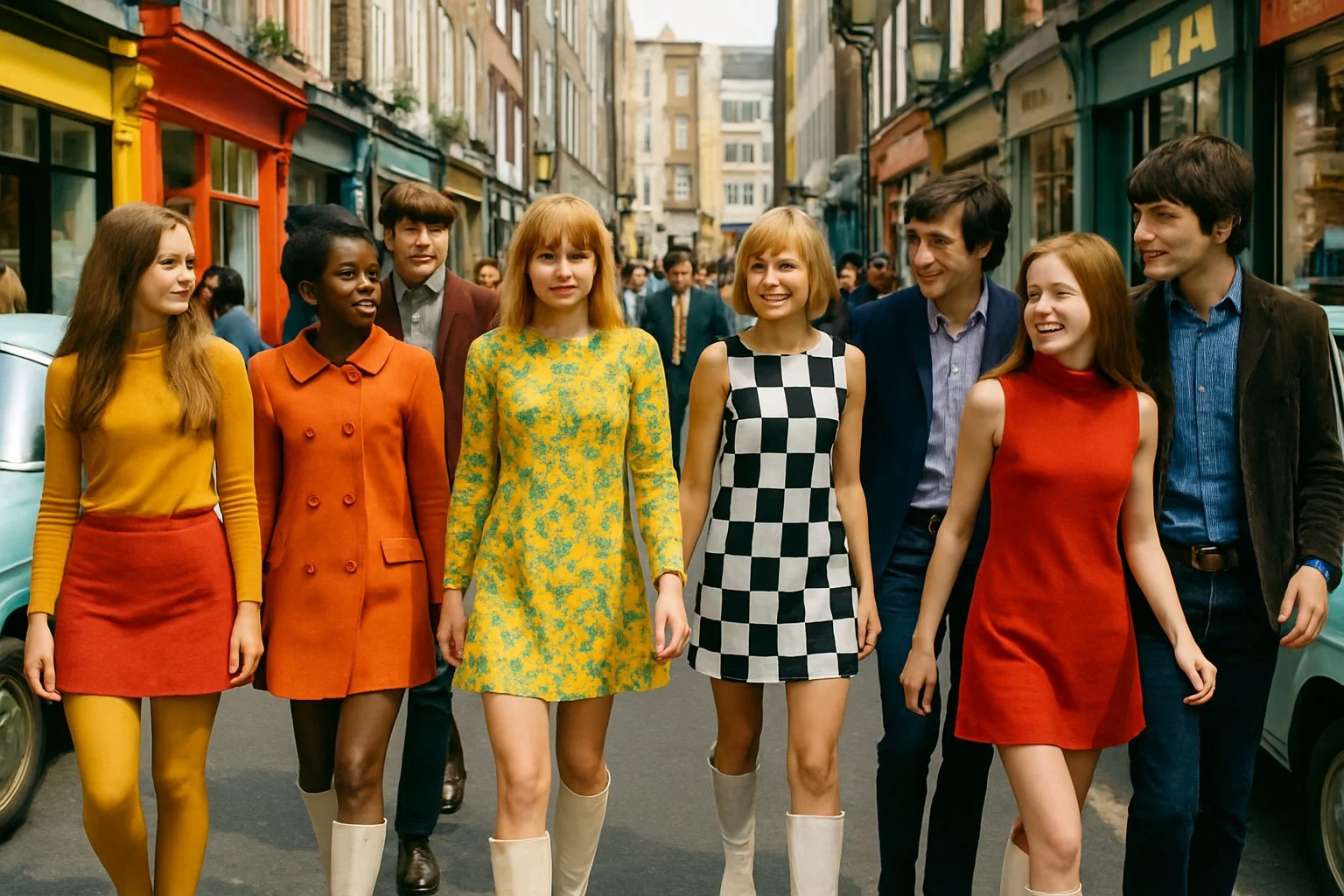
Carnaby Street was the electric pulse of all this. You can almost hear the chatter and laughter, see the bright shopfronts, and spot teens darting from store to store, searching for that perfect mod dress. The mini-skirt wasn’t just a trend—it felt like a line in the sand, a way of saying, “We’re not our parents, and we’re not going back.”
Designers chopped away at old hemlines, pop stars strutted in them, and suddenly, this little skirt was everywhere. It’s kind of wild to think how a simple garment could stand for so much—freedom, youth, and the energy of a world in flux.
The Miniskirt Revolution: An Iconic 1960s Fashion Statement
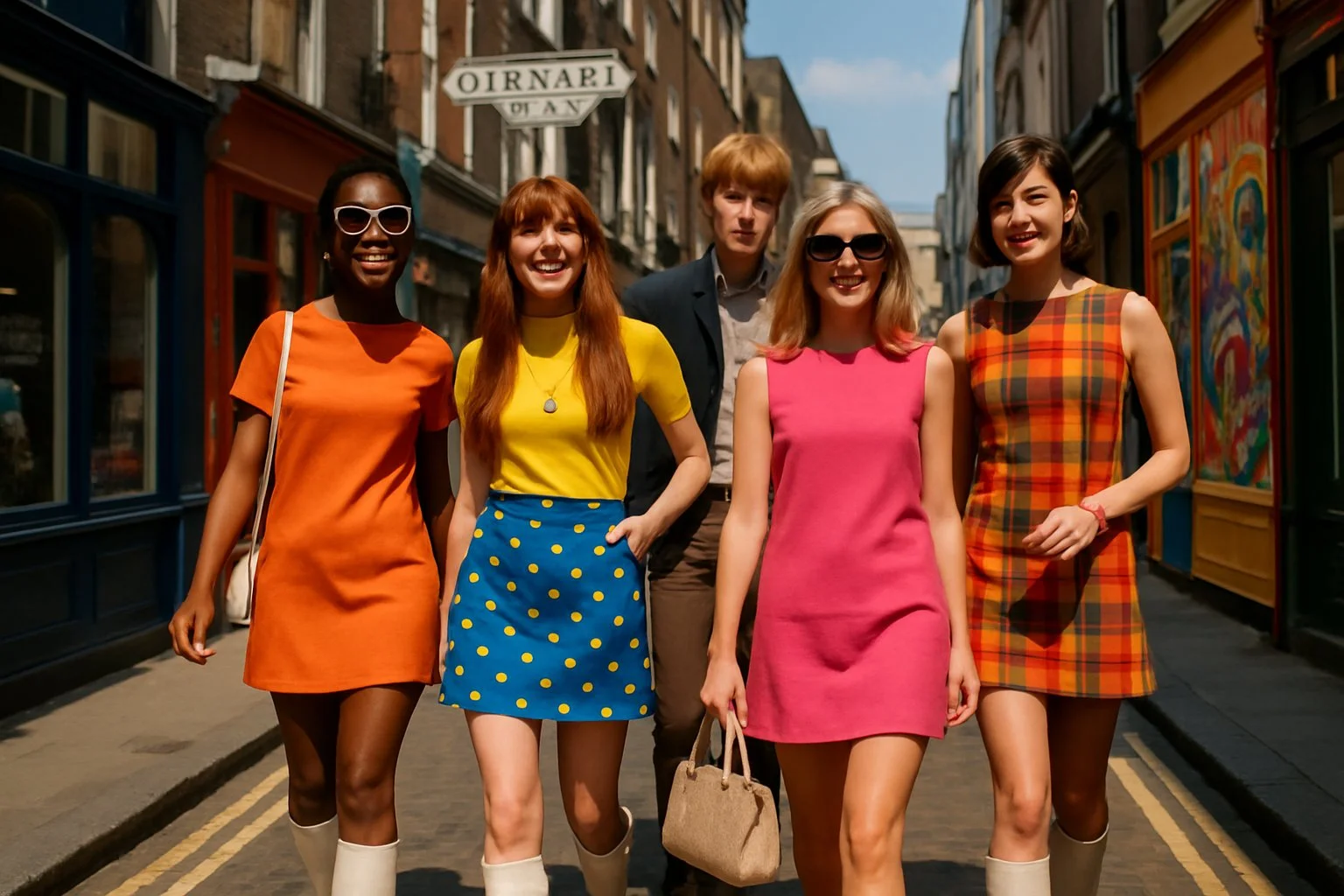
The mini skirt flipped 1960s fashion upside down. Suddenly, old rules about hemlines didn’t matter. Mary Quant’s wild ideas turned Carnaby Street into a magnet for anyone craving something new, especially girls itching for a bit of freedom.
Origins and Early Influences
You know, the mini skirt didn’t just pop out of nowhere. If you look back, short skirts have danced their way through history—think ancient dancers, or those knee-skimming flappers in the Roaring Twenties. That era’s boldness sort of paved the way.
Mary Quant gets most of the spotlight for making the mini skirt iconic, but she wasn’t alone. When she opened Bazaar in 1955, she started fiddling with shorter hemlines because, honestly, that’s what girls wanted. She watched young women already hacking off their skirts at home, and just leaned into it.
Some early sparks:
- Dancers and performers from way, way back
- 1920s flapper style
- Post-war restlessness
- What Quant saw on the street
She grabbed jersey fabrics—practical, comfy, and easy to move in. It wasn’t about fashion for fashion’s sake; it was about real life, and these kids wanted to run, dance, and live.
By the late ’50s and early ’60s, teens were just done with the old ways. They wanted clothes that kept up with their energy, and the mini skirt fit right in.
Redefining Women’s Fashion in the 1960s
The mini skirt grew into something much bigger than anyone expected. It started to stand for women’s independence—like, “I’ll wear what I want, thanks.” By 1964, Mary Quant’s minis were everywhere, not just in London.
André Courrèges, over in France, was doing his own thing. His A-line minis, all sharp lines and wild colors, looked nothing like what moms wore. He played with geometry and made clothes that felt like the future.
Women grabbed onto minis because, well, they could. Those short skirts thumbed their noses at old dress codes and stuffy expectations. It wasn’t just about showing off legs—it was about being in charge.
What the mini skirt stood for:
- Youth shaking off the past
- Picking your own clothes, not what’s “proper”
- Escaping stiff, old-fashioned styles
- Riding the wave of feminism
Twiggy’s face is probably what pops into your head—her pixie cut, her fearless style. She made it look effortless and cool, and suddenly, everyone wanted in. The mini skirt became part of the wild ride that was the Swinging Sixties.
Carnaby Street and the Birth of Youth Style
Carnaby Street was just buzzing. It was the spot if you wanted to see what was next, fashion-wise. Mary Quant’s vibe turned it into a playground for anyone bored with the usual department store fare.
Teens and tourists alike crammed into those tiny boutiques, hunting for minis, mod dresses, and whatever else was new and different. The place felt alive—colorful, a little chaotic, and totally youth-driven.
Each shop had its own spin. Minis paired with go-go boots, wild tights, bold patterns—it was a whole look, and it screamed “now.”
Carnaby Street’s magic:
- Proved teens weren’t just following trends—they were setting them
- Put London on the fashion map
- Inspired copycat districts everywhere
Brands finally noticed that young people actually had money to spend. The mini skirt wave showed everyone that youth culture wasn’t just noise—it was big business.
Designers Who Shaped the Miniskirt Era
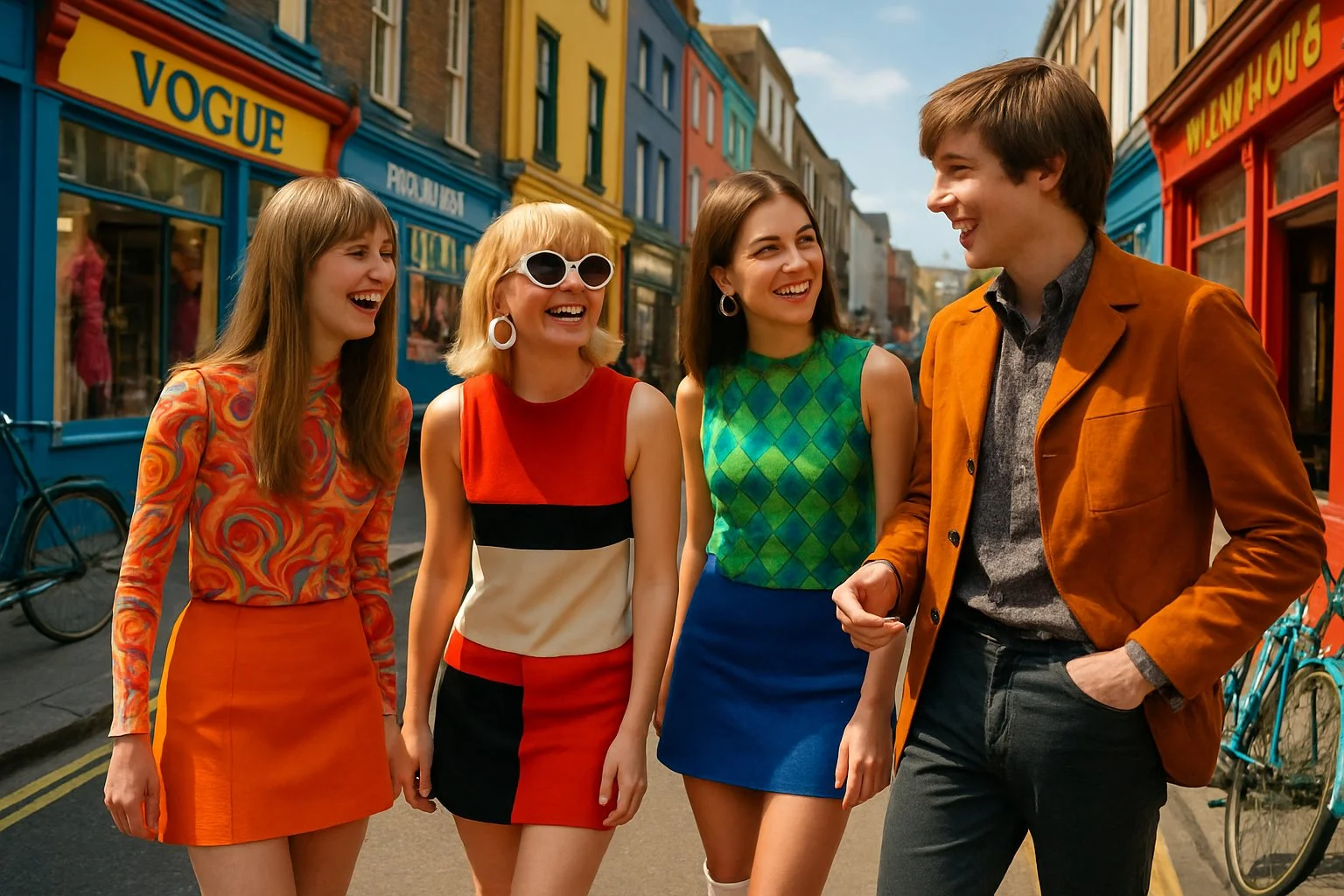
The miniskirt didn’t just materialize out of thin air. A handful of designers—mostly in London and Paris—pushed boundaries and made this whole scene happen. Mary Quant was the loudest voice for the mini, but André Courrèges in France was right there with his own spin.
Mary Quant: The Vision Behind the Mini
Mary Quant and her husband Alexander Plunket-Greene opened Bazaar on King’s Road back in ’55, and that place just radiated cool. It was the heart of Chelsea’s fashion scene for a while.
Quant didn’t technically invent the mini, but she sure made it shorter and bolder. Her dresses gave girls freedom to move—and to dance. She wanted them to stop copying their mothers’ wardrobes.
She brought:
- Hemlines way above the knee (sometimes scandalously so)
- Loud, playful colors and patterns
- Tights that matched or clashed
- Shiny PVC raincoats that looked space-age
Her Ginger Group line made minis affordable, so suddenly, it wasn’t just rich girls in Chelsea wearing them. By the mid-’60s, magazines were calling her the queen of British fashion.
Quant herself was a walking ad for her designs—sharp bob, always on the move, and never looking back.
André Courrèges and French Fashion Innovation
André Courrèges, meanwhile, was shaking things up in Paris. His minis were crisp, architectural, and had this space-age vibe that felt so different from Quant’s playful looks.
Courrèges’ trademarks:
- Clean, sharp lines
- Lots of white and metallics
- Go-go boots with everything
- Futuristic fabrics and shapes
When he dropped his autumn ’64 collection, Paris was a little stunned. Courrèges wanted clothes to look modern, almost scientific.
Other French designers started to follow his lead. His minis weren’t just another trend—they were a whole new attitude.
Other Influential Designers and Boutiques
London was packed with other creative types jumping on the mini bandwagon. Carnaby Street was a goldmine for cool little shops selling minis to anyone with a few quid.
Ossie Clark, Jean Muir, and the folks at Biba all had their own twist. Biba, in particular, went for moody colors—purples and blacks instead of Quant’s brights.
Shops worth remembering:
- Biba: Gothy, mysterious minis
- Bus Stop: Easygoing, everyday styles
- Granny Takes a Trip: Psychedelic prints galore
These designers made sure even working-class teens could snag a mini. By ’67, high street shops were copying the look everywhere.
Even the big department stores caught on. Within five years, you could find a mini on just about any British high street.
Pop Icons and Media: How Twiggy and The Beatles Fuelled the Trend
Designers started the mini-skirt craze, but pop culture legends like Twiggy and The Beatles turned it into a full-blown phenomenon. Their faces (and legs) were everywhere, and suddenly, everyone wanted a piece of that magic.
Twiggy and the Rise of the Sixties Supermodel
Twiggy changed the whole idea of what a model could be. At sixteen, she was discovered and almost overnight became the face of the mod scene.
She wasn’t curvy or glamorous in the old sense—she just looked like a regular teenager, which was exactly the point.
Twiggy’s signature:
- Cropped, boyish hair
- Giant, painted-on lashes
- Skinny as a rail
- Unisex, playful style
- Always in a mini or a shift dress
When Twiggy wore a mini, it didn’t look shocking anymore. It looked fun, young, and honestly, kind of innocent.
Fashion mags and TV ate her up. “Ready Steady Go” showed off her style to millions, and suddenly, girls across the country were copying her look.
Twiggy made it feel like anyone could be a model, and that made minis even more appealing.
Music, Rock and Roll, and British Pop Culture
The Beatles—what can you even say? They didn’t just change music; they changed how people dressed, talked, and even thought.
They started out in stiff suits, but as the decade rolled on, their hair grew longer, their clothes got wilder, and their fans followed suit.
Beatles style changes:
- Shaggier hair for guys
- Collarless jackets
- Cuban-heeled boots
- Trippy patterns and colors
Rock and roll was all about throwing out the rulebook. Minis fit right in—cheeky, playful, and just a tad rebellious.
British pop culture in the ’60s was this wild mix of music, fashion, and freedom. Beatles videos showed kids having a blast, looking sharp, and not caring what adults thought.
Media Influence and the Spread of the Miniskirt
TV and magazines spread the mini-skirt gospel at lightning speed. Music shows had girls dancing in minis every week. Fashion mags splashed models like Twiggy across their covers.
Carnaby Street got famous just from all the press. News crews and photographers flocked there to capture the buzz.
How the word got out:
- Fashion mags (Vogue, Harper’s Bazaar)
- Music TV shows
- Newspaper style pages
- Celebrity snapshots
- Movies and pop culture
Every time Twiggy or The Beatles showed up in the papers, teens took notes. Their photos zipped around the world, and suddenly, the mini was everywhere.
Fashion photographers loved Twiggy—she was a dream to shoot in mod clothes and minis. Those images made the look feel normal, even to skeptical parents.
Fashion as Freedom: Miniskirts, Empowerment, and Changing Gender Roles
The miniskirt wasn’t just a fad—it was a statement. It challenged old ideas about what women could wear, and honestly, how they could act. That tiny skirt helped rewrite the rules, giving girls a new way to say, “I’m in charge here.”
Miniskirts and the Sexual Revolution
The mini landed right in the middle of the sexual revolution. Women were demanding more say over their lives, and those short skirts just drove some people nuts.
What changed:
- Girls took charge of their appearance
- They shrugged off old dress codes
- They got bolder about showing who they were
Sure, parents and preachers freaked out. Some called minis “immoral.” But for young women, it was about choice, not shock value.
The pill hit the scene around the same time, so women suddenly had more control over their futures. Minis and the pill together? That was a double whammy for independence.
By 1965, miniskirts were popping up in all the big fashion mags, and the look was off to the races.
The Feminist Movement’s Embrace of Youthful Style
Feminists weren’t all on the same page about minis. Some worried the skirts were just about looks, but others saw them as a way to break free.
Mary Quant said she wanted to liberate women from fussy, restrictive clothes. Her minis made it easy to run, jump, and dance—stuff you just couldn’t do in a pencil skirt.
Why minis worked:
- Let you move however you wanted
- Cheap and easy to make at home
- Perfect for busy, active lives
- Screamed “youth culture” from a mile away
Young feminists started to see the mini as a way to rebel—not just against men, but against their mothers’ old rules, too.
The mini skirt was a break with the past. It said, “I get to decide what I look like.” And honestly, that’s a pretty powerful legacy.
Challenging Traditional Gender Roles
Miniskirts threw a wrench into old-school gender roles in British society. Before the 1960s, everyone expected women to dress primly and act like proper ladies.
The short skirt flipped those expectations on their head. Suddenly, women could dress for themselves, not just for social approval. This shift seeped into all sorts of areas of life.
Areas of Change:
- Workplace dress codes loosened up
- Dating got a lot less formal
- Women started moving through public spaces with more confidence
- People began to question what femininity really meant
A lot of employers tried to ban miniskirts at first. Young women didn’t just accept it—they pushed back. Over time, the rules changed, and dress codes relaxed in all kinds of industries.
The miniskirt even changed how we walked down the street. Women claimed more space, physically and figuratively. That new swagger said a lot about how we started to see ourselves.
Styling the 1960s Mini: Fabrics, Patterns, and Everyday Looks
The mini skirt revolution wasn’t just about shorter hemlines—it changed everything about how young women dressed, from the fabric to the finishing touches. Let’s talk about the bold materials that defined the era and how teens pulled together those unforgettable looks.
Materials: From Tartan to Leather and Synthetics
We picked fabrics for our mini skirts that made a statement—sometimes just to annoy the grown-ups.
Wool was still a staple for everyday outfits. Tartan minis ruled school halls and Saturdays in town. Burgundy pinafores with white polo necks were everywhere. Houndstooth checks? Basically a uniform.
Synthetics crashed onto the scene in the mid-60s and changed the game. Cotton gabardine gave minis their crisp shape. PVC? That was for the bold—shiny, waterproof, impossible to ignore.
Leather and mock suede felt rebellious, like you were wearing your independence. We wanted to break away from the dainty, girly fabrics our mums wore.
New blends like Courtelle jersey made fashion affordable (finally). Crimplene kept its shape, no matter how wild you danced the Twist.
We mixed textures with abandon—leather minis and chunky knits, cotton shifts and textured tights. Why not?
Popular Miniskirt Outfits and Combinations
Everyday mini skirt outfits had their own rhythm, but there were some classic combos.
The schoolgirl look was everywhere: tartan mini pinafores layered over crisp shirts or snug polo necks. Knee-high socks, flat shoes, done. It was that sweet spot between childhood and something more grown-up.
Evenings called for more daring pairings. Leather minis with black polo necks—total Beatles vibe. Silver or gold lurex tights made any party outfit pop.
The mod look meant straight shift dresses, cut scandalously high. White collars, matching accessories, everything sharp and geometric.
Baby doll dresses gave us a softer option—floaty, tent-shaped minis in lace or chiffon, a little dreamy after a day of structure.
Some favorite combos:
- Burgundy wool mini + mustard jumper
- Black and white check dress + patent bag and shoes
- PVC mini + matching rain mac (because weather never stopped us)
Accessorising the Look: Shoes and Hairstyles
Accessories took the mini skirt from fun to unforgettable.
Shoes had to change, too. We ditched stilettos for kitten heels and flat boots. By ’65, knee-high boots were a must—they balanced out those short skirts.
Mary Janes in shiny patent leather brought a bit of schoolgirl charm. Dr Scholl clogs were everywhere for weekends, sort of like what Birkenstocks became later.
Hair? That was a whole movement. Vidal Sassoon’s sharp, geometric cuts were the dream. We wanted bobs that framed our faces, no fussy curls or waves from the previous generation.
Accessories were minimal but made a point:
- Short, colorful gloves with cut-outs
- Plastic bead bags in wild shades
- Big disc earrings
- Bright plastic bangles
- Tiny white collars on everything
Black patent accessories tied a look together. We kept jewelry simple and bold—anything too ornate just felt out of step with the times.
The Legacy of 1960s Teen Fashion: Influence on Modern Styles
Those wild, rebellious trends from 1960s teenage culture? They’re still shaping the way we dress. From the mini-skirt’s staying power to the way shops chase youth trends, it’s amazing how much of that era still echoes in what we wear and buy now.
Mini-Skirts in Today’s Wardrobes
The mini-skirt just won’t quit. Every fashion season, it pops up again—sometimes classic, sometimes totally reinvented. Designers know it’s more than a piece of fabric; it’s a symbol of freedom and self-expression.
Now you’ll find structured A-lines that nod to Mary Quant, and new spins in leather, denim, or high-tech fabrics. Even high street shops like Primark keep mini-skirts on the racks, making that once-daring look something anyone can try.
Modern twists include:
- Pleated tennis minis
- Asymmetrical hems
- Mini-skirt suits for the office
- Eco-friendly versions for the sustainably minded
It’s a chameleon. We pair minis with oversized blazers for work, chunky sweaters for lazy days, or fitted tops when we’re heading out.
Instagram and TikTok have only made the mini-skirt more visible. Influencers keep finding new ways to style it, so it never really fades from view.
Carnaby Street’s Lasting Impact on High Street Fashion
Carnaby Street didn’t just sell clothes—it rewrote the rules on how we shop. Those tiny, youth-obsessed boutiques basically invented fast fashion and the idea that trends should move at lightning speed.
A lot of what we see in shops now—constantly changing collections, affordable trend drops, music-inspired looks—all that started on Carnaby Street.
Today’s big retailers borrowed Carnaby’s playbook: quick turnarounds from runway to rack, celebrity tie-ins, and trend-first marketing. It all traces back to those wild London shops.
Carnaby Street’s biggest legacy might be how it encouraged us to express ourselves with clothes. Now, retailers push us to make our own style rules, not just follow someone else’s.
Modern retail owes plenty to Carnaby Street:
- Pop-up shops and limited runs
- Music and brand mash-ups
- Boutique corners inside big stores
- Marketing aimed right at the youth crowd
Continuing the Spirit of the Fashion Revolution
Something about that rebellious spirit from 1960s teen fashion still lingers, shaping the way new trends pop up in women’s clothing. Designers keep poking at old beauty standards and breaking the rules, just like those trailblazers did back in the day.
You can feel the echoes of those democratic ideals from the original fashion revolution. Sustainable labels push for ethical consumption, and all these inclusive sizing campaigns? They’re shaking up the old ideas of beauty, much like the social shifts the ’60s brought to the closet.
Street style is everywhere now, isn’t it? Regular folks steer fashion trends with a single Instagram post or TikTok video. It reminds me of how those 1960s teenagers flipped things upside down—fashion bubbling up from the sidewalks, not trickling down from some distant runway.
Designers today love to reference 1960s silhouettes. You’ll spot the classic shift dress or those bold geometric patterns sneaking into new collections, little nods to the decade’s wild, creative pulse.
At its heart, that old fashion revolution believed clothing ought to show off your personal identity and social values. Whether you’re picking out vintage treasures, sticking with sustainable brands, or just throwing on something bold and weird, it’s all part of this ongoing tradition—using fashion to say who we are and what we care about. Funny how some things never really change.




Leave a Reply