
When Grange Hill first hit BBC screens on 8 February 1978, it did something no children’s programme had really dared before. The show brought real secondary school life into living rooms across Britain, complete with bullying, shoplifting, and language that made parents reach for the television aerial. Phil Redmond, the creator, didn’t want neat uniforms and jolly adventures. He wanted comprehensive school as it actually was—warts and all.
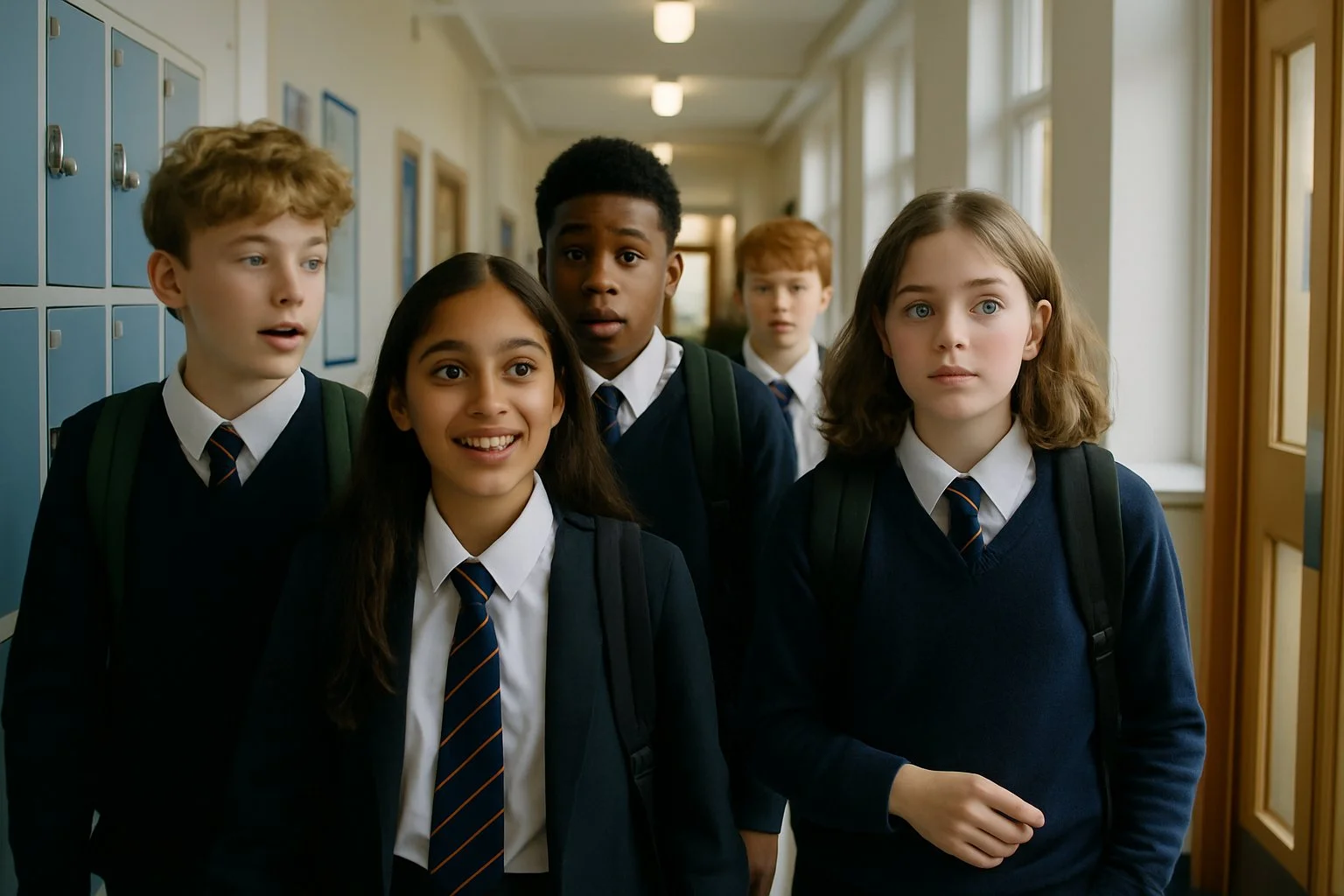
Over thirty-one series and 601 episodes, Grange Hill became a mirror for British childhood. The BBC fielded plenty of complaints from adults who fretted their kids were soaking up bad behaviour with nobody there to set them straight. Still, those same kids rushed home to catch every episode, finally seeing their own lives reflected on screen.
Grange Hill tackled everything—racism, teenage pregnancy, Zammo’s heroin addiction in the ’80s. It made stars out of its young cast, and gave us characters we still remember. Tucker Jenkins, Gripper Stebson… Grange Hill’s fictional school felt more real than most actual ones ever did.
Breaking the Mould: Grange Hill’s Realism and Impact

Grange Hill shook up children’s TV, showing school life as it really was. That made for excitement—and a fair bit of concern. The series jumped into topics other shows wouldn’t touch, and it changed how British television handled young people’s stories.
Pushing Boundaries in Children’s Television
When Grange Hill landed in ’78, it felt like nothing else on kids’ TV. Set in a comprehensive school, it told stories from the pupils’ point of view—no posh grammar schools, no fantasy. Just the world most British kids actually knew.
Phil Redmond wanted to reflect real school life. The crew even set the cameras at kids’ eye level, so the show felt like it belonged to them. That was a big leap from the usual fairy tales and old-fashioned adaptations that filled the after-school slots.
The show dug into everyday problems—homework, friendships, dealing with teachers. But it also showed the rougher sides of school life. That honesty made Grange Hill feel real to kids, who finally saw their own struggles on TV.
Controversial Storylines and Public Backlash
Grange Hill didn’t flinch from tough subjects, and that made plenty of parents nervous. The show aired in the early evenings, when kids watched TV on their own, and that worried adults.
The show dove into:
- Bullying—Gripper Stebson and Jackie Heron made sure of that
- Drug abuse—Zammo’s heroin addiction still gets talked about
- Teenage pregnancy—Chrissy Mainwaring’s story
- Crime—shoplifting, vandalism, theft, all part of the mix
Some folks slammed the show for showing bad behaviour and language without spelling out that it was wrong. The drugs storyline in the ’80s especially ruffled feathers—parents fretted it might give kids ideas instead of scaring them straight.
Influence on British School Dramas
Grange Hill’s success rewrote the rules for British TV. Phil Redmond went on to create Brookside and later Hollyoaks, both with the same raw, working-class approach. These shows didn’t dodge the tough stuff.
Grange Hill ran for 31 series until 15 September 2008—one of the longest runs in British TV. Its influence is everywhere in later school dramas. It proved children’s TV could get serious and still keep kids glued to the screen.
Unforgettable Moments: The Storylines That Shocked and Inspired

Grange Hill earned a reputation for taking on subjects other kids’ shows wouldn’t touch—drug addiction, racism, you name it. The show’s boldness sparked national conversations and sometimes a bit of outrage, but it also helped kids make sense of tough stuff in their own lives.
Heroin Addiction: The ‘Zammo’ Plot and National Campaign
Zammo McGuire’s heroin addiction in the mid-’80s—wow, that was something else. Lee MacDonald played Zammo, who started dabbling in drugs and spiraled into addiction. The show didn’t sugarcoat it; you watched him fall apart, and it was shocking.
The impact spilled off the screen, too. The cast recorded “Just Say No,” an anti-drugs single that climbed to number five in the UK charts. Nancy Reagan even invited them to the White House for her anti-drugs push.
The storyline showed how addiction wrecks lives. Zammo stole from friends and family, and his recovery was slow and messy. There was no quick fix—just the hard, ugly truth.
Bullying and Racism at Grange Hill
From the start, Grange Hill showed how bullying could wreck a kid’s life. There was physical intimidation, name-calling, exclusion—the works. The show didn’t just paint bullies as monsters; it poked at why they acted that way.
Racism got tackled head-on, too. Kids from different backgrounds faced prejudice, sometimes even from adults. One storyline had racist graffiti showing up around the school, and the community had to decide: ignore it or fight back.
Exploring Teenage Pregnancy, Suicide and Sensitive Issues
Teenage pregnancy was another subject Grange Hill didn’t shy away from, even when most shows wouldn’t touch it. The show followed young mothers struggling with school, relationships, and the rest of life.
Suicide, too. Grange Hill tried to show the warning signs and the heartbreak that follows, handling it with a kind of care you didn’t always see back then.
The show even addressed rape and sexual assault, focusing on supporting survivors. These storylines got people talking—sometimes awkwardly, but talking all the same.
Tackling School Uniforms and Authority
Who could forget the Students’ Action Group sit-in in series two? Jessica Samuels led a protest against school rules, and suddenly you had kids on TV standing up for what they thought was right.
That ruffled plenty of feathers—parents, teachers, even politicians. Some thought it would encourage real-life rebellion.
The school uniform debates kept cropping up, too. Characters argued for self-expression; teachers stuck to the rules. If you ever fought your own uniform battle, you probably saw yourself in those scenes.
The Characters Who Defined A Generation
Grange Hill didn’t just give us stories—it gave us characters who stuck in our heads. Rebellious pupils like Tucker Jenkins, stern teachers like Mr Bronson… these people felt real, and they dealt with the same stuff we did, especially if you grew up in the ’80s or ’90s.
Tucker Jenkins and Tucker’s Luck
Tucker Jenkins (Todd Carty) was the first big star. He was cheeky, working-class, always challenging authority but with a good heart underneath.
Tucker got his own spin-off, Tucker’s Luck, in 1983. That show followed him after school, trying to find work in a tough economy. Not many kids’ drama characters got that kind of send-off.
His best mates—Benny Green (Terry Sue Patt) and Alan Humphries (George Armstrong)—felt like the kind of friends you might’ve had yourself. Trisha Yates (Michelle Herbert) was another standout in the early years.
Iconic Cast Members and Their Journeys
Grange Hill launched a ton of acting careers. Susan Tully played Suzanne Ross before moving on to EastEnders. Sean Maguire showed up as Tegs Ratcliffe, then headed for American TV.
Some unforgettable characters:
- Gripper Stebson (Mark Savage)—the school bully everyone feared
- Zammo McGuire (Lee MacDonald)—the face of that heroin storyline
- Danny Kendall (Jonathan Lambeth)—his death in 1989 hit hard
- Pogo Patterson (Peter Moran)—Tucker’s mate, always up to something
Michelle Gayle played Fiona Wilson before she hit the music charts. Grange Hill gave a lot of young actors their first real shot.
Teachers and Their Lasting Legacies
Mr Bronson (Michael Sheard) might be the most memorable teacher on TV. That moustache, that glare—he was the old-school authoritarian, and you couldn’t miss him.
Mrs McClusky (Gwyneth Powell), the headmistress, balanced things out. She ran the school from 1981 to 1991, dealing with chaos from both students and teachers. She showed you could be strict and still be fair.
The teachers weren’t just props—they had their own stories and quirks, which made them feel like real people, not just grown-ups in the background.
Behind the Scenes and Lasting Influence
Grange Hill’s production team got creative with camera work and used real London schools for filming. The show’s success opened doors for its young cast and made Phil Redmond a heavyweight in British TV drama.
From London to Liverpool: Locations and Changes
The BBC filmed Grange Hill in real schools around London. They started in 1977 for a February ’78 debut, always chasing that authentic feel.
Director Colin Cant made a smart move early on—he kept the cameras at kids’ eye level. That way, viewers saw the school world the way students did, not from some distant adult perch.
Filming locations shifted as the show grew, but they always stuck with real schools. Those gritty backdrops made the stories hit home—studio sets just couldn’t match that.
Career Launchpad: Grange Hill’s Alumni in Other Soaps
Loads of Grange Hill actors went on to bigger things. Todd Carty (Tucker Jenkins) got his own spin-off, then joined EastEnders as Mark Fowler—one of the soap’s longest-running characters.
Other cast members popped up in all sorts of British dramas. Grange Hill became a sort of training ground, where young actors learned their craft on the job, dealing with tough stories and tight schedules. Looking back, you can see just how many careers started in those corridors.
Phil Redmond’s Creative Vision
Phil Redmond came up with Grange Hill in his mid-twenties, right after cutting his teeth on children’s programmes. He’d been one of the first kids to go through comprehensive schools, so naturally, he wanted to write about them—felt like there was something real there, you know?
One day, Redmond sat down with BBC executive Anna Home. She asked what he was itching to write, and when he mentioned a school drama, she just grinned and pulled out an empty envelope labeled “School Series” from her desk. Funny how sometimes the stars just line up like that.
He really just wanted working-class kids to sound like themselves on TV, not all polished and fake. After Grange Hill took off, Redmond went on to dream up Brookside for Channel 4 and, a bit later, Hollyoaks. Looking back, all three shows carried his stubborn belief in honest stories and tackling real social issues—maybe that’s what made them stick.






Leave a Reply