
If you went to school in the 1950s, just hearing “PE class” probably conjures up a rush of memories—some shivery, some hilarious, and a few you’d rather forget. Thin cotton knickers, icy winds, and those dreaded cross-country runs—yep, it’s all coming back.
Physical education back then really leaned hard into the “character-building” bit, with little thought for comfort or, honestly, anyone’s actual athletic ability.
Teachers sent you outside in your flimsy kit, rain or shine, and that was just how it went.
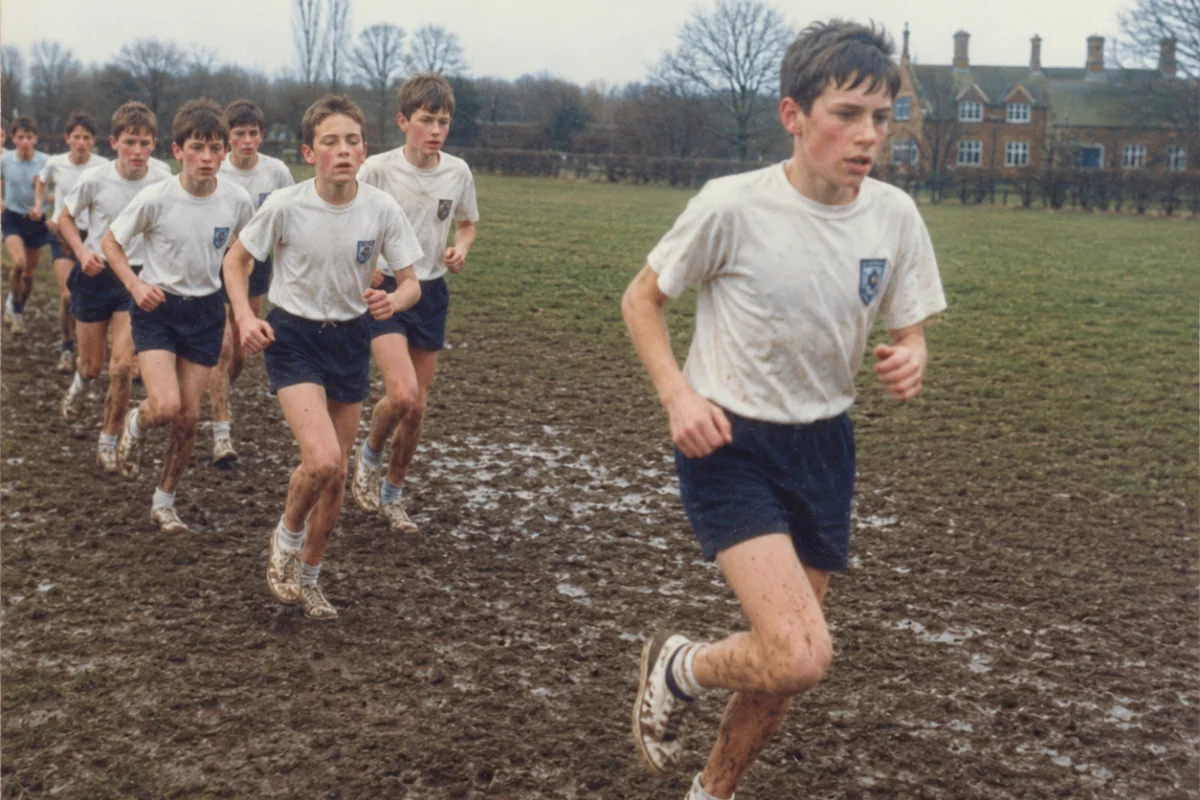
The 1950s approach to school PE couldn’t be further from today’s. Pupils braved freezing temperatures and tough activities, no matter how miserable it got.
Maybe you still remember uncomfortable gym knickers, plimsolls that never fit quite right, and teachers who seemed to have a sixth sense for picking the coldest day for outdoor runs. It’s funny how those shared struggles linger in the memory, isn’t it?
From the awkwardness of team selection to the peculiar torture of communal changing rooms, PE lessons back then shaped how a whole generation felt about exercise. Some of us never quite got over it. That school gym smell? Still haunting.
The Realities of Cross-Country Runs in 1950s PE Classes
Cross-country running ruled the PE timetable in the 1950s. Whenever equipment went missing or the weather made indoor sports impossible, teachers defaulted to “just run.” We all knew what that meant: a miserable slog across muddy fields, whatever the weather.
Braving the Cold and Mud
Teachers always seemed to wait for the nastiest, coldest days before sending everyone out for cross-country. You’d be out there, legs numb, racing across frost-covered fields with the wind biting through those paper-thin shorts.
The courses themselves? Mud, puddles, and more mud. Some schools even made you run barefoot, especially if the field was a swamp—girls got this treatment more than boys, for some reason.
Weather hardly mattered; sleet, frost, rain, or shine, you ran. Complaining didn’t change a thing.
Races got split by age: juniors ran three miles, intermediates four, and seniors a whopping five miles, no matter how rough the ground got.
Teacher Expectations and Discipline
PE teachers didn’t mess around. They expected everyone to join in, no matter how out-of-shape or reluctant you were. Cross-country was “real” physical education in their eyes.
If you couldn’t catch a ball or the footballs had all vanished, you’d get sent running laps. And if you lagged behind? Teachers didn’t hold back with the shouting. Coming last meant you’d get that slow, sarcastic clap from everyone—nothing like a little public humiliation to brighten your day.
Trying to dodge PE with a sick note rarely worked. Teachers saw right through it most of the time.
Running Attire and Forgotten Kits
The standard kit: lightweight cotton shorts and basic plimsolls. Boys usually got white shorts, while football and cross-country shorts came in heavy black cotton, almost like twill.
Forget your kit? You’d end up digging through the lost property box for something that smelled like it’d been forgotten since the war. Not a great look.
Standard 1950s Cross-Country Kit:
- Lightweight cotton shorts
- Basic plimsolls or canvas shoes
- White cotton vest or gym shirt
- Pretty much zero weather protection
Plimsolls barely kept your feet dry or warm. They slipped and slid on mud, offered no grip, and left your toes numb by the end.
By the time you finished, you’d be shivering and miserable. Those uniforms were all about cost, never about comfort.
Gym Knickers, Plimsolls and Uniform Woes

PE uniforms in the 1950s were tough as old boots but about as comfortable as sandpaper. Gym knickers and plimsolls—those words still make some people wince.
Wearing Gym Knickers: Comfort and Embarrassment
If anything haunted PE, it was those navy blue gym knickers. Baggy, scratchy, and so big you could probably smuggle a packed lunch in them.
That rough fabric chafed, and you had to wear them for everything—inside, outside, whatever. Sometimes, no shorts to cover them up.
Worst of all, you’d have to wear them in front of the boys. Some schools insisted on just knickers and a vest for certain activities—pure mortification for any self-conscious teenager.
At a few schools, you’d double up: white knickers under the navy ones. The thick material made running or jumping a joke.
The Trouble with Plimsolls
Plimsolls were the only option—canvas shoes with flat, thin rubber soles. Your feet would slide around, and you’d get blisters if you wore them without socks (which was, let’s be honest, most of the time).
And the smell? Unforgettable. The squeak of plimsolls on the gym floor gave you away every time. No ankle support, no cushioning—just cold, wet feet if you’d had PE outside.
When they got soaked, they stayed wet for days. Some kids ended up with sore feet for weeks from wearing those things.
Lost Property and Spare Kits
Forgot your kit? Off you went to the lost property box, rifling through a pile of other people’s forgotten clothes. Everything stank. No one escaped this fate at least once.
The PE teacher never let anyone off the hook for a missing kit. You wore what you could find, even if it was three sizes too big. The “spare” knickers were legendary for their size and general grimness.
If you struck out and there was nothing left, you’d be doing PE in your vest and pants. That sort of thing got talked about for ages.
PE Lessons and Activities: A Closer Look

PE in the 1950s was all about building grit, or so they said. You’d face ropes, wall bars, and team games like rounders, whether you liked it or not.
The Dreaded Rope Climb and Wall Bars
That thick rope dangling from the gym ceiling? It was the stuff of nightmares. You were meant to haul yourself up with just your arms and legs—most of us barely managed a few feet.
Wall bars were another classic. Wooden ladders up the wall, and teachers had you hanging, climbing, stretching, or balancing on them:
- Hanging by your arms
- Climbing up and down
- Stretching exercises
- Balancing movements
Teachers made you keep trying until you got better—or at least until you stopped complaining. Rope burns and sore hands were just part of the deal.
Most kids dreaded these lessons. The equipment seemed designed to show up your weaknesses in front of everyone.
Playing Rounders and Other Team Sports
Rounders was a big one. You’d grab a wooden bat, smack a hard ball, and run the bases—simple in theory, but not if you were uncoordinated (like me).
Team captains picked the squads, so if you weren’t sporty, you’d end up last. You might spend most of the game praying the ball wouldn’t come your way.
Other favourites:
- Netball for the girls
- Football for the boys
- Cricket in the summer
- Hockey on grass, when the weather allowed
Boys and girls never mixed teams. Sports were strictly divided, and teachers expected you to shine at whatever was “appropriate” for your gender.
Competition was fierce, and winning mattered more than having fun.
Changing Rooms and Showers
Changing rooms were spartan—cold, with wooden benches and not much privacy. Everyone got changed together, and nobody liked it.
Communal showers were a must after PE. No way out. The water was either icy or scalding, never in between.
Teachers watched the clock and made sure everyone showered in five minutes flat. It was a mad scramble, and nobody had time for modesty.
The facilities? Pretty grim:
| Changing Room Features | Shower Facilities |
|---|---|
| Wooden benches | Communal shower heads |
| Metal hooks for clothes | Basic soap dispensers |
| Cold concrete floors | Thin towels provided |
| Minimal heating | Time limits enforced |
It was all a bit much. Embarrassing, rushed, and not exactly confidence-boosting.
Social Pressures and Lasting Memories
PE in the 1950s came with a special kind of social pressure. For some, it shaped their feelings about exercise for life. Team selections and confidence issues left their mark.
Peer Competition and Being Picked Last
Team picking—what a nightmare. You’d stand awkwardly in a line while captains chose one by one.
Being picked last happened to nearly half of us, apparently. The sting of standing there, knowing everyone saw you left behind, really stuck with you.
Teachers let the sporty kids pick teams, never really noticing how rough it was on the rest. Same kids picked last every time.
You learned quickly that your value depended on how fast you could run or how well you could throw. No wonder some of us started dreading PE days ahead of time.
Embarrassment and Self-Confidence
Changing in front of everyone else? That was enough to give anyone anxiety. You stripped down to your knickers and vest, no privacy at all, while everyone pretended not to look.
Running outside in just your underwear—especially in winter—felt like some kind of punishment. Teachers didn’t seem to notice or care how awkward it made you feel.
Getting shouted at by PE teachers in front of everyone else? That just crushed your confidence. Lots of us still remember it, decades later.
Some kids never really got over how PE made them feel. Maybe you were a bit clumsy, or just slower to develop, but PE lessons rarely encouraged improvement—instead, they made you feel like you’d failed before you even started.
Impact on Attitude Towards Exercise
Those negative experiences really stuck with you, shaping how you felt about moving your body years down the line. I mean, there’s research floating around—something like 57% of adults—who say school PE classes left a mark on their attitude towards exercise.
If PE meant humiliation or feeling like you just couldn’t keep up, it’s no wonder you dodged exercise as an adult. Maybe you actually liked dancing or swimming or just going for walks, but those old memories from gym class? They kind of soured the whole idea.
Competition always seemed to overshadow participation. Instead of focusing on health or just having fun, it was all about who won and who lost. That lesson stuck, sometimes for decades.
A lot of folks steered clear of gyms or group sports for ages, haunted by that old PE embarrassment. It’s wild how those moments linger, quietly shaping your habits and maybe even your well-being as the years roll by.







Leave a Reply