
The 1950s brought a complete transformation to British kitchens, marking one of the most significant shifts in domestic life throughout the country’s history. After years of wartime hardship, families embraced new technologies and bright, cheerful designs that reflected post-war optimism.
Fitted kitchens became widely popular during this decade, featuring Formica worktops, chrome fixtures, colourful appliances in shades like lemon yellow and pistachio green, and modern conveniences that changed how British households prepared meals and gathered as families.
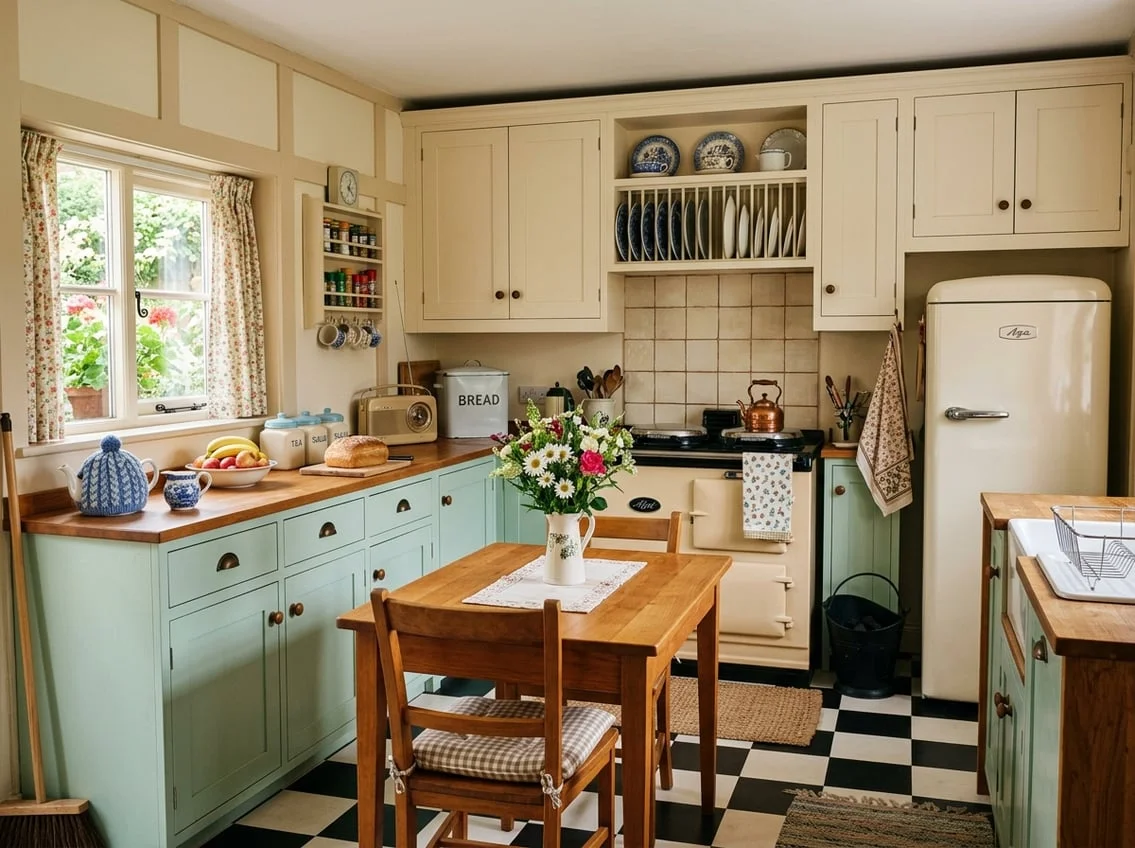
This era introduced open-plan layouts, space-saving furniture, and labour-saving devices that gave homeowners more freedom and efficiency. The kitchen evolved from a purely functional space into the heart of the home.
New materials like PVC, melamine, and vinyl replaced traditional options. Geometric patterns and bold primary colours created a distinctly modern look.
Defining Features of 1950s Kitchen Design

British kitchens in the 1950s marked a dramatic shift from the unfitted, utilitarian spaces of previous decades. These rooms embraced bold colours, new synthetic materials, and fitted layouts that transformed the kitchen into a modern workspace designed for efficiency and style.
Colour Trends and Key Surfaces
The 1950s kitchen moved away from drab pre-war tones towards vibrant primary colours and soft pastel shades. Red, yellow, and lime green dominated kitchen schemes, often paired with crisp white or black accents.
Checkerboard flooring in black and white or red and white became a signature feature, typically laid in vinyl tiles for easy maintenance. Kitchen worktops featured Formica, a revolutionary laminate material that allowed homeowners to bring pattern and colour to surfaces that were once plain wood or stone.
Formica came in abstract geometric patterns, atomic designs, and solid colours that matched the space-age optimism of the era. The English Rose kitchen style favoured softer palettes, combining pretty sprigged florals with polka dots or stripes in sugary pinks, pale blues, and buttery yellows.
Walls often received a coat of cheerful paint rather than wallpaper. Some homeowners chose patterned wallpaper featuring scientific motifs like atoms and starbursts.
Ice cream shades such as pistachio green, bubblegum pink, and pale blue offered a gentler alternative to the bolder primary colour schemes.
Signature Materials and Finishes
The post-war boom introduced new synthetic materials that defined the 1950s kitchen aesthetic. Melamine, vinyl, plastics, and aluminium replaced traditional materials, offering durability and easy cleaning.
Steel cabinets appeared in some modern kitchens, providing a sleek, industrial look that appealed to forward-thinking homeowners. Chrome became the finish of choice for appliances and furniture legs.
Kitchen chairs combined chrome frames with vinyl upholstery in bright colours, creating the diner look that many British households adopted. Wire accessories in plastic-coated black, white, or red featured ball feet and included plant stands, magazine racks, and vegetable holders.
Formica didn’t just cover worktops. It appeared on table surfaces, cabinet doors, and even splashbacks.
This versatile material resisted heat, stains, and moisture whilst maintaining its glossy finish. Kitchen manufacturers began offering fitted units with Formica finishes, making it accessible to middle-class families investing in their first modern kitchen.
Layout Innovations and Ergonomics
The fitted kitchen concept revolutionised British homes in the 1950s. Before this decade, most kitchens contained freestanding furniture and a single kitchen cabinet unit.
The modular kitchen changed everything by offering coordinated base units, wall cabinets, and worktops that created continuous work surfaces. Open-plan living emerged during this period, with some families removing walls between kitchens and dining areas.
This layout suited smaller post-war houses where space came at a premium. The fitted kitchen maximised storage through wall-mounted cupboards and floor-standing units with built-in drawers and shelves.
Labour-saving appliances received dedicated spaces within the new fitted layouts. Large refrigerators, often in bright colours, became status symbols and focal points.
Manufacturers designed units to accommodate standard appliance sizes, creating the integrated look that remains popular today. Mid-century modern design principles emphasised clean straight lines and functional storage, removing unnecessary decoration in favour of practical solutions.
Furnishings and Fittings That Shaped the Era

British kitchens in the 1950s featured fitted units made from aluminium and steel, paired with wipe-clean surfaces like Formica and melamine. Electric and gas appliances became widespread, whilst colourful accessories and bold patterns transformed these spaces into bright, modern rooms.
Iconic Cabinets and Worktops
The English Rose kitchen of 1948 revolutionised British kitchen design. Manufactured from stockpiled aluminium originally intended for Spitfire production, these units offered a complete fitted solution.
Steel cabinets replaced traditional wooden furniture, bringing a metallic shine that reflected the modern age. Fitted units became the standard choice for new homes.
Companies like John Lewis of Hungerford produced ranges where homeowners could select individual components to build complete kitchens. The units featured integrated cupboards, shelves, and drawers in a single piece of furniture.
Worktops featured wipe-clean surfaces that changed daily kitchen life. Formica and melamine became the materials of choice, available in vibrant colours that brightened post-war homes.
These surfaces required minimal maintenance compared to wood or stone. They fit the decade’s emphasis on efficiency and hygiene.
Essential Appliances and Gadgets
Electric cookers transformed meal preparation after electricity nationalisation in 1947. The American Gas Association also promoted gas cookers as modern alternatives.
By the mid-1960s, 61% of London households owned refrigerators, eliminating the need for daily shopping trips. Relaxed hire-purchase rules made appliances accessible to average families.
Washing machines freed women from hours of manual laundry work. Smaller gadgets filled kitchen drawers, from electric mixers to pop-up toasters.
The golden triangle concept shaped kitchen layouts. This design minimised distances between cooker, sink, and worktops, treating cooking as an engineering process rather than traditional labour.
Distinctive Accessories and Decor
Bright colours dominated 1950s kitchen decor. Walls featured floral wallpaper and bold patterns that created striking focal points.
Units came in yellows, reds, blues, and greens that contrasted sharply with pre-war neutrals. Chrome fixtures and handles added metallic accents throughout the room.
Storage containers in matching sets lined open shelves. Designers like Robin Day influenced the era’s aesthetic with clean lines and functional beauty.
Practical items doubled as decorative elements. Wall-mounted ironing boards that folded away saved space whilst maintaining the streamlined look.
Tea towels, canisters, and ceramic containers featured geometric patterns and atomic-age motifs that reinforced the modern atmosphere.
Everyday Life and Social Shifts in the Kitchen

The 1950s British kitchen transformed from a purely functional workspace into a brighter, more social environment where new appliances and materials changed how families cooked and gathered. This shift reflected broader changes in domestic life as technology promised to ease the burden of household work.
The Rise of the Kitchen as a Social Hub
The kitchen moved from its traditional role as a dark, isolated workspace to become the heart of the home during the 1950s. Families began spending more time together in this space, which had become brighter and more inviting with new design approaches.
The modular kitchen concept gained popularity, featuring fitted units that made the room feel more organized and spacious. These units allowed housewives to arrange their kitchens more efficiently than ever before.
The space-age material Formica covered worktops and cupboards, bringing fashionable patterns and easy-to-clean surfaces into British homes. Bright colours replaced the drab tones of previous decades.
Yellow, red, and turquoise became common choices for kitchen walls and accessories. The vintage kitchen aesthetic of this era emphasized cleanliness and modernity, with chrome fixtures and streamlined designs that suggested progress and optimism.
Influence of Technology and Labour-Saving Devices
New appliances promised to free housewives from time-consuming tasks. Electric cookers became more common, though many households still used gas ranges.
Refrigerators gradually replaced traditional larders, changing how families stored and prepared food. Washing machines started appearing in middle-class homes, though they remained expensive for most working-class families.
The ironing board became a standard fixture, often stored in specially designed cupboards within the new fitted kitchens. Electric kettles and toasters offered convenience that previous generations had never known.
These labour-saving devices were heavily promoted through television advertising, which began in 1955. Adverts portrayed the modern housewife as efficient and content, suggesting that new technology would provide her with more leisure time.
Popular Cookware and Tableware
Pyrex glassware became a kitchen staple during the 1950s. Its durability and ability to go from oven to table made it practical for everyday use.
Housewives could prepare casseroles and serve them in the same dish. Melamine crockery offered an affordable, unbreakable alternative to traditional ceramics.
Families with young children particularly valued these colourful, lightweight plates and cups. The material’s resistance to chipping made it ideal for daily meals.
Aluminium pots and pans dominated British kitchens, though stainless steel began gaining favour towards the decade’s end. Vintage cookbooks from this period reflected the rationing mentality that persisted even after restrictions ended, featuring recipes that emphasized economy and resourcefulness.
The careful, make-do attitude shaped cooking habits for years after the war.
Restoring and Styling a Modern Vintage Kitchen
Bringing a 1950s British kitchen back to life requires careful sourcing of period pieces, thoughtful integration of modern conveniences, and guidance from those who have successfully completed similar projects.
The English Rose kitchen remains the most sought-after example of mid-century kitchen design, though finding and restoring these aluminium units demands significant effort and expertise.
Sourcing Original and Replica Pieces
Original English Rose kitchens rarely appear in pristine condition. These modular kitchen units were manufactured from surplus aluminium left over from Spitfire production during the war, making them both historically significant and structurally unique.
Each cabinet contains roughly fifteen separate components including framework, plinth, metal panels, wooden strengtheners, and sound-deadening material.
Buyers should expect extensive restoration work. The fragile aluminium panels often arrive badly dented and require professional straightening before preparation for repainting.
The curved front drawers, which enabled deeper worktops without sacrificing floor space, need particular attention during restoration.
John Lewis of Hungerford offers a modern alternative called the Crème de la Crème range for those who prefer new construction. These replica units capture the aesthetic of the original English Rose kitchen whilst incorporating contemporary manufacturing standards.
The range comes in pale yellow, glossy pink, mint green, and pale blue finishes.
Vintage cookbooks and period-appropriate accessories complete the authentic look without requiring restoration work.
Blending Retro Elements with Contemporary Needs
A successful retro kitchen balances nostalgic design with practical modern requirements.
The metal framework of original English Rose units can be disassembled and reassembled like a giant Meccano set, allowing for custom configurations that suit contemporary layouts.
Professional restoration techniques mirror those used for classic car renovation. Each panel requires straightening, preparation, and respraying before careful reassembly.
Door hanging proves particularly time-consuming, as the original mechanisms must align precisely to function properly.
Modern appliances can be integrated without compromising the vintage aesthetic. Period-style canisters, tea dispensers, and lighting fixtures enhance authenticity.
The key lies in maintaining the colour palette and material choices typical of 1950s design whilst ensuring the kitchen meets current safety and efficiency standards.
Advice from Notable Designers and Publications
Style Your Modern Vintage Home features several exemplary mid-century kitchen restorations, including detailed case studies of English Rose installations.
The book emphasises the importance of complementary vintage accessories rather than attempting to source every element from the same era.
Homeowners must consider long-term implications before investing in period kitchens. These installations appeal to specific tastes, creating potential complications during property sales.
Owners face the choice of leaving the kitchen for new occupants who may remove it, or undertaking the expense of kitchen replacement before selling.
Interior stylists recommend starting with smaller vintage elements before committing to full-scale kitchen renovation.
This approach allows homeowners to determine whether the retro kitchen aesthetic suits their daily routines and lifestyle needs.
Enduring Legacy and Influence on British Interiors
The 1950s kitchen revolutionised British domestic design in ways that continue to shape contemporary interiors.
Elements like built-in storage, efficient layouts, and family-focused spaces remain central to modern kitchen planning, whilst a growing appreciation for vintage aesthetics has brought period-specific features back into favour.
Continued Popularity of 1950s Design Elements
The fitted kitchen concept introduced in the 1950s established design principles that remain standard practice today.
The “golden triangle” layout between cooker, sink, and preparation areas still guides kitchen planning.
Modern designers continue to prioritise efficient storage and integrated appliances, both innovations that gained widespread adoption during this decade.
Period features have experienced a notable resurgence in contemporary British homes.
Coloured melamine worktops, chrome fixtures, and pastel cabinetry—hallmarks of the English Rose kitchen from 1948—now appear in both authentic restoration projects and new builds seeking retro kitchen charm.
Vintage appliances and reproduction models appeal to homeowners who value the era’s optimistic, practical aesthetic.
Mid-century modern design sensibilities extend beyond kitchens into broader interior schemes.
Open-plan layouts that began in 1950s homes remain popular, whilst the decade’s emphasis on light, airy spaces with clean lines influences current British interior trends.
The combination of traditional elements with modern functionality creates what many consider quintessentially British kitchen design.
British Brands and Designers Carrying the Torch
Several British designers and manufacturers maintain connections to 1950s design heritage. Robin Day, whose furniture designs epitomised mid-century British style, helped establish the period’s aesthetic vocabulary.
His emphasis on functional beauty remains relevant to modern kitchen design.
Specialist retailers now cater to demand for authentic vintage kitchen pieces and faithful reproductions. British companies produce period-accurate appliances, including reproduction ranges and refrigerators in classic pastel shades.
Cabinet makers offer English Rose-inspired units that incorporate modern conveniences whilst maintaining 1950s styling.
This market supports both preservation of original kitchens and creation of new spaces that honour the era’s design legacy.
Heritage brands that survived from the post-war period continue to reference their 1950s roots in current collections.






Leave a Reply