
Back in the autumn of 1955, a TV programme arrived that would become a true British institution. Sunday Night at the London Palladium brought the glitz and excitement of live variety theatre right into millions of living rooms, fast becoming the nation’s favourite way to wrap up the weekend. It aired during the UK’s first week of commercial television and pretty much shot to the top of the ratings, where it stayed for what felt like forever.
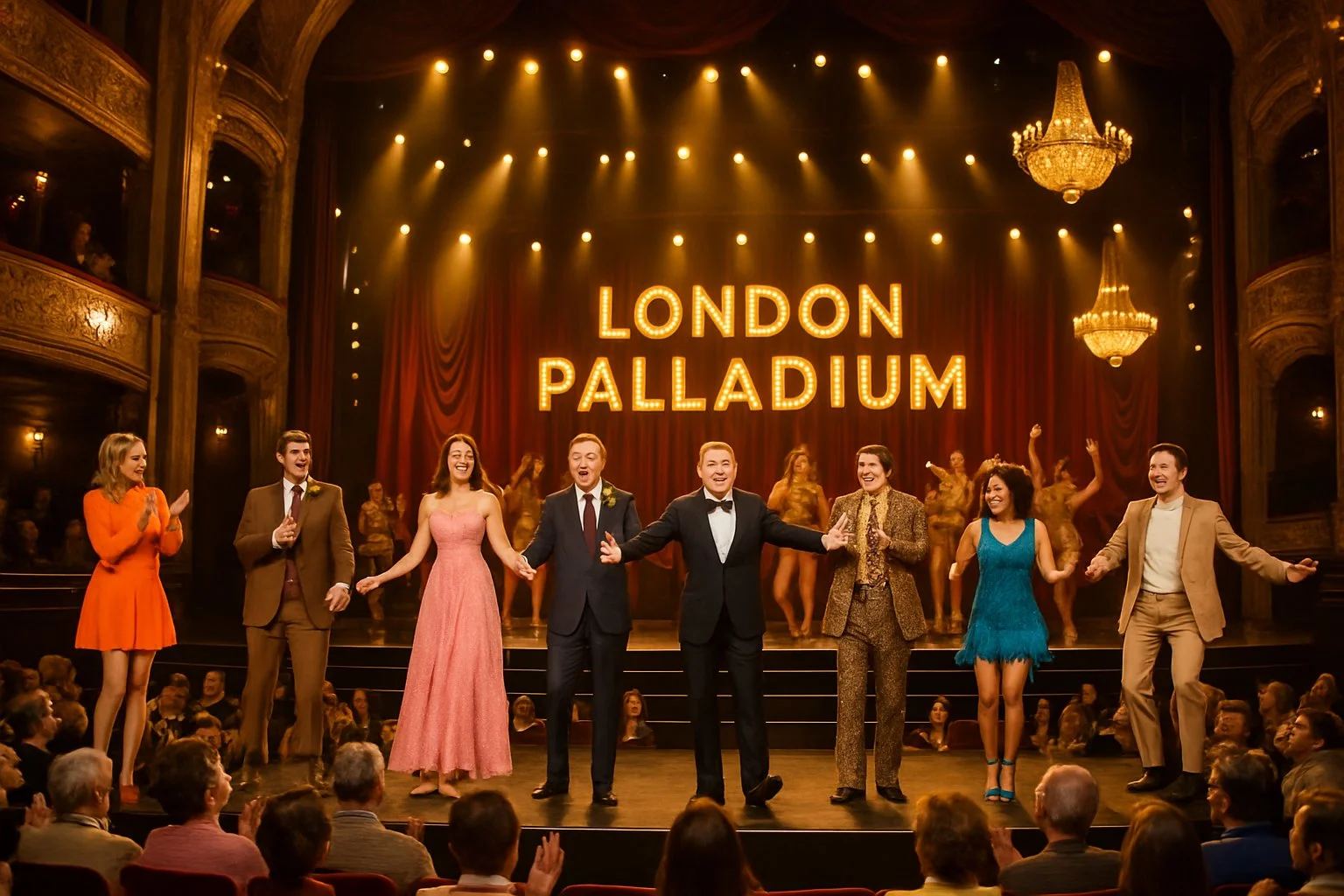
From its home at one of London’s most famous theatres, the show brought everything—acrobats, comedians, international music stars, and those high-kicking Tiller Girls. You felt like you’d gone out on the town, even though you were just curled up at home. Dance routines, specialty acts, and the ever-popular Beat The Clock game segment kept things moving, all stitched together by hosts who soon became household names.
The show ran from 1955 to 1969, with a brief 1970s comeback. It made stars out of its presenters, brought world-class acts to ordinary families, and set the bar for all the variety shows that came after. If you ask me, Sunday Night at the London Palladium really does capture that golden age when variety TV ruled the airwaves.
The Birth and Rise of Sunday Night at the London Palladium

Sunday Night at the London Palladium launched on 25 September 1955 as one of ITV’s earliest offerings, quickly becoming the cornerstone of British commercial TV. Val Parnell had this vision—he took a theatre variety format and somehow turned it into a ratings juggernaut that captured the country’s imagination.
Origins and Format of the Variety Show
The format borrowed from the old variety bill but gave it a television twist. Each episode kicked off with the Tiller Girls’ high-energy dance routines, then a specialty act—maybe acrobats, mimes, or puppets. New performers usually closed out the first half.
Then came “Beat the Clock,” a mini-game show that pulled audience members into the fun. Big-name acts dominated the final stretch, and everything wrapped up with a finale on that famous revolving stage as the credits rolled. The compere guided everyone through, sometimes even joining in the acts.
You could always see the orchestra and the audience, which made it feel like a proper theatre night, just happening in your front room. Only the Royal Variety Show, sometimes held at the same venue, really compared.
ITV and the Advent of British Commercial Television
Sunday Night at the London Palladium arrived right as ITV started broadcasting. Associated Television (ATV) produced the show for the ITV network, putting commercial TV on the map from day one.
By the time the 100th episode aired on 2 March 1958, only four episodes hadn’t cracked the Top 10. The show quickly went out to the whole ITV network, locking in its place as must-see TV. It always took a break for summer and Christmas, which let the seaside shows keep their regulars.
In 1965, they dropped “Sunday Night” from the title—partly to make it easier to sell abroad, partly so ATV could pre-record on Saturdays when needed. Some ITV stations wanted to air it an hour earlier, which just shows how big a draw it was.
Val Parnell, Lew Grade, and the Making of a TV Sensation
Val Parnell, the creator and executive producer, stayed with the show until 1966. He really shaped it into the bedrock of commercial TV in Britain.
Broadcasting from the London Palladium in the West End gave the show a kind of glamour that the others just couldn’t match. Parnell worked with Lew Grade at ATV to bring in huge international and home-grown stars.
The first show had Tommy Trinder as compere, with Gracie Fields and American singer Guy Mitchell as the main acts. Over time, the show moved from booking old music hall and radio favourites to TV personalities and pop stars, which just reflected how quickly British entertainment was changing.
Iconic Hosts, Stars, and Memorable Moments

The Palladium stage brought together some of the best comperes in British TV and rolled out the red carpet for stars from both sides of the Atlantic. Bruce Forsyth’s lightning wit, live TV mishaps—there were moments that had 28 million viewers buzzing on Monday mornings.
Legendary Comperes: From Tommy Trinder to Bruce Forsyth
Tommy Trinder kicked things off in 1955 and proved his worth right away—when a power cut knocked out ITV, he kept the audience going for two hours, finally greeting viewers with, “Welcome to Monday morning at the Palladium!”
Bruce Forsyth took over in 1958 and, honestly, he just owned the role. With 14 million viewers and his cheeky “I’m in charge” catchphrase, he became a real household name.
Don Arrol followed in 1960, then Norman Vaughan and Jimmy Tarbuck. Others took a turn—Bob Monkhouse, Des O’Connor, Roger Moore, Benny Hill. Jim Dale hosted the 1973 revival, bringing his own spark.
Star Performers Who Defined Palladium Nights
The first night brought Gracie Fields and Guy Mitchell, and after that, just about every big name seemed to show up.
International stars like Judy Garland, Mario Lanza, Liberace, Danny Kaye, Jack Benny, Johnnie Ray, and Bob Hope all took a turn. British favourites—Cliff Richard and The Shadows, Petula Clark, Frank Ifield—became regulars.
The Beatles played the show as their star was rising. The Rolling Stones—well, they refused to stand on the revolving stage. Too tame for their image, apparently. Norman Wisdom, during a 1961 Equity strike, saved the show with Bruce Forsyth, doing a full hour of slapstick chaos with stepladders and wallpaper paste.
Beat The Clock and Audience Participation
Beat The Clock brought regular folks onto the stage for silly games, all for a shot at a £1,800 jackpot. Borrowed from an American quiz show, it became a real highlight.
Contestants would dash about, trying to complete ridiculous tasks—catching ping pong balls in a butterfly net, that sort of thing. Bruce Forsyth’s way with this segment made him a star in his own right, and it kept viewers glued to the screen.
Unforgettable Incidents and Live TV Surprises
Live TV had its fair share of disasters. Hughie Green got clocked by falling scenery. Harry Secombe tumbled through a trap door mid-performance.
Norman Vaughan dropped a rifle and nearly broke his toe. Frankie Howerd accidentally carried the Union Jack upside down, causing a stir. Mario Lanza, in a mix-up, punched his own bodyguard.
Judy Garland, too upset, couldn’t face the revolving stage. Sometimes the stage itself broke down, leaving performers stranded. You never quite knew what would happen, and honestly, that’s part of what made it all so thrilling.
Cultural Impact and Enduring Legacy
Sunday Night at the London Palladium wasn’t just a show—it shaped how families spent their weekends and left a mark on TV for decades. Its reach stretched from the height of Beatlemania to inspiring a whole wave of variety programmes.
The Show’s Role in British Popular Culture
At its peak, the show pulled in up to 15 million viewers. For many, it was a Sunday evening ritual. Miss it, and you’d feel left out at school or work the next day.
The Beatles’ appearance in October 1963 was a real turning point. The crowds outside gave birth to the term Beatlemania. When they came back three months later, their fee had shot up from £250 to £1,000—times were changing fast.
The show brought old music hall and vaudeville traditions into the home. You never knew if you’d see a world-famous singer, a comedian, or a troupe of dancers next.
Influence on Future Variety and Game Shows
Sunday Night at the London Palladium really set the mould for British variety TV. Bruce Forsyth, after his run here, went on to host The Generation Game and other shows that borrowed the Palladium’s mix of games and entertainment.
Audience participation became a staple—later revivals in 1973 added games like ‘Anything You Can Do’. That influence is still felt in British TV today.
Archival Footage, Revivals, and Talking Pictures TV
The original run spanned from 1955 to 1969 on ITV, produced by ATV, LWT, and ABC. In 1966, the name changed to The London Palladium Show.
ITV tried revivals in 2014-2017—Tonight at the London Palladium, hosted by Bradley Walsh and others. They never quite recaptured the old magic, but they gave it a good go. A one-off concert in 2010 celebrated 100 years of variety at the venue.
Talking Pictures TV has started airing classic episodes, which is a treat. It lets new audiences get a taste of what made the original so special.
The London Palladium: Stage, Setting and City
The London Palladium’s reputation as a top variety venue came from its grand design and its prime West End location. Frank Matcham’s 1910 creation could seat over 2,000, and its spot on Argyll Street put it at the heart of British entertainment.
History and Architecture of the London Palladium
Frank Matcham designed the Palladium, opening it in 1910. The theatre became a Grade II* listed building, marking its architectural and historic importance. With room for 2,286 people, it’s still one of the bigger West End theatres.
Its size and layout made it perfect for variety shows. The revolving stage at the centre became a trademark of Sunday Night at the London Palladium. Performers would wave goodbye as the stage spun—well, unless you were Judy Garland, who found it too much, or The Rolling Stones, who just weren’t having it.
The Moss Empires theatre group ran the Palladium for years. Later, the General Theatre Corporation and producer George Black helped build its reputation as the go-to spot for variety theatre.
West End, Argyll Street, and The Theatre’s Place in London
The London Palladium sits right on Argyll Street in Soho, tucked into the heart of the West End. You can almost feel the old energy of the place, surrounded by London’s legendary theatres and entertainment haunts. The West End—Britain’s theatre district—always gave the Palladium that extra spark of prestige.
Being here, the theatre pulled in top talent from both Britain and America. The buzz of the West End brought crowds pouring in week after week, especially during those classic Sunday night TV broadcasts that somehow united millions across the country. Over time, the place earned a reputation as big as the Palace Theatre in New York—one of those rare venues everyone seems to know, even if they’ve never set foot inside.






Leave a Reply