
The late 1970s brought something magical—a time when suburban dance floors became stages for dreams, and disco balls turned plain old nights into wild, unforgettable adventures.
Across Britain and America, young people realized that weekends could transform them from their weekday selves into dancing legends, all while rocking the most fabulous flared trousers and platform shoes you could ever imagine.
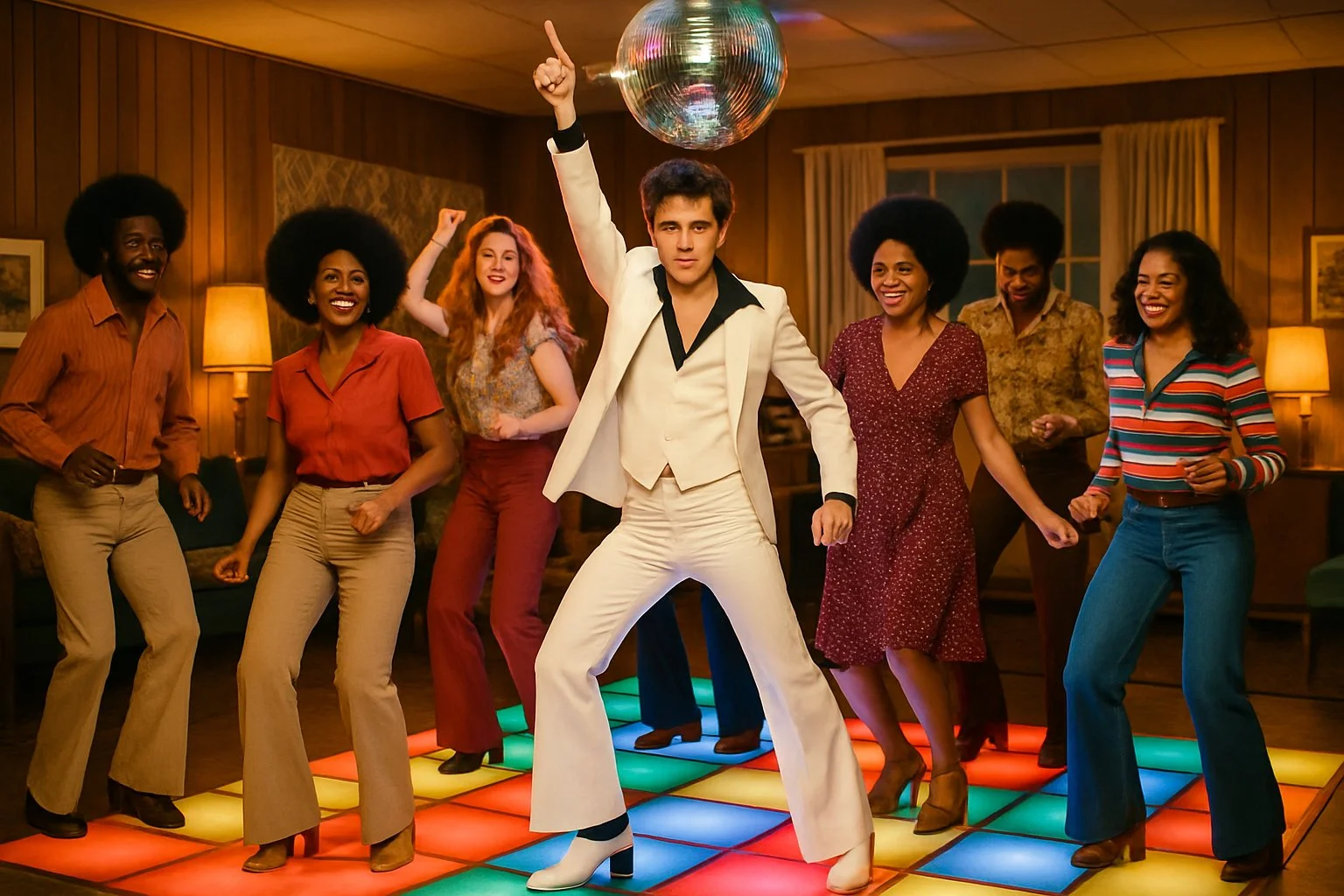
Saturday Night Fever didn’t just capture this cultural moment—it kind of exploded it, turning disco from an underground pulse into the heartbeat of a generation.
When John Travolta strutted across cinema screens in 1977, he wasn’t just acting; he was showing us how dance could be an escape, a kind of magic portal, and a way to carve out your own place in the world, even if just for a night.
Let’s wander back through the disco craze that swept suburban communities, peek at the iconic moves that defined the dance floors, and remember the wild impact this era had on music, fashion, and culture. From disco’s roots in working-class neighborhoods to the legendary venues where dreams came alive, this is a trip back to when Saturday nights really did feel like fever pitch.
Origins of Disco Culture in 1970s Suburbia

Disco culture bubbled up from city nightlife and, almost overnight, spilled into suburban communities across America. Young suburbanites found freedom and identity in discotheques—places that promised a break from the usual expectations.
The Rise of the Discotheque
Discotheques totally changed how we experienced nightlife in suburbia. Instead of live bands, DJs spun continuous dance music, and the vibe was all about losing yourself in rhythm.
Key Features of 1970s Discotheques:
- Flashing lights and mirror balls
- Sound systems built for dancing
- Atmosphere focused on movement and energy
Suburban discos became the hangout for anyone craving something different from the usual pubs or staid dance halls.
These clubs popped up in shopping centers and converted buildings, bringing a bit of urban cool to smaller towns. The music never let up, and the energy just kept building.
Suburban Youth and Social Escape
For young people stuck in suburbia, disco was a little rebellion against the old-fashioned family values. The dance floor felt like a place to break free from the daily grind.
What Disco Offered Suburban Youth:
- Freedom from prying parents
- New ways to express yourself
- Real connection with friends through music
Fashion was wild—flares, platforms, and shiny fabrics that caught every glint of the disco lights.
Saturday nights turned into little quests. Folks would drive between towns to find the best disco, chasing that shared experience the music created.
Dancing became a way to shake off the stress of work or school. The relentless beat gave us a place to pour out all that pent-up energy.
Brooklyn’s Influence on Disco Nights
Brooklyn’s disco scene set the tone for venues all over America. Clubs in the borough pioneered the mix of music and atmosphere that everyone else wanted to copy.
Brooklyn DJs basically wrote the rulebook. They read the crowd, kept the floor packed, and spread their influence through records and club networks.
Brooklyn’s Contributions:
- DJ mixing techniques
- Sound system innovations
- Dance floor culture
You could spot Brooklyn’s style everywhere—even in towns miles from New York City.
Local DJs learned from the best and brought those tricks home, so disco culture started to feel oddly familiar no matter where you danced.
Saturday Night Fever: Shaping the Dream

The story centers on Tony Manero’s desperate chase to escape working-class Brooklyn life, while Stephanie and the rest show other ways to chase the American Dream. Director John Badham nailed that balance between disco’s glamour and the gritty reality of 1970s suburbia.
Tony Manero’s Aspirations and Struggles
Tony Manero really captures the dreams (and frustrations) of so many young Americans stuck in dead-end jobs. John Travolta gives us a paint store clerk who morphs into a dance floor king every Saturday night.
Tony’s dreams reach beyond the disco lights. He’s desperate to get out of Brooklyn and break free from his family’s expectations. The club is his sanctuary, the one place he can imagine being someone else.
We watch Tony wrestle with his own limits. He knows he’s got talent, but his background keeps tripping him up.
Key struggles Tony faces:
- Dead-end work, no real prospects
- Family pressure that never lets up
- Not much education or money
- Class barriers that feel impossible to climb
Dance is Tony’s hope. On weekends, he’s king of the floor—respected in a way he never is the rest of the week.
The Role of Stephanie and Supporting Characters
Karen Lynn Gorney’s Stephanie is Tony’s idea of sophistication and escape. She works in Manhattan, talks about culture and dance like she owns it, and Tony finds her both intimidating and irresistible.
Stephanie becomes his dance partner and maybe something more, but she also reminds Tony how out of place he feels outside the disco.
Supporting characters do a lot of heavy lifting:
- Annette – the comfort Tony ultimately leaves behind
- Bobby C – a warning about where limited options can lead
- Tony’s family – traditional expectations he’s desperate to escape
These relationships make up Tony’s whole world. Each one hints at a different path for kids growing up in 1970s Brooklyn.
Stephanie eventually turns Tony down, forcing him to face himself—disco king on the surface, but still a kid underneath.
Director John Badham’s Vision
John Badham gave suburban disco culture real grit by filming on location in Brooklyn. He insisted on showing both the glitz and the grind.
Badham wanted the real thing. He didn’t sugarcoat poverty or pretend disco was a magic fix for everything.
He focused on:
- Real dialogue that sounded like actual Brooklyn
- Authentic locations—no fake Hollywood sets
- Gritty visuals that clashed beautifully with the dance scenes
He worked closely with Travolta to shape Tony’s journey. The leap from awkward teen to confident dancer didn’t just happen—it took careful choreography and real character work.
Badham’s vision stretched to the film’s social commentary, too. Saturday Night Fever digs into class, masculinity, and the limits facing suburban America.
His honest direction helped us connect with Tony’s struggles, even as we lost ourselves in those legendary dance scenes.
Legendary Dance Floors and Iconic Moves
The disco era didn’t just light up the dance floor—it turned it into a glowing stage for self-expression. And those signature routines? They became their own language, one you could spot anywhere. Saturday Night Fever’s lit-up floor and Travolta’s moves set the template.
The Illuminated Dance Floor Phenomenon
The disco floor wasn’t just a place to dance—it was the pulsing heart of nightlife. Saturday Night Fever’s geometric, color-pulsing floor was hypnotic.
They built that floor for the movie at a cost of $15,000. At 24 by 16 feet, with colored bulbs under acrylic panels, it was simple tech with a huge payoff.
Key features of iconic disco floors:
- Bold, geometric patterns
- Lights that flashed along with the beat
- Mirror tiles everywhere
- Raised spots for show-offs
After filming, the 2001 Odyssey club in Brooklyn kept the original floor. Local dancers got to feel its magic for real. Once those lights came on, even the shyest folks wanted to dance.
These glowing floors became disco’s calling card. Clubs everywhere tried to copy that electric vibe.
Signature Disco Dance Routines
Travolta’s Tony Manero made certain moves legendary. He prepped hard—running, dancing for hours, dropping weight—just to nail that role.
Essential disco moves from Saturday Night Fever:
- The Hustle – Partner spins and syncopated steps
- The Point – That iconic finger jab
- Hip swivels – Smooth, rolling hips
- Shoulder rolls – Loose, flowing upper body
The film pulled underground moves into the mainstream. Suddenly, you saw them everywhere—in suburban clubs from London to LA.
Travolta’s white suit was almost as famous as his dancing. His strut and sharp moves showed that disco wasn’t just about rhythm—it was about style and attitude.
Those routines weren’t easy. Dancers put in serious hours to get the transitions and poses just right.
The Music That Defined an Era
The Bee Gees—who would’ve guessed?—reinvented themselves as disco kings with the Saturday Night Fever soundtrack. “Stayin’ Alive,” “Night Fever,” and the rest became the pulse of the late ’70s. And disco didn’t stop there; artists all over the map kept suburban communities moving in shared rhythm.
Bee Gees: Crafting the Soundtrack
We watched the Bee Gees flip from ballads to disco almost overnight. The Gibb brothers, hailing from Australia, ditched their folk roots and dialed into disco’s energy.
Their falsetto harmonies became the genre’s signature. Barry, Robin, and Maurice seemed to know exactly what dancers craved. They wrote hooks and beats that stuck in your head.
What made their disco sound:
- Soaring, high harmonies
- Relentless four-on-the-floor drums
- Strings that shimmered
- Bass lines you could feel in your bones
Legend has it they wrote most of those hits in just a weekend, hunkered down in the studio.
They didn’t stumble into this. The Bee Gees studied the clubs and then cranked up the volume for the masses. Suddenly, disco was everywhere—even in the most unlikely suburbs.
Unforgettable Hits: ‘Stayin’ Alive’, ‘Night Fever’, and More
“Stayin’ Alive”—that bass line, those drums. Even now, you can’t hear it without wanting to move.
“Night Fever” nailed the weekend escape. The lyrics spoke to anyone trying to shake off a tough week.
Chart Performance:
| Song | UK Peak | Weeks at #1 |
|---|---|---|
| Stayin’ Alive | #4 | 4 weeks |
| Night Fever | #1 | 2 weeks |
| How Deep Is Your Love | #3 | 3 weeks |
“How Deep Is Your Love” gave disco a softer side. Still danceable, but with some heart.
“More Than a Woman” rounded out their run of classics. Each track was its own thing, but you always knew it was the Bee Gees.
These weren’t just songs—they were the soundtrack to every party, every school dance, every night you didn’t want to end.
Dancefloor Anthems Beyond Saturday Night Fever
Disco was way bigger than the Bee Gees. So many artists shaped the sound.
Donna Summer’s “I Feel Love” rewrote the rules with electronic beats. Giorgio Moroder’s synths were so ahead of their time, it’s almost spooky.
Chic brought a kind of elegance—”Le Freak,” “Good Times”—and Nile Rodgers’ guitar became the backbone of a thousand disco hits.
Other disco essentials:
- “Dancing Queen” by ABBA
- “Boogie Wonderland” by Earth, Wind & Fire
- “I Will Survive” by Gloria Gaynor
- “Love Train” by The O’Jays
Disco was a melting pot—soul, funk, pop, all mashed together.
Studio 54 became the epicenter, but those songs blasted out of every suburban rec center and basement party, too.
Every track was a little celebration. For a few minutes, everyone belonged on the floor.
Fashion and Style on the Disco Scene
Disco fashion? Honestly, nothing else comes close. Bold colors, shimmering fabrics, and shapes that begged to be spun around. The whole look was about comfort and flash—expressing yourself while keeping cool under those relentless lights.
Platform Shoes and Flares
Platform shoes—they literally lifted you above the crowd. We wore them in gold, silver, glitter, you name it, and every step caught the light.
Women’s platforms were all chunky heels and straps, often in metallics that sparkled like crazy.
Guys’ platforms were a little more low-key, but still gave you a couple extra inches. And they worked perfectly with those flared trousers.
Bell-bottoms and flares ruled the closet. The wide legs made for dramatic entrances (and exits) and looked incredible twirling under the disco ball.
High-waisted cuts hugged you in all the right places, then flared out—whether you went for polyester or that slippery, shiny satin. There was something about the way those pants moved that just made you want to dance.
The Allure of the White Suit
John Travolta’s white three-piece suit in Saturday Night Fever—man, that thing rewrote the rulebook. Suddenly, every guy wanted that crisp polyester blazer, waistcoat, and those gloriously flared trousers. Against the darkness of a packed dancefloor, that look just popped.
We chased that style like it was the Holy Grail. Wide-collared shirts in wild colors, always half-unbuttoned, gold chains glinting under the disco lights. If you skipped the waistcoat, you weren’t really doing it right—it pulled the whole thing together, kept the lines sharp so you could move and still look put-together.
Women got in on the white craze too, swirling around in flowy dresses and jumpsuits that seemed to catch every stray beam from the spinning disco ball. Some went for matte polyester, others for lamé so shiny it could blind you if you stared too long.
Hairstyles, Accessories, and Attitude
Our hair? Oh, it was a whole production. Women layered and feathered theirs, channeling Farrah Fawcett, so every spin on the dancefloor sent those locks flying. Guys kept it just long enough for some bounce, a little windblown, like they’d just stepped off a motorcycle—even if they’d never touched one.
Key accessories included:
- Gold chains, the longer the better
- Wide belts cinched tight at the waist
- Big hoop earrings, always flashing in the light
- Metallic handbags and clutches tucked under one arm
Makeup went bold. Electric blue or purple eyeshadow, lips slicked and glossy, highlighter everywhere. It was all about standing out, not blending in.
But honestly, it wasn’t just about the clothes or the hair. You had to walk in like you owned the place. Confidence mattered more than memorizing the rules.
Cultural Impact and Lasting Legacy
Saturday Night Fever didn’t just make disco popular—it turned it into a tidal wave that swept over everything. Dance, music, fashion, even how we thought about escaping the daily grind… it all changed. Sometimes I wonder if we realized how big it was at the time.
Disco’s Influence on Popular Culture
When Saturday Night Fever hit, disco exploded. The Bee Gees were everywhere; you couldn’t walk down the street without hearing “Stayin’ Alive” or “Night Fever” blaring from a car or a shop window. Those songs just stuck in your head and refused to leave.
Travolta’s white suit, that finger-in-the-air dance move—you saw it everywhere, from Halloween parties to magazine covers. People all over, not just in cities, started copying the look: bell-bottoms, wide lapels, wild shirts. Suddenly, disco wasn’t just a city thing—it was in the suburbs, in small towns, on TV.
Everyone jumped on the bandwagon:
- TV shows started adding disco episodes or musical numbers
- Advertisers pumped out commercials with disco beats and flashy lights
- Fashion designers rolled out whole lines inspired by the dancefloor
- Radio DJs packed their playlists with disco tracks
Disco artists like Donna Summer and KC and the Sunshine Band shot up the charts. Record labels scrambled to sign anyone with a dance beat. It almost felt like the whole world was spinning under a mirrored ball.
Transforming Dance Club Life and Youth Identity
Nightclubs morphed into something else entirely. After Saturday Night Fever, they weren’t just dark rooms with a jukebox—they became these electric, almost magical places. Young people flocked to them, hoping to lose themselves in the music for a few hours, maybe find a piece of themselves they didn’t know was missing.
Dancing wasn’t just for fun anymore; it became a way to say, “This is who I am.” Tony Manero showed us that even if you felt stuck in your day-to-day, you could shine on the dancefloor.
Key transformations in club culture:
| Before Saturday Night Fever | After Saturday Night Fever |
|---|---|
| Limited dance styles | Universal disco moves |
| Niche club attendance | Mainstream club popularity |
| Simple lighting | Elaborate disco balls and effects |
Those disco moves? Everybody wanted to learn them. Suddenly, you saw the same steps from New York to London to tiny towns you’d never heard of. It didn’t matter where you were from—if you could dance, you belonged.
Nightclubs started to feel like theater. Places like Studio 54 leaned into the spectacle, drawing in all kinds of people, each hoping for their own Saturday Night Fever moment. Honestly, it felt like the world was just a little bit shinier back then.
Continued Nostalgia for Disco Dreams
The film’s legacy lingers in the oddest corners of pop culture. You’ll spot new artists like Dua Lipa channeling disco’s wild, joyous vibe, and every few weeks, TikTok seems to rediscover those classic moves all over again.
Saturday Night Fever set the standard for dance films. You can see its fingerprints on movies from Flashdance to Footloose and even Step Up. It’s almost funny how dance, thanks to that film, became a way to tell stories that actually stick with us.
Contemporary disco influence pops up in:
- Music production – disco beats sneak into modern tracks all the time
- Fashion revivals – those 70s looks just keep coming back
- Film and television – shows and movies keep celebrating that era
- Social media – endless disco dance challenges and throwbacks
When we picture the 1970s, it’s hard not to see it through a disco lens. Saturday Night Fever didn’t just reflect the times—it more or less wrote the script for how we remember them: the glitter, the music, the whole mood.
The Bee Gees’ soundtrack just won’t quit. Their songs still pop up everywhere—from movies to commercials to the occasional wedding dance floor. Somehow, they always bring back that rush of hope and energy the film captured so well.






Leave a Reply