
If you grew up in Britain during the 1960s, you probably remember those chilly mornings in the school hall, hymn book in hand, ready to belt out “All Things Bright and Beautiful” or “Jerusalem” with your mates.
Thanks to the 1944 Education Act, daily collective worship wasn’t just tradition—it was law, so morning assemblies with hymns and prayers became this oddly unifying ritual for a whole generation.
Personally, as a lifelong athiest, I rather resented that.
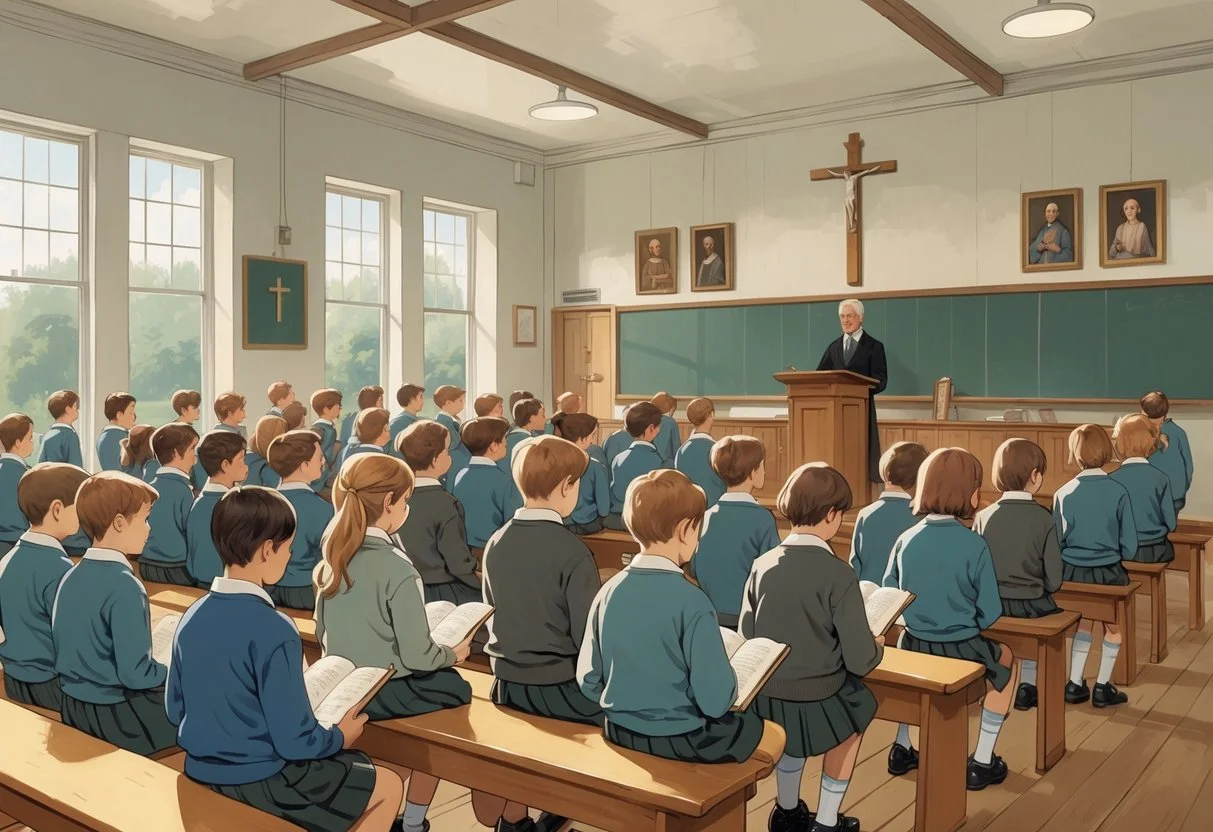
Those songs weren’t just background noise—they became the soundtrack of your childhood. Even now, decades on, I bet you could mumble your way through “He’s Got the Whole World in His Hands” or “Morning Has Broken” without missing a beat. Assembly rituals stitched together shared memories—from city schools to tiny village classrooms, everyone knew the drill.
Assembly Hymns in 1960s British Schools

Assemblies in 1960s Britain had a grab bag of hymns—some old, some new—that shaped what religious education meant back then. You got the classics like “All Things Bright and Beautiful” but also newer tunes that crept into the hymn books as the decade rolled on.
Popular Hymns and Their Meanings
Traditional hymns really anchored school assemblies. “All Things Bright and Beautiful” was a mainstay, celebrating God’s creation and, by osmosis, teaching kids something about nature and providence.
“He’s Got the Whole World in His Hands” always got everyone singing. Its simple, looping verses made it easy to learn, and the message—God’s protective care—felt comforting, even if you didn’t quite grasp all the theology.
Common Traditional Hymns:
- The Lord’s My Shepherd
- How Great Thou Art
- Onward Christian Soldiers
- Morning Has Broken
“Kumbaya My Lord” had a gentler, almost lullaby vibe. Its roots in African spirituals and that calm melody made it a go-to for quieter assemblies.
“This Little Light of Mine” was all about letting your faith—whatever that meant to you—shine out. It was catchy and simple, and the message about spreading kindness stuck, even if you just liked the tune.
Modern Classics Added to the Canon
By the late ‘60s, new hymns started sneaking in. “Shine Jesus Shine” had a bounce to it and felt more modern, which probably helped keep the younger kids awake.
“Lord of the Dance” brought a burst of energy. That rhythm, those swirling verses—it was a challenge to keep up, especially first thing in the morning, but it woke you up better than the assembly bell.
Graham Kendrick’s songs showed up in the newer hymn books. His style bridged the gap between the old church music and something a bit more lively, which, honestly, was a relief.
“Give Me Oil in My Lamp” had that “Sing Hosanna” chorus, which meant even the shy kids joined in. It was simple, repetitive, and somehow managed to sound cheerful even on rainy Mondays.
Seasonal and Thematic Songs
Harvest festivals brought in special hymns about God’s bounty and the natural world. “Cauliflowers Fluffy” stands out—partly because it was fun to sing about vegetables, partly because it made the assembly feel like a celebration.
“Autumn Days” marked the changing seasons. These songs tied religious education to the world outside the classroom—leaves turning, rain on the windows, that sort of thing.
Seasonal Favourites:
- Who Put the Colours in the Rainbow (creation themes)
- Colours of Day (morning worship)
- One More Step Along the World I Go (journey themes)
Christmas and Easter brought their own set lists. “The Ink is Black” and other newer songs joined the classic carols, and the whole hall would buzz with a different energy.
Teachers often picked hymns that matched whatever was happening in the world or in school life. That made assemblies feel a bit more connected to what was actually going on.
The Role of Hymns in Religious Education
Hymns weren’t just for singing—they doubled as teaching tools. “When I Needed a Neighbour” drilled home the idea of looking out for others, not just yourself.
The repetitive lyrics made it easy for kids (even the ones who struggled with reading) to pick up religious ideas and stories, almost without realizing it.
No matter what kind of school you went to, you probably sang the same hymns as kids across the country. That shared songbook created a kind of invisible thread between generations.
Music opened the door for everyone. If you couldn’t read or remember the prayers, you could still join in on the chorus, especially with songs like “Sing Hosanna.”
Because the 1944 Education Act required daily worship, these hymns got baked into childhood memories. They gave everyone a kind of common language, even as Britain became more diverse.
Morning Prayers and Daily Assemblies

Assemblies were the heartbeat of religious education in 1960s British schools. Every day started with prayer, singing, and a bit of moral instruction—sometimes more than a bit. It was a ritual that pulled the whole school together and set the tone, for better or worse.
Structure of Morning Assemblies
Mornings kicked off at 9:00 a.m. sharp when the assembly bell rang out. You’d line up in the playground, shivering or fidgeting, then file into the hall.
The headmaster sat up front, flanked by a Bible, hymn book, and that ever-present collection plate. You’d find your spot—usually cross-legged on a hard wooden floor—and try not to make a sound.
Assemblies followed a familiar rhythm. First, everyone recited the Lord’s Prayer—some from memory, others sneaking a peek at the hymn book. Then came a Bible reading, usually from the Old Testament, meant to teach some lesson (though sometimes it just made you hungry for break time).
After that, you’d drop your pennies into the collection plate. Those coins funded school repairs or the tuck shop.
Announcements came next—sports fixtures, concerts, reminders about homework. Occasionally, a local priest would pop by to talk about church or invite you to Sunday services.
And then, the best bit: the whole school belting out a hymn, voices echoing off those high ceilings.
Types of Prayers Recited
The Lord’s Prayer was the anchor—everyone knew it, even if you mumbled through the tricky bits.
Morning prayers focused on gratitude, guidance, and protection for the day. You’d bow your head, close your eyes, and try not to peek at your friends.
Some prayers asked for wisdom in lessons, or patience (not that it always worked). Others nudged you to be kind to classmates and respectful to teachers.
“Morning Has Broken” and other hymns doubled as sung prayers, praising creation and asking for a bit of divine help with the day ahead.
Prayers usually circled around:
- Thankfulness for school and opportunities
- Guidance for making good choices
- Protection throughout the day
- Compassion for others, especially those having a rough time
Integration with Daily School Life
Assemblies shaped more than just mornings. The values you picked up seeped into the rest of the day—sometimes in ways you didn’t notice.
Discipline and respect got drilled in, not just in the hall but out on the playground and in classrooms. The sense of belonging carried over, too.
If you got into trouble—the odd broken window or playground scrap—the headmaster would remind you of that morning’s prayer or hymn. Not always what you wanted to hear, but it stuck.
Assemblies also offered the chance for recognition. When you did well, you’d stand up in front of everyone, feeling ten feet tall. That sense of community was hard to shake, even years later.
And those hymns—like “The Lord’s My Shepherd”—stayed with you. They’d pop into your head at the strangest times, a kind of comfort blanket from your school days.
Cultural Impact and Legacy of School Hymns
Those old assembly hymns wove themselves into the fabric of British life, far beyond school walls. They influenced everything from stage productions to pub singalongs, and the memories they made still spark conversations and laughter today.
Enduring Popularity in British Culture
Hymns from 1960s assemblies still echo in British culture. “Jerusalem” rings out at sporting events and royal dos, while “All Things Bright and Beautiful” pops up at weddings and local gatherings.
Even now, plenty of adults can rattle off “He’s Got the Whole World in His Hands” or “This Little Light of Mine” without missing a beat. The songs outgrew their church roots and became something everyone shared.
Media loves to revisit these tunes—articles call them “absolute belters” and “bangers,” and radio shows run whole segments on assembly favourites.
Popular hymns still going strong:
- Lord of the Dance
- Shine Jesus Shine
- Give Me Oil in My Lamp
- When the Saints Go Marching In
Social media, too, is full of people swapping lyrics and laughing about projector screens and sitting cross-legged on cold floors. There’s a real appetite for assembly nostalgia.
Influence on Later Musical Productions
The rhythms and melodies of school hymns didn’t just fade away—they shaped big theatrical productions. “Lord of the Dance” morphed into Michael Flatley’s blockbuster show in the ‘90s, which is wild when you think about it—a school hymn filling theatres worldwide.
Flatley’s version took that simple melody and spun it into a spectacle. It’s proof that those old songs had real staying power, even if we didn’t realize it at the time.
Connections worth noting:
- Lord of the Dance hymn → Michael Flatley’s stage show
- Celtic traditions → Riverdance and its offshoots
- Assembly songs → Full-on dance extravaganzas
Riverdance and similar productions borrowed from the same musical roots as the hymns we sang as kids. Those tunes, once echoing in school halls, ended up captivating audiences around the globe. Funny how things come full circle, isn’t it?
Community and Shared Memory
School hymns wove strange, invisible threads between people who grew up in different corners of Britain. It’s funny—you might bump into someone decades later, and there’s this odd spark of recognition when you both remember the same morning assemblies, the same tunes echoing through drafty halls.
Didn’t matter much where you went to school, really. Village primary or sprawling urban comprehensive, chances are you picked up the same handful of hymns. That’s just how it was.
Common assembly memories include:
- Sitting cross-legged on those chilly wooden floors
- Squinting at lyrics projected overhead, occasionally out of focus
- Trying to out-sing your mates on the rousing bits
- Hand actions—some coordinated, most not
Those hymns, they’re like little time capsules. Folks born in the ’50s or ’60s? They’ll light up if someone mentions “From the Tiny Ant” or “Cauliflowers Fluffy.” You can almost see them transported right back.
At reunions these days, someone inevitably starts up a hymn, and suddenly a whole roomful of adults remembers every word. Harmonies drift back, sometimes shaky, but always familiar. It’s a bit magical, honestly—who’d have thought those early songs would stick around so stubbornly?
Looking back, it feels like these memories stitched together a kind of Britishness. Not in a grand, flag-waving way, but in the quiet recognition that, for a while, we all sang the same songs.






Leave a Reply