
When British television captured life in an NHS hospital ward in 1979, it did more than just entertain.
Only When I Laugh used the tight, slightly claustrophobic space of a hospital to poke at how ordinary Britons faced discomfort, illness, and uncertainty with a mix of dark humour and quiet resilience—traits that sort of defined British stoicism by the late 20th century.
The sitcom threw together three men from wildly different backgrounds, stuck side by side in adjoining beds, and just watched what happened when they couldn’t get away from each other or their own problems.
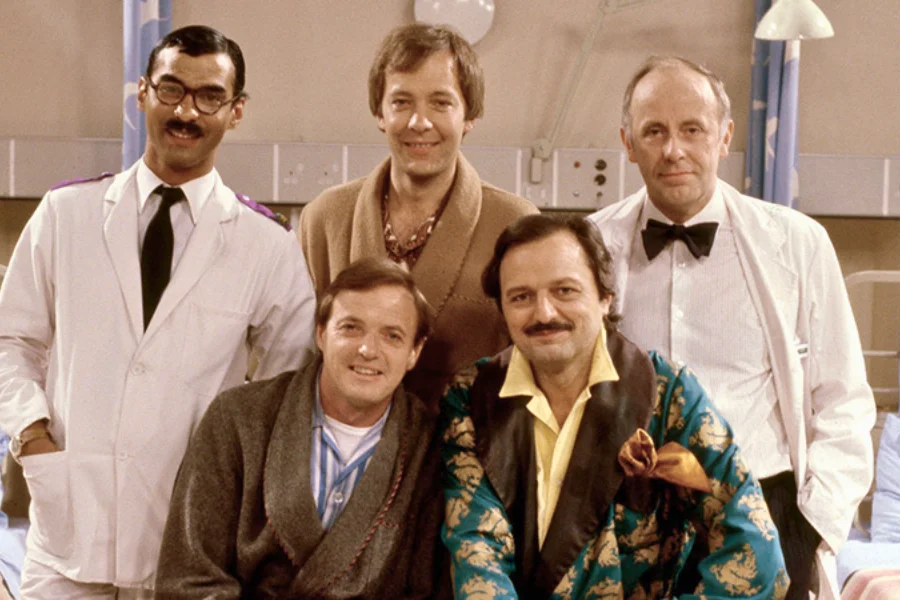
The show landed at a funny sort of moment in British culture. Eric Chappell, fresh off the success of Rising Damp, wrote it with James Bolam, Peter Bowles, and Christopher Strauli as long-term patients muddling through hospital life with banter, grumbling, and the occasional bit of mischief. Unlike those slick American medical comedies, this wasn’t about miracle-working doctors or dramatic recoveries. This was about waiting, enduring, and figuring out how to cope when life just made you sit tight.
What set Only When I Laugh apart was its attitude toward suffering—it wasn’t something to conquer, just something to manage. The characters didn’t deliver rousing speeches or come out transformed. They just existed together, making the best of a rough deal with humour that was sometimes sharp, sometimes a bit cruel. It was this approach—neither wallowing in misery nor pretending it wasn’t there—that felt so very British.
Setting the Scene: The Hospital Ward as a Microcosm of Britain
The men’s surgical ward in Only When I Laugh became a little world of its own, tossing together three patients from different walks of life. Class divisions, political differences, and those very British attitudes all crashed into each other. This NHS hospital backdrop let the show dig into how everyday people, plucked from their usual surroundings, managed when forced into close quarters.
The Men’s Surgical Ward: Everyday Life and Comedic Chaos
The ward had three main characters who couldn’t have been more different. Roy Figgis, a working-class lorry driver, brought a bit of trouble wherever he went. Norman Binns, jumpy and middle-class, was on his first hospital stay and clearly out of his depth. Archie Glover, the upper-class hypochondriac, turned every twinge into high drama.
These three constantly disrupted the staff. Mr Thorpe, the surgeon, and Nurse Gupte had to wrangle their antics day in and day out. The patients weren’t in for quick fixes—they were stuck there, with plenty of time to scheme, squabble, and, now and then, actually bond.
The ward became their home for a while. Meals, visiting hours, sleepless nights—they shared it all, whether they liked it or not. There was really no escaping each other’s quirks or differences.
The NHS Hospital Backdrop: Authenticity and Social Commentary
Yorkshire Television set the sitcom in a standard NHS hospital, not some posh private clinic. That grounded the show in the reality most viewers knew. The NHS was the great leveler—everyone got the same care, no matter their bank balance.
And the hospital looked like it belonged in 1970s Britain. Shared wards, no real privacy, resources stretched thin, staff doing their best with what they had.
Chappell focused on the patients’ experience, not the staff’s. Earlier hospital sitcoms had always centered on doctors and nurses. By flipping that, the show let us see what it felt like to be vulnerable, stuck, and at the mercy of others.
Class and Politics on the Ward: British Society in Micro
Chappell once said the three main characters differed in “class and politics” and how they viewed being stuck in hospital. That created the “vital chemistry” for comedy. Figgis, rough around the edges, stood in for the working class. Binns, anxious and eager to please, was every inch the middle-class rule-follower. Glover, with his dramatics and expectations, brought upper-class entitlement.
Their backgrounds shaped how they handled illness and authority. Figgis pushed back against the system. Binns tried to be the model patient. Glover expected special treatment, whether he got it or not.
Politics bubbled up in their conversations, too. The 1970s were a mess—strikes, inflation, social upheaval. You could see those tensions playing out in miniature right there on the ward.
Smoking, Hypochondria, and 1970s Hospital Culture
The show nailed the details of hospital life back then. Patients smoked in bed—even when they were sick. That feels wild now, but it was just how things were. Hospital culture hadn’t yet turned toward all the strict health rules we know today.
Glover’s hypochondria got laughs, but it rang true. Plenty of patients exaggerated symptoms or dragged their feet about going home. The show poked fun at that, but you could tell it understood the real anxiety illness brings.
Visiting hours were short and strictly enforced. Families came and went on a schedule, leaving long stretches where the patients had nothing to do but talk, wind each other up, and get into trouble.
Meet the Cast: Characters Who Embodied Stoicism and Humour
The three main patients each brought their own flavour of British reserve and wit. Their backgrounds clashed and blended, showing just how folks from all walks of life muddled through illness and hospital life.
Norman Binns: The Naïve Middle-Class Patient
Christopher Strauli played Norman Binns, the gentle, slightly lost middle-class bloke stuck between two bigger personalities. Norman felt like the everyman, just trying to make sense of hospital routines. He faced his situation with a kind of quiet acceptance that, honestly, bordered on stoicism.
Norman’s strength showed in how he endured without fuss. He didn’t challenge the staff, just absorbed the chaos with patience.
His naivety made him easy prey for Roy and Archie, who dragged him into their schemes. Norman went along, even when he knew it was a bad idea.
The laughs often came from Norman’s desperate attempts to stick to the rules, even as his wardmates led him astray. He just wanted to be a good patient—easier said than done.
Roy Figgis: Working-Class Wit and Resilience
James Bolam turned Roy Figgis into a working-class patient who refused to let illness get the better of him. Roy was a fixture on the ward, always ready with a sharp remark or a sneaky plan. His stoicism looked more like action than quiet suffering.
Roy coped by staying busy—organising card games, plotting little rebellions against hospital rules, keeping the mood up. He didn’t wallow; he just got on with it.
Roy’s main traits:
- Quick thinking, always scheming
- Fiercely loyal to his mates
- Suspicious of authority, especially Dr Gordon Thorpe
- Practical, never sentimental about hospital life
Comedy often came from Roy’s run-ins with Richard Wilson’s Dr Thorpe. Those clashes brought class tensions bubbling to the surface. Roy didn’t back down, not even from doctors.
Archie Glover: Upper-Class Snobbery and Dry Irony
Peter Bowles made Archie Glover the ultimate upper-class hypochondriac, bringing a bit of theatre to every cough and ache. Archie’s stoicism felt like a performance—he suffered, but always with dramatic flair.
Archie showed how the upper crust handled adversity. He expected special treatment, but the NHS had other ideas. That gap between what he wanted and what he got made for some of the show’s best moments.
His dry, cutting wit stood in sharp contrast to Roy’s more direct humour. Archie could insult you with a smile. He thought he was above his wardmates, but couldn’t escape sharing their world.
Together, these three painted a picture of late 1970s Britain—different backgrounds, forced to get along, finding common ground in the most unlikely place.
Behind the Comedy: Creators, Writers, and Ensemble Dynamics
Eric Chappell built the series around three patients from different social classes, while Richard Wilson and Derrick Branche anchored the medical staff. A rotating cast of British TV favourites popped in as patients and visitors.
Eric Chappell’s Vision: From Rising Damp to Only When I Laugh
Eric Chappell made his name with Rising Damp, which won a BAFTA for Best Situation Comedy in 1978. Yorkshire Television snapped him up for another sitcom as soon as that wrapped.
He picked a hospital ward for his setting, knowing it would trap characters together and spark conflict. Chappell created three leads—working class, middle class, and upper class—whose clashing politics and personalities would drive the laughs. He told the Liverpool Echo their different attitudes toward hospital life gave the show its “vital chemistry.”
Chappell loved poking at class divides, always finding humour in Britain’s social pecking order. Ken Jones wrote the theme tune “I’m H-A-P-P-Y,” a downbeat little number that didn’t quite match its cheery lyrics.
Supporting Characters: Dr Gordon Thorpe, Nurse Gupte, and More
Richard Wilson played Dr Gordon Thorpe, the exasperated doctor forever trying to keep his squabbling patients in line. The trio drove him up the wall with their endless bickering.
Derrick Branche rounded out the main cast as Staff Nurse Gupte. Before acting, Branche played guitar in The Hectics—a band that, funnily enough, once included a young Freddie Mercury.
The medical staff became the authority figures the patients loved to rebel against. Dr Thorpe, especially, ended up as the target of Roy Figgis’ suspicions—Roy always thought the doctor favoured the posher patients.
Guest Stars: Famous Faces Across British Television
The hospital setting let a parade of guest stars wander in and out over four series. Patrick Troughton (the second Doctor in Doctor Who) showed up, as did John Junkin, Gwen Taylor, Pat Ashton, Mary Tamm, Sylvia Kay, and Reginald Marsh.
Pat Ashton played Norman’s overbearing mother in the Series 2 episode “The Visitors,” trying to set him up with a girl. Wanda Ventham also made an appearance somewhere along the line. These familiar faces kept things fresh, but the show always circled back to the three main patients and their tangled relationships with each other and the staff.
Cultural Impact and Legacy of Only When I Laugh
The series carved out its place in British TV comedy, showing that humour could thrive even in tough times, and brought together stars from other beloved sitcoms. People still remember it, and it keeps popping up in repeats and on home media.
British Stoicism and the Art of Suffering with Humour
The show really captured a British way of handling illness and hardship. The three main characters rarely moaned in earnest about their ailments. Instead, they turned their hospital stay into a contest of wit and bravado.
Roy Figgis, in particular, played up his working-class toughness, always boasting about his “natural resistance” and pain threshold. Of course, the laughs often came when his bravado crumbled during actual medical procedures. That gap between the tough front and reality—so recognisably British, isn’t it? Just putting on a brave face, pretending everything’s fine, even when it’s not (classic move).
The ward became a little slice of British society, muddling through the NHS experience. Patients smoked in bed, squabbled over nonsense, and brushed off serious stuff with sarcasm. The theme tune, with its ironic “I’m H-A-P-P-Y” refrain, somehow nailed that mood of cheerful resignation.
Comparisons with The Likely Lads and To the Manor Born
Only When I Laugh brought James Bolam back to sitcoms, and honestly, it felt like seeing an old friend walk through the door after years away. Bolam’s Roy Figgis had a bit of Terry Collier in him—both northern, both working-class, and both carrying that chip on their shoulder about politics and the world. You can almost hear the echoes of the past in Figgis’s dry remarks.
Funny thing—Peter Bowles popped up in the very first episode of To the Manor Born just a month before Only When I Laugh started. He slipped right into those posh roles, didn’t he? Archie Glover in the hospital ward carried himself with the same polished air and clipped speech as Richard DeVere. Sometimes it’s hard not to grin at the way Bowles made aristocracy look both ridiculous and oddly charming.
If you look back, the class conflict between Bolam and Bowles’ characters really captured something of the era’s mood. Eric Chappell leaned into those class differences, squeezing out every bit of comedy. It’s almost as if he understood that audiences, deep down, love a bit of tension between the north and the south, the working man and the gentleman. That’s where the spark was.
DVD Releases, Repeats, and Lasting Popularity
The complete series landed on DVD in the UK, opening the door for folks who missed it the first time around. Over the years, you could still find all four series on different home media—VHS, DVD, you name it.
British TV channels just kept bringing it back, airing repeats well after the series wrapped up in 1982. There was something about that hospital backdrop and the quirky, character-driven humor that stuck with people—maybe it reminded them of their own lives, or maybe it was just a bit of comfort on a rainy evening.
Looking back, the show really carved out its place as one of ITV’s standout sitcoms from that era. Eric Chappell, fresh off Rising Damp, showed he could spin up another hit, and honestly, he kind of became a household name for Yorkshire Television.






Leave a Reply