
Back in 1971, British TV took a wild left turn. Suddenly, there was a fluffy white kitten named Twinkle, ballooning to a monstrous size and rampaging through London—toppling the Post Office Tower and sending the city into a panic. This wasn’t some failed monster flick. Nope, it was The Goodies, a show that loved nothing more than turning slapstick and surrealism up to eleven. “Kitten Kong” became one of the most celebrated episodes in British comedy history, winning the Silver Rose at the 1972 Rose d’Or Festival and creating an iconic image that would define the series for years to come.
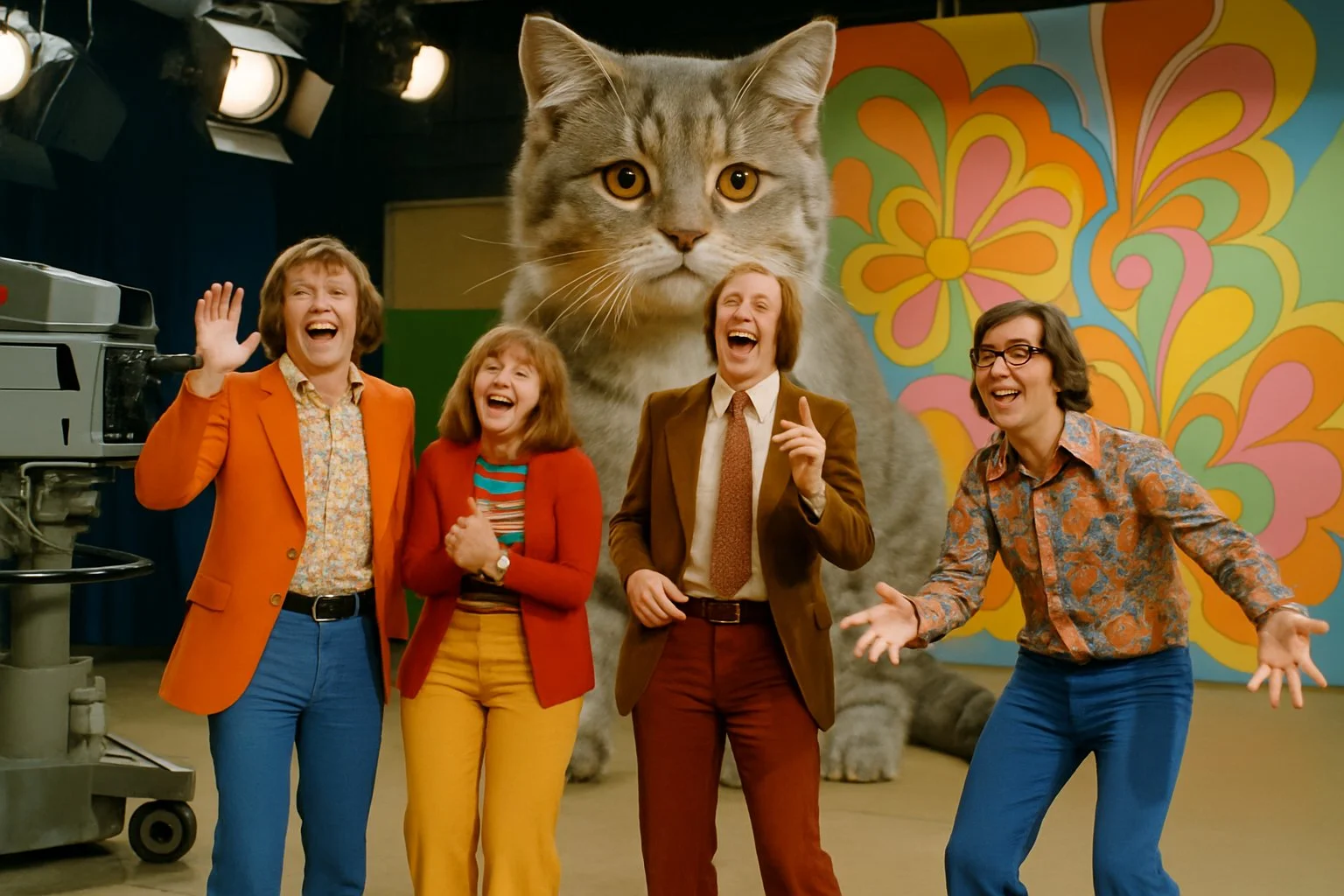
The premise? Three comedians running an animal clinic, who—almost inevitably—feed growth serum to a kitten. What followed was 25 minutes of pure, escalating chaos as the trio scrambled to save London from their own disaster. The episode mashed up physical comedy with effects that, for the time, looked downright ambitious. Audiences hadn’t seen anything quite like it on a small screen.
The Goodies thrived on this sort of absurdity, mixing sketches with situation comedy in ways that always felt a little unpredictable, almost anarchic. “Kitten Kong” was the show at its wildest, grabbing a ridiculous idea and running with it all the way. The episode’s runaway success pretty much sealed the show’s legacy.
Kitten Kong: The Madcap Episode That Defined The Goodies

Series two gave us this slice of madness: over-the-top premises, creative effects, and a general sense that anything could happen. When it aired on BBC2 on 12 November 1971, it instantly became the show’s signature moment.
The Plot and Outrageous Premise
It kicks off with Bill earning a bit looking after a guinea pig. Graeme and Tim, never ones to miss a scheme, rope him into starting the Goodies Animal Clinic—after all, why not cash in on the pet-sitting craze?
Soon they’re wrangling a bizarre collection of animals from all over the neighbourhood. Cats, dogs, snakes, a bush baby, a vampire bat. And then there’s Twinkle, a scrawny, ancient kitten who’s never grown properly.
Graeme, ever the mad scientist, decides to try his special growth mixture on Twinkle. Four days later, the kitten’s the size of a double-decker bus. Then Bill, in a classic blunder, lets the cat out for the night.
Cue chaos: Twinkle stomps through London, flattening landmarks like the Post Office Tower and St. Paul’s. The Goodies have to figure out how to stop their monster moggy before London’s just a pile of rubble.
Innovative Special Effects and Chroma Key
To pull off the giant cat, the production team got creative with chroma key (blue screen). They filmed a real white kitten and then superimposed it over shots of London—simple, but it worked, and honestly, it’s still pretty charming.
That shot of Twinkle knocking down the Post Office Tower? It’s legend. They even stuck it in the opening credits for the next six series. The whole thing just captured The Goodies’ knack for mixing the ridiculous with surprisingly clever technical tricks.
Director Jim Franklin and producer John Howard Davies wrangled all this madness into something that actually worked. The effects were wild for early ‘70s BBC2 comedy. They sort of proved you could have spectacle and laughs in the same half-hour, which wasn’t a given back then.
Cultural Impact and Awards
After the episode aired, the BBC put together a re-edited version with extra scenes and sent it off to the 1972 Montreux Festival. The original broadcast version, sadly, vanished from the BBC archives—hard to believe, but that happened a lot back then.
The image of the giant kitten and the chaos it unleashed? That stuck. It became shorthand for The Goodies themselves—British comedy at its most fearless and unhinged.
Key Recognition:
- Selected for Montreux Festival 1972
- Featured in opening credits for six subsequent series
- Became one of the most memorable images in British television history
Audience Reception and Legacy
People loved the sheer ridiculousness of it all. A giant kitten trashing London? It hit that sweet spot between silly and spectacular. Even now, if you mention The Goodies, chances are someone will bring up that Post Office Tower scene.
Kitten Kong just lodged itself in the culture. The effects, the physical comedy, the wild storytelling—it all came together in a way that still feels special, even decades later.
The Goodies: Origins and Comedy Style

The Goodies didn’t just appear out of nowhere. They came out of the Cambridge University comedy scene in the late ‘60s, bringing together clever writing and a love for physical gags. Their stuff was always a bit different—carefully scripted, but willing to get wild and messy.
From Cambridge Footlights to the BBC
Tim Brooke-Taylor, Graeme Garden, and Bill Oddie met at Cambridge Footlights in the early ‘60s—the same club that churned out Pythons like John Cleese and Eric Idle. They performed together in Cambridge Circus, which toured everywhere and kickstarted their careers.
Before The Goodies, the trio bounced around the BBC. Brooke-Taylor and Garden wrote and performed on I’m Sorry, I’ll Read That Again for radio. Garden and Oddie did Broaden Your Mind, while Brooke-Taylor worked with Cleese and Chapman on At Last the 1948 Show.
When The Goodies landed on BBC Two in November 1970, it drew on all that experience. The show’s premise was loose: three guys running an agency that’d do “anything, anytime.” That freedom let them get as weird as they wanted.
Writing Process and Visual Gags
All three wrote the show together. Oddie handled most of the music, too. Each brought something different: Garden’s scientific silliness, Brooke-Taylor’s establishment satire, Oddie’s musical and countercultural edge.
Dialogue mattered, but they leaned hard into visual comedy—special effects, models, stunts, chases, sight gags. The show felt closer to silent film or Looney Tunes than your average sitcom. Everything looked chaotic, but it was all tightly choreographed behind the scenes.
The Blend of Satire, Slapstick, and Surrealism
The Goodies mashed up comedy styles in a way that hooked both kids and adults. One minute, they’d poke fun at politics; the next, someone would get walloped with an inflatable banana.
Surrealism was their secret sauce. Monty Python might’ve had the edge on verbal absurdity, but The Goodies lived in a world where cartoon logic ruled and anything could happen.
At its peak, the show pulled in 10 million viewers. Turns out, people really liked seeing sophisticated visual gags on TV, not just wordy sketches or formulaic sitcoms.
Music, Guest Stars, and Memorable Moments
The Goodies didn’t stop at visual gags. Music was a huge part of the show, and the guest stars only added to the mayhem.
Funky Gibbon and The Goodies Theme
Bill Oddie, with a little help from Michael Gibbs, wrote most of the show’s music. The theme song—“goody goody yum yum”—was one of those tunes you couldn’t get out of your head.
Their biggest hit? “Funky Gibbon” in 1975. Number four on the UK charts, believe it or not. The dance was ridiculous—lots of arm flapping and general silliness. It was about a trip to the zoo, and honestly, it was catchy enough to drive you nuts. Somehow, it even made the Billboard Hot 100 in the US (though, barely).
The Goodies dropped a few albums and singles over the years. The music wasn’t just filler—it was baked into the comedy, with full-blown musical sketches showing off Oddie’s knack for a tune.
Iconic Guest Appearances and Crossovers
Michael Aspel got flattened by Twinkle in “Kitten Kong”—a cameo that’s still a fan favourite. That episode nabbed a Silver Rose at the 1972 Festival Rose d’Or. Guest stars always brought a bit of extra sparkle to the madness.
The show’s influence didn’t stop with its original run. Noel Fielding and Julian Barratt made The Mighty Boosh as their own modern Goodies. The White Stripes even named their album “Icky Thump” after the episode “Kung Fu Kapers,” where Bill Oddie invented Ecky Thump—a Lancashire martial art involving black pudding and flat caps.
Unforgettable Episodes Beyond Kitten Kong
“The Movies” snagged a Silver Rose in 1975. The Goodies buy a film studio, split up, and make their own movies in different genres, with characters crashing through each other’s films.
“Snooze” had a dodgy bedtime drink that knocked out all of Britain, then the cure made everyone hyperactive. “Give Police a Chance” lampooned current events as the Goodies tried to fix the police force’s image by dressing up themselves.
After eight BBC series, the show moved to London Weekend Television in 1980. They did a special, “Snow White 2,” and one last series in 1982 before LWT pulled the plug.
Influence on British Comedy and Lasting Legacy
The Goodies carved out a weird and wonderful niche in TV history. They bridged the gap between old-school sketch comedy and wild, visual storytelling. Comedians still talk about them, and the cult following isn’t going anywhere.
Connections with Monty Python and Beyond
The Goodies and Monty Python shared roots at Cambridge and aired around the same time on BBC2. The Goodies kicked off in 1970 and sometimes poked fun at Python’s style, but their approach was totally their own. Instead of cerebral absurdism, they went for physical stunts and effects.
Brooke-Taylor, Oddie, and Garden honed their craft alongside future Pythons, but their shows felt different. The Goodies’ win at the 1972 Montreux festival, where “Kitten Kong” got the Silver Rose, helped put British comedy on the global map.
Trailblazing Visual Comedy for New Generations
The Goodies’ love for physical comedy and effects set the standard for future comedians. Julian Barratt and Noel Fielding (The Mighty Boosh) have said the show’s blend of surrealism and slapstick inspired them. “Kitten Kong” even snagged a BAFTA nomination for its bonkers special effects.
They weren’t afraid to try new things—practical gags, sped-up film, massive set pieces. It all took real effort and, honestly, a bit of nerve. Looking back, it’s hard not to feel a bit wistful for when TV comedy was this inventive, messy, and just plain fun.
Enduring Cult Status and Fan Tributes
Back in the day, The Goodies pulled in about 10 million viewers at their peak—pretty wild numbers for a comedy trio with such offbeat charm. Over nine series and 74 episodes, they hopped from BBC2 to London Weekend Television before wrapping up in 1982.
Fans still gather online, swapping memories and hosting the occasional reunion, just to celebrate the trio’s unique brand of silliness. Thanks to streaming and DVD releases, a whole new crowd keeps stumbling onto classics like “The Funky Gibbon” or that unforgettable gymnasium scene. There’s just one episode missing from the BBC archives now, which somehow makes the rest feel even more precious to longtime devotees.






Leave a Reply