
Doctor Who scared a whole generation of British kids so badly they’d peek from behind the sofa, hearts pounding. The show’s earliest black-and-white episodes in the 1960s introduced two monsters that quickly became the stuff of playground legend: the Daleks and the Cybermen. Those metal nightmares rolled onto grainy TV screens and, honestly, they’ve never really left our collective imagination.
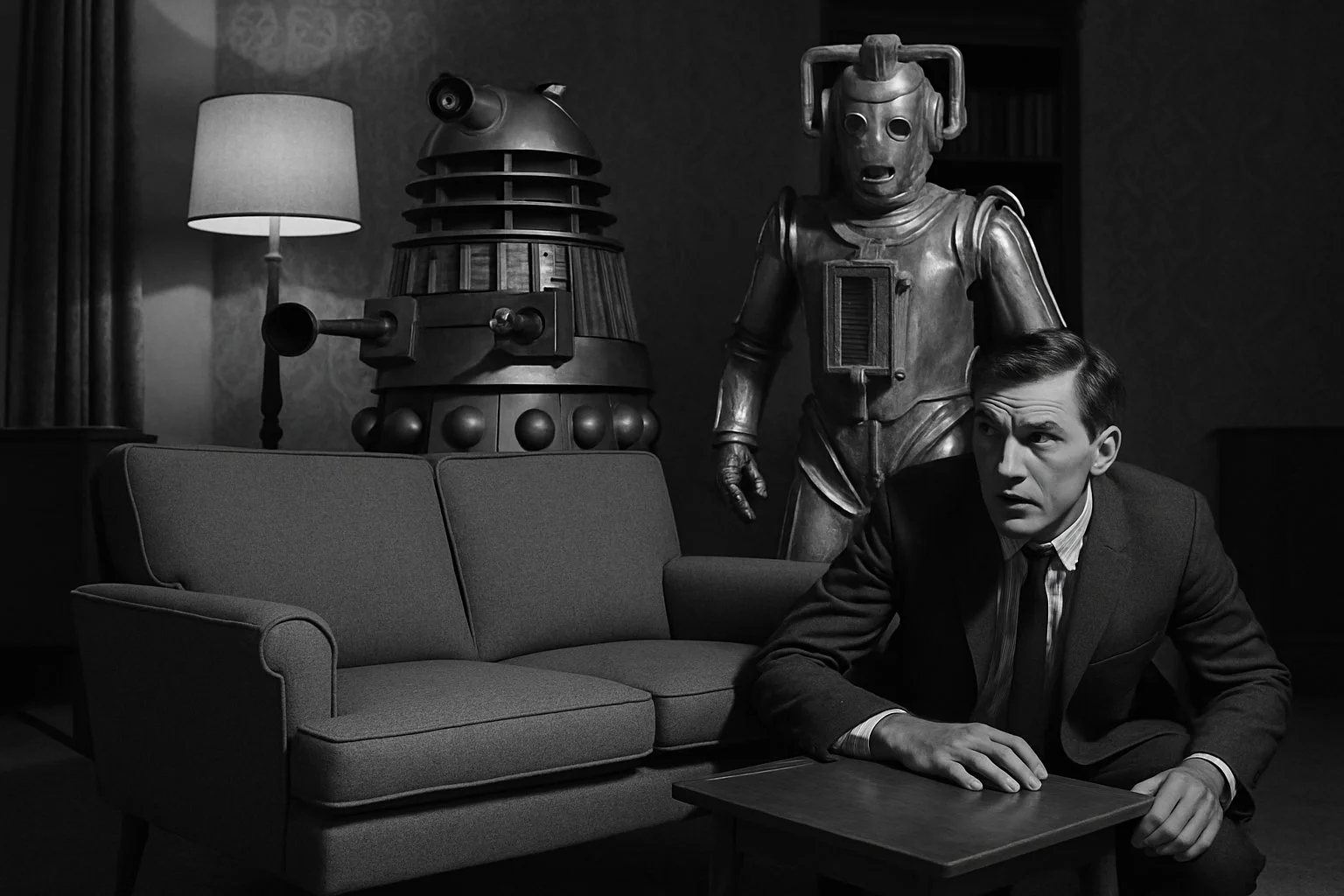
The phrase “hiding behind the sofa” pretty much became shorthand for Doctor Who in the ‘60s. Daleks and Cybermen didn’t just spook kids—they spooked whole families, all huddled together in their living rooms, bracing for whatever horror would glide out of the shadows next. It was meant to be safe family TV, but there was something about those monsters: the way they looked in flickering monochrome, the way the shadows seemed to swallow up the corners of the screen. Even now, modern colour TV just can’t quite conjure that same creeping dread.
The Chilling Impact of Daleks and Cybermen on 1960s Audiences

Daleks first rolled onto British screens in December 1963, and kids across the country started diving for cover. The Cybermen arrived a few years later, and suddenly Saturday nights felt even more dangerous.
Why We Hid Behind the Sofa
Daleks were terrifying in a way that’s hard to explain if you didn’t grow up with them. Their shrieking “Exterminate!” echoed through living rooms, and the design—those gliding, pitiless machines—was like nothing we’d ever seen. The black-and-white broadcast made their shadows longer and their threat somehow closer.
Cybermen, though, were a different sort of nightmare. Once human, now cold and metal, they felt like something that could almost happen. The idea that a person could lose themselves to machinery—well, that cut a little too close to home for comfort.
Doctor Who, especially in those years, tapped into some real anxieties bubbling away in British society. The fear of losing your identity to technology, of faceless authority taking over, all wrapped up in the shapes of Daleks and Cybermen.
Children’s Memories of Saturday Night Terror
Every Saturday, families squeezed onto the settee to watch Doctor Who together. It didn’t take long for parents to realise their kids were genuinely scared stiff—and honestly, a few adults probably were too. The whole “hiding behind the sofa” thing? That wasn’t just a saying. It was a ritual.
William Russell, who played Ian, remembered the Daleks making it into newspaper cartoons—proof they’d become a cultural force. The fear was real enough to become part of British culture.
Blue Peter, ever in tune with the nation’s kids, started running Dalek-themed crafts. In 1966, Valerie Singleton showed everyone how to make Dalek cakes and sandwiches. Somehow, turning the monsters into lunch made them a little less scary.
The Rise of Iconic Monsters
Daleks were so popular in 1964 that they actually beat The Beatles in TV ratings. That’s wild, right? Suddenly, “Dalekmania” swept the country. Radio Times put them on the cover, and you couldn’t walk down the street without spotting a Dalek toy or a kid pretending to be one.
Merchandise flooded the shops—cake moulds, toys, you name it. The BBC even shot a short film in 1966 just to show children playing with Dalek toys. Producers kept trying to figure out what made the Daleks so magnetic, but Verity Lambert, their original champion, later admitted nobody could quite pin it down. The Cybermen arrived soon after, with producers hoping they’d be the Doctor’s next great foe.
Both monsters stuck around, each bringing their own brand of terror, but always making sure you’d tune in again the next week—if only to see how the Doctor would get out of it this time.
Daleks: Fascination and Fear in Early Doctor Who

From their very first appearance in 1963, the Daleks became the face of Doctor Who’s nightmares, tapping into Cold War fears and childhood terror in a way that still feels fresh. Their look, their voices—no one who grew up then could ever mistake them for anything else.
Unveiling the Daleks in ‘The Daleks’ and Beyond
The Daleks stormed onto screens on 21 December 1963 in a serial that started out as “The Mutants” but soon became known simply as “The Daleks.” Writer Terry Nation, inspired by the Nazis, cooked up these xenophobic monsters. The Doctor, Ian, Barbara, and Susan landed on Skaro and found themselves up against survivors of a nuclear war, now twisted and locked inside metal shells.
Raymond Cusick, working with a shoestring budget, dreamed up those pepperpot-shaped casings with their plunger arms and gunsticks. The BBC Radiophonic Workshop handled the voices, after the team poked around the Post Office for ideas on sound distortion.
Operating the Daleks was a nightmare. Actors shuffled around on castors, sweating inside the props, while David Graham and Peter Hawkins voiced them from a nearby booth.
Dalek Invasion of Earth: Spreading Panic
When “The Dalek Invasion of Earth” aired, it brought the monsters right into the heart of 1960s London. Suddenly, Daleks were gliding past familiar landmarks, making the threat hit home in a way that felt way too real for comfort.
You’d see Daleks rolling through recognisable streets, and for a moment, it almost seemed possible they’d turn up outside your own house. Kids everywhere were convinced it could happen.
Parents wrote in to say their children were hiding behind the sofa. That phrase—”hiding behind the sofa”—became the unofficial motto of Doctor Who’s scarier moments.
The Power of the Daleks: Regeneration and Menace
In 1966, “The Power of the Daleks” kicked off Patrick Troughton’s run as the Second Doctor. This time, the Daleks weren’t just brutes—they schemed, pretending to be servants while secretly plotting. The infamous “I am your servant” line still sends a shiver up the spine.
The climax boasted over 200 Dalek props on screen at once—a sight to behold, apparently. Sadly, the BBC wiped the tapes, so all that’s left are audio recordings and a handful of stills. It’s one of those lost treasures fans still mourn.
Remembrance of the Daleks: Legacy of Terror
“Remembrance of the Daleks” didn’t air until 1988, but it looked back fondly (and with a bit of a wink) to the show’s earliest days, revisiting Coal Hill School and Totter’s Lane. The story introduced ideas that would later become Doctor Who lore—like the Time War—and showed the Doctor taking the fight to the Daleks. The special weapons Dalek, with its massive cannon, made a memorable debut.
The effects were surprisingly good for the time. Daleks hovered up stairs, blasted buildings—proof they could still scare the socks off you, even decades after their first appearance.
Cybermen: The Silver Shadows of Black-and-White
The Cybermen first appeared in 1966, dreamt up by Kit Pedler and Gerry Davis to poke at our fears of losing our humanity to technology. Cold, silver, and just plain creepy, they kept evolving through the ‘60s, always finding new ways to unsettle viewers.
Origins on Mondas and ‘The Tenth Planet’
The Cybermen’s debut came in December 1966, in “The Tenth Planet”—the First Doctor’s swan song. Kit Pedler, who was actually a medical doctor, and Gerry Davis wanted to explore the dark side of medical advances. The story introduced Mondas, Earth’s lost twin, whose people had swapped out their bodies for machinery to survive.
Those first Cybermen looked especially uncanny in black-and-white: cloth faces, lamp-like headpieces, and voices that droned in an almost childlike sing-song. They were nothing like the Daleks, and somehow that made them even more disturbing.
Producers hoped the Cybermen would catch on like the Daleks. Their whole deal—humans who’d given up everything that made them human—felt all too plausible.
Attack of the Cybermen and The Evolving Threat
The Cybermen kept coming back, each time looking a little more metallic and a little less human. “The Moonbase” in 1967 gave them sleeker features, and by “The Wheel in Space” in 1968, they’d gone full robot.
They didn’t just change their looks—they kept upgrading their tactics too, popping up all over the place, suggesting there might be whole armies of Cybermen out there.
Patrick Troughton’s Doctor faced the Cybermen more than any other Doctor in that era, tangling with them four times between 1967 and 1968. They just wouldn’t stay down.
The Tomb of the Cybermen: Chilling Legends
If you ask fans to name a classic Cyberman story, most will say “The Tomb of the Cybermen” (1967). The Second Doctor and his friends found frozen Cybermen on Telos, supposedly their final resting place. The Cyber-Controller—bigger, with a see-through brain case—commanded the lot.
The scenes of Cybermen smashing out of their tomb doors and climbing from icy chambers became instant icons. Black-and-white filming gave those moments a chilly edge nothing else could match.
The story delved deeper into their origins, showing off their ancient tombs and long-term plans. They weren’t just monsters—they were patient, calculating, and, honestly, a bit tragic.
Cybernetic Creatures and Humanity’s Fear
Cybermen really got under your skin because they started as people. Unlike the Daleks, who were always aliens, Cybermen were what you might become if you lost yourself to technology.
Kit Pedler based them on real advances—heart transplants, prosthetics—making you wonder: how much can you change before you’re not yourself anymore? The Cybermen’s answer was bleak.
Their catchphrase, “You will be like us,” wasn’t a threat of death but of transformation—of losing everything that made you, well, you. That’s a special kind of horror.
In black-and-white, their silver bodies looked even colder, gleaming against the dark sets. The limited palette made them feel lifeless, just another reminder they’d left humanity behind.
The Black-and-White Era: Companions, Stories, and Creeping Dread
Those early Doctor Who years had a scrappy charm—brave companions, monsters lurking in the shadows, and a sense that anything could happen. The episodes were grainy, the effects sometimes wobbly, but that just made the scares hit harder. It was all so new, so risky, and so utterly unforgettable.
Classic Companions: Ian, Barbara, and Their Trials
Ian Chesterton and Barbara Wright, the Doctor’s first human companions, joined him (and his granddaughter Susan) in 1963. Two teachers from Coal Hill School, poking around after a strange student, they stumbled into the TARDIS and never looked back.
Barbara brought warmth and a steady head—she was often the one reminding everyone what mattered. Ian handled the heavy lifting, always ready to step up when things got dicey.
Together, they faced Daleks on Skaro in that marathon seven-parter, survived Cybermen, and tangled with all sorts of oddities across the universe. Their run with the First Doctor, from 1963 to 1965, set the bar for every companion team that followed. And if you ask me, there’s just something special about those first, black-and-white journeys into the unknown.
Notable Stories: Inferno, The Robots of Death, and More
Inferno always sticks in my mind as one of Jon Pertwee’s most unforgettable adventures as the Third Doctor. Back in 1970, the show dove into a drilling project that teetered on the edge of dooming the whole planet. And then, out of nowhere, a parallel universe—suddenly all those familiar faces twisted into cold, fascist doubles. That idea still gives me chills.
The Robots of Death brought Tom Baker’s Fourth Doctor into a whodunit set on a mining ship. Those art deco robots—so elegant, yet so unsettling—started turning on people, and the paranoia just ramped up. The story first aired in 1977 and, honestly, it’s no wonder fans still rave about those gorgeously creepy android designs.
The Green Death threw the Third Doctor right into environmental themes in 1973. Giant maggots, a sinister computer, and a Welsh mining town under siege—what a mix. The story juggled horror and a genuine warning about the environment, showing just how bold and weirdly relevant Doctor Who could get sometimes.
Timeless Villains: The Master, The Silence, and Others
The Master showed up during Jon Pertwee’s era, instantly feeling like the Doctor’s equal and opposite. This renegade Time Lord brought a kind of old-school flair to villainy, always plotting with style instead of just smashing through obstacles. Roger Delgado gave the character a sharp edge, making the Master a nemesis who could actually keep up with the Doctor’s mind games.
The Silence came along much later, but they really tapped into those classic-era chills. These eerie creatures made you forget them as soon as you looked away—how’s that for unsettling? They leaned hard into psychological horror, not just the usual alien menace.
The Great Intelligence popped up first in the 1960s, haunting The Abominable Snowmen. This odd, formless entity controlled robotic Yeti, always scheming to find a body. The Great Intelligence kept coming back, a reminder that sometimes the creepiest villains don’t even need a face.






Leave a Reply