
Thursday nights in Britain—there was a time when that meant just one thing for millions of teenagers: crowding around the telly at 7pm, waiting for Top of the Pops. From 1964 until 2006, this music show was more than just a bit of fun—it became a cultural event that shaped how young people found music, fashion, and even a little bit of romance. Families squeezed together in living rooms, friends phoned each other during the breaks, and teenagers everywhere bonded over the latest chart hits. It really was a different kind of magic, wasn’t it?
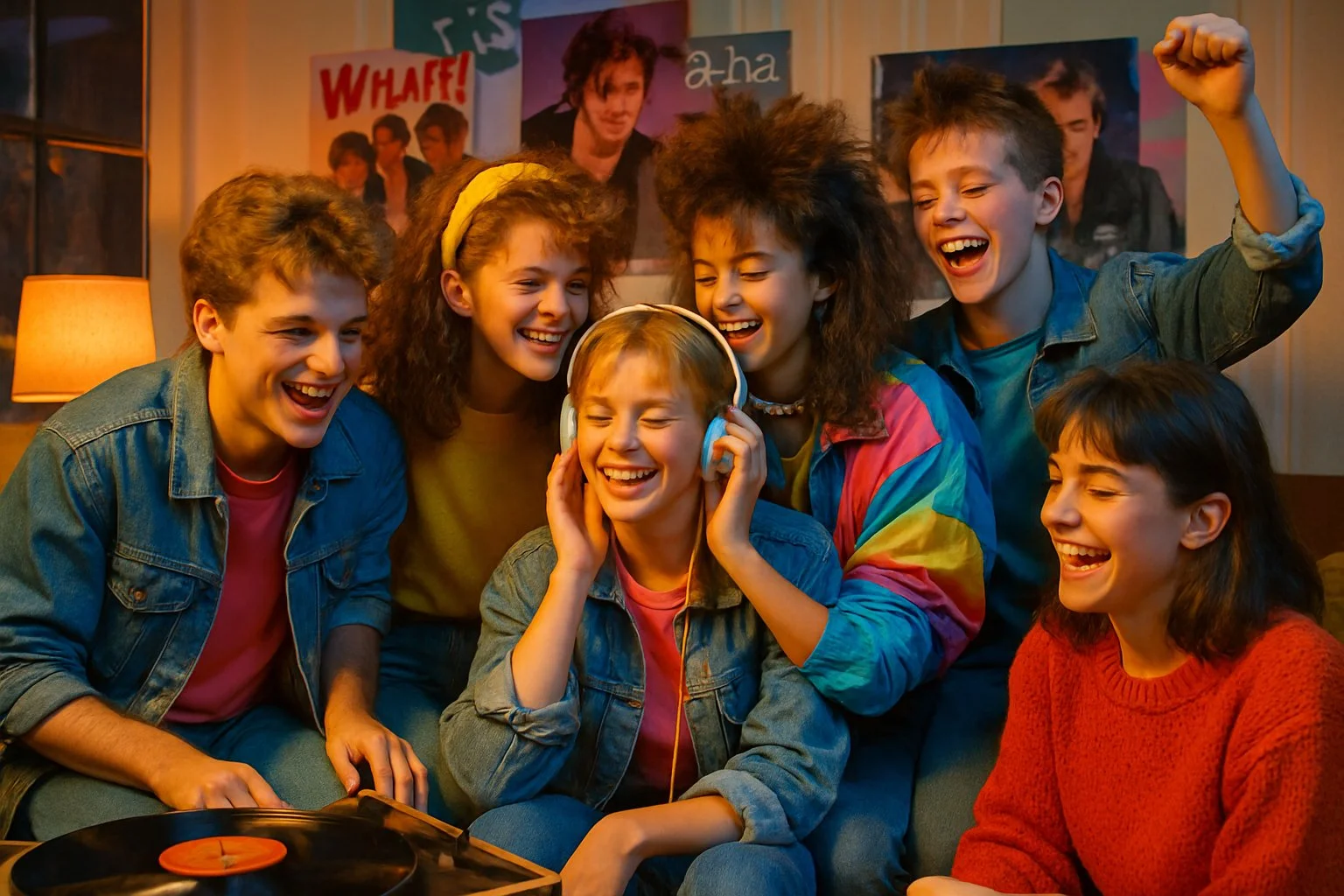
Top of the Pops became the place where Britain’s youth fell in love with pop music and often with each other, as the show created a shared experience that brought young people together every week. The programme brought in live performances from the biggest stars—David Bowie, ABBA, Queen, The Jam, you name it. Suddenly, these weren’t just voices on the radio. They strutted across the screen in platform shoes and glitter, and teenagers scrambled to copy every wild outfit.
It wasn’t just about the music, either. The show fired up conversations in school halls, inspired questionable fashion choices, and gave everyone something to look forward to as the weekend inched closer.
The Rise of Top of the Pops and Its Thursday Night Tradition

Top of the Pops didn’t just land in British homes—it settled in, establishing a weekly ritual that became a cornerstone for generations of music lovers. Thursday evenings, in particular, turned into a kind of sacred appointment.
Origins of the Music Show
The BBC kicked off Top of the Pops on New Year’s Day, 1964, inside a converted Manchester church. It was only supposed to last six episodes—nobody guessed it would grow into a TV giant.
DJ Jimmy Savile opened that first show at 6:36 pm on a Wednesday. The Rolling Stones led with ‘I Wanna Be Your Man’, then Dusty Springfield, the Dave Clark Five, The Hollies, and The Swinging Blue Jeans took the stage. The Beatles closed out with ‘I Want to Hold Your Hand‘ at number one.
The formula was simple: run through the Top 40, finish with the chart-topper. It worked. The show stuck with what people actually wanted to hear, not what critics pushed.
Impact of BBC and BBC One on UK Pop Culture
BBC One blasted TOTP out to as many as 19 million viewers at its peak. Anyone who cared about music trends tuned in. It became essential viewing—miss it, and you’d feel left out the next day.
Performing on the show became a big deal for musicians. Bands from all over—ABBA from Sweden, Desmond Dekker from Jamaica, AC/DC from Australia—made the pilgrimage to BBC Television Centre. The exposure was unbeatable back then.
The BBC’s backing gave the show a sort of legitimacy. Jarvis Cocker from Pulp once said that young artists didn’t feel like they’d made it until they’d been on Top of the Pops.
The Move to Thursday Nights
Top of the Pops found its Thursday night groove pretty early, and that’s when it really became a weekly ritual for teenagers. “It’s Thursday night, it’s seven o’clock, it’s Top of the Pops”—that phrase was everywhere.
People planned their evenings around it. Families knew exactly when to plop down in front of the telly. For most of its 42 years, Thursdays belonged to TOTP. It shifted to Fridays in 1996 and then Sundays on BBC Two by 2005. The final episode aired on 30th July 2006—hard to believe it’s been that long.
Showcasing Stars and Iconic Performances

Top of the Pops delivered those unforgettable TV moments that still echo through British pop culture. It launched careers, captured legendary performances, and chronicled the ever-evolving UK music scene from the swinging sixties to the mid-2000s.
Legendary Acts and Their TOTP Appearances
The Rolling Stones opened the show’s first episode in 1964, and from there, it was a parade of legends. David Bowie’s “Starman” in 1972? That Ziggy Stardust look—people still talk about it. Elton John popped up throughout the 70s, and even his early “Border Song” performance had something raw and special.
Status Quo practically lived on the show, clocking over 100 appearances. Dusty Springfield brought her signature soul, while Snow Patrol showed up as the show’s final years ticked by.
Memorable Moments and Live Hits
The Who trashed their instruments and the set after “5.15” in 1973—Keith Moon even wrecked the green room. The band got fined, but honestly, it’s one of those stories that just adds to the legend.
John Lennon’s 1970 “Instant Karma!” performance had Yoko Ono in her own world of performance art. The Smiths, with Johnny Marr’s jangly guitar and Morrissey’s gladioli, made “This Charming Man” a moment. Nirvana’s Kurt Cobain famously changed the lyrics to “Smells Like Teen Spirit” to sneak past censors, but still brought the house down.
Oasis, ever the pranksters, swapped roles—Noel mimed the vocals, Liam pretended to play guitar during “Roll With It.” It was cheeky, and people loved it.
Chart Success: UK Singles Chart and TOTP Crossovers
Top of the Pops mirrored the UK Singles Chart—chart position decided who got a slot. A good showing on Thursday could push a song to number one by Friday.
Key Chart Impact:
- Artists hustled for chart spots to secure a TV appearance
- Thursday broadcasts often nudged songs up the Friday charts
- Number one singles always got the spotlight
- The show quietly influenced what record shops kept in stock
It was a feedback loop—perform well, climb the charts; climb the charts, get invited back.
The Archives: Preserving Musical History
The BBC, in a moment of short-sightedness, wiped loads of early tapes. Beatles performances and other gems? Gone forever. Breaks your heart, really.
Luckily, fans with home VHS systems saved some performances. The Top of the Pops Archive tries to keep what’s left safe. When Top of the Pops 2 started in 1994, it brought a bunch of these old moments back for new viewers.
YouTube’s made a lot of these clips easy to find, even if the quality’s all over the place. The BBC’s digitised and cleaned up many performances, some of which look better now than they did back in the day.
Teenage Fandom and Britain’s Pop Culture Revolution
Top of the Pops turned Thursday nights into unmissable TV for teenagers, creating a shared cultural moment that shaped how young people experienced, well, everything—music, fashion, even first crushes. The BBC show built wild fan communities and nudged British youth culture in directions nobody could’ve predicted.
How Top of the Pops Captivated Youth
Top of the Pops gave British teens a new kind of access to their pop idols. Before this, seeing your favourite band meant shelling out for concert tickets (if they even played your town). Suddenly, every Thursday, you could watch The Beatles, The Rolling Stones, The Kinks, and a parade of American acts—The Supremes, The Byrds, Sonny & Cher—right in your living room.
You’d see The Who smashing guitars, Lulu belting out a tune, or Cliff Richard charming the crowd. Studio dancers, miming acts, the lot—it all added up to an atmosphere that felt both glamorous and just a bit attainable.
Teen Trends and Social Impact
Top of the Pops basically doubled as a fashion runway for British youth. Sandie Shaw, Cher, all those stars—teens watched closely, copying hairstyles and dresses, or picking up mod looks from The Small Faces and Herman’s Hermits.
The show sped up how quickly trends spread. One week’s performance could launch a fad from London to Glasgow. Regional differences started to blur; everyone watched the same acts, wore the same looks.
Parents didn’t always love these new styles or the music, and honestly, that just made it cooler. The rebellious streak in bands like Them or the cheeky humour of The Barron Knights signalled a break from the old ways. That generational clash? It only made teenagers cling tighter to their pop culture.
Pop and Young Romance
Thursday nights shaped teenage social life and those first flickers of romance. Couples arranged dates around Top of the Pops. The show gave everyone something to talk about, a soundtrack to flirt to, and a reason to hang out.
Slow numbers from Val Doonican or Billy J. Kramer and the Dakotas set the mood for living room slow dances. Pop music gave teens a language for feelings they probably couldn’t say out loud.
Boys sometimes bought singles they’d seen on the show just to impress someone. Making a mixtape of TOTP hits? That was a pretty clear sign you fancied someone.
The Fan Community and Shared Experience
Top of the Pops kicked off a national conversation every Friday morning. School corridors buzzed over last night’s performances. If you didn’t watch, you were out of the loop.
Fan clubs popped up around regular acts. Teens swapped letters about The Swinging Blue Jeans, or argued—sometimes fiercely—over whether The Beatles or The Stones were better. These little communities helped young people figure themselves out.
Watching Top of the Pops together, all at once, gave British teens a shared memory. It didn’t matter if you were from the north or south, posh or working class—you were part of the same pop culture wave.
Controversy, Legacy, and Changing Attitudes
Top of the Pops leaves behind a complicated legacy—huge cultural influence, but also some dark chapters. The show faced tough scrutiny over certain presenters and performers, and its format shifted before disappearing in 2006.
Contentious Figures and Scandals
The programme’s reputation took a serious hit when several former hosts and regulars were exposed for criminal behaviour. Jimmy Savile, the face of the show for years, was revealed posthumously as a serial sexual predator. Rolf Harris and Gary Glitter, both familiar faces on the show, were later convicted of sexual offences against children.
These revelations cast a long shadow over Top of the Pops. The BBC faced harsh criticism for failing to protect young people and for allowing a culture where such abuse could happen. Episodes featuring these individuals were pulled from repeats and archives.
Jonathan King, another regular, was also convicted of sexual offences. The scandal forced some painful conversations about the BBC’s culture in the 70s and 80s, and how so much bad behaviour got swept under the carpet.
The Evolution and End of the Original Series
The show really changed a lot in its final decades. Fewer people tuned in, especially as music television started to splinter with MTV and all those other music channels popping up. Suddenly, kids didn’t have to wait around for Thursday nights just to catch a glimpse of their favorite bands.
They bumped the programme to Friday nights in 1996, tossing aside that old Thursday routine. Then, in 2005, it left BBC One for BBC Two—kind of a sign that its crowd was shrinking. The last episode rolled out on 30 July 2006, closing the curtain after 42 years.
The BBC pointed to shifting habits and the way music became available everywhere as reasons for pulling the plug. Let’s be honest, the internet and digital TV completely flipped how teens soaked up music and pop culture.
Revival Specials and Top of the Pops 2
Top of the Pops 2 showed up in 1994, aiming straight for that sweet spot of nostalgia. It dug up all those classic performances from the original show—stuff you probably thought you’d never see again—and let everyone relive those wild moments from decades past. Oddly enough, it kept going until 2017, outliving the main series by quite a stretch.
Every now and then, the BBC throws together a revival special for Christmas or whatever excuse they can find. These shows bring in today’s artists, who belt out the latest hits, but there’s always a little wink to that old-school Top of the Pops vibe.






Leave a Reply