
In 1953, Britain transformed into a sea of red, white, and blue as communities across the nation came together to celebrate Queen Elizabeth II’s coronation.
Streets that had endured years of wartime hardship suddenly burst to life with homemade decorations, shared meals, and genuine celebration.
Coronation street parties became powerful symbols of post-war renewal, bringing neighbours together with bunting-lined tables, carefully rationed ingredients turned into festive cakes, and a collective spirit of hope for the future.
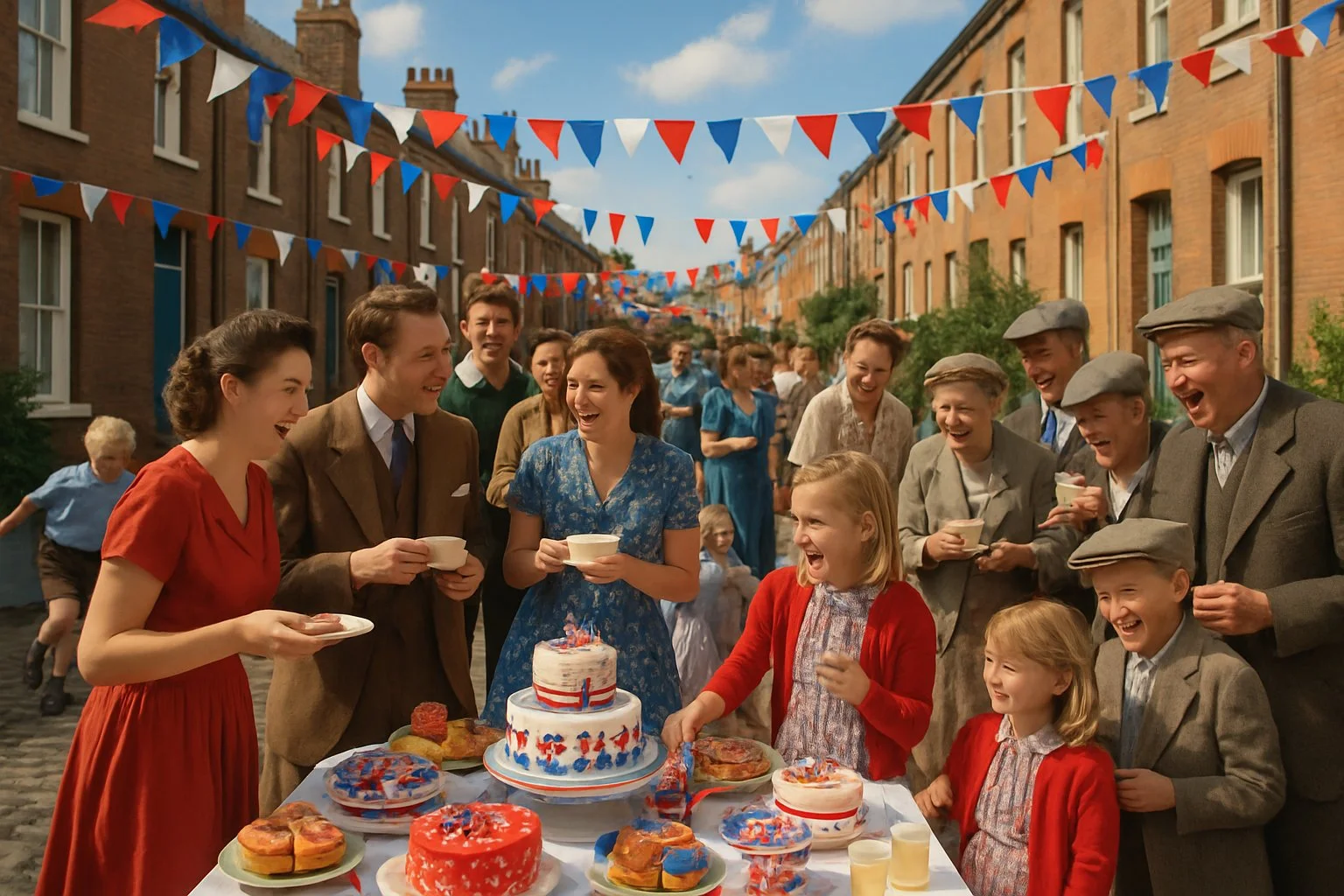
It’s almost impossible to capture the pure excitement that swept through London and beyond as ordinary folks reclaimed their streets for something truly extraordinary. After years of rationing and separation, families pooled whatever they had to create feasts worth remembering. Kids wore paper crowns, adults draped Union Jacks from every windowsill and fence post they could find.
You can still see echoes of those 1953 street parties in modern celebrations—the bunting, the cakes, and that unmistakable sense of community. There was something magical about the way we turned any street into a stage for national pride and neighbourly joy. I sometimes wonder if we’ll ever quite recapture that same spirit.
The Spirit of Coronation Street Parties in 1953
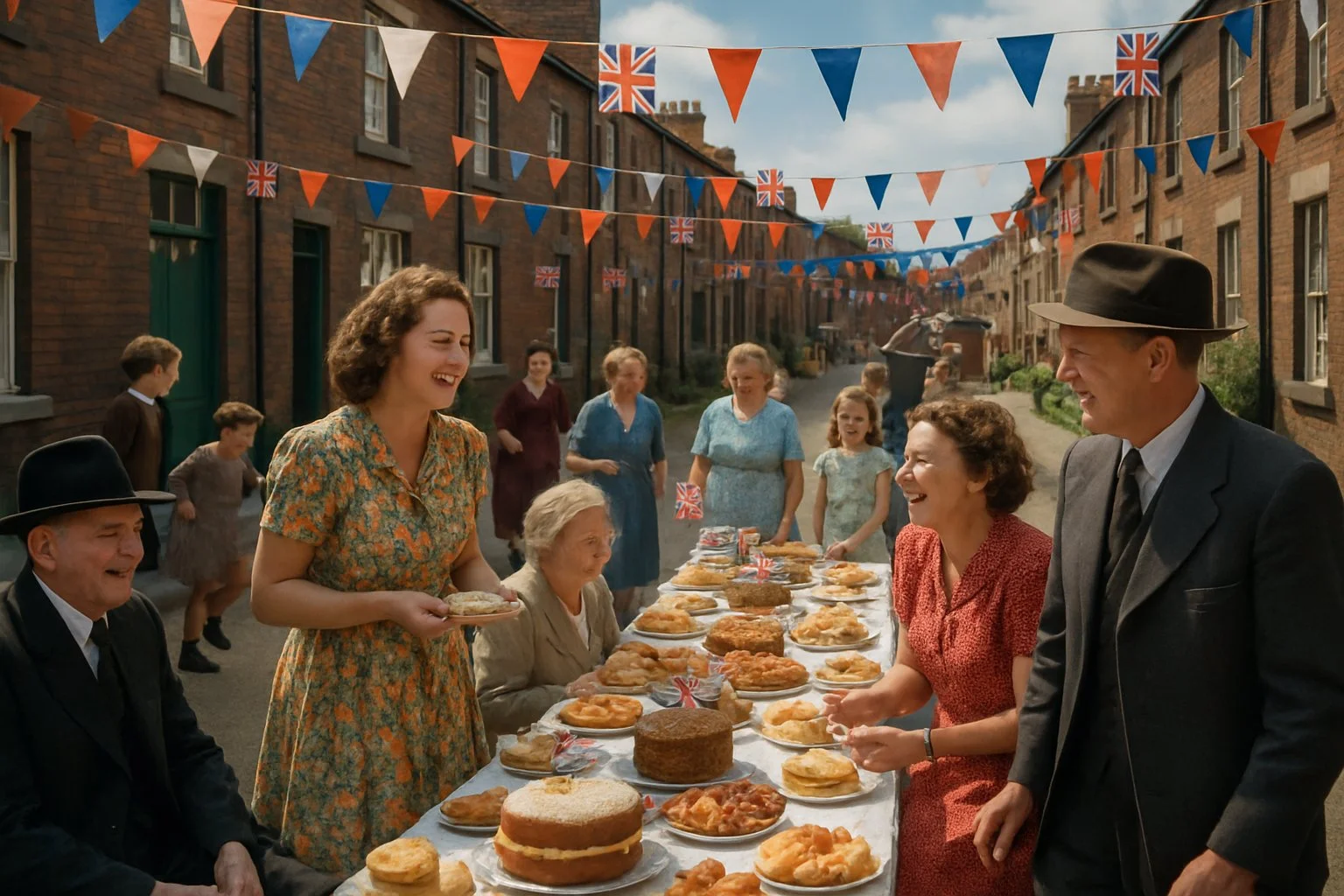
The coronation of Queen Elizabeth II sparked a nationwide celebration, pulling communities together in a way Britain hadn’t really seen since before the war. These street parties became vivid symbols of hope and unity, just as the country was piecing itself back together after World War II.
Origins of the 1953 Celebrations
Coronation street parties in 1953 grew out of a deep, almost aching need for celebration after years of hardship. We’d endured rationing, bombing, and loss. The crowning of a young Queen offered something bright on the horizon.
Sweet rationing ended in February 1953—just in time for the festivities. Suddenly, families could finally share proper sweets and cakes at their street parties, and that felt like such a treat.
Royal street parties weren’t anything new, really; we’d celebrated coronations together for centuries. But 1953 felt different—a kind of fresh start for modern Britain.
Weeks before the big day, neighbours started planning. Folks collected tables, chairs, and scraps of bunting. Local committees popped up to sort out food and decorations, sometimes with a bit of friendly squabbling about who’d bring what.
Preparations brought together people who’d barely exchanged a word before. In the East End, working-class streets put on celebrations just as elaborate as the wealthier neighbourhoods.
Role of Community and Neighbourhoods
Those 1953 street parties showed just how much communities could accomplish when they came together. Neighbours who’d struggled through rationing now pooled their resources, determined to create something memorable.
Local vicars often got involved, crowning young women as “Queens” in playful ceremonies, complete with makeshift crowns and neighbourhood bridesmaids. Kids waved Union Jack flags, wore paper crowns, and joined in games. It all felt like one big family event.
The parties chipped away at social barriers. Rich and poor sat side by side at the same tables, and anyone could join in as long as they brought a smile (and maybe a sandwich).
Women, unsurprisingly, took the reins when it came to organisation—coordinating baking, decorating, and seating. For many, it was a rare chance to lead and shape their communities.
Whole streets bloomed with bunting and streamers. Flags hung from every window and lamppost. There was an almost giddy sense of pride in the air.
Impact Across the United Kingdom
The Queen’s coronation street parties weren’t just a London thing—they reached every corner of Britain. From the East End to tiny Scottish villages, communities threw celebrations that reflected their own local quirks but shared the same national pride.
Tens of thousands of street parties happened all at once across the country. Cities like Birmingham, Norwich, and Manchester had hundreds of neighbourhood parties apiece.
In Bethnal Green, Morpeth Street’s party became a symbol of East End resilience. Bomb-damaged streets turned into festivals of hope, at least for a day.
Provincial towns got in on the act too. In places like Kidsgrove, residents waved flags and cheered from tables set up right in the middle of the road.
Ask anyone who was there, and they’ll tell you—June 2nd, 1953, felt like one of the happiest days of their lives.
Photographers caught it all: faces beaming with happiness, neighbours who’d endured so much finally letting loose.
Rural communities, where street parties weren’t practical, gathered in village halls or churchyards, bringing the same spirit indoors.
Bunting and Street Decorations: Creating a Festive Atmosphere
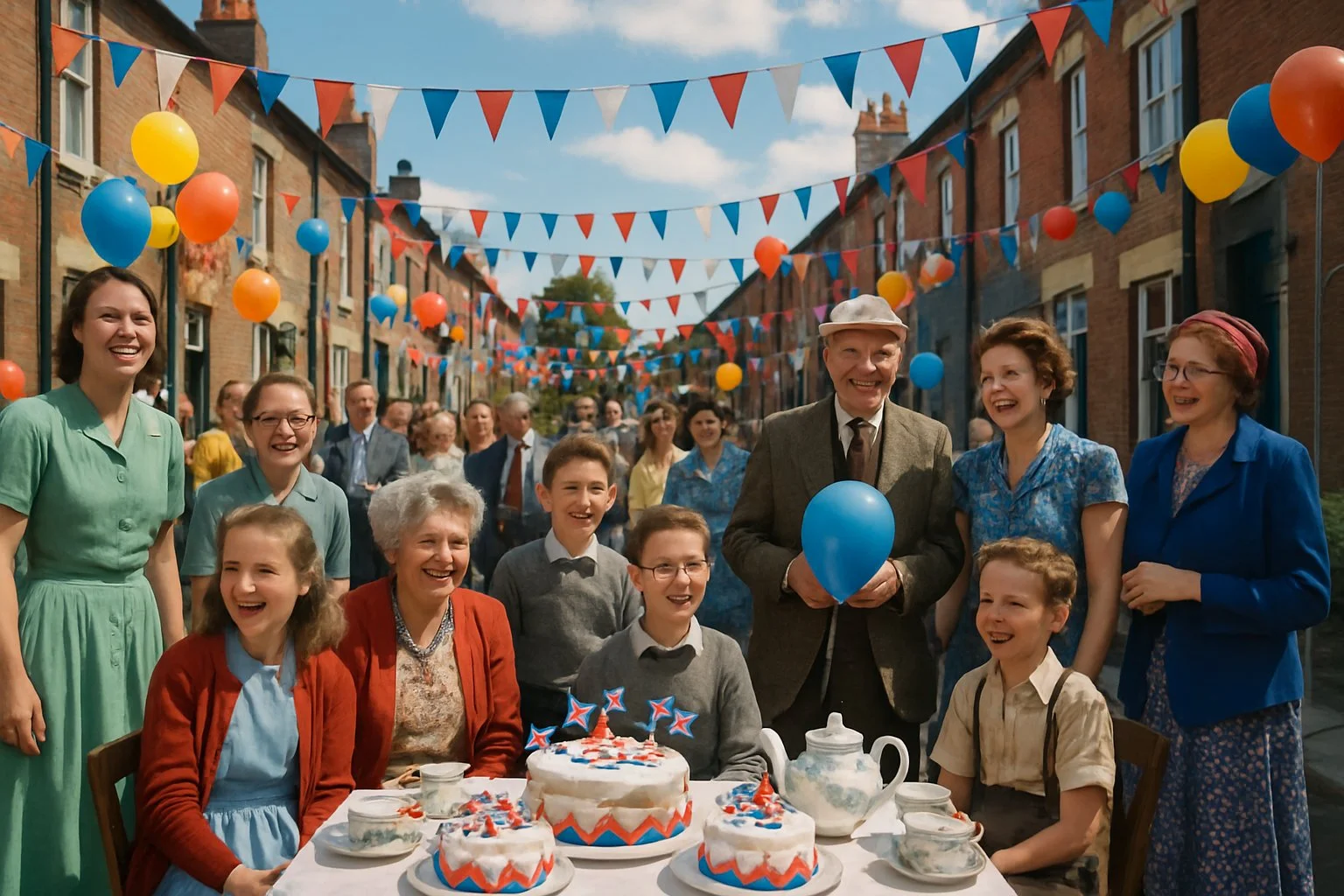
Street decorations turned ordinary neighbourhoods into royal celebration spaces during the Queen’s coronation in 1953. People rolled up their sleeves and worked together, stringing up bunting, flags, and handmade touches that broadcast their loyalty to the new monarch.
Traditional Decorations of the Era
Red, white, and blue bunting dominated every street party. Triangular flags stretched from house to house, making colourful canopies you could spot from blocks away.
Popular decoration types included:
- Paper Union Jack flags
- Cardboard crowns and royal symbols
- Hand-painted banners with “God Save the Queen”
- Tissue paper flowers in patriotic colours
- Royal portraits in windows
Families often made their own decorations with whatever they could find—crepe paper, cardboard, fabric scraps. Church halls and community centres became makeshift workshops, with women gathering to cut, sew, and paint for hours.
Sourcing Bunting and Flags
Local haberdasheries buzzed with shoppers in the weeks before the coronation. You could buy ready-made bunting or pick up fabric to make your own.
Common sources for decorations:
- High street drapers and fabric shops
- Woolworths and other chain stores
- Church fundraising sales
- Community group orders
Some streets organised group buys to save a few shillings. One neighbour would take everyone’s orders and head off to the wholesalers.
Homemade bunting often came from old bed sheets, curtains, or even worn-out clothes. We’d cut triangles and sew them onto string—simple, but it did the job.
Communities sometimes borrowed decorations from the Women’s Institute or church groups, stretching every resource as far as it would go.
Community Involvement in Preparation
Street decorating was a true neighbourhood effort. We formed committees to plan and coordinate, sometimes over endless cups of tea.
People met in each other’s front rooms to hash out themes and divvy up tasks. Someone took on bunting, another flags, someone else table decorations.
Common preparation activities:
- Sewing circles for bunting
- Group shopping trips
- Decoration hanging parties
- Kids’ art sessions for posters
Men usually handled the heavy lifting—stringing bunting between lamp posts, attaching flags to houses, setting up displays.
Children pitched in too, painting signs or making posters during school holidays. It wasn’t always neat, but it was ours.
Coronation Cakes, Treats, and Party Food
Britain’s home baking traditions came out in full force for the coronation, with cakes taking centre stage alongside classic party fare. Tables groaned under Victoria sponges, trifles, and treats decorated in honour of the big day.
Popular Cake Styles of the 1950s
Victoria sponge cakes ruled the day, layered with strawberry jam and cream for that perfect red and white effect.
Madeira cakes worked well for more elaborate decorations. Their sturdy texture meant you could pipe crowns, roses, and “EIIR” monograms without the whole thing collapsing.
Fruit cakes brought a bit of elegance—soaked in brandy weeks ahead, then covered in marzipan and white icing. The smell alone brings back memories.
Swiss rolls were a budget-friendly way to feed a crowd. Families made several, decorating with red, white, and blue icing for a splashy centrepiece.
Street Party Table Staples
Sandwiches—endless rounds of egg and cress, cucumber, potted meat—were cut into triangles and stacked on borrowed china.
Scones with jam and cream showed up everywhere. People still argue about whether the jam or cream should go first, but honestly, who cared with all that excitement?
Trifles let everyone show off their pudding skills. Layers of sponge, custard, fruit, and cream filled big glass bowls—enough for a whole family or two.
Jellies and blancmanges wobbled in every colour. Red, white, and blue jellies made for patriotic displays, while rabbit-shaped blancmanges always got a laugh from the kids.
Unique Coronation Recipes
Crown-shaped cakes stole the show. Folks baked ring cakes and transformed them with golden icing, sweets for jewels, and a bit of sugar magic.
Coronation chicken made its first appearance here, too. The official recipe was a bit fancy, but street parties served up simpler versions—cold chicken in a mild curry mayo.
Royal iced biscuits let home bakers get creative. Shortbread cut into crowns, Union Jacks, or “ER” letters, finished with coloured icing and a few silver balls.
Patriotic trifles layered up red strawberry jelly, white custard, and blue-tinted cream. It might sound over the top, but it looked fantastic on the table.
Capturing the Moment: London and National Scenes
The coronation lives on in countless photographs—families gathered round tables piled high with treats. London’s streets became a patchwork of Union Jacks and bunting, while towns up and down the country threw their own unforgettable parties.
Celebrations in London
London was buzzing. Streets near Westminster Abbey filled with hopeful revellers, some camped out for hours just to catch a glimpse of the procession.
The Mall was a blur of red, white, and blue. Families staked out spots, brought camp chairs, flasks of tea—maybe a sneaky sherry for the grown-ups.
Popular London celebration spots included:
- The Mall and nearby streets
- Hyde Park Corner
- Trafalgar Square
- Neighbourhoods all over south London
Street parties popped up everywhere. People hauled tables into the road, strung bunting between lamp posts, and let the kids run wild in paper crowns.
The contrast between the formal ceremony at Westminster Abbey and the informal joy in the streets was something special. Both captured the mood of the nation.
Iconic Photographs and Memories
Cameras were everywhere, snapping black-and-white photos of kids in their best clothes at long tables.
Families squeezed together for group shots. Tables overflowed with sandwiches, sponges, and jellies. Bunting fluttered in the background.
Common photo elements included:
- Long tables stretching down the street
- Kids in paper crowns
- Adults dressed up for the occasion
- Homemade decorations everywhere
These photos became family treasures, reminders of a day when everyone seemed to belong.
The happiness in those images is real. Neighbours who barely nodded on the street before now shared cake and laughter.
Festivities Outside the Capital
Towns and villages across Britain had their own take on the celebration. Street parties weren’t just for city folk—they happened from Scotland to Cornwall.
Village greens became picnic grounds, with everyone invited. Councils organised entertainment—brass bands, Morris dancers, children’s races, and fancy dress competitions.
Rural celebrations often featured:
- Village hall gatherings
- School playground parties
- Church fête-style activities
- Local talent shows
Small towns sometimes spent months planning. Local businesses chipped in with food or prizes for the kids’ games.
There was a special warmth to these provincial parties. Everyone knew everyone, and the celebrations felt intimate and genuine.
Exclusive Offers and Selling on Etsy: Modern Traditions
Etsy has become a hub for unique coronation decorations and personalised party supplies. Modern sellers offer exclusive handmade bunting and custom items that bring royal celebrations into today’s homes.
Coronation Party Supplies on Etsy
Etsy sellers craft handmade coronation bunting with a real attention to detail, using materials like 100% cotton that feel nice to the touch. You’ll spot national flowers, royal doodles, and all sorts of little flourishes—each one seems to have its own personality.
Bunting comes in all sorts of lengths and quirky styles. Some folks offer tidy 2.25-metre sets with 10 flags, perfect for a cozy garden. Others go big, with longer runs for those classic street parties that seem straight out of an old photo album.
Popular materials include:
- 100% cotton fabric
- Sustainable organic cotton
- Quality polyester that shrugs off a bit of rain
- Pure wool, sometimes hand-embroidered
Custom designs? Oh, absolutely. Sellers will stitch in dates, names, or whatever message you fancy—just the thing for a street party that feels a bit more “yours.”
Shops love a British royal theme. Union Jacks, London buses, little crowns—sometimes it’s a bit much, but it does the trick. There’s always something that feels like it belongs in a biscuit tin illustration.
Exclusive Offers and Unique Gift Ideas
There’s something special about exclusive coronation memorabilia you can’t just grab off a supermarket shelf. These handmade pieces stick around long after the last slice of cake—little reminders of the day.
Unique gift options include:
- Bunting in pure wool, hand-embroidered. Feels like it could be passed down, doesn’t it?
- Custom photo bunting with royal portraits—maybe a touch cheeky, but fun.
- DIY bunting kits for the crafty types (or the kids you want to keep busy)
- Faded, vintage-style Union Jacks that look like they’ve seen a few parties already
Bundle deals pop up everywhere—bunting, balloons, cake toppers, all in one go. Handy if you’re the type who leaves things to the last minute.
Personalised touches are everywhere. Add your family name, a date, or mix and match decorations for a look that’s yours alone.
Premium materials really do make a difference. Wool bunting with royal insignia costs a bit, but you’ll probably use it for years—maybe even hand it down.
Limited edition designs pop up for the big moments. They’re the kind of thing you find in a drawer years later and get a little pang of nostalgia.
Personalised Tips for Hosting Today
Go for weather-resistant materials if you’re braving the outdoors. Polyester bunting can handle a surprise shower way better than paper.
Measure your space—seriously. A little garden only needs a couple of metres, but if you’re decking out an entire street, you might need 10 metres or more.
Mix it up. Try classic Union Jacks with bunting that has royal crests or London icons. It keeps things interesting—no one wants a party that looks straight out of a catalogue.
Order early, especially for custom stuff. Handmade bunting isn’t whipped up overnight, and the good ones always seem to sell out.
Think about your budget. Paper bunting is cheap as chips, but wool or hand-embroidered options can get pricey—sometimes £50 or more.
Store your bunting after the party. The good stuff deserves another outing for the next royal bash or even just a sunny weekend.
Read the reviews. Sellers with happy customers usually deliver on time and use proper materials.
Don’t be shy—ask about customisation. Most sellers are happy to add a personal touch, and sometimes they’ll do it for free.
Technology and Coronation Parties: Challenges and Changes
Back in 1953, the coronation felt like a turning point. Suddenly, television brought royal celebrations right into our living rooms. These days, though, we’re dealing with digital headaches—captchas, pop-ups, and all those little things that make planning a street party online just a bit less magical.
Televised Events and Media Coverage
The 1953 coronation—it was the first royal event most of us could actually watch at home. In the months before Queen Elizabeth II’s big day, TV sets started popping up everywhere.
Television ownership statistics:
- 1950: Just 350,000 households had TVs
- 1953: That shot up to over 2 million
- Coronation Day: 20 million tuned in
It changed everything. Instead of waiting for the newspaper or huddling around the radio, families gathered in front of tiny screens, squinting at the black-and-white spectacle.
Street parties suddenly had a new twist—if your neighbor had a TV, their living room became the place to be. Communal viewing was born, right alongside the usual trestle tables and bunting.
The BBC’s coverage ran for a whopping seven hours. Commentators tried to explain the old traditions, and the cameras got us closer than anyone had ever been before. It was all new, a bit chaotic, and honestly, kind of wonderful.
The Role of Captchas and Ad Blockers Today
Modern coronation planning stumbles over digital hurdles our 1953 neighbours would’ve found unimaginable. Online coordination’s now the backbone of organising street parties, yet technology seems to toss up new barriers at every turn.
Captcha systems guard so many community websites and council pages these days. When we try to apply for road closure permits or register our street parties, these security puzzles can really trip up older residents. Not everyone grew up clicking on blurry pictures of traffic lights just to prove they’re real.
Ad blockers throw in their own curveball. Community groups lean on social media ads to spread the word about events, but these tools quietly hide our coronation party announcements from neighbours who might’ve loved to join in.
We’ve started mixing things up—WhatsApp groups, printed flyers, and good old door-to-door chats fill in the gaps online efforts leave behind. It’s not perfect, but this patchwork approach helps make sure everyone hears about the local celebrations, no matter how they feel about tech.
Funny, isn’t it? Technology’s supposed to make party planning easier, but sometimes it feels a whole lot more tangled than those simpler 1953 gatherings.




Leave a Reply