
In the 1970s, most British families stuck to the classics—fish and chips, roast dinners, shepherd’s pie. But for those of us itching for something a bit different (and on a budget), Vesta curries were like a little window to the world.
These packet meals brought Indian and Chinese flavours into ordinary British kitchens, back when “curry” still sounded daring and a bit posh.
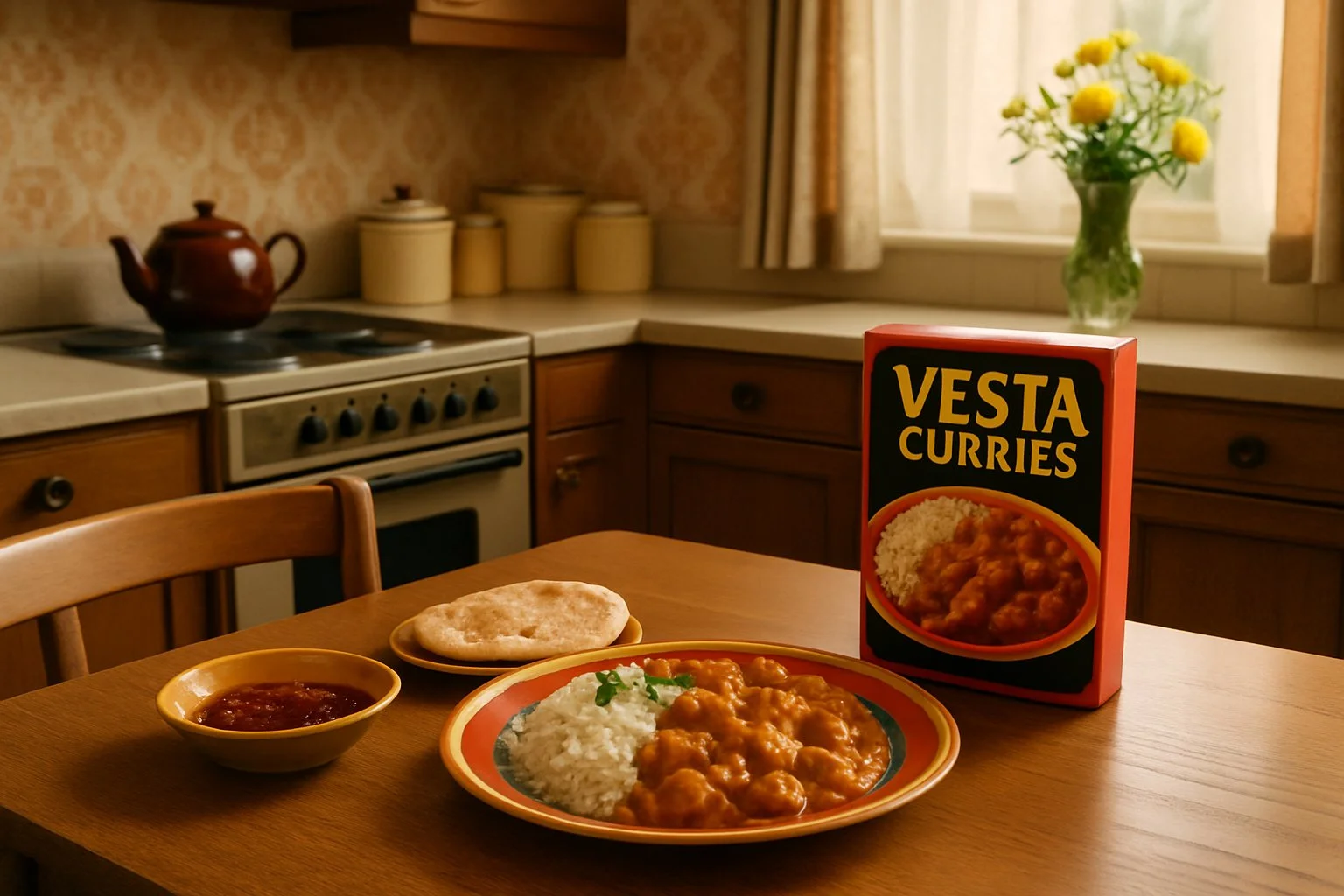
Sure, the idea of mixing a powder with boiling water to make a “curry” might get a laugh now, but honestly, Vesta meals changed the game.
Suddenly, we were tasting spices and rice dishes that felt miles away from our usual fare, and we didn’t have to spend a fortune or wrestle with complicated recipes.
Those simple packet meals made some pretty vivid memories. There was the thrill of frying up those crispy noodles for chow mein, or the anticipation of that first spoonful of beef curry—maybe not “authentic,” but definitely special. Vesta curries wormed their way into British food culture, and, well, they still tug at the heartstrings for a lot of us.
Vesta Curries: A 1970s Culinary Revolution
Back then, Vesta curries changed how we thought about dinner. Suddenly, the taste of India—or at least a version of it—sat right there in a box on the supermarket shelf.
The Rise of Convenience Meals
Life in the 1970s meant more families where both parents worked, and nobody wanted to spend hours in the kitchen after a long day. Vesta understood that perfectly. Their boxed meals didn’t need a fridge and could wait patiently in the cupboard for whenever you fancied something different.
Each box had its own little ritual: sachets of brightly coloured powder, a packet of rice, sometimes a tiny bag of dried meat. No need to hunt down mysterious spices or odd ingredients. Just boil some water, stir, and voilà—curry night.
Before Vesta, “exotic” dinners mostly meant going out or scouring specialty shops. Now, if you wanted a curry on a Wednesday night, you could have one.
Why Vesta Curries Felt Exotic
It’s hard to imagine now, but curry wasn’t everywhere in the 1970s. Fish and chips still ruled the table, and most towns didn’t even have an Indian restaurant.
Serving curry at home felt bold—like you were showing off a bit of worldliness. The packaging helped, too. Those bright, almost psychedelic boxes with foreign-sounding names promised adventure, even if you were just standing in your mum’s kitchen.
Trying Vesta was often the first time many of us tasted “spicy” food. It was exciting, and maybe a little intimidating, but mostly it just felt new.
Popular Vesta Flavours
Beef curry and chicken curry led the pack. Those familiar meats made the leap into “exotic” territory a little less scary for cautious eaters.
But Vesta didn’t stop at curry:
- Chow mein with those magical crispy noodles you fried yourself
- Paella for a Spanish twist
- Beef Italienne with spiral pasta
Frying those chow mein noodles was a real highlight. They’d puff up and twist in the pan, and for a moment, dinner felt like an event.
Beef curry, especially, became a family staple. Some parents would mix it with mince and serve it with baked beans and potatoes—classic British comfort, just with a bit more zing.
How Vesta Curries Were Made at Home

Making a Vesta curry was straightforward, but you had to follow the steps to get it just right. There was a certain satisfaction in unboxing all those little sachets, setting out the rice and curry powders, and getting everything bubbling away on the hob.
Unpacking a Typical Box
Opening a Vesta curry box felt a bit like unwrapping a present. Inside, you’d find each component in its own little packet.
The main curry sachet—usually a bright yellow or brown powder—would become the sauce. The rice packet held seasoned grains, ready for boiling.
Most boxes gave you:
- Curry sauce powder
- Rice grains
- Dried meat pieces (usually beef)
- Seasoning sachet
- Instructions card
A lot of families had their own tricks. Tossing in an Oxo cube was pretty common if you wanted a bit more oomph in the flavour.
Preparing Vesta Rice and Curry
We’d get two pans going—one for rice, one for curry. The powder hit the boiling water first, and you had to keep stirring or it’d go lumpy and stick to the bottom.
Rice steps were simple:
- Boil water
- Add rice
- Simmer 10-12 minutes
- Drain
The curry sauce thickened up in about 5-8 minutes. The kitchen would fill with a spicy, slightly sweet smell—some loved it, some found it a bit much.
Adding Raisins and Extra Toppings
Lots of families liked to jazz up their Vesta curries. Raisins were a big favourite for adding a bit of sweetness.
We’d toss a handful into the pan near the end, letting them plump up in the sauce. Other popular add-ins: sultanas, peas, even extra mince if you wanted to stretch the meal.
Some mums swapped out the rice for boiled potatoes, or served the curry with baked beans on the side—very British, and honestly, pretty tasty.
The dried beef pieces could be a bit chewy, so adding fresh ingredients made the meal feel more like something you’d made yourself.
Signature Dishes: Beef Curry, Chicken Curry, and Chow Mein
Vesta’s hits brought India and China (or, well, a version of them) right to our tables. Beef curry was the big one, but chicken curry was a gentler option, and chow mein, with those crispy noodles, was just plain fun.
Beef Curry from a Packet
Beef curry was probably where most of us started. The freeze-dried mix came in a little packet—just add water and cook it up.
Currants in the sauce gave it a sweet twist that actually worked surprisingly well. The beef pieces, once rehydrated, were small but packed a punch.
For many, this was the first time curry hit the dinner table at home. Not exactly authentic, but it nudged us toward trying the real thing later.
Chicken Curry with a Fruity Twist
Chicken curry was a bit milder, making it a safe bet for younger kids or anyone nervous about spice. The rice came right in the box, so you just added water and let it all bubble away.
Those currants showed up here, too, keeping that sweet-spicy balance. Families often switched between beef and chicken curry for a bit of variety.
Vesta Chow Mein Experience
Chow mein was a revelation. The meal came with noodles you’d shallow-fry yourself, and watching them puff up was half the fun—especially for the kids.
The sauce, with its mix of veggies and tiny meat pieces, tasted like nothing else we’d had at home. The combo of crispy noodles and saucy filling was a real treat, and for a lot of us, it was our first taste of “Chinese” food before takeaways became an everyday thing.
Serving Suggestions and Side Dishes
Vesta curry packets included rice, but let’s be honest—it was never enough for a hungry family. We’d stretch the meal with extra sides, or sometimes dive into Vesta’s other “Continental” offerings for a change.
Paella and Continental Options
Vesta didn’t stop at curries. Their paella packets let us pretend we were dining in Spain, even if the result was more yellow rice and bits of seafood or chicken than anything truly Mediterranean.
Some families would alternate between curry nights and paella nights, just for the novelty. Mixing leftover paella rice with curry? Not exactly traditional, but it made the food go further.
Other options in the range included Beef Stroganoff and Chicken Italienne. Sometimes these all showed up together at big family gatherings.
Traditional Rice Pairings
The rice sachet in the box never quite filled everyone up, so we’d make extra plain rice on the side. Long-grain white rice worked best—just boiled with plenty of salt, ready to soak up that curry sauce.
Some mums swapped in jacket potatoes or even baked beans, making the meal heartier. Others tossed sultanas or chopped apple into the rice for a little sweetness.
Nostalgic Stories and Family Memories
Ask around, and you’ll find plenty of folks who remember Vesta curry nights. Mums in the kitchen, sachets being torn open, the odd smell filling the house—it was a little adventure right at home.
Saturday Night Vesta Rituals
For a lot of families, Saturday night meant Vesta curry night. We’d gather round, watching mum stir powder into water, waiting for that shiny brown sauce to appear.
Sometimes she’d mix in mince, or serve the curry with potatoes and beans—nothing fancy, but it felt special. Those chewy beef pieces were a bit odd, but as kids, we didn’t care. It was different, and that was enough.
The British Home Cook’s Experience
Home cooks found Vesta curries both exciting and a bit weird. They brought a taste of India (sort of) to people who’d never been near an Indian restaurant.
The curry wasn’t hot, or especially authentic, but it was a step away from the usual. Mums liked the convenience: no fridge needed, just add water and stir. No fussing with spices or complicated recipes.
Beef curry and chicken curry quickly became family favourites. They might have tasted a bit artificial, but they opened the door to new flavours and, eventually, to the real thing.
The Legacy of Vesta Curries in Modern British Cuisine
Vesta curries gave us a first taste of the world when “curry” still sounded exotic. Now, of course, there’s a curry house on every high street and supermarket shelves groan with options.
Changing Tastes Since the 1970s
Back then, curry was a treat, not a staple. Fish and chips still reigned supreme, and Vesta’s little boxes felt like a ticket to somewhere new.
We’d mix up those coloured powders, pour on the boiling water, and call it curry. The flavours were mild, and looking back, not exactly true to their origins, but they got us curious.
These days, curry’s practically a national dish. We’ve come a long way from those humble packets, but Vesta helped ease us into a bigger, spicier world. And, honestly, the convenience didn’t hurt either. Sometimes, you just want dinner to be easy—and maybe a little nostalgic too.
Available Flavours Today
Vesta still cooks up curry meals, though the lineup isn’t quite what it was in the 1970s. You can still find beef curry and chow mein—the classics that put the brand on the map.
These days, you’ll spot:
- Beef curry with rice
- Chow mein with those iconic crispy noodles
- A couple of chicken curry options
Honestly, frying up those noodles and watching them puff and twist in the pan? That’s a memory that sticks. Even now, folks look for that little ritual in their chow mein packs.
Sure, the prep’s shifted a bit. Instead of hovering over the hob for ages, most of us just toss the tray in the microwave and hope for the best—life’s too busy, right?
Maybe it’s the nostalgia, or maybe it’s just easy comfort, but somehow these boxes still hang around on the shelves. Some nights, you really just want a taste of the past.






Leave a Reply