
When you picture punk fashion, those battered safety pins and anarchy symbols come rushing back, don’t they?
Punk pins and safety-pin earrings became these wild badges of rebellion, turning boring household junk into loud, unforgettable statements.
They weren’t just accessories – they shouted out a whole movement of teens who wanted nothing to do with the mainstream.
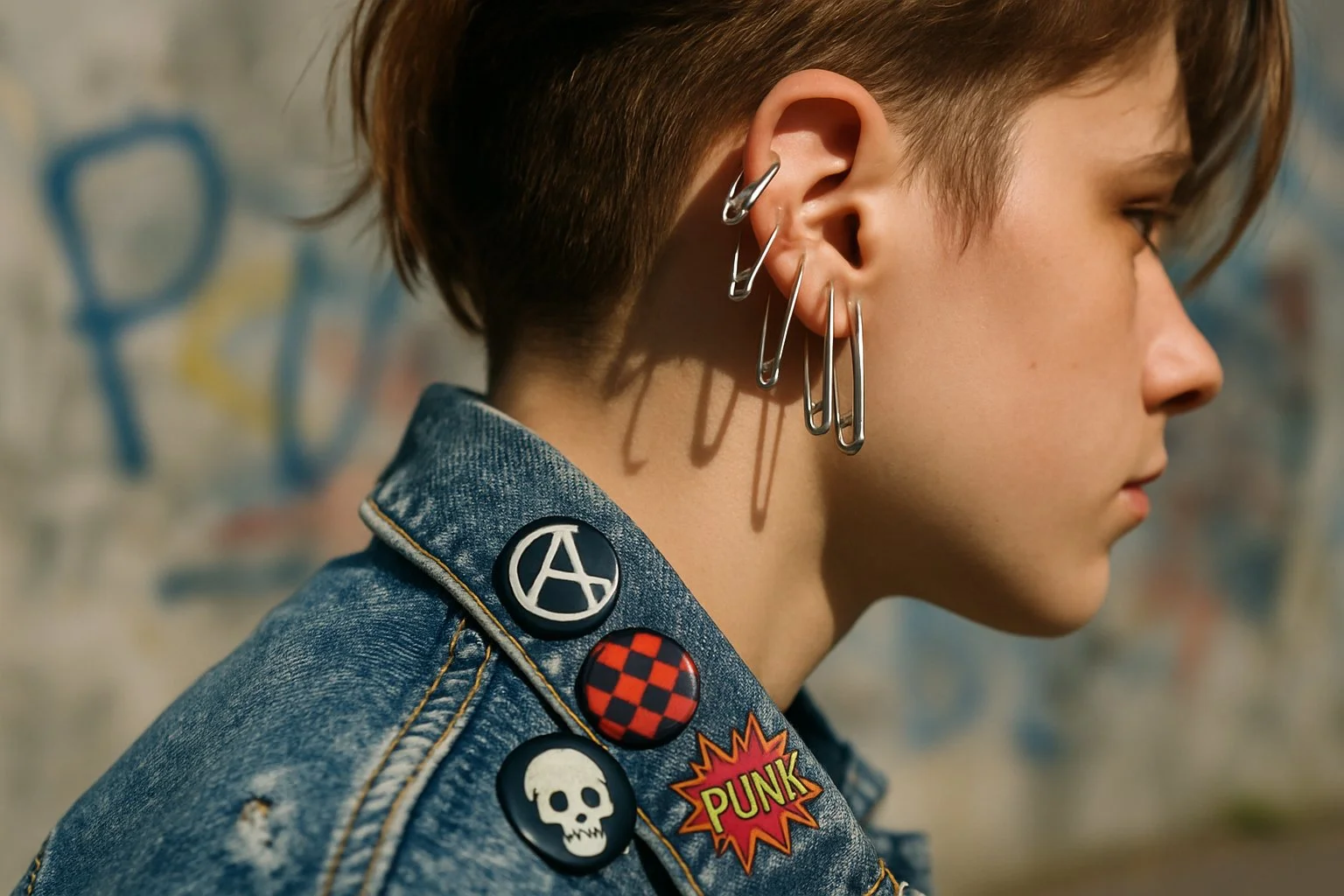
The story of punk pins starts in 1970s London, when kids grabbed safety pins to hold together shredded clothes and threw them on as makeshift jewelry. What began as a quick fix turned into a legendary act of defiance. These little bits of metal somehow became the ultimate sign of freedom.
The Rise of Punk Pins and Safety-Pin Earrings

Back in the ‘70s, musicians and misfits started grabbing whatever was handy—safety pins, mostly—and making them the heart of their look. Suddenly, you saw pins everywhere, holding together torn shirts, stuck through ears, or dangling off jackets. It was all about that DIY spirit. If you couldn’t afford something, you made it, and you made it loud.
Safety Pins as a Punk Symbol
Safety pins, of all things, became the ultimate badge of punk rebellion in 1970s Britain. Young people everywhere started shoving these little fasteners through their clothes, sometimes even their skin, just to show they weren’t interested in fitting in.
They were cheap, sure, but that was the point. When you didn’t have cash for fancy clothes, you made your own statement. Torn clothes, held together with pins, became a uniform of sorts—one that poked holes (literally and figuratively) in the rules of fashion.
Pins weren’t just decoration; they were a kind of protest. You could wear your resistance on your sleeve, ear, or wherever else you felt like sticking one. And because anyone could get their hands on a box of safety pins, it felt like a movement you could join, no matter where you came from.
Origins in Punk Rock Culture
It’s hard to pin down (pun intended) the exact moment safety pins broke into punk fashion. Some folks credit Richard Hell, from Television and The Voidoids, who rocked ripped clothes held together with pins because, well, he had to. It was practical at first—then it became a whole look.
Malcolm McLaren and Vivienne Westwood, always with an eye for the outrageous, spotted Hell’s style and brought it back to London. Their shop, SEX, became the place to see and be seen if you wanted to look like you didn’t care.
By the time the Sex Pistols hit TV, safety pins were everywhere—through noses, ears, you name it. Punk kids, especially in Britain, grabbed onto the look as unemployment and frustration with the system boiled over. Pins weren’t just for shock anymore; they were political.
Evolution of DIY Accessories
As punk pushed the envelope, safety pins started showing up as earrings and even more creative jewelry. Before piercing studios were a thing, kids just grabbed a pin and did it themselves. It hurt, but that was almost the point—pain as proof of commitment.
By the early ‘80s, things got a little fancier. Post-punk scenes in London, New York, and Berlin started making elaborate safety-pin earrings, mixing aggression with a weird kind of beauty.
Designers took notice eventually. Zandra Rhodes, for example, put golden pins on torn-up rayon dresses in her 1977 collection. Suddenly, the same pins you bought at the corner shop were on the runway.
Punk’s influence stuck around. What started out as a necessity turned into a choice—a way to say, “I don’t care what’s in style, this is me.”
Influential Figures in Punk Accessory Style

Punk’s wild, ragged look didn’t just appear out of thin air. There were a few trailblazers who took everyday junk and made it iconic. Richard Hell, for one, just wanted to keep his clothes from falling apart. Malcolm McLaren and Vivienne Westwood turned that raw look into something you could buy, and Zandra Rhodes brought it into the world of high fashion—imagine that.
Richard Hell’s Style Legacy
Richard Hell, from Television and The Voidoids, pretty much wrote the book on punk’s ripped-and-pinned style. He wore torn shirts and pants, held together with whatever he could find—usually safety pins.
Hell’s look wasn’t calculated at first. He just needed to keep his clothes on his body. But soon, that scrappy, unpolished vibe became the blueprint for a whole generation.
Hell’s style in a nutshell:
- Safety pins through every rip
- Clothes that looked like they’d survived a bar fight
- Zero polish, all attitude
- Fixing things on the fly
Malcolm McLaren, always on the hunt for something shocking, saw Hell play in New York and brought the idea back to London. And just like that, Hell’s accidental style became punk gospel.
Malcolm McLaren and Vivienne Westwood
Malcolm McLaren and Vivienne Westwood didn’t just sell clothes—they sold a whole attitude. Their shop, SEX, was the epicenter for anyone who wanted to look like they didn’t give a damn.
They took Hell’s raw style and gave it a British twist—bigger pins, louder patterns, more deliberate chaos.
What they brought to the table:
- Made safety pin style something you could buy
- Created a template for punk fashion
- Helped bands look the part
- Turned a shop into a cultural flashpoint
Westwood’s designs didn’t just use pins to hold things together—they made them the star. McLaren, meanwhile, saw the media potential and ran with it. Their boutique became the hangout for London’s weirdest and wildest.
Sex Pistols: Iconic Imagery
The Sex Pistols, well, they took safety pins and ran with them. Sid Vicious, especially, became the poster boy for sticking pins through pretty much anything.
The band’s look wasn’t random. McLaren and Westwood made sure every ripped tee and facial piercing got noticed.
What stood out:
- Pins in faces, shirts, and anywhere else
- Layered pins as jewelry
- Placement that dared you to look away
Johnny Rotten’s spiked hair and pin-covered clothes became the image of punk for years to come. Their TV appearances spread the look far and wide.
The Sex Pistols didn’t just wear pins—they turned them into a symbol of everything they stood against.
Zandra Rhodes and High Fashion Influence
Zandra Rhodes took punk’s ragged energy and brought it to the runway. Her 1977 Conceptual Chic collection featured dresses with intentional rips, held together by golden safety pins.
Rhodes showed that punk could be elegant, in its own offbeat way. She mixed torn fabrics with precious metals and bold colors.
Her spin:
- Gold pins on distressed dresses
- Carefully controlled chaos
- Punk meets luxury
Some critics didn’t know what to make of it—punk and high fashion seemed like total opposites. But Rhodes proved you could blend rebellion with craftsmanship, and suddenly designers everywhere started playing with pins and rips.
Anarchy and Anti-Establishment Attitude
Punk culture took something as plain as a safety pin and loaded it with meaning. It was about flipping off authority, breaking rules, and building a new kind of community—one that didn’t care about what was “normal.”
Safety Pins as Acts of Rebellion
Safety pins became little weapons of rebellion. Teenagers started sticking them through cheeks, noses, and ears, just to see the shock on everyone’s faces.
Richard Hell may have started it, but Malcolm McLaren and Vivienne Westwood made it accessible. Their shop, SEX, sold clothes covered in pins to anyone who wanted to make a scene.
How we used them:
- Piercings in places that made parents cringe
- Giant pins as earrings
- Rips that stayed ripped—on purpose
- Jewelry that looked a bit dangerous
Wearing safety pins hurt sometimes, but that was the point. Suffering for your look meant you really meant it.
Statements Against Mainstream Norms
Punks used safety pins to say “no thanks” to everything mainstream culture tried to sell. Who needed expensive labels? Pins cost next to nothing, and that was the whole idea.
The safety pin look popped up at a time when young people felt boxed in—by politics, by money, by boring expectations. Pins let us wear our frustration right out in the open.
What we wanted to say:
- Forget pricey fashion—pins are cheap and everywhere
- Ugliness could be its own kind of beauty
- Sharp metal sent a message—don’t mess with us
- Rules? We broke them for fun
The Sex Pistols’ “Anarchy in the UK” pretty much nailed the feeling. Tear it all down and start over, right?
The Meaning of Anti-Fashion
Anti-fashion was our way of refusing to play along with the fashion industry’s game. Why buy what you’re told to wear when you can make something wild out of nothing?
Safety pins summed up that whole DIY spirit. You didn’t need designer anything—just a box of pins and a little nerve.
There was something deeper, too. Creativity didn’t need a big budget or anyone’s approval. Pin jewelry was proof that rebellion could be rough and beautiful at the same time.
Seeing someone else with safety pin earrings felt like spotting a fellow misfit. We built a whole community out of shared rejection—one pin at a time.
Iconic Moments and Designs in Punk Jewellery
Safety pins didn’t just stay on the streets—they crashed the fashion world in some unforgettable moments. Sometimes, they made it all the way to the red carpet or into the hands of artists who turned DIY into high art.
Elizabeth Hurley’s Versace Dress
In 1994, Gianni Versace made jaws drop with his infamous safety pin dress. Elizabeth Hurley wore it to the Four Weddings and a Funeral premiere, and suddenly, punk was in the spotlight.
This wasn’t just some punk rip-off—Versace used golden, crystal-studded kilt pins to hold together slashed black fabric. Punk met glamour in a way nobody saw coming.
It was wild to see a symbol of rebellion go mainstream like that. Punk fans couldn’t help but laugh a little—safety pins, once a protest, now graced the red carpet.
Judy Blame and the Safety Pin Necklace
Judy Blame, working out of Dalston in the ‘80s, took safety pins and made them art. His necklaces, made from dozens of linked pins, turned everyday metal into something you’d see in a gallery.
Blame’s pieces weren’t just DIY—they were statements. They showed that street style could be just as important as anything in a museum.
His safety pin necklaces inspired punks and designers alike, proving that the line between fashion and art could be as thin as a pin.
Runway to DIY Fashion
The ‘80s and ‘90s saw designers like Jean Paul Gaultier sticking safety pins on everything. Suddenly, what started as punk rebellion strutted down international runways.
But even as the fashion world cashed in, punks kept making their own. Cheap pins from the corner shop, a little creativity, and you were set.
It’s funny—on one end, you had designer pins costing a fortune. On the other, punks making jewelry for pennies. Both sides, somehow, kept the same spirit alive.
How to Wear and Create Punk Pins and Safety-Pin Earrings
Making your own punk pins and safety-pin earrings is still the best way to get that raw, rebellious look. Mix handmade pieces with whatever you find at thrift shops or in your junk drawer. Just, you know, be careful with the piercings—nobody wants an infection.
Choosing the Right Safety Pins
Let’s be real—big safety pins just work better for earrings. They’re easier to handle, and honestly, they pop a lot more. The tiny ones? Save those for jazzing up your jacket or jeans; they’re not great for sticking through your ear.
For Earrings:
- Large safety pins (2-3 inches)
- Heavy-duty construction
- Silver or black finish
For Clothing Pins:
- Mix up sizes for layering
- Standard pins are fine
- Play with different finishes
Metal quality matters, especially if something’s going near your skin. Steer clear of cheap pins; you don’t want mystery alloys in your ears. Stainless steel or sterling silver—those are the classics for a reason.
You’ll spot the good stuff at craft stores, punk boutiques, or scrolling online late at night. Hardware stores? Surprisingly, they’ve got some hefty industrial pins that make killer statement pieces.
DIY Tips for Safe Piercing and Styling
If you’re making your own punk earrings, safety has to come first. No one wants an infected ear for the sake of fashion.
Essential Steps:
- Snip off the sharp tip with wire cutters or nail clippers
- Fire polish the end—just wave a lighter over it for about 10 seconds
- Disinfect with rubbing alcohol
- Check for rough spots so you don’t scratch yourself
Trim just the very tip so the pin still clicks shut. Go too far and the thing won’t close at all—ask me how I know. And always cut over a trash can unless you like hunting for tiny metal bits.
When you fire polish, you’re smoothing out any jaggedness. Heat the end until it’s rounded off, then let it cool down before you touch it. Nothing ruins the vibe like a burnt finger.
Styling Options:
- Insert from back to front for that classic punk vibe
- Add some beads or charms before you close it up
- Stack a few pins of different sizes for a layered look
Mixing Modern Pieces with Classic Looks
There’s just something about blending old-school punk with new twists. Try pairing a safety pin with a regular earring hook—suddenly you’ve got punk that’s wearable anywhere.
Contemporary Combinations:
- Safety pins dangling from earring hooks
- Mash up gold and silver finishes
- Throw in some crystals or colored beads
- Add a bit of chain for extra flair
It’s a way to keep that edge but still look put together enough for work or class. Punk, but you know, grown-up punk.
Dangly earrings with a bunch of pins have this wild movement to them. Connect a few small pins on one hook and you get a kind of waterfall effect. It’s fun, and it catches the light in a way that feels a little rebellious.
Clothing Applications:
- Cluster pins on jacket lapels
- Scatter them across denim
- String safety pin chains over shirts or skirts
- Mix with patches and badges for that lived-in look
It’s all about finding a balance—keeping the punk attitude alive, but making it fit your own life.
Contemporary Impact and Commercial Trends
It’s wild, honestly, how the safety pin went from a punk staple to a full-on fashion must-have. You see them everywhere now, from runways to street corners, and they’ve picked up a whole new set of meanings along the way.
Mainstream Adoption of Safety-Pin Accessories
Remember when safety pins were just for punks? Now, luxury brands run with the idea. Celine turns them into sleek necklaces, Balenciaga goes big and bold with earrings the size of your palm.
Alexander McQueen? They’ve built entire collections around what they call “punctured punk kids.” It’s this weird and wonderful mix of rebellion and high fashion.
You’ll spot safety pins at:
- High-street stores like Zara and H&M
- Designer labels—Maison Margiela, for one
- Indie brands making their own punk-inspired spins
And then there’s the solidarity thing. After the EU referendum, people started wearing safety pins to show support for immigrants. It’s a simple gesture, but it means a lot.
That mix—defiance and unity—gives safety pins a special kind of magic. They’re more than just decoration; they actually say something.
Punk Influence on Today’s Youth
Teens today? They’re all about safety-pin earrings. It’s a way to stand out, show confidence, and push back against whatever’s expected. There’s a kind of fearlessness to it.
Social media makes it even bigger. TikTok, Instagram—scroll for five minutes and you’ll see a DIY safety-pin earring tutorial. Suddenly, punk’s not just for a few; it’s everywhere.
But it’s not quite the same as it was back in the day. Now, kids mix safety pins with:
- Vintage finds for that thrifted vibe
- Modern basics for a quieter rebellion
- School uniforms (just enough to bend the rules)
The whole DIY thing is still at the heart of it. Teens are making their own accessories, customizing everything, keeping that punk spirit alive in a world that’s always changing. Maybe that’s the real legacy—taking something ordinary and making it yours.
Sustainability and Upcycling
There’s something charming about how safety pins have become little champions of sustainable fashion. These days, you’ll catch young folks grabbing a handful to patch up a jacket or tweak a pair of jeans—no need to run out and buy something new.
That’s right in step with the old punk philosophy, honestly. Punks would scrawl all over their clothes with marker pens and jab safety pins through the fabric, turning whatever they had into something personal and bold. There was a kind of magic in making do.
Environmental consciousness is at the heart of this revival:
| Traditional Shopping | Safety-Pin Upcycling |
|---|---|
| Buy new clothes | Repair existing items |
| Follow fast fashion | Create lasting pieces |
| Waste materials | Reuse everything |
You’ll find whole craft communities obsessed with safety pins, swapping tips and sharing tutorials on how to turn those little bits of metal into jewelry or other accessories. It’s oddly satisfying to see something so humble get a second life.
And sure, the circular economy gets a boost from all this. When you use safety pins to keep your clothes going, you cut down on textile waste. Maybe it’s a small gesture, but it’s got a bit of that punk rock spirit—defiant, resourceful, and quietly good for the planet.






Leave a Reply