
During World War II and for years after, ration books were more than just bits of government paper—they quietly ran the show in every kitchen, deciding what was for dinner, when a kid might finally get a sweet, and how families scraped together meals.
Rationing in Britain lasted a staggering 14 years, from 1940 until 1954, shaping how a whole generation thought about food and treats.
Those little booklets from the Ministry of Food could turn a simple craving for chocolate into a week-long bike ride across Yorkshire, or make a handful of dolly mixtures feel like buried treasure.
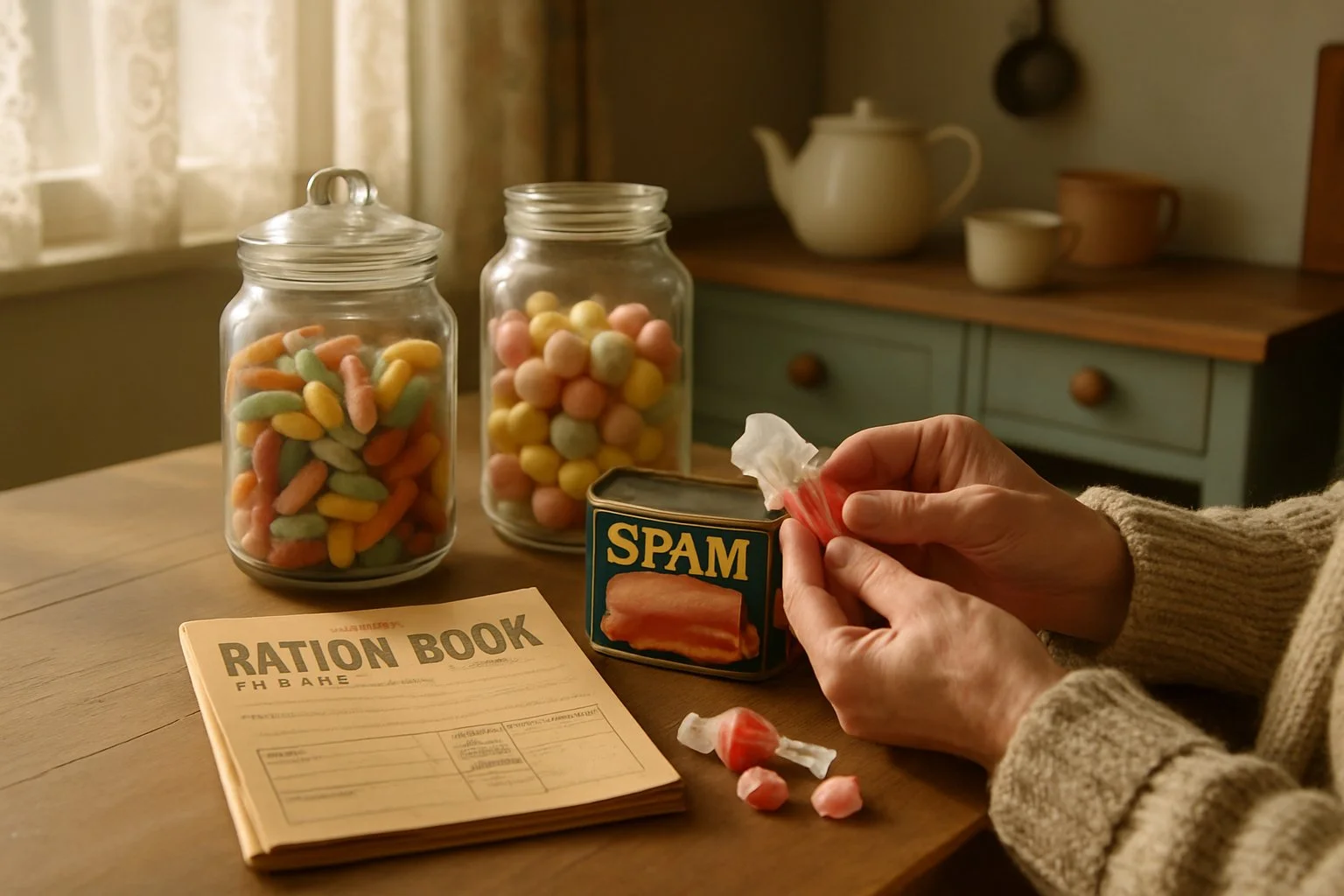
It’s easy to overlook just how much rationing seeped into daily life—how families became experts at conjuring meals from Spam or how the end of sweet rationing felt like a national holiday for kids. There are stories stashed away in old kitchen drawers and family lore, all about a Britain that learned to make do, swap ingredients, and really savour every small treat.
The Ration Book: Icon of Wartime Britain
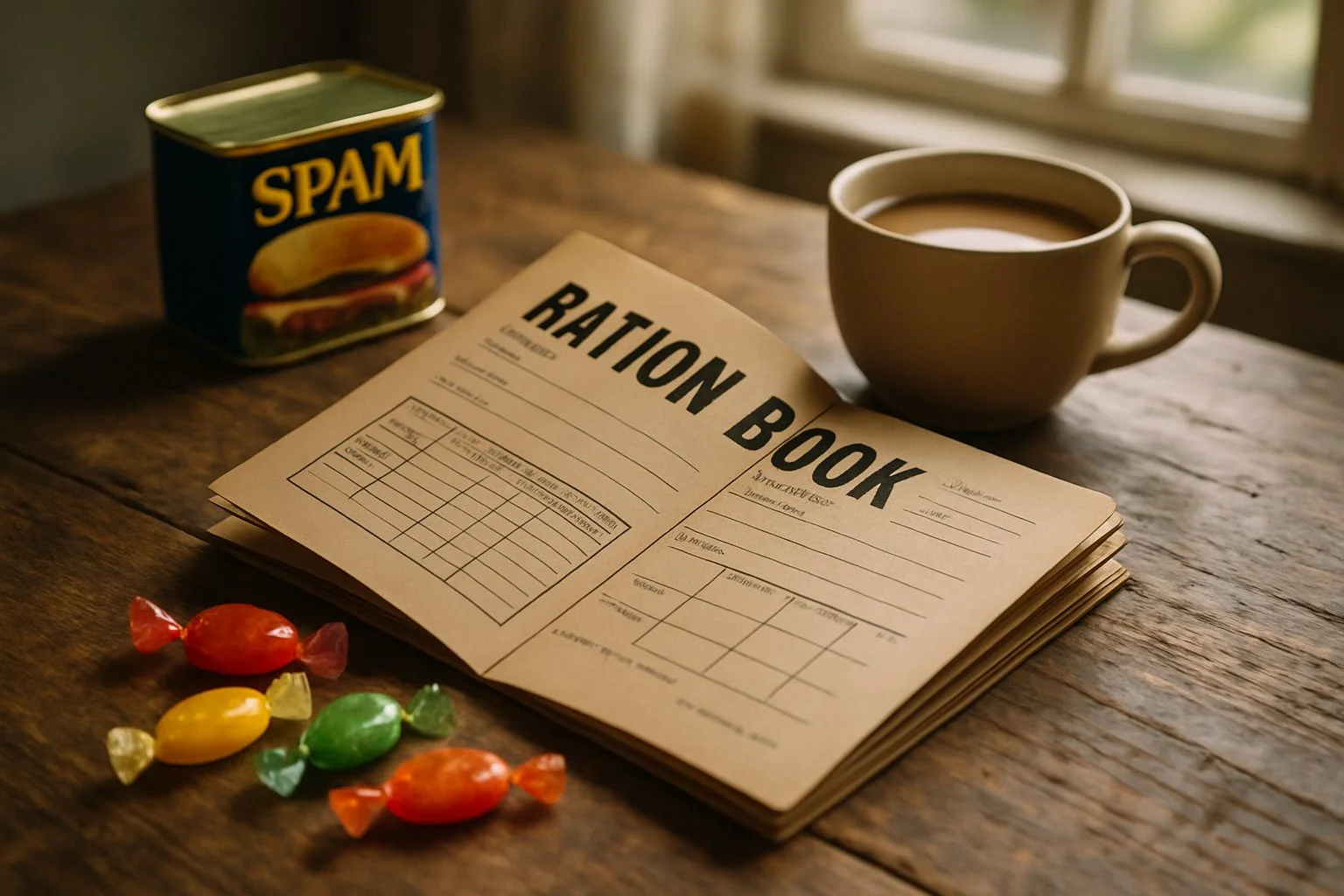
Those government-issued booklets—ration books—became the lifeblood for households between 1940 and 1954, dictating access to food, clothing, and petrol with their pages of coupons and stamps. The ration book meant restriction, sure, but also a certain fairness in the bleakest of times.
What Was a Ration Book?
A ration book was a little booklet packed with removable coupons for buying rationed goods. The Ministry of Food handed these out to everyone—no exceptions.
Each book was filled with coupons, colour-coded for age and need: green for kids, buff for adults, blue for expectant and new mums (with a few extra perks tucked inside).
They weren’t just scraps of paper, honestly. They were about survival, especially since Britain used to import most of its food before the war.
No ration book? No meat, sugar, butter, or tea. Lose it, and you’d be out of luck until the authorities decided you’d suffered enough paperwork.
How Ration Books Worked
Every coupon let you buy a specific amount of something rationed. You’d hand over the coupon and cash at the shop.
Typical weekly allowance per person:
- 2oz butter
- 2oz tea
- 2oz sugar
- 2oz meat or cheese
Rationing changed as the war dragged on. At first, it was just the basics; later, they added clothing, soap, even sweets.
Some things worked on a points system instead of coupons. That gave folks a bit of choice—save up for a tin of something special, or spread it out. The flexibility was nice, in theory.
Shops collected the coupons and sent them back up the chain. That kept things honest and helped the government keep tabs on what was left.
Registering and Shopping With Coupons
You had to pick your shops and stick with them—one butcher, one grocer, one dairy. No hopping around for a better deal.
That helped shopkeepers know how much to order and who they were serving. It made sense, but it could be a pain.
Shopping was a bit of an ordeal. Some shops only opened a couple days a week. You might queue for hours, only to hear, “Sorry, all out.” It happened.
The shopkeeper would cut out or stamp your coupon, and you’d guard the rest like gold. Lose them, and you’d be in for weeks of forms and waiting.
The Ministry of Food and Rationed Food Essentials
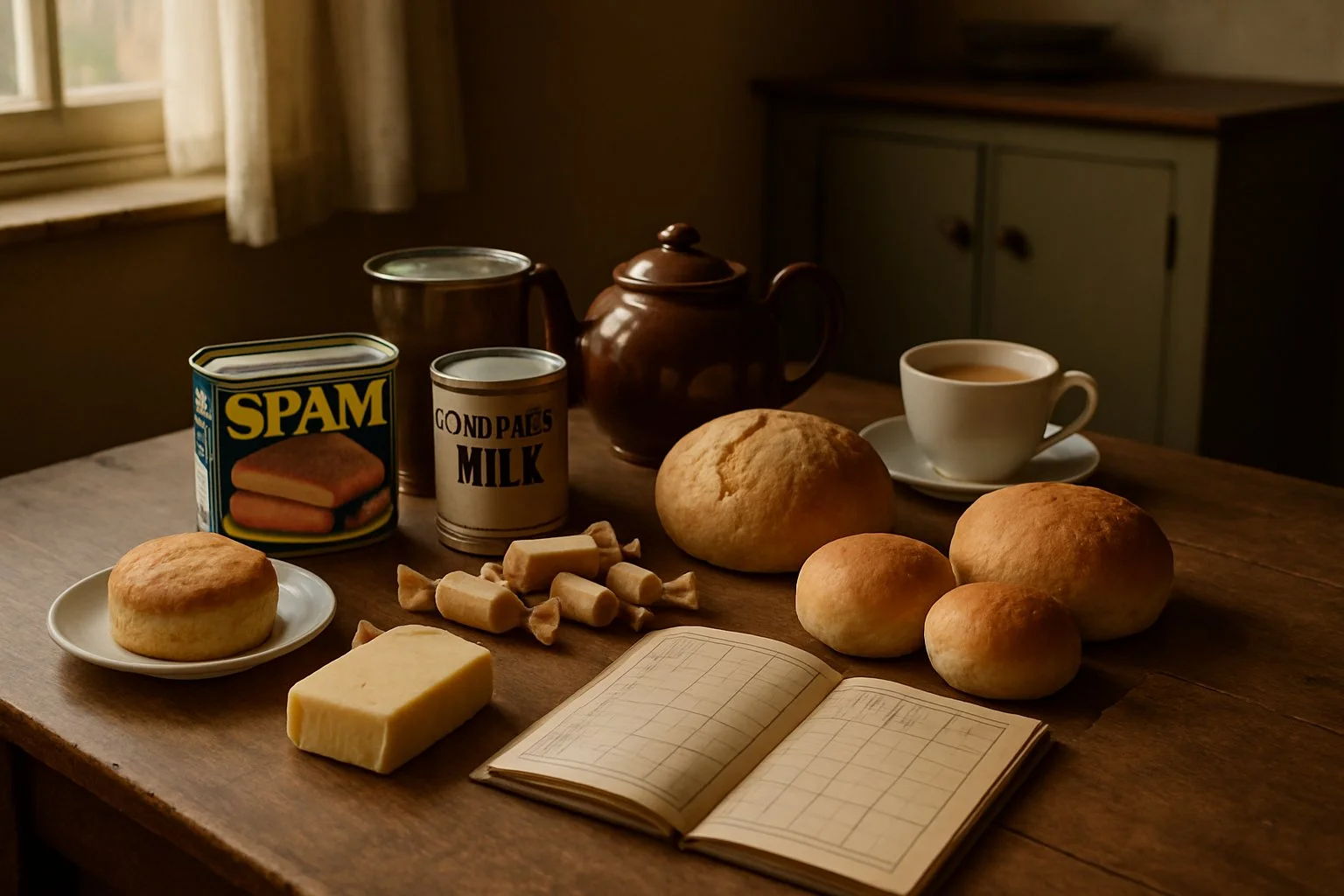
The Ministry of Food really ran the show—deciding what we could buy and eat, all through those ration books and coupons. They managed everything from sugar and meat to clothing and petrol, trying to keep things fair.
Why Rationing Was Introduced
When war broke out in 1939, Britain was bringing in most of its food from abroad—70% of the sugar and cheese, half the meat, 80% of the fruit.
Then German U-boats started picking off supply ships. Suddenly, food got scarce. The government remembered the shortages from World War I and wanted to nip that in the bud.
So, in January 1940, rationing started up. The idea was “fair shares for all.” No matter your bank balance, you got the same basic foods. It was a strange kind of equality.
Key Rationed Foods: From Bread to Bacon
The Ministry of Food rationed a whole list of foods, starting with the basics in 1940—sugar, meat, bacon, cheese, fats.
Sweets and chocolate joined the list in July 1942. Tea, eggs, and butter were tightly controlled too.
Oddly, bread wasn’t rationed during the war, but after it ended, in July 1946, bread finally made the list.
- Sugar: 8-10 ounces a week
- Meat: Coupon-limited
- Bacon: 4 ounces a week
- Cheese: 2 ounces a week
- Tea: 2 ounces a week
Fresh fruit and veg weren’t rationed, but good luck finding tomatoes or onions—especially the imported stuff.
Allowances and the Points System
Everyone got their own ration book, coupons and all. Kids and pregnant women got a little extra—more milk and eggs.
Some foods used a straight coupon system, others a points system. You’d get a set number of points per month for things like tinned goods or dried fruit. If something was scarce, it cost more points. If there was a glut, it was a bargain.
You had to register with specific shops for your rationed items. No shopping around for the best price—once you picked your grocer, you stuck with them.
Sweets and Treats: The Bittersweet Wait
During the war, sweets became these little treasures you had to plan for. Rationing on sweets dragged on for over a decade, and families got creative—making their own treats, waiting and hoping for the day sweet shops would be free again.
Sweet Rationing: Limits and Cravings
Sweet rationing kicked in July 1942 and stuck around nearly eleven years. Depending on sugar supplies, you were allowed 8 to 16 ounces of sweets a month.
Those ration books had tiny coupons for sweets—barely bigger than a postage stamp. Shopkeepers had to snip out each one for every single sweet purchase.
Unlike butter or Spam, sweet coupons were fiddly. Shopkeepers would spend Sunday afternoons counting those little scraps. No coupon, no new stock.
Most families spread their monthly ration out, buying just a couple ounces at a time. It made the sweets last, but it also meant more work for the shops.
Popular picks back then:
- Pear drops
- Nut brittle toffee (sold in big squares)
- Dolly mixtures
- Hard boiled sweets
Creative Wartime Sweets and Recipes
With sugar so tight, families made their own sweets at home. People used honey, golden syrup, even saccharin. Toffee was a favourite—made from butter rations and whatever sweetener you could find. Dried fruit, if you could get it, turned into makeshift sweets.
Kids would share out their sweets with siblings, or trade with friends for something new. Birthdays felt extra special—sugar was such a rare treat.
Baking became a bit of an experiment. Biscuits with barely any sugar, carrot and beetroot in puddings—anything to get a hint of sweetness.
The End of Sweet Rationing
Sweet rationing ended for the first time in April 1949, and chaos followed. Sweet shops emptied out in days, with people panic-buying. Some shops started their own unofficial rationing just to cope.
The government brought rationing back four months later. We all had to wait until February 1953 for sweets to finally come off ration for good. That was nearly eight years after the war ended.
On that last day, queues snaked down the street outside sweet shops. Kids who’d never tasted unlimited sweets finally got their chance. Some shops ran out and struggled to restock for weeks.
After more than a decade of counting coupons, buying sweets freely again felt like a minor miracle.
Spam, Substitute Meats, and the Wartime Kitchen
Meat rationing hit hard. Families had to get creative—Spam and other tinned meats became staples, and cooks started experimenting with meat substitutes that, honestly, sometimes stretched the definition of “meat.”
The Rise of Spam and Preserved Meats
When meat got tight, Spam took over British kitchens. That tinned American meat was a lifesaver—protein that didn’t need a fridge and was always there when the butcher’s counter was empty.
Meat rations were tiny and fresh stuff was pricey. Spam became the go-to, even if not everyone loved it. People fried it, baked it, chopped it up—whatever worked.
Spam classics:
- Fried Spam and potatoes
- Spam fritters in batter
- Chopped Spam sandwiches
- Spam hash with whatever veg was around
Corned beef and tinned fish also became common sights. Anything to make the fresh meat ration last a bit longer.
Making the Most of Limited Meat
With so little meat to go around, families learned to make every scrap count.
Bones became gold for making stock and soup. Even a bit of bacon or ham would get saved to flavour a pot of veg.
Mince was precious—you could stretch it with breadcrumbs, oats, or vegetables to fill hungry bellies.
Meat-stretching tricks:
- Oats or breadcrumbs in mince
- Reusing bones for stock
- Mixing meat with lots of veg
- Stews with more carrots than beef
A Sunday roast became a rare event. If you managed one, you’d plan the week’s meals around those leftovers.
Substitutes and Clever Cooking
Cooks got creative, making meals taste “meaty” with barely any meat. Veg and grains took centre stage.
Oatmeal sausages—oats, veg, a bit of fat—stood in for the real thing. Lentils and beans, mostly unfamiliar before the war, suddenly became pantry staples.
Go-to substitutes:
- Oatmeal sausages with herbs
- Lentil rissoles shaped like chops
- Veg pies with thick gravy
- Bean stews and casseroles
Carrot jam and other odd sweet stand-ins popped up too. Maybe not meat, but proof that wartime cooks could make something out of almost nothing.
Ration Book Memories: Personal Stories and Daily Life
Life with ration books wasn’t just about shortages. Kids treasured every sweet, families stretched meals in ways that would make a modern chef wince, and neighbours helped each other out with recipes and spare coupons.
Children’s Experiences and Sweet Rewards
For kids, sweets were everything. Each got 12 ounces every four weeks, but choosing at the shop counter was agony.
One granddad remembered losing his sweet ration book at age 12 and cycling 25 miles across West Yorkshire to find it—otherwise, no sweets for weeks.
Kids would save their rations for special occasions, or trade with friends for their favourites. Some would eat them slowly, making that little bag last as long as possible.
Weekly rations in 1942 looked like:
- 2 oz butter, cheese, and tea each
- 4 oz bacon, margarine, and cooking fat each
- 8 oz sugar
- 3 pints milk
- 1 fresh egg plus dried egg allowance
When sweet rationing finally ended, the happiness was real. One child recalled walking into the shop in 1954 without his ration book—buying 2 ounces of black bullets, just because he could.
Coping, Creativity, and Community
Families got pretty good at making things stretch. They’d save the best cuts of meat for Sunday, and leftovers turned into shepherd’s pie. Chicken? That was a treat—maybe for a birthday or a rare celebration.
Folks dug up their gardens and took on allotments, hoping to squeeze out a few more carrots or potatoes. Bottling fruit from wild hedgerows was almost a rite of passage. I remember an aunt who’d save up the cream off the milk in a jam jar, then churn it by hand—sometimes for ages—just to get a bit of butter.
Shopping was a whole adventure, never a one-stop affair:
- Eggs from Peter Craig on Ann Street
- Meat from Walter Rea in Winlaton
- Dairy from Meadow Dairy on Church Street
- Tea, sugar, and bacon from the Co-op
People got inventive: essence, chicory, even tinned Bantam coffee stood in for the real thing. When potatoes ran out, there was POM—potato powder mash, not exactly a taste sensation. Fish and offal didn’t get rationed, so tripe and liver—well, they showed up on plenty of kitchen tables, whether anyone liked it or not.
Getting By After the War
Rationing didn’t just vanish after 1945. It dragged on, sometimes feeling endless, until 1954. Oddly enough, bread rationing only started after VE Day, which didn’t exactly boost morale.
Kids sometimes got little surprises from abroad. At Blaydon West Junior School, each pupil got an apple—sent all the way from British Columbia. Small things like that felt huge.
Ration books stuck around for years. People still had to register with shops, present their books, and watch as coupons vanished, one by one. The country limped back to normal, but it took time.
Utility furniture and clothes, stamped with those unmistakable symbols, kept showing up in shops long after the fighting stopped. If you could afford it, you bought it—simple as that.
Then, almost without fanfare, it ended. One Monday in 1954, kids could finally buy sweets with nothing but a few coins in their pockets. Fourteen years of rationing, and suddenly, the world felt a little brighter.
The Sweet Taste of Freedom: Life After Rationing
When sweet rationing ended on 4th February 1953, Britain just erupted. Sugar-starved and ready for a taste of the good life, folks doubled their sugar intake in a single year. Fourteen years’ worth of longing spilled out in a rush for chocolate, boiled sweets, and anything remotely sugary.
Celebrations as Rationing Ended
On that day, crowds lined up outside sweet shops, kids and grownups both, ready to buy as much as they could carry. I can almost picture the queues—everyone giddy, impatient, clutching coins.
Shops ran out of stock in hours. Some people bought so much, you’d think they were stocking up for another war. Home baking made a comeback, too—suddenly, there was enough butter and sugar for cakes again, and kitchens filled with the smell of jam bubbling on the stove.
Some of the treats people snapped up:
- Chocolate bars
- Boiled sweets
- Toffees
- Sugar for baking
- Jam and preserves
It was like stepping out from under a cloud. No more counting coupons, no more guilty pleasures—just the freedom to buy what you wanted, when you wanted.
Changes in Food Culture and Shopping
Shopping changed almost overnight. Self-service shops popped up everywhere. No more standing in line, waiting for an assistant to weigh out your rations.
The old, familiar routine—registering with a shop, ration book in hand—just faded away. Suddenly, you could shop wherever you liked, and nobody cared how much you bought.
Shopping looked different:
- No more ration book queues
- Bigger portions on offer
- Sweet shops bursting with choice
- Freedom to wander and buy anywhere
Food became fun again, not just a calculation. No more mothers doling out a single sweet to each kid on Sunday.
Restaurant menus, too, started to look a bit more decadent. Desserts made a comeback. Maybe it’s nostalgia talking, but it really did feel like a new era—one where you could finally say yes to that extra slice of cake.
Lasting Impacts on British Society
The end of rationing left its mark on how we think about food and what it means to have enough. Folks who grew up measuring out every ounce of sugar or scraping the last bit of margarine from the wrapper just saw things differently. Waste? It wasn’t an option. Even decades later, many still found themselves folding up paper bags to reuse or thinking twice before tossing out a crust of bread.
Shopping trips became careful affairs, almost like a ritual—checking the pantry, making lists, stretching a shilling as far as it would go. It’s funny how those habits stuck around, even when the shelves filled up again.
There was a real sense of looking out for each other back then. Neighbours swapped recipes, shared a bit of this or that, maybe even slipped a spare coupon across the fence. That spirit didn’t disappear overnight.
Long-term effects on society:
- People started to really value having enough to eat
- The neighbourhood ties forged during rationing stayed strong for a long while
- Sweets and sugar became something special, not just a given
- Folks never quite shook off the urge to avoid waste
Kids who grew up with powdered eggs and beetroot jam? They often turned into adults eager to try new flavours—maybe because the old days didn’t offer much choice. It’s as if missing out made them curious.
Rationing stories became family lore. Every household seemed to have tales of clever substitutions or making something out of nothing—those memories handed down like treasured recipes, reminding us how people coped, endured, and, somehow, made it all work.





Leave a Reply