
Picture this: you’re eight years old in 1971, clutching your weekly pocket money, only to wake up one morning and find that your familiar shillings and sixpences have suddenly become confusing “new pence.”
On 15th February 1971, Britain abandoned a currency system that had lasted for centuries, switching from pounds, shillings, and pence to decimal currency in a single day that created widespread confusion and panic.
What we now call Decimal Day was supposed to modernise Britain’s creaky monetary system, but honestly, it left a whole generation scrambling to make sense of their own money.
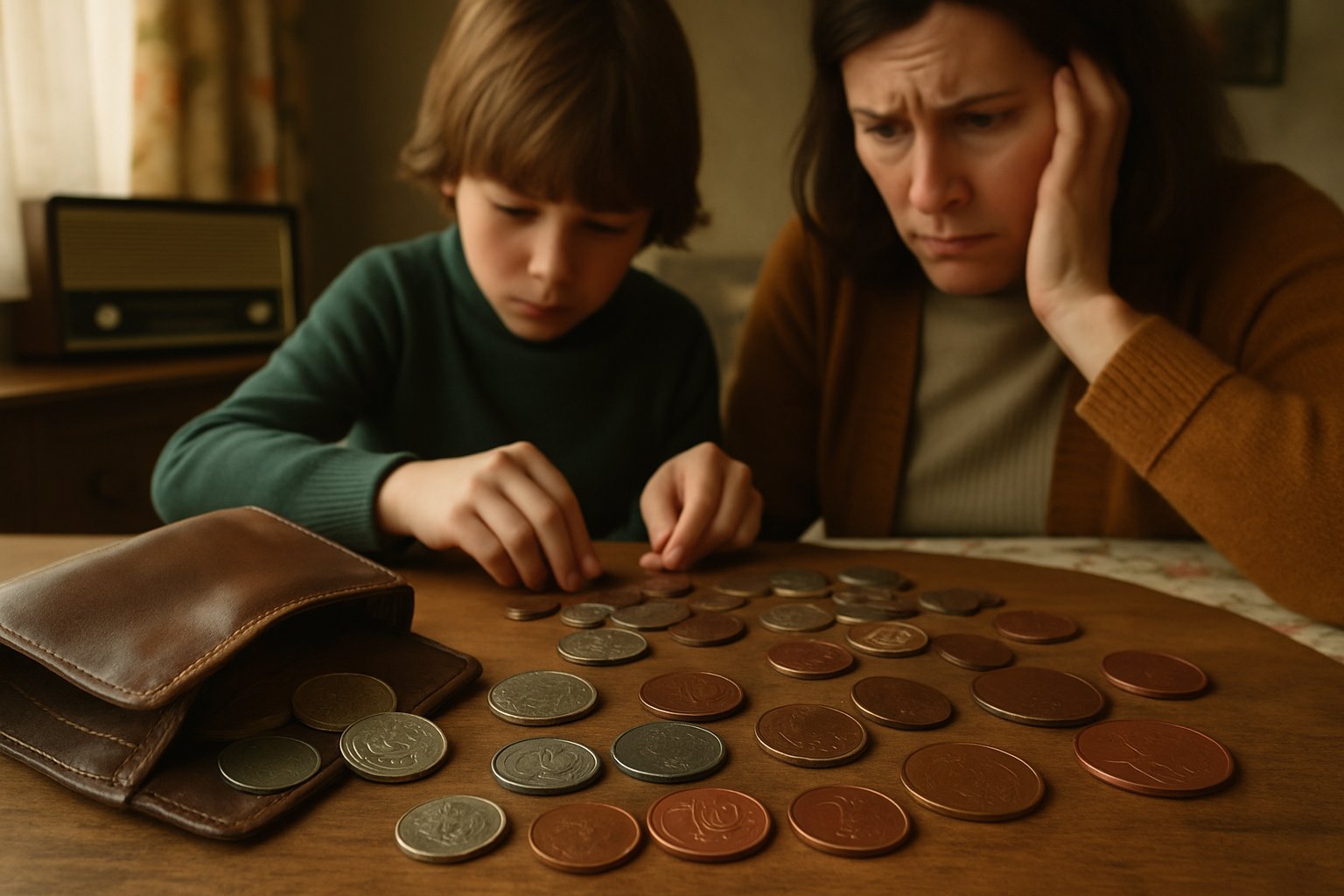
The changeover from a system where 12 pennies made a shilling and 20 shillings made a pound to our familiar 100 pence per pound seems straightforward now, but at the time? It was pure chaos.
Kids couldn’t work out their pocket money, shopkeepers fumbled with conversions, and plenty of folks felt sure they were being cheated as prices seemed to jump overnight.
Let’s dig into how this massive shift hit everyday families, the oddball coins that bridged old and new, and why some people still sigh wistfully about the “proper money” of their youth.
The government’s wild education campaign, the cultural ripple effects that haven’t quite faded—decimalisation was more than a maths lesson, it was a jolt to daily life.
The Pocket-Money Panic of 1971

Children across Britain faced confusion and worry as their familiar coins suddenly changed on 15 February 1971. Parents struggled to explain the new system whilst young people feared their savings might lose value in the switch from shillings to decimal currency.
Children’s Reaction to Decimal Day
British children woke up on 15 February 1971 to find their pocket money had transformed overnight. The familiar threepenny bits and sixpences they’d saved in jam jars suddenly looked different.
Many kids couldn’t wrap their heads around why their 12 old pennies now made up only 5 new pence. The maths just didn’t add up, not in their eyes. Some swore they were being ripped off.
School playgrounds buzzed with confusion. Kids compared coins, trying to figure out who’d lucked out and who’d lost out. Those new bronze coins just felt odd—lighter, shinier, and frankly, a bit fake.
Teachers tried to help. They’d use sweets and comics as examples, breaking it down as simply as possible. Still, plenty of kids stayed puzzled for weeks.
A few kids even refused to spend their old coins. They worried the new money wouldn’t work in the sweet shop, or maybe the old stuff would turn into treasure if they held onto it.
Fears of Losing Value in Pocket Money
Parents got peppered with questions from anxious kids about their savings. Decimalisation had them convinced their money would shrink overnight.
The maths was the real villain here. When 20 shillings became 100 new pence, kids couldn’t see how that worked out. Some panicked, thinking their piggy banks had been cut in half.
Common worries included:
- Old coins suddenly worthless
- Sweets costing more
- Pocket money not stretching as far
- Months of saving, gone in a flash
Kids saving up for toys or sweets felt especially uneasy. They’d counted their coins in the old system for ages, and suddenly, it was like someone had switched the rules.
Some even begged their parents to swap their savings for “real money” right away. They just didn’t buy that a 5p coin matched their old shilling.
Parental Guidance During the Transition
Parents had to turn into maths teachers overnight, explaining currency conversion while trying to figure it out themselves.
A lot of families made their own conversion charts and taped them up in the kitchen. “1 shilling = 5 new pence” became a sort of family chant.
Shopping trips morphed into lessons. Parents and kids would count out the new money together, practice buying sweets, compare prices, and hope for the best.
Some families made a game of it. They’d set up pretend shops at home so kids could practice spending decimal coins, hoping to take the edge off the anxiety.
Popular parent strategies:
- Drawing up conversion charts together
- Playing shop with the new coins
- Reassuring everyone that prices stayed fair
- Showing the bank statement hadn’t changed (well, not for this reason anyway)
The most patient parents let kids handle both old and new coins, side by side. That hands-on approach really helped some kids see the values lined up.
Media Coverage and Public Sentiment
TV shows rolled out special segments to help families decode decimalisation. Children’s programmes brought in characters who fumbled through new pence alongside their viewers.
Blue Peter and other classics showed kids how to convert pocket money, turning it into a mini adventure (or at least trying to make it seem fun).
Newspapers ran stories about families muddling through. Some articles pointed out how quick kids were to pick it up compared to their grandparents, which, honestly, probably made some grown-ups feel a bit old.
Radio stations played catchy jingles to hammer home the conversions. Kids picked it up through sheer repetition—those tunes stuck in your head whether you liked it or not.
Not all media coverage was reassuring. Reports of long queues and calculation mishaps made some parents more nervous than they already were.
But then you’d see local papers with smiling kids using the new coins, and that helped. Those stories reminded everyone that, somehow, British families would find their way through the muddle.
Understanding Pre-Decimal British Currency

Before 1971, British money worked on a system that dated back to Roman times. One pound contained 240 pence, divided into 20 shillings of 12 pence each.
Pounds, Shillings, and Pence Structure
The old British currency system ran on three main units: pounds (£), shillings (s), and pence (d). The ‘d’ came from the Roman denarius, which always felt oddly ancient in a modern world.
The basic structure was:
- 1 pound = 20 shillings = 240 pence
- 1 shilling = 12 pence
- 1 penny = 2 halfpennies
You had to do weird maths for the simplest things. If something cost 3 shillings and 8 pence, you’d be juggling base 12 and base 20 numbers, not the base 10 we’re all used to now.
The pound sterling was the main unit, but prices got written in all sorts of combinations: 2/6 for two shillings and sixpence, or £1 5s 4d for one pound, five shillings, fourpence. It was a code you just had to learn.
Everyday Coins and Notes in Use
We used a wild assortment of coins before 1971. The penny, sixpence, shilling, florin, and half crown were the staples.
Common coins were:
- Farthing (¼ penny)
- Halfpenny (½ penny)
- Penny (1d)
- Threepence (3d)
- Sixpence (6d)
- Shilling (12d)
- Florin (2 shillings)
- Half crown (2 shillings 6 pence)
Notes included the ten shilling note—everyone called it the ten bob note. We also had one pound and five pound notes, and the guinea (21 shillings) for posh stuff.
Each coin had its own size and feel. The sixpence was tiny and light, while the half crown felt like a proper chunk of metal in your palm.
Slang and Nicknames for Coins
Brits loved giving coins nicknames. The sixpence was the tanner, a shilling was a “bob,” and so on.
The florin went by “two-bob bit.” “Half a crown” was just that. And the threepenny bit? “Thruppenny bit,” of course.
Popular coin slang:
- Tanner = sixpence
- Bob = shilling
- Thruppenny bit = threepence
- Half a crown = half crown
- Ten bob note = ten shilling note
These names just grew out of daily life. You’d hear them tossed around in corner shops and markets all the time.
Arithmetic and Calculating Change
Working out change was a brain-bender. You’d add and subtract using different number bases at once.
Say you bought something for 1 shilling 8 pence and another for 2 shillings 7 pence. You’d add: 8 + 7 = 15 pence = 1 shilling 3 pence. Then 1 + 2 + 1 = 4 shillings 3 pence. Not exactly straightforward.
Handing over a ten bob note for something costing 7 shillings 9 pence? You’d have to figure out: 10 shillings minus 7 shillings 9 pence equals 2 shillings 3 pence.
Shopkeepers used mechanical tills with special keys for pounds, shillings, and pence. Kids learned their 12 and 20 times tables right alongside the usual ones.
The Decimalisation Changeover Process
Britain’s leap from pounds, shillings, and pence to decimal currency took years of planning. The government announced it in 1966 and circled 15 February 1971—Decimal Day—as the big switch.
Planning and Implementation of Decimal Day
The government picked 15 February 1971 after announcing plans in 1966, so everyone had nearly five years to brace themselves for the biggest shake-up to British money in a thousand years.
They called it “Decimal Day” or just “D-Day.” Why a Tuesday in February? Apparently, it was a slow shopping day, so there’d be fewer people in the shops when the confusion peaked.
Banks closed up on Monday the 14th to swap out their cash. Staff worked through the night, clearing out old coins and loading up tills with the new stuff. When the doors opened Tuesday, it was all decimal, ready or not.
Everything switched overnight—shops had to change their price tags, staff had to learn new maths, and many businesses stuck up labels with both old and new prices, just in case.
Design and Introduction of New Coins
The Royal Mint started cranking out new decimal coins well before Decimal Day. They needed to make nearly six billion coins—no small feat. They even built a new mint in Llantrisant, South Wales, opening it up in 1968.
The first decimal coins hit pockets in April 1968:
- 5p coin—same size as the old shilling
- 10p coin—same as the old florin (two shillings)
These “decimal twins” circulated with their old counterparts, giving everyone time to get used to the new money.
Then in 1969, out came the 50p coin—that odd seven-sided one. It replaced the 10-shilling note and was a pretty clear signal that change was coming, whether you liked it or not.
Christopher Ironside designed the new coins, each with different heraldic symbols. They looked modern but still nodded to British tradition.
Withdrawal of Old Currency
Not all the old coins vanished on Decimal Day. The government let some stick around to smooth the transition. The sixpence, for instance, kept going for years since it was worth 2½ new pence.
Rough timeline:
- Decimal Day (15 February 1971): Most old coins stopped being legal tender
- 1980: Sixpence finally withdrawn
- 1984: Half penny (½p) coin discontinued
The shilling and florin stuck around as 5p and 10p coins until the 1990s. Once the Royal Mint shrank the 5p and 10p coins in 1990 and 1992, the old shillings and florins were finally retired.
Some folks hoarded the old coins, hoping they’d be worth something someday. Others just forgot which ones you could still spend.
Official Public Education Campaigns
The government went all out with publicity, plastering leaflets and posters everywhere to explain how 100 new pence would now make a pound instead of 240 old pence.
TV was crucial. The BBC aired “Decimal Five”—short, snappy programmes breaking down the new system. ITV gave us “Granny Gets The Point,” a little drama where a grandson taught his gran about decimal money.
Key campaign messages:
- 12 pence in a shilling—gone for good
- 100 new pence in a pound—so much simpler (supposedly)
- Conversion charts made price changes a bit less scary
Schools started teaching decimal currency months ahead. Teachers used special materials to help kids practice converting between old and new.
All those efforts paid off, at least somewhat. When Decimal Day rolled around, most people had the basics down. The transition, for all the nerves, went smoother than many expected.
Legacy Coins: From Silver to Sentiment
The old coins that vanished in 1971 turned into family keepsakes—little chunks of silver and history, tucked away in drawers or passed down as lucky charms. Sixpences, shillings, florins… they’re not just currency anymore, but reminders of a Britain that felt a bit more complicated—and, maybe, a bit more charming.
Collectable Coins and Their Value
Pre-decimal coins still spark excitement for collectors. Honestly, even the silver alone can make them worth more than you’d expect—certainly more than their humble face value.
Coins struck before 1947 carried 50% silver, and if you go back further—think Victorian or Edwardian eras—some had even richer silver content. You might be surprised at just how much precious metal was jingling in those old pockets.
Most Valuable Pre-Decimal Coins:
- Edward VI sixpences (1547-1553)
- Victorian florins in mint condition
- George V half crowns
- Rare pennies with minting errors
Condition can make or break a coin’s value. A battered old Victorian shilling? Maybe 50p if you’re lucky. But an uncirculated one—those shine and can fetch £20 or more.
Rarity is the real game-changer. Coins from short-lived reigns, like Edward VIII (who barely made it onto coins before abdicating), always get collectors buzzing at auctions.
The Silver Content and Historical Significance
British silver coins don’t just clink—they tell our nation’s economic story. Over the centuries, governments tweaked the silver content, juggling precious metal costs with the needs of the currency.
Before 1920, these coins were 92.5% silver—sterling quality, the real deal. After World War I, silver dropped to 50% as the country had to save resources for other things. By 1947, silver vanished from daily coins altogether. The government needed every ounce for industry after the war, so base metals took over.
Silver Content Timeline:
- Pre-1920: 92.5% silver (sterling)
- 1920-1946: 50% silver
- 1947-1971: No silver content
Each coin carries a little portrait gallery—Victoria’s youthful face, then her older one, followed by Edward VII and the Georges. Our coins, in a way, became pocket-sized history books.
Famous Coins: The Sixpence, Shilling, and Florin
These three coins were everywhere—every purse, every pocket. Each had its own quirks and a place in daily life.
The sixpence—the “tanner”—was tiny but important. Brides tucked them in shoes for luck, and kids hoarded them for sweets at the corner shop. It’s hard not to feel a little affection for that small silver coin.
Shillings really did the heavy lifting. Worth 12 pence, enough for bread or a pint of milk, and their size made them easy to find in a jumble of change.
The florin was a bit of an oddball—our first step towards decimal currency, introduced in 1849. Worth two shillings (24 old pence), it lined up perfectly with 10 new pence after decimalisation.
Designs on these coins had real charm. Florins sometimes featured Britannia with her trident and shield, while shillings showed off royal crests and symbols. It’s funny—many of us probably still have a jam jar of these coins somewhere, tucked away as a reminder of pocket money and shopping trips from decades ago.
Decimalisation’s Social and Economic Impact
The move to decimal currency shook up daily life and forced businesses all over Britain to rethink everything. It’s wild to think how much that one change still shapes the way we handle money and run transactions.
Shopping and Daily Transactions After 1971
Switching to 100 new pence in a pound upended the simple act of buying things. Suddenly, everyone had to relearn prices for milk, bread, sweets—stuff you’d bought a thousand times before.
People grumbled that shops used decimalisation as an excuse to bump up prices. Rounding up to the nearest new penny made some things pricier, and folks noticed.
The halfpenny coin? What a pain. Too tiny, too fiddly. Shops often refused to hand out halfpenny change, which left customers feeling short-changed.
Kids, though, probably had the toughest time. Parents had to explain why their weekly shilling was now 5 new pence. Sweet shops became confusing territory, where a threepenny bar suddenly cost something entirely different.
All over the country, cash registers needed replacing. The old machines just couldn’t cope with decimal currency. Some shopkeepers kept those little conversion charts under the till for months after February 1971, just to keep up.
Public transport was a bit of a circus. Bus conductors had to master new fares while passengers fumbled with unfamiliar coins. The London Underground’s ticket machines needed pricey upgrades to accept the new coins.
Business Adaptations and Challenges
Companies poured millions into preparing for the big switch. Banks had to train thousands of staff so they could handle both old and new money during the changeover.
Retailers faced a mountain of costs—updating cash registers, reprinting accounting books, and changing price labels. Small shopkeepers, in particular, struggled, since new equipment wasn’t cheap.
Factories and offices had their own headaches. Wage packets looked different, and employers had to reassure workers they weren’t being shorted, just paid in new numbers.
The Decimal Currency Board did its best to keep things running smoothly. They sent out training packs and conversion guides, and honestly, without that, things could’ve gone off the rails.
Manufacturers had to rethink pricing, too. Items once sold for 2 shillings and sixpence needed new decimal prices. Some companies just rounded or simplified to avoid the math.
Banks even extended their hours on Decimal Day, helping people swap their old coins for new ones. Millions of transactions flew through as people lined up to make the switch.
Long-Term Influence on Modern Finance
Decimalisation finally put British money in step with international systems. The 100-pence structure made currency exchanges much less of a headache.
Electronic banking owes everything to decimalisation. Computers could actually handle the new format—imagine trying to automate pounds, shillings, and pence. No thanks.
All our modern payment systems—credit cards, online banking, digital wallets—depend on that simple decimal math. Without it, none of this would’ve been possible.
Teaching kids about money got easier too. Schools could finally use the same base-10 system for maths and money, making lessons less confusing for everyone.
International trade really took off after decimalisation. Foreign companies found it simpler to do business with Britain when our currency used the same logic as theirs.
Even today’s contactless payments and mobile banking apps only work because we switched to decimal fifty years ago. If we’d stuck with the old system, who knows—maybe none of this tech would’ve made sense.
Nostalgia and Cultural Reflections
The old currency system lingers in British culture—songs, stories, even the way some folks collect coins. Myths about decimalisation still pop up, and collecting those old coins keeps the memories alive.
Songs, Sayings, and Stories Featuring Old Money
British life is peppered with old money references. “Spending a penny,” “not worth a brass farthing”—these phrases are still around, even if the coins aren’t.
Music halls and old songs loved the sixpence and shilling. “I’ve Got Sixpence” was a Christmas classic, all about pocket money. Folk tales told of lucky sixpences baked into Christmas puddings.
Writers from Dickens to Enid Blyton dropped in florins and ten shilling notes. Characters would fret over having “only half a crown” or cheer about earning “five bob.”
The tanner (sixpence) turned up in playground rhymes, too. Kids sang about “tanner for the bus” or “sixpence for sweets.” Those little lines shaped how generations talked about money.
Radio shows made light of the old money’s complexity, with comedians cracking jokes about wrestling with pounds, shillings, and pence. That confusion became its own kind of British humour.
Popular Myths and Misconceptions
People still say everything doubled in price after decimalisation. It’s a stubborn myth—probably because one old penny became 2.4 new pence, which just sounds odd.
Some folks are convinced shops rounded prices up to cheat customers. In reality, most price changes happened gradually, not all at once on Decimal Day.
There’s a belief that the penny vanished. Not quite—the penny stuck around, just with a new value. The new penny equalled 2.4 old pence.
The shilling really did convert to five new pence, which made some things easier—at least for a while.
The florin (two shillings) matched up perfectly to ten new pence, and that helped people get the hang of the new system, especially since florins stayed in use for a bit.
People sometimes claim British coins lost their value. But honestly, the coins kept the same buying power—just with simpler numbers. Maybe it’s not quite as romantic, but it sure is easier to count.
Collecting and Preserving British Coins
Coin collecting really took off after 1971—people everywhere started tucking away old British coins. I remember families hanging onto sixpence pieces, mostly for luck or those quirky wedding customs that never quite go out of style.
Pre-decimal coins? Their prices are all over the place:
- Florins from rare years: £5-£50
- Victorian pennies: £1-£20
- Ten shilling notes: £15-£100
- Common shillings: 50p-£5
If you wander into a museum, you’ll spot complete sets of the old stuff. The Bank of England Museum actually lets you see (and kind of feel) how the tanner and its friends looked back in the day.
School projects sometimes dig into old money. Kids get a kick out of comparing a chunky, bronze 1960s penny with the tiny ones we use now—it’s a little time machine in your palm.
Antique shops love their pre-decimal currency. Those crisp-edged ten shilling notes? Collectors will pay a small fortune for them, and you can see why when you hold one.
A lot of family collections begin with someone stumbling on a coin in a dusty drawer. Maybe a 1950s florin or a battered wartime shilling—suddenly, you’re knee-deep in British monetary history and wondering how many more treasures are tucked away.
Online, people swap tips about rare dates, mint marks, and the thrill of finding a valuable sixpence or a quirky penny. The stories, honestly, are half the fun.






Leave a Reply