
When I think back to British summers in the 1960s and 1970s, it’s all sun-warmed skin, sandy sandwiches, and the endless promise of play.
Maybe you get the same flicker of memory: beach holidays, laughter echoing in parks, and that unmistakable feeling of freedom.
But was the weather really as glorious as we remember or is it just nostalgia painting the clouds away?
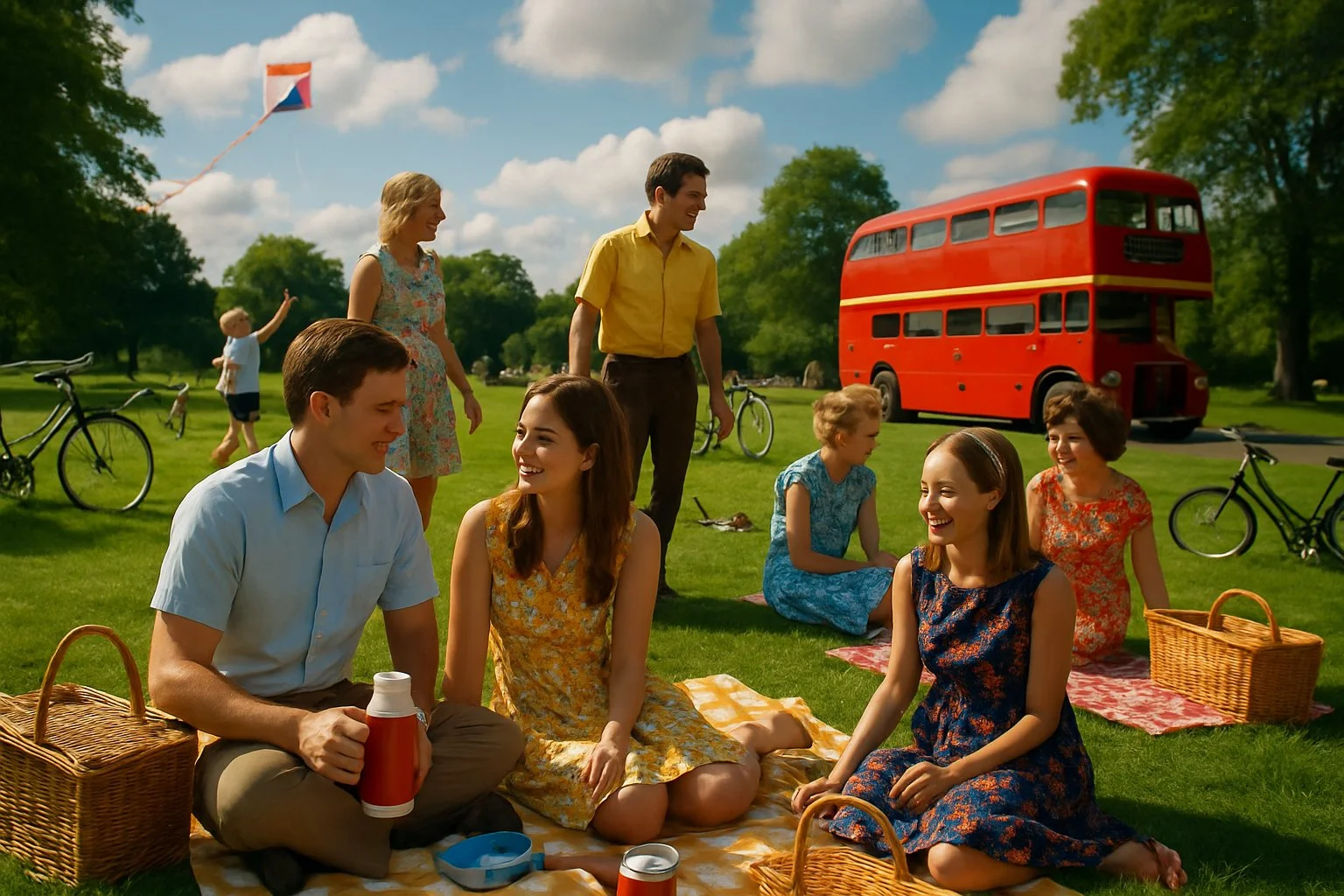
Sure, the 60s and 70s had their share of grey skies and soggy afternoons, but those golden spells, like the legendary summer of 1976, felt like magic. That year, the sun just wouldn’t quit, and even now, people still swap stories about standpipes, parched lawns, and days that seemed to last forever.
But let’s rummage a bit deeper. What did the weather really serve up back then? How did families squeeze joy from their holidays, rain or shine? And why do those years tug at our hearts so much?
Whether it was hopping on a coach to the coast or huddling behind a windbreak with chips gone limp from the sea air, something about those summers just sticks.
Did British Summers in the 60s and 70s Really Shine?

If you ask around, plenty of folks will swear those decades were endless sunshine. But the weather records? Well, they tell a different story, less “eternal summer,” more “typical British muddle.” Turns out, memory’s a funny thing.
Perceptions Versus Weather Records
Dig into the Met Office archives, and you’ll see the 60s and 70s were a mixed bag. Some summers really did sizzle, but plenty more limped along with drizzle and chill. It’s not like every July was a scorcher; some years, August felt like autumn was already knocking.
A few patterns pop up:
- June: Sometimes started off bright, only for the weather to flip on a dime.
- July: Could be glorious, could be a washout. No guarantees.
- August: More often than not, a bit of a wildcard as the season tipped toward autumn.
Honestly, for every memory of sunburn and melting ice cream, there were probably just as many afternoons spent dodging showers or huddling in a tea room, waiting out the rain.
Nostalgia and Cultural Memory
Here’s the thing: our minds are sneaky. We stash away the highlights and quietly forget the rest. All those sunlit snapshots in family albums? They’re just that—the best bits. Nobody bothered to immortalize a caravan holiday where the rain never let up.
Back then, holidays felt special because, well, they were. Most families managed just one trip a year, so those days got a glow-up in memory. And with school out for weeks, kids found adventure outdoors no matter the forecast. Maybe that’s why summer feels so big and bright when we look back.
Common Myths About Summer Sunshine
A lot of myths swirl around those summers. The big one? That the sun always shone. But when you squint at the numbers, there’s not much to back that up. Average summer temperatures didn’t really budge much compared to previous decades. Sure, there were hot streaks, but also plenty of damp, chilly spells.
And let’s be honest: as kids, even a so-so day felt like a gift. One good week at the seaside could color the whole summer in memory. Plus, we didn’t have weather apps or wall-to-wall forecasts. If it rained, it rained—you just got on with it.
Modern climate records show that rainfall in the 60s and 70s was nothing out of the ordinary. Those years weren’t particularly dry or sunny compared to what came before or after.
A Look at the Weather: Were Summers Truly Sunny and Warm?

If you go by the numbers, British summers in the 60s and 70s were all over the place. Some years were cool, others wetter than we care to remember. The sunny stretches? They were the exception, not the rule.
Weather Patterns and Temperature Trends
Looking back, the 60s and early 70s actually ran cooler than what we see nowadays. Most summers clocked in with mean temperatures under 15°C—pretty mild by today’s standards, where we’re used to seeing 16°C or more.
Then there was 1976. That one’s burned into the collective memory for a reason. With an average of 15.7°C, it smashed records and set the bar for what a “real” summer felt like. Before that, genuinely hot summers were rare. Even in the 18th and 19th centuries, only a handful of Julys could compete.
Truth is, most years in the 60s were a patchwork of warm spells and long, cool stretches. Consistency just wasn’t in the cards.
Rainfall and Cloud Cover
Despite all the sun-drenched nostalgia, plenty of those summers were wet and overcast. June, July, and August often brought rain showers and stubborn clouds. It’s just how it went.
Rainfall totals regularly tipped above average, and sunny days were often interrupted by a downpour. That’s what made 1976 so shocking—it was a real outlier. Most years, the weather couldn’t make up its mind. “Four seasons in one day” wasn’t just a saying; it was a way of life.
High-pressure systems that bring clear skies? Not so common back then. More often, Atlantic fronts rolled in with more rain than we wanted.
Sunny Spells and Notable Weather Events
Of course, 1976 hogs the spotlight. That summer was wall-to-wall sunshine and bone-dry days. It’s the one everyone remembers, and for good reason.
But most other summers in the 60s and 70s? They were mixed. July tended to be the brightest, but even then, blue skies weren’t a given. Some Augusts were downright chilly, and sunshine could be in short supply.
It wasn’t until the late 80s and 90s that we started seeing a string of hotter, drier summers—years like 1989 and 1995 really changed the game.
The Unforgettable Summer of 1976
If you lived through 1976, you’ll never forget it. The heat, the drought, the sense that the whole country was melting—it was something else. Nearly 36°C in some places, and barely a drop of rain for months. That summer still gets name-checked every time the mercury rises.
Record-Breaking Heatwave
The heatwave kicked off on 23rd June and just kept going, all the way to 27th August. For over two months, Britain felt more like the Mediterranean.
A few jaw-dropping stats:
- Hottest day: 35.9°C in Cheltenham on 3rd July
- Sixteen days in a row over 30°C at Heathrow
- June high: 35.6°C in Southampton
It wasn’t just a flash in the pan. England saw 15 straight days with temps topping 32.2°C, and on five separate days, the thermometer climbed past 35°C.
The drought was just as brutal. Some parts of southwest England went 45 days without a single drop. Reservoirs shrank to puddles—Haweswater was down to 10% of normal, and folks could wander across the cracked lakebed.
Lasting Impact on the British Public
Things got so dire, the government had to step in. Parliament rushed through the Drought Act, and Denis Howell got the odd title of “Minister for Drought.” Standpipes popped up in the streets, and people queued for water when the taps ran dry.
The heat took its toll. Emergency rooms filled up, and there was a sharp spike in deaths during those sweltering weeks. Crops failed, food prices shot up, and fires tore through places like Hurn Forest.
Wildlife got weird, too—remember the ladybird invasion? Billions of them swarmed the coasts, covering everything in sight.
How 1976 Stands Out From the Rest
Ever since, every hot summer gets measured against 1976. In the Central England Temperature records, that year averaged 17.77°C across June, July, and August—a record that held until 2025.
What made it so remarkable wasn’t just the heat, but how long it lasted. The drought actually started in 1975 and just rolled on. By the peak, rivers like the Don and Sheaf in Sheffield had dried up completely.
That summer seeped into our culture—songs, stories, weather forecasts. Even now, if a heatwave’s coming, someone’s bound to say, “Well, it’s not quite ’76, is it?”
Unlike the frequent heatwaves we see now, 1976 was a true one-off for its time. It shaped the way we talk about British summers, for better or worse.
Everyday Experiences: How Britons Enjoyed Their Summers
For all the weather’s ups and downs, British families in the 60s and 70s made summer memories that stuck. Sometimes, it was the unpredictability that made those days special.
Traditional Seaside Holidays
We piled into cars or coaches and headed for the coast—Wells-next-the-Sea, Blackpool, you name it. That first glimpse of the sea, no matter how grey, was pure magic.
Caravans and B&Bs were the norm. Landladies ruled with an iron fist; out you went by 10:00 am, rain or shine, and don’t come back till tea.
Holiday camps like Butlins and Pontins were booming. They were a world of their own—wooden chalets, Redcoats with endless cheer, and a schedule that ran like clockwork. “Good Morning Campers” blared over the tannoy, and you’d better be up and ready.
Camp classics:
- Rows of chalets, all the same
- Bedtimes enforced, no arguments
- Wacky contests—knobbly knees, glamorous grannies
- Prizes for the oddest achievements
Family Activities and Beach Culture
Most days, we kept it simple. Sandcastles, shell collecting, running wild with a bucket and spade. The beach was our kingdom, no matter the weather.
Pier shows were a treat—maybe you caught Ken Dodd, or if you were lucky, the Beatles in Margate before they were megastars.
Food was half the fun:
- Fish and chips, still steaming in newspaper
- Cockles and mussels, salty and chewy
- Ice cream from vans with that tinny jingle
- Candy floss that glued your fingers together
Deck chairs, windbreaks, and that stubborn determination to make the most of it—those were the real essentials. We’d stake our claim on the sand and settle in, come sun or shower. And somehow, it all felt right.
Weather Surprises and Memories
British summers—what a mixed bag. You’d never know if you’d be basking in a heatwave or huddling under an umbrella. But honestly, both had their charms.
The summer of 1976, though, that was something else. For 25 days straight, the thermometer refused to budge below 26.7°C. People still talk about it as the hottest British summer ever, and for good reason. That kind of heat just didn’t happen here, at least not for that long.
Usually, though, summer meant dodging showers and bracing against a chilly breeze. We’d crowd behind windbreaks, munching soggy chips and watching the waves roll in. Looking back, those moments—shivering together, laughing at the stubborn drizzle—somehow became the heart of what a British summer meant.
We learned to make it work, come rain or shine. The seaside wasn’t just a place, it was a feeling. Even when the weather let us down, the company never did.
The Rise of Package Holidays and Changing Travel Habits
The 60s and 70s shook up how Brits did summer holidays. Suddenly, package deals made it possible to escape the moody British skies. Holiday camps flourished, but then the lure of sun-soaked beaches abroad started pulling us away from our traditional seaside haunts.
The Golden Age of Holiday Camps
Back then, holiday camps were in their prime. All-inclusive, packed with entertainment and a place to sleep, they promised a proper break from everyday life.
Names like Butlin’s and Pontins became part of the family vocabulary. They ran the show—organising games, putting on shows, and serving up communal meals in those echoing dining halls.
Families could book a week without worrying about the weather. Pools, dance nights, and activities for the kids—rain or shine, there was always something going on.
Some of the classic spots:
- Butlin’s Skegness
- Butlin’s Clacton-on-Sea
- Pontins Camber Sands
- Pontins Prestatyn
But by the mid-70s, things changed. Foreign package holidays promised more sun and, honestly, better value. Spanish beaches and Mediterranean warmth started calling, and the old camps found it tough to keep up.
Growth of Overseas Package Holidays
The late 60s really kicked off the overseas holiday craze. Hard to imagine now, but in 1950, just 11 Brits took off on an old war-plane to start what’d become a booming industry.
Companies like Thomas Cook and Horizon Holidays opened up Spain to regular families. Suddenly, jetting off wasn’t just for the rich.
A few milestones:
- 1966: Freddie Laker rolled out cut-price tours
- 1970: The first Boeing 747 landed at Heathrow
- 1974: Clarksons went bust, leaving hundreds stranded abroad
By the 70s, Spain was the place to be. Resorts like Lloret de Mar filled up with Brits on week-long or fortnightly deals.
Thomson Holidays took off as more of us chased guaranteed sunshine. The Costa del Sol, Majorca—those names started to mean something. Pools, warmth, and cheap hotels… it was hard for British resorts to compete.
Effects on British Tourism
Package holidays really shook up the homegrown tourism scene. Seaside towns and holiday camps suddenly had to compete with the promise of endless sun abroad.
Visitor numbers at British holiday camps slid through the 70s. Seaside towns felt the pinch as more families chose Spanish sands over pebbly British beaches.
Still, a few good things came out of it:
- Travel agents popped up on every high street
- Tour operators got better at looking after customers
- Holidays in general got a boost in quality
The boom also changed how we thought about holidays. They stopped feeling like a luxury and started to seem like a basic right—something everyone deserved.
Travel got more democratic. Working-class families could finally afford trips that used to be off-limits. It changed our habits for good, and honestly, who wanted to gamble on a British summer when Spain was just a flight away?
A Month-by-Month Glance: From June to August
Summers in the 60s and 70s, month by month, each had its own mood. June eased us in, July cranked up the heat, and August—well, that was the classic holiday month. The weather shaped everything, from what we packed to the stories we still tell.
June: Milder Starts to Summer
June felt like a gentle nudge into summer, not a shove. Back then, we got highs around 18-20°C—enough for a light jumper in the morning, maybe a T-shirt by lunch.
Days stretched out, and gardens looked their best. Rain still made regular appearances, but the sun started to win more often than not.
A typical June:
- Mornings: 10-12°C
- Afternoons: 18-20°C
- Rain: Showers every few days
- Sunshine: Up to 6-7 hours if you were lucky
June didn’t usually bring the kind of heat that had us running for the shade. It was more of a warm-up, really. We’d get those “changeable” days—sunny mornings, clouds rolling in by afternoon, maybe a quick shower.
And that old saying, “three fine days and a thunderstorm,” seemed to fit June perfectly. Just when you thought summer had arrived, the sky would rumble and remind you not to get too comfortable.
July: Typically the Hottest Month
July was when things really heated up. On average, the mercury climbed 2-3°C higher than in June.
The summer of ’76, of course, is the stuff of legend—15 days straight somewhere in England topped 32°C. For many, that’s what a “real” British summer means, even if we rarely see its like.
July in those decades:
- Highs: 22-24°C, sometimes pushing 26-28°C
- Hot streaks: 4-7 days in a row of real warmth
- Rain: Less often, but when it came, you knew about it
By July, air conditioning started to sound less like a luxury and more like a necessity. Public transport turned into a sauna, and office workers ditched their jackets and opened every window they could.
The heat crept up as the month went on. Early July felt like a holdover from June, but by the middle, you couldn’t ignore it. Gardens begged for water, and everyone hunted for a bit of shade in the afternoons.
August: The Traditional Getaway Month
August, for so many years, really felt like Britain’s main holiday month—even if the weather could be a bit of a wild card compared to July. You had the classic factory fortnight closures and families all trying to squeeze a little sun into those four weeks, come rain or shine.
Temperatures usually stayed on the warm side, but honestly, you never quite knew what you’d get. One Tuesday could sizzle, while Thursday might have you reaching for a jumper and cursing the drizzle. Packing for a trip? Always a gamble.
August weather traits:
- Temperature range: 16-26°C
- Weather changes: Honestly, more swings than July
- Holiday impact: Coastal towns absolutely swarmed, no matter what the sky looked like
- Thunderstorms: Seemed to pop up more as the month wore on
Early August sometimes clung to July’s leftover heat, but by mid-month, you’d sense things shifting. Sunsets crept in earlier, and every now and then, you’d catch a whiff of autumn on the breeze.
Seaside holidays in August were almost a rite of passage—Blackpool, Brighton, Bournemouth, all packed to the rafters. Rain? Didn’t matter much. People just found different things to do, maybe with a bit of grumbling, but always clinging to the hope that tomorrow would be brighter.
And then there was Bank Holiday Monday, which, for better or worse, always felt like the curtain call for summer—even if September sometimes snuck in with a few surprisingly warm days. Funny how that works.







Leave a Reply