
After the Second World War, British families faced the daunting task of piecing life back together as the country crawled out from years of turmoil.
The late 1940s and early 1950s—well, they were a patchwork of hope and hardship. Folks juggled rationing, housing shortages, and the invisible wounds left by war.
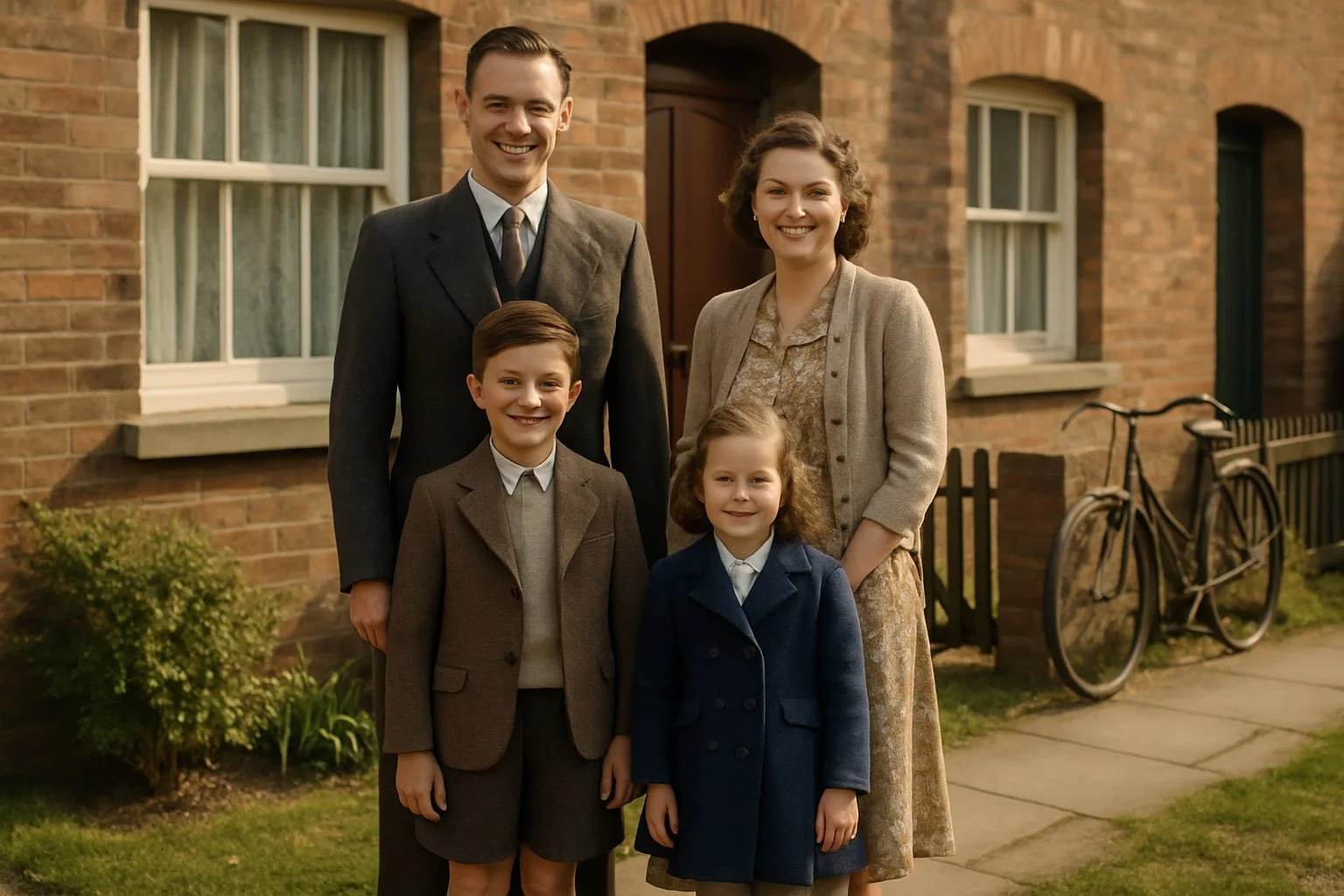
Families started inventing new routines, searching for what “normal” even meant now. Sunday best came out for church and family gatherings, and the rest of the week was all about making do. Kids played in the rubble—turning bomb sites into their own wild playgrounds—while mothers queued for groceries, ration books clutched tight.
Let’s wander back and see how these families found ways to adapt, from daily routines and the scrapes of childhood to the foods that filled their tables and the celebrations that stitched communities together. They found joy in small victories and, somehow, laid the groundwork for what we think of as modern British family life.
Family Structures and Daily Routines

After the war, family life ran on clear patterns—everyone knew their part. Predictable schedules brought a bit of comfort after all that chaos, and church or community events kept neighbourhoods close-knit.
Roles Within the Family
Traditional family structures held strong. Fathers left early for work—factories, offices, trades, you name it.
Mothers kept the home humming. Cooking, cleaning, shopping, raising kids—it was all on their plate. Most women didn’t have jobs outside the house then.
Kids didn’t get off easy:
- Boys got roped into outdoor chores and practical stuff
- Girls pitched in with cooking, cleaning, and minding siblings
- Everyone respected adults and stuck to strict bedtimes
Grandparents often lived just down the road, ready to lend a hand or share a bit of advice. Sunday visits to relatives were practically a ritual, weaving a tight net of support.
Dad’s word was usually law, but Mum had plenty of sway—especially when it came to the kids or anything inside the house.
Typical Weekday and Weekend Life
Weekday mornings kicked off early. Fathers were out the door by half-past seven, mothers got breakfast going and wrangled the kids for school.
Kids walked to school—no fuss—and most came home for dinner at midday. Afternoons, mums tackled laundry, ironing, and prepping the evening meal.
Evenings had their own rhythm:
- The family gathered for tea around 5:30 or 6
- Homework happened at the kitchen table
- The wireless droned on in the background
- Bedtimes were non-negotiable
Saturdays meant shopping at the high street or market, maybe a bit of gardening or DIY for Dad.
Sundays, though, were something else. Church in the morning was a given. Sunday dinner—roast and all the trimmings—felt like a feast.
Afternoons might mean a walk in the park or countryside, or popping round to see relatives for tea and a good natter.
Religious and Community Traditions
Church was the anchor of the week for most families. Sunday services were as much about seeing neighbours as they were about faith.
Different denominations had their quirks:
- Anglicans at the parish church
- Catholics with extra weekday services
- Methodists and Baptists sometimes out again in the evening
Kids went to Sunday school, soaking up Bible stories and old-fashioned morals. Many families said grace before meals, and prayers at bedtime were common.
Community events—fêtes, harvest festivals, Christmas pageants—brought everyone together, year after year.
Women joined the Women’s Institute or church committees, while men found camaraderie at the working men’s club or British Legion. These groups were lifelines for socialising and support.
Street parties marked royal occasions—coronations, jubilees—turning neighbours into friends. People shared what they had, especially when times were tough.
Religious holidays—Christmas, Easter, Whitsun—meant big family gatherings, special foods, and traditions handed down like precious heirlooms.
Impact of the War on Home Life

The war left its fingerprints on family life for years. Soldiers came home to a world that felt both familiar and completely changed.
Returning Service Members and Adjustments
Coming home wasn’t a fairy tale for everyone. Years of military routine and danger made ordinary life feel almost alien.
Some men found it tough to reconnect with wives and kids who’d grown up without them. The suburban commuter dad was a new thing—off to work by day, home for tea at night. It wasn’t quite like before.
Adjusting meant:
- Figuring out how to be a couple again after years apart
- Getting to know children who’d changed
- Searching for steady work
- Wrestling with memories that wouldn’t fade
Families found comfort in simple things. DIY projects, gardening, crosswords, and listening to the radio became ways to rebuild bonds.
Men struggled with what we’d now call PTSD, but back then, families muddled through as best they could. Women like May—maybe someone you knew—shouldered the burden with patience.
Church offered a sense of belonging and solace. Faith helped many weather the rough patches.
Housing and Reconstruction Efforts
The housing crisis hit hard. Bombs had flattened whole streets, especially in cities like London.
Government efforts focused on piecing families back together. Social housing expanded, and new towns sprang up to ease the squeeze.
Some of the big changes:
- Council estates grew quickly
- New towns offered a fresh start
- Homes got modern touches—indoor toilets, for one!
- Garden suburbs promised space and a bit of green
Many families bunked in with relatives or made do in temporary digs. Privacy was a luxury; crowded rooms and shared kitchens were the norm.
Owning a home with your own front door and a patch of garden became the dream—a sign that life might finally be settling down.
Loss, Displacement and New Beginnings
Loss wasn’t just about death; it meant lost years, broken ties, and neighbourhoods that would never be the same.
Evacuated kids came home changed. Separation left scars, and slipping back into family life wasn’t always smooth.
Displacement took many forms:
- Kids sent away to the countryside
- Dads gone for years on service
- Families uprooted by bombs
- Hospital stays that dragged on
Some children grew distant, especially from mothers they barely remembered. There wasn’t much expert help—families just did what they could.
Women, having run things during the war, didn’t always want to slip quietly back into old roles.
Money was tight. Medical bills, rebuilding costs, and helping extended family stretched every shilling. Many mums skipped meals to make sure the kids had enough.
Children’s Experiences in Post-War Britain
Childhood in post-war Britain looked nothing like today. The baby boom packed classrooms, and the world outside was both a playground and a little wild.
Schooling and Education Changes
Classrooms bulged with children—sometimes fifty to a room, especially in the cities.
Kids learned their reading, writing, and arithmetic the old way—blackboards, chalk, no gadgets.
The 11-plus exam sorted kids into:
- Grammar schools for the lucky few
- Technical schools (if you could find one)
- Secondary moderns for most
School started at five, finished at fifteen. Raising the leaving age was being talked about, but didn’t happen yet.
Discipline was tough. Boys got the cane, girls got their knuckles rapped.
Everyone got free milk—a holdover from the war years.
Walking to school grew riskier as cars filled the streets. The first lollipop ladies showed up in 1953 to help kids cross safely.
Leisure Activities and Hobbies
Kids in the ‘50s spent their days outside. It’s hard to picture now, but they roamed free.
Popular pastimes:
- Climbing trees, building dens
- Racing homemade go-karts down hills
- Hopscotch chalked on the pavement
- Football in the park
- Exploring woods and fields
They’d vanish for hours with nothing but a sandwich, turning up when hunger or darkness called them home. Parents trusted them—or maybe just hoped for the best.
Saturday mornings meant the cinema—cowboys like Roy Rogers and the Lone Ranger were big. Cowboy hats and toy guns filled Christmas stockings.
Plastic toys became a thing:
- Farm sets and model cars
- Dolls’ houses
- The first Barbies (imagine!)
TV was creeping in—shows like Muffin the Mule, Andy Pandy, and Dennis the Menace became family favourites, if you were lucky enough to have a set.
Teenagers found rock and roll, with films like Rock Around the Clock introducing Bill Haley. Teddy boys strutted in their drapes—Britain’s first teen rebels.
Social Values and Manners
Respect for authority ran deep. Teachers, police, park keepers—kids listened, or else.
If a child acted up, any adult might step in. Parents expected it, really.
Kids learned to:
- Stand when adults entered
- Always say “please” and “thank you”
- Offer seats to elders
- Speak only when spoken to
- Pitch in with chores
Sunday best was a must. Families dressed up for church and visits, and kids learned that how you looked reflected on the whole clan.
Most left school at fifteen and went straight to work—no gap years or lounging about.
Boys were pushed to be tough and handy; girls learned to cook and sew, getting ready for marriage.
Children knew their place. They ate what was served, wore hand-me-downs, and didn’t argue with Mum or Dad.
Everyday Living: Food, Fashion, and the Home
After the war, British homes started to change, bit by bit. Rationing faded, shop shelves filled with new tinned foods, and fashion brightened up, leaving the drab war years behind.
Meals, Rationing and Food Innovations
Queuing for food didn’t end overnight—rationing dragged on into the ‘50s.
Sweets and chocolate finally came back in 1953, sugar not long after. By summer 1954, ration books were history.
New foods started to appear:
- Tinned peas dyed a vivid green
- Spaghetti and other “exotic” dishes
- Processed foods in flashy tins
Electric cookers and fridges popped up in more kitchens. Housework got a bit easier with vacuum cleaners.
Adverts for tinned foods targeted housewives, promising to save time and brighten up mealtimes. Families tried foods they’d never dreamed of before.
Clothing Trends and ‘Sunday Best’ Outfits
Fashion took a turn for the better as restrictions eased. No more dreary utility wear.
Christian Dior’s ‘New Look’ caught the eye of those who could afford it:
- Full skirts, lots of fabric
- Nipped-in waists
- Elegant lines—goodbye, boxy shapes
Pastels were in: pinks, yellows, mint green—so much cheerier than wartime browns and greys.
Sunday best still mattered. Dressing smart for church or special visits showed pride and respect.
Even on a shoestring, families tried to look their best. Sunday clothes weren’t always stylish, but they spoke of dignity and self-respect.
Celebrations, Holidays and National Events
When the war ended, Britain found ways to celebrate again. Christmas took centre stage in family life, and big national moments—the Festival of Britain, the Queen’s Coronation—gave everyone a reason to come together, share a smile, and feel proud of what they’d survived.
Christmas and Festive Traditions
Christmas in post-war Britain was really all about family—making do, pulling together, and squeezing every bit of joy out of what little we had. We’d string up paper chains, gather holly from the hedgerows, and craft homemade ornaments while rationing still loomed over our holiday tables.
The Christmas dinner was still sacred, even if it looked a bit different. Families hoarded ration coupons for months, hoping for a turkey or chicken, but honestly, most of us settled for rabbit, pork, or the ever-present Spam. We made it work, somehow.
Gift-giving took on a practical, homemade flair. Kids unwrapped simple toys, a cherished book, or a precious handful of sweets. Grown-ups swapped things they’d made themselves—knitted scarves, jam, or whatever might actually be useful around the house.
There was always a Christmas cracker to pull and carols to sing, though. We’d gather around the wireless, listening to the King’s Christmas message, and for a few moments, it felt like the whole country was breathing in the same hope.
The Festival of Britain
The Festival of Britain in 1951—now that was something. After years of scraping by, suddenly there was this burst of pride and possibility. It felt like the country was stretching, shaking off the grey.
Families packed onto trains to see the South Bank exhibition. The Skylon tower and the Dome of Discovery—those were sights you couldn’t forget. Science, technology, modern design—everywhere you looked, there was something new to marvel at.
But it wasn’t just London. Towns and villages across the country joined in, throwing their own celebrations and exhibitions. For once, it felt like everyone could be part of something hopeful and grand.
The Coronation of Queen Elizabeth II
June 2nd, 1953—what a day. The Coronation of Queen Elizabeth II swept up the whole nation. I remember neighbours pooling money for a television, or crowding into the local shop window just to catch a glimpse of the ceremony.
Street parties sprang up everywhere. We draped roads in bunting and Union Jacks, hung up portraits of the young Queen, and piled tables high with homemade cakes, sandwiches, and jellies. Rationing was finally easing, and you could taste it in every bite.
Kids wore paper crowns and paraded about, while adults dusted off their best clothes. The ceremony itself ran for hours, but nobody seemed to mind—those memories stuck with us.
Social Changes and Modernisation
Life in post-war Britain didn’t just go back to how it was. Everything was shifting—technology, family life, what people expected from each other. Sometimes it felt like the world was running to catch up with itself.
New Technology and Household Appliances
Television quickly took over our living rooms in the 1950s. Families gathered around the set, sharing new rituals that quietly replaced the old radio evenings and after-dinner chats.
Key household innovations included:
- Washing machines—no more endless hours over the washtub
- Refrigerators that let us keep food fresh for days instead of hours
- Vacuum cleaners that made cleaning almost fun (well, almost)
- Electric cookers that finally nudged out those old coal ranges
Fridges meant fewer frantic shopping trips, and suddenly, a bit more breathing space in the week.
Television changed our evenings. Sunday teatimes often revolved around a favourite programme—everyone squeezed onto the sofa, the room glowing with that strange blue light. It was different from anything our parents had known.
Evolving Gender Roles
Women’s roles shifted in ways you couldn’t ignore. So many had worked in factories or offices during the war—gaining skills, confidence, and a taste for independence that didn’t just disappear.
Even with pressure to return to housework, plenty of women kept working, often part-time, especially after marriage. It wasn’t always easy, but it was happening.
Men weren’t left untouched either. The breadwinner role still mattered, but fathers started spending more time with their kids and pitching in at home—more than their own dads ever had, that’s for sure.
Changes in family dynamics:
- Women spoke up more in household decisions
- Fathers got more involved with the children
- Chores started to get shared out, at least a little
Shifts in Social Attitudes
Class lines blurred a bit as working families started buying things that once felt off-limits—TVs, fridges, even the occasional holiday by the seaside. Suddenly, what used to be a luxury looked more like just another part of life.
Kids started speaking up more at home, too. That old, stiff respect for authority? It softened. Families argued and laughed around the dinner table, hashing things out together in a way that just didn’t happen before the war.
Grammar schools opened doors for working-class kids, and parents found themselves dreaming bigger for their children. The idea that you could move up in the world didn’t seem quite so far-fetched anymore.
People drifted away from regular churchgoing, but Sundays still carried a certain magic. Maybe the pews emptied out a bit, but Sunday dinners and family get-togethers stuck around—just with a little less hymn-singing and a bit more chatter.






Leave a Reply