
Picture it: families gathered around makeshift stages, kids howling at puppet shows, proud dads parading their knobbly knees while the crowd roared with laughter.
For decades, Butlin’s holiday camps stitched themselves into the fabric of British seaside life, drawing in families from every corner.
Those Redcoat entertainers in their bright jackets, the oddball competitions, the endless games—they became the backdrop for a thousand family stories, the kind you hear about over Sunday lunch or in sun-faded photo albums.
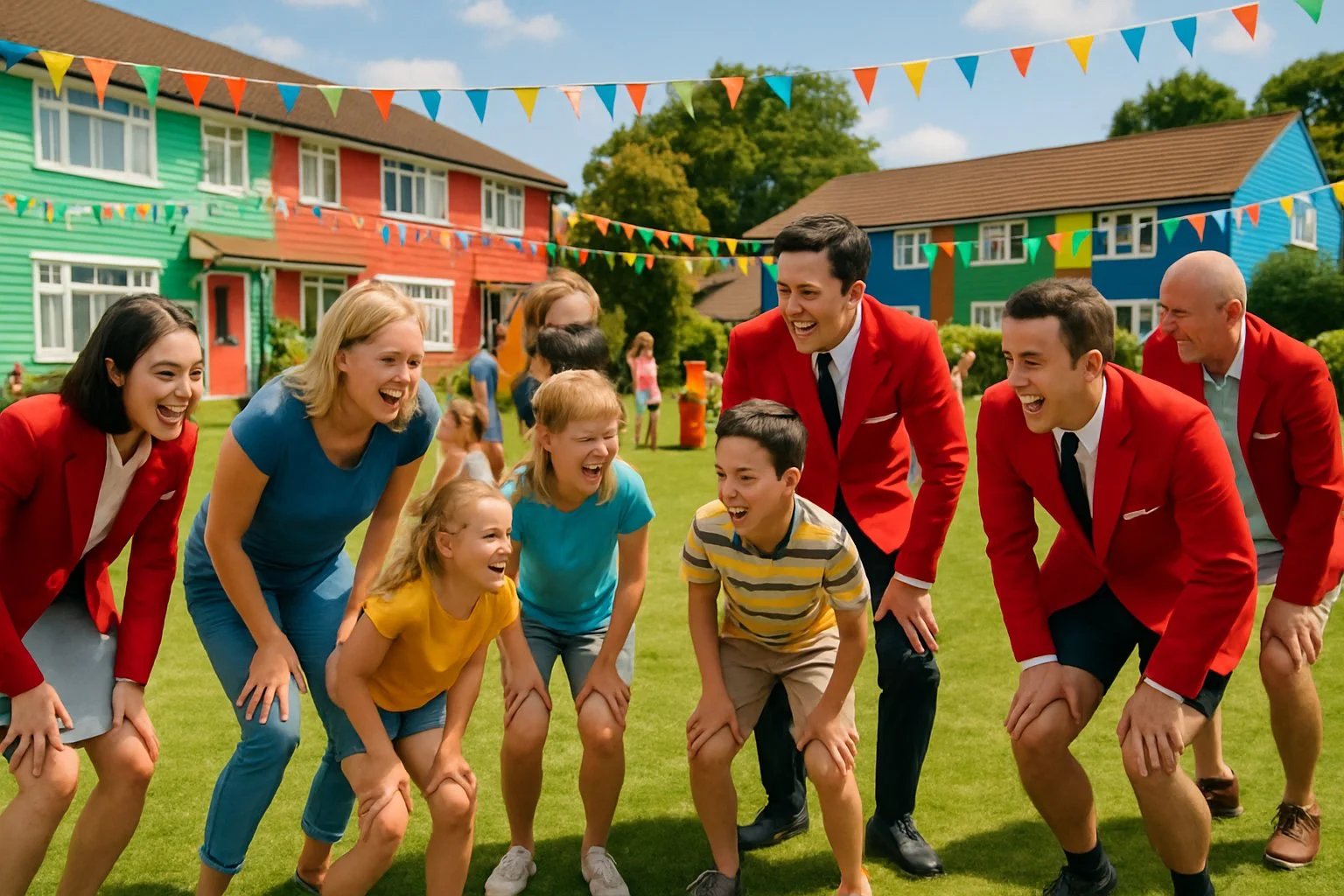
Ask just about anyone with a British childhood and they’ve got a Butlin’s story—usually involving a knobbly knees contest, a singalong, or maybe a dodgy plate of chips. The camps had this magic: they let families drop their worries at the gate and dive headfirst into a world of organized chaos, all shepherded by those ever-smiling Redcoats in their unmistakable jackets.
From Billy Butlin’s first bold step to the heyday of British holiday camps, there’s a lot to unpack. The Redcoats, the games, the traditions—they all left their fingerprints on British holiday culture. And honestly, there’s a reason people still feel a tug of nostalgia for places like Bognor Regis. Let’s wander back through the years and see what made these holidays so special.
Origins of Butlin’s Holiday Camps

When Billy Butlin opened his first camp in Skegness in 1936, he didn’t just build a holiday camp—he changed how Britain took its holidays. Suddenly, the seaside wasn’t just for the well-heeled. It was for everyone.
Billy Butlin’s Vision and Early Days
Billy started out as a travelling showman, always on the lookout for what made people smile. He saw that holidays could be more than just a bed and a view of the sea; they could be an experience, a memory-making machine.
In 1936, Billy bought a patch of Skegness and set out to build something different. He figured families wanted more than just a roof—they craved fun, entertainment, and a break from the grind.
He kept things simple. One price covered everything: your room, your meals, and all the entertainment you could handle. No surprise bills. No worrying about whether you could afford that extra round of bingo.
Billy wanted to tear down social walls, too. At his camps, it didn’t matter where you came from. Everyone joined in, side by side, for a week of pure fun.
The First Camps: Skegness and Expansion
Skegness kicked things off in 1936, and it wasn’t long before Billy realized he was onto something big. The first camp went up fast—chalets, dining halls, stages, all built around his all-in-one idea.
He officially formed Butlin’s Ltd in 1937, raising money and dreaming bigger. That same year, he put out a prospectus and opened up shares to the public—now he could really expand.
By 1938, a second camp popped up, proving the Skegness formula was no fluke. Families flocked in, and other entrepreneurs took notice.
Impact on British Family Holidays
Before Butlin’s, working-class families rarely got a proper holiday. Billy’s camps changed all that. Suddenly, you could plan, budget, and know exactly what you’d spend—no nasty surprises.
Organized fun became the norm. Kids’ games, talent shows, adult contests—it was all there, and it changed what people expected from a holiday.
Billy’s idea caught on fast. Fred Pontin and Harry Warner jumped in with their own camps, and soon the British holiday industry was transformed.
The Role and Legacy of Redcoats

Redcoats weren’t just staff—they were the heartbeat of Butlin’s. With their red blazers and endless enthusiasm, they became the face of British holiday fun and helped launch more than a few famous careers.
Creation of the Redcoat Tradition
It all started in 1936 at Skegness. Billy noticed guests looking bored—a nightmare for a showman. He called on Norman Bradford, a camp engineer, to jump on stage and crack a few jokes. The crowd loved it.
But Billy wanted something lasting. Norman went shopping for uniforms—he came back with jackets in blue, yellow, and white. Billy tried them, but they felt too stiff, too official. Not right.
Then he handed Norman a red blazer with white lapels. Suddenly, it clicked. Friendly, welcoming, impossible to miss. Norman became the first Redcoat, and soon Billie Ditchfield and Kay Berry joined as the first women to wear the iconic jacket.
Life as a Redcoat: Duties and Daily Fun
Redcoats wore a lot of hats—entertainer, organizer, part-time therapist, you name it. Mornings on the beach running games, afternoons wrangling kids, evenings on stage.
Their main gigs:
- Running knobbly knees contests and other competitions
- Hosting talent shows and variety acts
- Leading sing-alongs and party games
- Guiding lost guests and answering questions
- Keeping the kids entertained with puppet shows and crafts
It was a tough gig—long hours, endless energy required, and always a smile. Some guests could be a handful, others just needed a nudge to join in. Redcoats had to think on their feet, inventing new games and keeping the mood up.
They weren’t just staff—they became friends, confidants, and the glue that held the whole Butlin’s experience together.
Famous Redcoats and Their Influence
Butlin’s turned out some serious talent. Des O’Connor, Jimmy Tarbuck, Roy Hudd—they all started out in those red jackets. The job taught them how to work a crowd and sharpen their act.
Su Pollard, maybe the most famous of the bunch, went on to star in “Hi-de-Hi!”—a show that pretty much captured the holiday camp spirit. Even the competition took notes: Pontins rolled out Bluecoats, Warner’s went with Greencoats.
The Redcoat idea spread far and wide. Today, you’ll spot echoes of it in holiday resorts all over the place. And that red blazer? Still a British holiday icon.
Billy Butlin even got knighted in the 1960s, partly because he made family fun something everyone could afford. The Redcoats were a massive part of that.
Family Entertainment and Traditions
Butlin’s built its legend on games and contests that brought families together. The knobbly knees contest? Pure British silliness, but it stuck. Bingo nights, puppet shows, dance-offs—these became the stuff of family lore.
The Knobbly Knees Competition Phenomenon
Nothing says Butlin’s quite like the knobbly knees contest. Men lined up in shorts, showing off their lumpy, bumpy knees to a crowd that cheered and laughed. Even Laurel and Hardy once judged the thing—imagine that!
Winners weren’t just about the knobbliest knees, but about the laughs they got from the crowd. It was all in good fun, and somehow, it broke the ice—suddenly strangers were friends, and shy dads became camp legends.
And yes, you can still catch a knobbly knees contest at Butlin’s today. Some things just never go out of style.
Bingo and Classic Holiday Games
Bingo nights were huge. Families packed the main halls, Redcoats calling numbers with goofy voices: “Two little ducks, 22!” It was half game, half comedy act.
These days, they’ve got Bingo Bango—a modern twist, but the heart’s the same. Redcoats still run the show, and the laughs are just as loud.
Other classics? Glamorous granny contests, talent shows, dance competitions, quiz nights. The glamorous granny idea popped up after Billy Butlin met Marlene Dietrich and realized she was a grandmother—he figured, why not celebrate grandmas who still had style?
These games brought people together. You’d show up as strangers, but after a night of bingo or a silly contest, you left as friends.
Puppet Shows, Parades and Dances
If you were a kid at Butlin’s, puppet shows were a daily highlight. The Redcoats put on colourful parades, with Billy and Bonnie Bear leading the way and families trailing behind.
Dance classes gave guests a chance to learn new moves, and the evening discos let everyone—kids, parents, even grandparents—show off what they’d learned.
Typical day’s fun:
- Morning puppet shows
- Afternoon parades
- Dance workshops
- Evening sing-alongs and discos
- Meet-and-greets with camp mascots
Redcoats made these moments shine. Their energy was infectious, and even the shyest kids (and adults) eventually joined in. Families left with inside jokes and stories that lasted years. No wonder so many came back, summer after summer.
Butlin’s Bognor Regis: Past and Present
Butlin’s Bognor Regis, which opened in 1960 after a lot of back-and-forth with the council, quickly became one of Billy Butlin’s proudest achievements. Over the years, it’s changed a lot—new hotels, new attractions, but the old spirit lingers.
Opening of the Bognor Regis Camp
Billy’s ties to Bognor Regis went back to the early ‘30s. He built a recreation shelter, then a little zoo by the sea. But it wasn’t until the late 1950s that he really set his sights on building a full-blown holiday camp.
Locals weren’t thrilled at first, but when the council needed to redevelop the Western End, Billy saw his chance. He struck a deal for a 39-acre site called Brookland—a 99-year lease for £12,000 a year.
On July 2nd, 1960, the camp opened. It cost £2.5 million—a fortune back then. Over 3,000 people came on day one, and they expected 30,000 for the first season. It was an instant hit.
Locals could even buy into the Winter Social Club for two guineas, getting access to the camper areas (though not the chalets or dining rooms).
The Shoreline Hotel and Modern Facilities
When Bourne Leisure Limited took over in 2000, things started to shift. They poured money into new facilities, brought back adult weekends, and broadened the appeal.
The Shoreline Hotel opened in 2005—160 rooms with sea views, a real step up for Butlin’s. The Ocean Hotel followed in 2009, and the Wave Hotel in 2012. Plans for more hotels fizzled out, but the three they built changed the place for good.
They also invested in the pools—demolishing the old one to make way for a shiny new £40 million complex. Sadly, the original staff chalets got bulldozed in the process.
And now? Butlin’s Bognor Regis still hums with the echoes of knobbly knees contests and Redcoats’ laughter. It’s changed, sure, but the heart of the place—family, fun, and a dash of British eccentricity—beats on.
Innovations for New Generations
Butlin’s Bognor Regis has managed to hold onto its old-school charm, even as it keeps up with the times. You’ll still find knobbly knees competitions and puppet shows, but now they sit side by side with all sorts of newer attractions.
Back in October 2024, the resort swung open the doors to the £15 million PLAYXPERIENCE indoor activity centre. That’s a first for any UK holiday resort—sort of wild to think how far things have come. The place is a magnet for families who want more than just the usual seaside fare; it’s all about interactive, hands-on fun now.
Ownership changed hands in 2022, when the Harris family took over from Bourne Leisure Limited. That ended Butlin’s ties with its sister camps at Pwllheli and Ayr. These days, only Bognor Regis, Skegness, and Minehead still wave the Butlin’s flag.
Entertainment venues are now grouped into three main spots: the Reds, Centre Stage, and the Skyline Pavilion. Studio 36 popped up where the old swimming pool used to be, offering even more space for shows and gatherings. It’s funny how places reinvent themselves, but some things just stick around.
Family Life, Activities and Community Spirit
Butlin’s always felt different—a place where families actually had time for each other. You’d get these little moments: parents and kids joining in activities, strangers chatting over tea, and somehow, everyone just belonged. There was something about the mix of planned chaos, sudden friendships, and those charity drives that made it more than just a holiday.
Structured Chaos: A Day in the Life
Days at Butlin’s had their own kind of rhythm—a mix of excitement and gentle anarchy. Redcoats seemed to be everywhere, ushering people from breakfast to bedtime with a kind of energy that was impossible to resist.
Mornings kicked off with everyone piling into the main dining rooms for breakfast. Kids would already be plotting what to do next, barely able to sit still.
Morning activities? Take your pick:
- Splashing around in swimming competitions out in the pool
- Arts and crafts (some projects were masterpieces, others… less so)
- Sports tournaments sprawling across the playing fields
- Talent show rehearsals that were equal parts nerves and excitement
Afternoons brought the legendary competitions. The knobbly knees contest—what a spectacle. Dads lining up behind a curtain, legs on display, all for the glory of being the knobbliest.
Then there were the glamorous grandmother competitions. They were a riot—good-natured teasing, laughter that echoed across generations, and families cheering each other on.
Come evening, the Skyline Pavilion and other venues filled up for variety shows, dance acts, and comedy routines. Redcoats made sure no one felt left out. Even the shyest kids got coaxed onstage, and adults found themselves swept up in the madness.
Making Friends and Memories
Friendships at Butlin’s happened fast. Something about the place just made it easy to strike up a conversation, and before you knew it, strangers turned into friends you’d look forward to seeing every year.
Those accommodation blocks? Perfect for bumping into folks. Kids would dart through the corridors while parents swapped stories over mugs of tea, the kind of chats that seemed to stretch on forever.
The inter-house competitions added another layer. Families got sorted into teams, each with their own colours and playful rivalries. There were sports days, treasure hunts, and even evening contests—everybody wanted their house to win, but it was all in good fun.
And the Redcoats—honestly, they were the glue. They remembered names, introduced people, and somehow always knew how to get everyone talking.
Meals were their own kind of social event. Long tables meant you’d end up chatting with whoever sat down next to you. Kids made friends in minutes, dragging their parents into new circles.
It wasn’t just about summer flings, either. Entire families bonded, coming back year after year, turning holiday acquaintances into something closer to a second family. Those reunions? They were the highlight for so many.
Charity Events and Community Bonding
Butlin’s had a knack for weaving charity into the fun. These weren’t just token efforts—people really got into it, and it brought everyone closer somehow.
Sponsored competitions—think egg-and-spoon races, three-legged dashes—raised money for local causes. Entry fees went straight to charity, and nobody minded because it felt good to help out.
The Redcoats would run collection drives, rallying guests to chip in spare change during shows. Their enthusiasm was contagious—giving felt like part of the festivities.
Special themed nights mixed entertainment with fundraising. Fancy dress, talent shows, dance parties—there was always some way to pitch in for a good cause.
Kids loved it, too. They’d set up their own puppet shows or sell crafts, all to raise a bit of pocket money for charity. Those little initiatives taught everyone that helping out could be fun.
Looking back, it’s those moments that stick. Families often remembered the charity events more than the rides or shows. It’s funny how a shared sense of purpose can turn a holiday into something you carry with you for years.
Memorable Locations and the Enduring Appeal
Butlin’s still has three holiday camps that hold a special place in so many hearts. Each one has its quirks, its history, and its own brand of nostalgia. Somehow, these places keep the spirit of the classic British seaside holiday alive—even as the world changes around them.
Skegness: The Original Seaside Classic
Skegness was where it all began, way back in 1936. Sir Billy Butlin’s dream took shape here, and the very first Redcoats stepped out on stage.
It started small, with room for 1,000 holidaymakers—but only 400 showed up that first week. That humble beginning? It’s almost hard to picture now, considering what Butlin’s became.
Norman Bradford—just an engineer at first—became the original Redcoat by accident. His stint on stage was such a hit that Billy Butlin realized he needed more people like Norman to set the mood.
The iconic red blazer? That started in Skegness, too. Norman went into town to buy a jacket, but Billy vetoed blue, yellow, and white. He wanted something bold, so they landed on red—supposedly inspired by the Canadian Mounties. Not a bad bit of branding, really.
Minehead and the Other Iconic Camps
Now, it’s just Bognor Regis, Minehead, and good old Skegness left. Each one’s changed with the times but still feels unmistakably “Butlin’s.”
Minehead’s got its own claim to fame—it’s where Stephen Mulhern started out as a Redcoat. They’re even planning a life-sized statue of him, which feels oddly fitting for a place that’s launched so many careers.
Bognor Regis, meanwhile, keeps the old traditions alive—knobbly knees, puppet shows, the whole lot. It’s proof that some things never really go out of style, even as everything else gets shinier and new.
Most of the old camps closed when cheap overseas holidays took off in the ‘60s, but these three hung on. There’s something about them that just works, no matter how many years go by. Maybe it’s the memories, or maybe it’s just the magic of a British seaside holiday. Either way, they’re still here, and for a lot of us, that means something.
Why Butlin’s is Still Loved Today
There’s just something about Butlin’s you can’t quite find on a trip abroad. Maybe it’s the sea air mixed with the distant sound of laughter, or the way families keep coming back, year after year, chasing that unmistakably British sense of organised fun.
Redcoats are still the heart of it all. They’re out there every morning, cracking jokes and leading silly dances, just like they did back in the heyday—think the 50s, 60s, and those gloriously kitsch 70s. You’d be hard-pressed to find a holiday camp with more personality.
Sure, the camps look a bit different now. In 2024, they even gave the Redcoats a wardrobe refresh—sleek new uniforms made from recycled fabrics, apparently easier to move in and a bit kinder to the planet. Butlin’s always finds a way to change without losing what made it special in the first place.
Entertainment? Still top-notch. Redcoats aren’t just leading the conga line; they’re DJing, belting out tunes, hosting wild gameshows, and spinning around the dance floor at Reds. You might stumble into a Bingo Bango session or get swept up in a sing-along disco. It’s a little chaotic, a little nostalgic, and honestly, that’s the magic.






Leave a Reply