
Picture this: streets across Britain lined with trestle tables draped in red, white, and blue bunting, neighbours who barely spoke suddenly sharing crown-shaped cakes and cream teas, and kids parading in homemade costumes with paper crowns perched slightly askew.
The Silver Jubilee street parties of 1977 pulled whole communities together in a way that feels almost impossible now—creating memories that just won’t fade.
From wheelbarrow races to fancy dress, these celebrations weren’t only about marking the Queen’s 25 years—they were about rediscovering what it meant to be neighbours, even if only for a day.
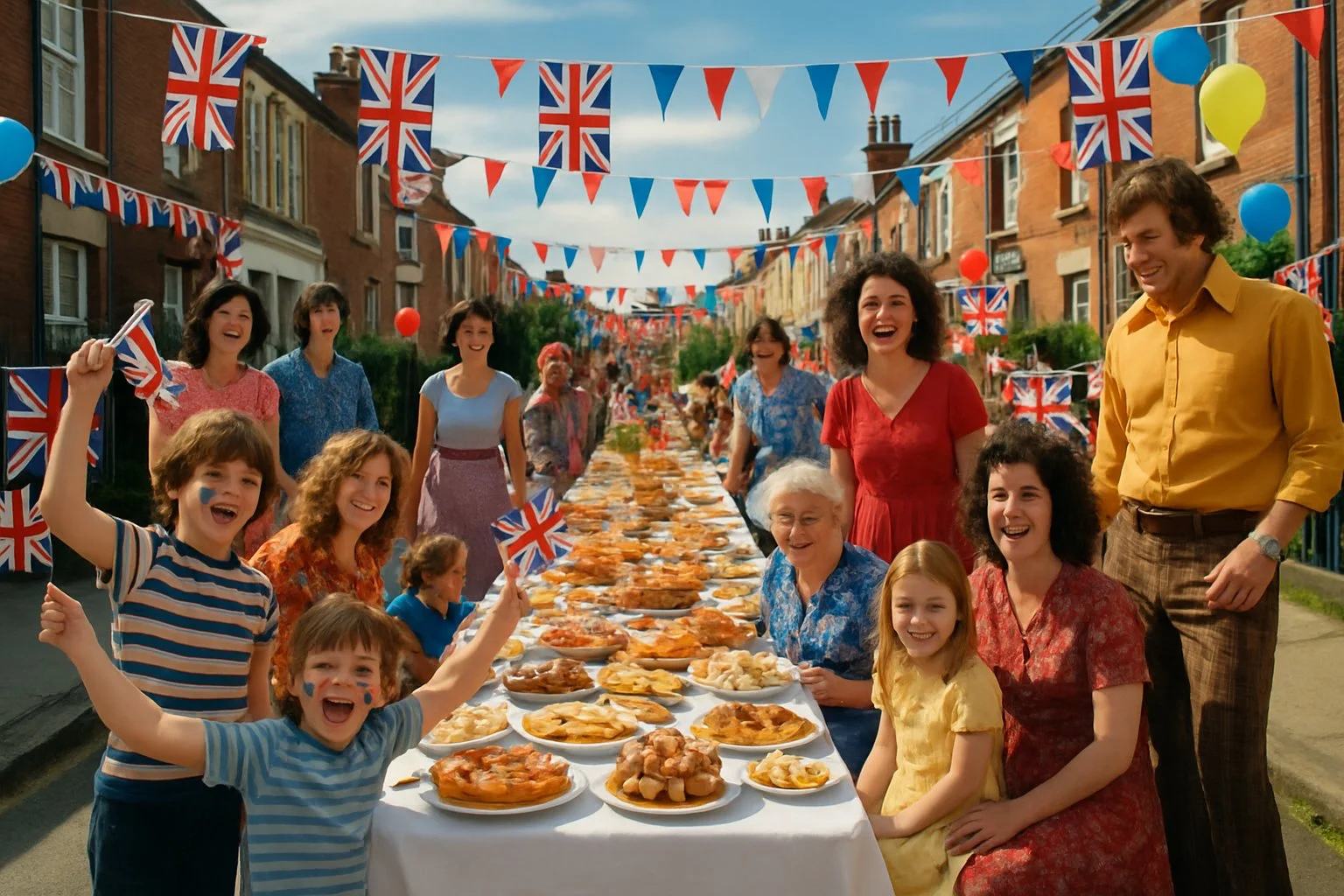
Let’s wander back to that extraordinary summer when ’77 fever swept the nation, and ordinary streets turned into makeshift villages where everyone suddenly knew each other’s name.
That spirit? It’s a story of bonds that ran deeper than you might expect, with tables groaning under classic foods and music that got everyone—yes, even the reluctant dads—dancing in the street.
Maybe you lived through the magic of 1977, or maybe you’re just curious about how to bottle up that sense of community today. Either way, let’s dig into the traditions that made those celebrations so unforgettable—and maybe figure out how to bring a little of that Silver Jubilee spirit to our own neighbourhoods.
Silver Jubilee Street Parties in 1977

In 1977, communities all over Britain came together to celebrate Queen Elizabeth II’s 25 years on the throne with street parties that seemed to stretch forever. Tables lined whole streets, and Union Jack flags fluttered from every window.
Nationwide Celebrations
Street parties popped up in just about every corner of the UK that year. Neighbours threw together gatherings that spanned entire roads.
Festivities officially kicked off on 6 February 1977, marking the Queen’s accession, but honestly, the parties kept rolling all year.
Big cities held grand parades and parties, but the real magic happened on ordinary streets, where people organised their own close-knit celebrations.
People pooled whatever they had to make it work. Mums teamed up to whip up food and decorations. Families dragged out tables and chairs from their homes, sometimes borrowing from next door.
Some parties got so ambitious that tables ran the entire length of the road. Everyone joined in—nobody wanted to miss out on the fun.
Traditional Decorations and Union Jacks
Union Jacks were everywhere—hanging from windows, draped across tables, strung up on bunting.
Red, white, and blue dominated. Tablecloths, napkins, even the odd umbrella—everything followed that patriotic vibe.
You’d spot:
- Bunting zigzagging between houses
- Royal portraits propped up wherever they’d fit
- Crown-shaped centrepieces
- Flags stuck in windows and poking out of gardens
The whole street felt transformed, like a giant outdoor dining room decked out in its Sunday best. Even folks who usually kept to themselves ended up chatting under that sea of flags.
Photos from back then show just how much effort people put in. Every street looked like it was hosting its own royal bash.
Street Party Traditions and Community Spirit

Those street parties pulled neighbours together, forging bonds through shared planning and simple fun. They became a symbol of community spirit, with residents working side by side to turn drab streets into something magical.
Community Involvement and Organisation
The real magic? It was in how whole neighbourhoods pulled together. Residents formed planning committees weeks ahead. They knocked on doors, recruited volunteers, and sorted out who’d bring what.
People took on roles like:
- Street coordinators to wrangle the planning
- Decoration teams to hang bunting and flags
- Food organisers to manage the potluck
- Entertainment leaders to dream up games
Local councils helped out with road closures, and sometimes even lent tables and chairs. Suddenly, people who’d barely exchanged a nod were working together.
Kids pitched in, making decorations and costumes. Adults offered up whatever skills they had—cooking, crafting, or setting up a battered old radio. That shared effort stuck with people long after the bunting came down.
Iconic Party Games and Activities
Classic British party games ruled the day. Families still talk about the egg and spoon races and the laughter echoing down the street.
Games everyone remembers:
- Egg and spoon races
- Three-legged races
- Sack races
- Musical chairs
- Pin the tail on the corgi (yes, really)
Kids turned into mini royals thanks to face painting. Fancy dress competitions brought out wild creativity—some went all out as the Queen, others just piled on as much red, white, and blue as possible.
Singing brought everyone together, even the shy ones. Someone would start “God Save the Queen” or “Rule, Britannia!” and the whole street would join in, off-key and grinning. Local musicians sometimes set up on makeshift stages—usually a plank of wood balanced on crates. Dancing spilled out into the street and carried on until dusk.
The games didn’t need much—just a bit of string, a few spoons, and a willingness to look silly. Everyone joined in, from toddlers to grandads.
Crown Cakes and Classic Street Party Foods
Nothing says street party like a homemade crown cake, right? These treats—shaped like royal crowns—sat proudly among classic British favourites, bringing neighbours together over a table groaning with food.
Baking Crown Cakes
Crown cakes always stole the show. People shaped them like crowns using round sponge bases.
We’d decorate them with golden icing, jelly sweets, and whatever looked like jewels. Some bakers got creative with jam tarts or boiled sweets for the “gems.”
Favourite Crown Cake Flavours:
- Victoria sponge with strawberry jam
- Chocolate cake with buttercream
- Lemon drizzle with royal icing
- Good old fruit cake for the traditionalists
Some folks made little crown cakes for the kids, while others went big—one cake for the whole street.
Paper crowns made from gold foil or silver paper often perched on top for a bit of extra sparkle.
Favourite British Treats of the Era
The tables overflowed with British classics. Sausage rolls and triangle sandwiches were everywhere.
Must-have Street Party Foods:
- Savouries: Sausage rolls, scotch eggs, cheese and pickle sandwiches
- Sweets: Jelly and custard, trifle, fairy cakes
- Drinks: Fizzy pop, orange squash, and plenty of tea
Jellies shaped like crowns were a big hit. Some people layered red, white, and blue jelly for extra effect.
Trifles came in big glass bowls, layered with sponge, custard, and cream—then finished with hundreds and thousands.
Fairy cakes, each with a tiny Union Jack flag, lined the tables. Kids made a beeline for those every time.
Sharing Recipes and Baking as a Community
Neighbours swapped recipes weeks in advance, passing cards from house to house as everyone plotted the perfect spread.
Baking turned into a group effort. We’d set up rotas so everyone brought something.
A few tips from back then:
- Share ovens when you’re making loads
- Pool ingredients to save a bit of cash
- Teach the kids a few decorating tricks
- Collect favourite recipes to keep for next time
Some streets even held practice baking sessions, turning them into mini social events where people swapped tips and stories.
The older generation passed down their best techniques, while younger bakers experimented with food colouring and new ideas.
Women would gather in each other’s kitchens, chatting as cakes rose in the oven and friendships grew alongside them.
’77 Fever: Music, Fashion, and Pop Culture
The Silver Jubilee was a wild mix of royal pageantry, punk rebellion, and patriotic fashion. The music charts pitted old-school anthems against edgy new hits, and Union Jacks showed up on everything from dresses to cakes.
’77 Party Anthems and Sounds
You couldn’t escape the sound of “God Save the Queen” at street parties—families belted it out around tables piled high with food.
But 1977 also gave us the Sex Pistols’ infamous take on “God Save the Queen.” That punk anthem shot up the charts, even though the BBC banned it. Some radio stations refused to touch it.
Jubilee Party Music:
- Brass band marches
- Community singalongs of the national anthem
- Local choirs giving it their all
- Kids singing patriotic songs
Live music came from whoever was brave enough to perform. Someone’s uncle might haul out a guitar, or a local band would cobble together a set between the bunting.
The contrast was striking. Punk bands raged in London clubs, but out on the street, it was all about tradition—songs everyone’s grandparents knew by heart.
Retro Fashion Trends and Union Flag Outfits
Union Jack patterns were everywhere. People wore the flag on everything—tea towels, party frocks, even the odd pair of flares.
Red, white, and blue was the unofficial dress code. Kids sported homemade costumes—crowns, flags, royal symbols. Adults did their bit with patriotic outfits.
Jubilee Fashion Highlights:
- Union Jack dresses and shirts
- Royal blue cardigans
- Red and white striped scarves
- Crown-shaped hats
- Flag face paint
Families stitched costumes at home—mums hunched over sewing machines for weeks, sometimes roping in the kids.
It wasn’t just about clothes, either. People pinned on badges, tied ribbons, and slapped on temporary tattoos. Some even dyed their hair in patriotic colours, just for a laugh.
Pop Icons and Royal Influences
The Queen turned into a pop culture icon that year. Her face showed up everywhere—on mugs, coins, and even punk album covers.
Television brought royal glamour into everyone’s living room. We watched the Queen’s jubilee tour, and some folks even tried to copy her style. Those bright coats and pearl necklaces inspired more than a few party outfits.
Royal-Inspired Trends:
- Pearl necklaces, just like Her Majesty’s
- Handbags carried with a certain royal flair
- Fancy hats for the occasion
- Matching coat and dress combos
Pop stars joined in, too. Some wore Union Jack outfits on stage, others borrowed royal imagery for their album art.
That year, the monarchy felt oddly close—street parties brought the celebration right to our doorsteps. For a moment, it felt like everyone was part of something bigger.
Memories and Lasting Impact of Silver Jubilee Celebrations
The street parties of 1977 left a mark that’s still visible in how we celebrate royal events now. Those gatherings set the tone for street parties that still pop up, and the memories linger for anyone who was there.
Photographs and Personal Stories
You can still find the joy of 1977 in faded photo albums. Kids in paper crowns and Union Jack hats, neighbours crowding around tables stacked with homemade cakes and sandwiches.
Families treasure photos from that summer—fancy dress competitions, kids dressed as Queen Elizabeth I, others as guards. The effort and creativity shine through in every snapshot.
People remember:
- The taste of Jubilee cakes with bright icing
- The sound of street musicians and off-key singing
- That rare feeling of belonging when the whole street came together
Back then, nobody bothered locking their doors. Neighbours wandered in and out, sharing food and stories. That kind of trust feels rare now, but it was the heart of those celebrations.
Commemorative mugs and coins handed to kids are still tucked away in cupboards—little reminders of a summer when everything felt possible.
Influence on Future Street Parties
The 1977 celebrations set the standard for royal street parties—trestle tables down the middle of closed roads, bunting everywhere, and everyone pitching in with food.
Those Jubilee parties proved that even the most ordinary street could become a party venue. Councils learned to help out, closing roads and lending a hand with logistics. It became the norm for future royal occasions.
Traditions that started in 1977:
- Decorating competitions between streets
- Communal cooking—everyone brings a dish
- Fancy dress themes with a royal twist
- Street games for all ages
We saw echoes of those parties during the Golden Jubilee in 2002 and the Platinum Jubilee in 2022—the formula barely changed because, well, it just works.
The Silver Jubilee even inspired non-royal street parties. People started organising similar get-togethers for local festivals, New Year’s, anything really. The blueprint from 1977 stuck around.
How to Host a Silver Jubilee-Inspired Party Today
If you want to capture a bit of that 1977 magic, why not update the classic Union Jack displays with modern materials or try your hand at baking a crown cake for your own street party? Sometimes, it’s the little touches—and a bit of neighbourly chaos—that make a celebration truly memorable.
Modern Takes on Union Jack Decorations
We don’t have to settle for basic bunting anymore when we’re chasing that Silver Jubilee vibe. These days, LED string lights in red, white, and blue can cast a magical evening glow—a far cry from what anyone had in 1977.
And wow, balloon arches are so much easier now. With those handy balloon strips and electric pumps, it’s almost fun to put together a dramatic Union Jack display over the garden gate or front door. Back then, it would’ve taken all day, and probably a lot more patience.
When it comes to table settings, here are a few things we can’t resist:
- Vintage-style mason jars wrapped in Union Jack ribbon, a little nod to the past
- Metallic silver charger plates (they just scream Silver Jubilee, don’t they?)
- Mini British flags tucked into napkins—simple but charming
If you’re thinking bunting, go for fabric. The cotton blends now outlast those old paper ones we used to hang up, flapping until the rain got them.
And let’s be real, nobody was making photo backdrops at street parties in ’77. But now? We can throw together an Instagram-worthy corner with an oversized Union Jack frame or some shiny silver “1977” numbers. It’s a different kind of fun, but somehow it still feels right.
Reviving Classic Crown Cake Recipes
Remember those crown cakes that stole the show at every Silver Jubilee street party? Let’s bring them back, but with a few tweaks that make the whole process a bit more fun (and tasty, if you ask me).
Back then, folks leaned on a ring tin and a classic Victoria sponge. I’d say throw in a little lemon zest for a brighter bite, and swap out that heavy old icing for a generous layer of buttercream. Why did anyone ever think thick icing was a good idea, anyway?
To get that crown look, here’s what you’ll want:
- 6-8 rectangular biscuits (digestives are just right)
- Royal icing for those makeshift “jewels”
- Edible silver balls—because honestly, it’s not a crown without a bit of sparkle
Honestly, individual crown cupcakes just feel more right these days. People aren’t really into sharing massive cakes anymore (germs, anyone?). Pipe on some buttercream peaks, toss on a little edible glitter, and you’ve got something fit for a queen.
Here’s a trick I wish I’d known years ago: layer up red, white, and blue inside your sponge. When someone slices in, they’ll get a little surprise—nothing like a flash of colour to liven up a party. Food colouring gel does the trick without messing up the taste.
And let’s be real—modern silicone crown moulds are a godsend. Way better than hacking away at a cake with a bread knife the way our parents did back in ’77. Some things really do get easier.






Leave a Reply