
Long before streaming or a hundred remote buttons, families across Britain would huddle around those squat black-and-white sets for an early evening ritual that, honestly, still feels like a dream. Back then, TV was new—almost magical. There weren’t many shows, so every programme felt like a proper event, something you’d look forward to all day.
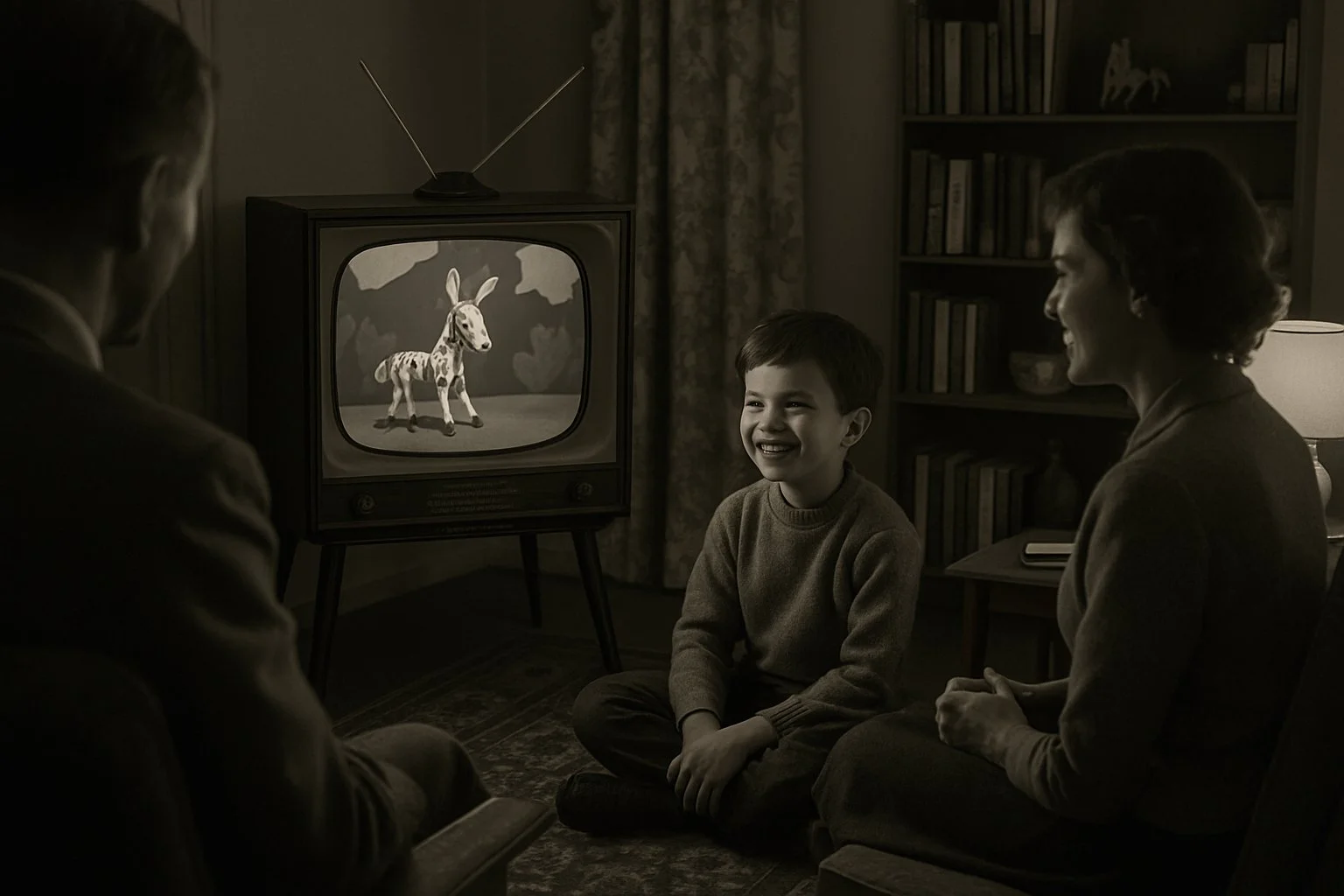
Muffin the Mule became Britain’s first children’s television superstar when he debuted in 1946, dancing across presenter Annette Mills’s piano top and capturing the hearts of an entire generation. That simple puppet show, with its unforgettable theme tune and Annette Mills’s voice, felt like the start of something—TV, finally, just for kids.
Let’s wander back through the story of Muffin, the puppet that set the stage for everything that followed. From his humble beginnings to his surprising influence on British telly, Muffin’s tale is proof that sometimes the simplest ideas stick around the longest.
Muffin the Mule: A Black-and-White TV Phenomenon
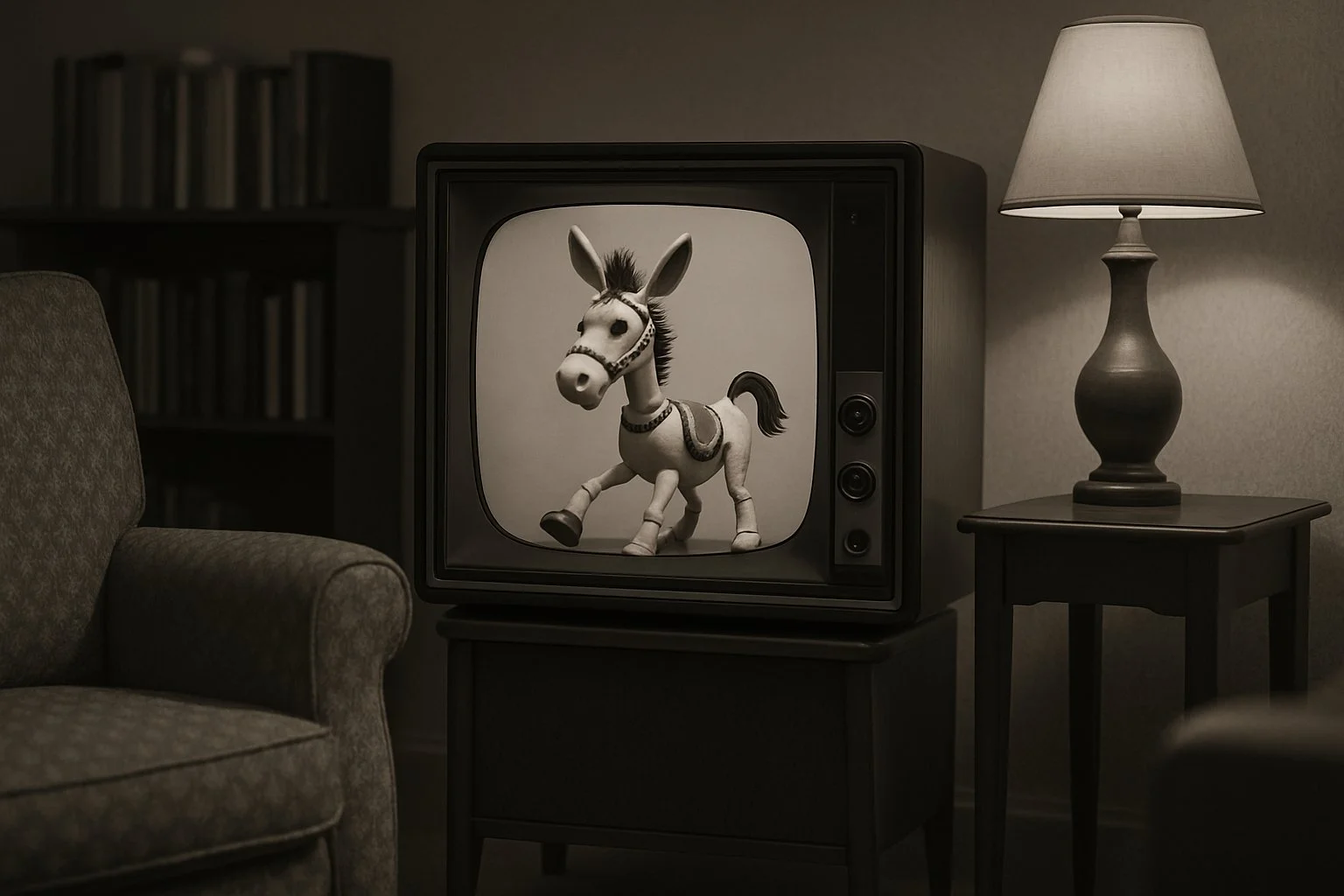
Muffin the Mule stole the show when he first appeared on BBC’s “For the Children” in 1946, with Annette Mills at the piano, singing and narrating as Muffin trotted and danced across the top.
The First Appearance on For the Children
Muffin made his TV debut on 20th October 1946 on the BBC’s “For the Children.” That night, something clicked—the audience fell in love, and suddenly, puppets on TV didn’t seem so odd.
The show went out live from Alexandra Palace, and you could almost feel the excitement in those early broadcasts. Muffin, a piebald puppet mule, would shuffle and sway while Annette played and told stories, and somehow, it all just worked.
The format was so simple—maybe that’s why it worked so well. The show ran until 1955, which was a solid run for a children’s programme back then.
Annette Mills and the Iconic Piano Performances
Annette Mills, who happened to be John Mills’s sister, really made the show what it was. Her piano playing and her very proper voice gave Muffin’s world its unique charm.
She played live every time, fingers dancing over the keys while Muffin danced above. That image—Muffin teetering on the piano and Annette smiling up at him—just sticks in your mind.
Her accent was almost comically posh, but somehow comforting. Looking back, it’s hard not to smile at how she made even the simplest song feel like an occasion.
Annette and Muffin performed live, which meant anything could happen—a missed note, a tangled string, a giggle from the crew. It all added to the warmth.
Sadly, Annette Mills passed away on 10th January 1955, just a week after Muffin’s last TV appearance. The end of an era, really.
Signature Songs and Theme Music
The music from Muffin the Mule still rattles around in some folks’ heads, I bet. Annette wrote and sang the songs herself, and they were catchy in that way only children’s tunes can be.
“We Love Muffin” was the big one. That tune stuck with you, and it set the standard for TV theme songs—simple, memorable, and a bit silly.
Most of the music was just Annette and her piano, which, honestly, suited the tiny living rooms and tinny speakers of the time.
Those songs didn’t just stay on TV. Suddenly, you could buy Muffin records and books—one of the first times a TV character turned into a proper brand.
It just goes to show, sometimes the simplest melody can last a lifetime.
Behind the Strings: Origin and Creation of Muffin
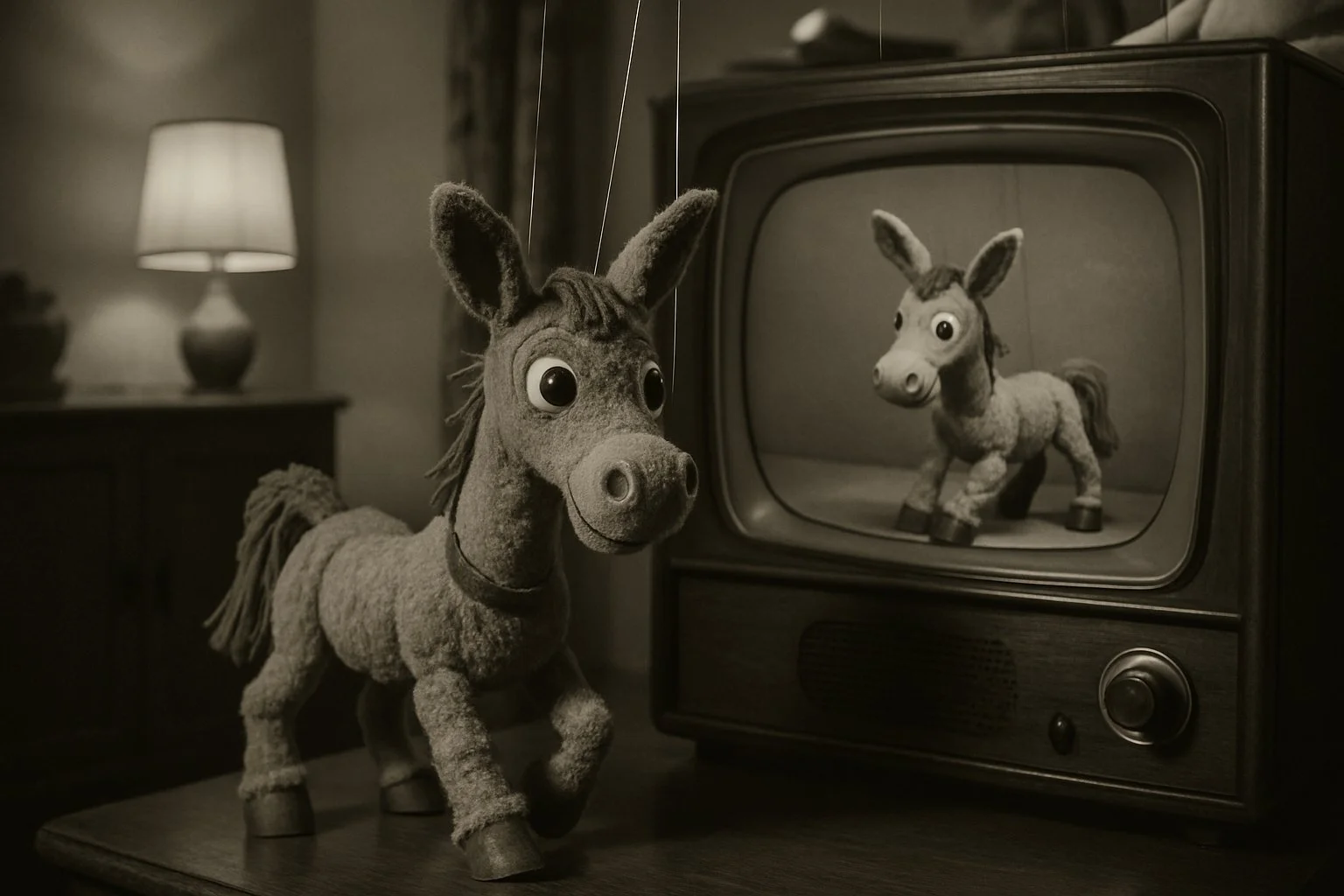
Muffin’s story actually started with Fred Tickner, a puppet maker, back in 1933. Eventually, Muffin wound up with the Hogarth Puppets team, who figured out how to make him move just right for TV.
Fred Tickner and the Crafting of the Puppet
Fred Tickner built Muffin in 1933, intending him as a ‘kicking’ mule for the Hogarth puppet circus. He gave Muffin a piebald pattern, black and white, to help him stand out—clever, considering how fuzzy old TVs were.
Ann Hogarth found Muffin later, gathering dust, and bought him for just 15 shillings from a travelling showman. Not bad for a puppet who’d become a star.
Tickner made Muffin as a marionette, with strings attached to his legs and head. That meant the puppeteer could make him trot, kick, and dance—almost like he had a mind of his own.
The Hogarth Puppets: Jan Bussell and Ann Hogarth
Jan Bussell and Ann Hogarth ran the Hogarth Puppets. They saw something in Muffin, dusted him off, and decided he’d be perfect for television.
Ann Hogarth became Muffin’s main puppeteer, standing behind a little screen on the piano, pulling the strings while Annette played. She made Muffin move with such personality, you’d almost forget he was wood and paint.
The Hogarths had been working with marionettes for years, mostly in theatres and circuses, but TV was a whole new world. Still, they adapted, and suddenly, puppetry was the hottest thing on the box.
Puppeteer Techniques and Puppetry Artistry
Ann Hogarth had to invent new tricks to make Muffin’s movements look smooth on TV. She matched her timing with Annette’s piano, making Muffin “dance” right on cue.
She hid behind a partition, out of sight, but her hands worked magic. Under those blinding studio lights, every string tug had to be perfect.
Muffin’s best trick was his lively dance across the piano. Ann had to pull the right strings in time with the music, and somehow, she always made it look effortless.
Other puppeteers took notes—Muffin showed everyone how marionettes could really work on TV.
The World of Muffin: Friends and Adventures
Muffin the Mule introduced us to Muffinham Village, a cosy puppet world where animals sorted out their little problems together. Kids fell in love with the characters, and soon, Muffin was everywhere—from books to toys to board games.
Muffinham Village and its Animal Characters
Muffinham Village was the sort of place you wished you could visit. All the animals there had their own personalities, and the stories were gentle, almost soothing.
Every animal character was crafted to be memorable—somehow, you’d remember their quirks years later. The stories usually revolved around friendship, kindness, and solving small problems. Nothing too dramatic, just the kind of thing that made you feel safe.
Memorable Episodes and Storylines
Muffin’s adventures were simple, but they stuck with you. He’d help a friend out of a jam, or figure out a puzzle, or just celebrate a birthday. The stories always had a little lesson about sharing or thinking things through.
Writers kept things creative, but never strayed far from what kids could relate to—helping a friend, fixing a mistake, or joining in a seasonal celebration.
Muffin usually used his “thinking cap” to figure things out, and you couldn’t help but root for him.
Muffin’s Animal Friends and Supporting Cast
Prudence Kitten was Muffin’s best pal, showing up often in the 1950s. Unlike Muffin, she was a glove puppet, which made for a fun contrast.
Some of Muffin’s friends:
- Prudence Kitten, his clever feline companion
- A rotating cast of village animals, each with their own quirks
- The occasional guest from another puppet show
Molly Blake, Annette Mills’s daughter, eventually took over presenting with Prudence Kitten, keeping things in the family.
The supporting cast made Muffinham Village feel like a real community, each animal bringing something new to the mix.
Muffin the Mule Merchandise and Licensing
Muffin was one of the first TV characters to become a merchandising hit. Suddenly, every kid wanted a Muffin toy or book.
Popular Muffin merchandise:
- Diecast metal toys by Lesney Products (1951)
- Picture strip books and TV mini-books
- Card games with Muffin and friends
- Loads of other collectibles—some of which probably still lurk in attics
Publishers like TV Comic and Brockhampton Press put out plenty of Muffin books, letting kids keep the adventures going after the TV switched off.
The toymakers jumped in too, making sure Muffin was everywhere kids looked.
Evening Rituals and Family Viewing Traditions
TV changed family life in the 1950s. Suddenly, evenings revolved around the set in the corner, and shows like Muffin the Mule became part of the daily routine.
The 1950s Black-and-White TV Experience
The living room turned into a theatre when you switched on the TV. Remember waiting for the screen to warm up, the glow slowly brightening? That anticipation was half the fun.
We’d fiddle with the aerial, twist the knobs, and sometimes smack the side of the set when the picture rolled or went snowy. The test pattern meant it was almost time. Shows didn’t run all day, so you learned to work around the schedule.
When the picture finally came in, everyone—parents, kids, even the dog—would gather round. It was a communal experience, and you felt it.
Children’s Evening Routines and Television Habits
Watch with Mother set the pace for the week. Each day brought different puppet friends into our homes, and you could almost set your watch by it.
Monday to Friday:
- Monday: Picture Book
- Tuesday: Andy Pandy
- Wednesday: The Flowerpot Men (Bill and Ben)
- Thursday: Rag, Tag and Bobtail
- Friday: The Woodentops
After school, before tea, we’d rush to the telly. Muffin the Mule had his spot on Sunday evenings—a treat to end the week. Annette at the piano, Muffin dancing, and everyone watching quietly.
Cultural Impact on British Families
Children’s TV gave us all a shared language. We all knew the songs, the characters, the little catchphrases. You’d talk about them at school or over dinner.
TV sets went from rare to common in no time. Suddenly, the telly wasn’t just for special occasions—it was the centre of family life.
Families started planning meals and visits around broadcasts. Parents watched with the kids, and everyone had opinions about their favourite puppet.
Toy shops filled up with Muffin and friends, and missing a show meant waiting ages for another chance—no catch-up, no repeats, just that one precious viewing.
Influence on Children’s Television and the Rise of Iconic Shows
Muffin the Mule kicked open the door for British puppet TV. His show inspired the whole Watch with Mother lineup and a flood of puppet series that defined childhood for generations.
From Muffin to Watch with Mother
The BBC really understood the magic behind Muffin the Mule’s simple setup. It’s wild to think how one puppet show, with its humble charm, could hold so many of us in its spell.
Back in 1952, the BBC rolled out Watch with Mother. For so many families, this became a cozy little window into gentle puppet adventures—something we all looked forward to.
Picture Book kicked things off. There were stories told with just illustrations and puppets, and somehow, that was enough.
Andy Pandy came along the same year. That cheerful boy puppet, always dancing in the garden with Teddy and Looby Loo, felt like a friend you could count on.
They kept things short and sweet—just 15 minutes per episode. Teatime meant huddling around the TV, everyone together, waiting for the familiar theme song.
The Evolution of Puppet Programmes
After Muffin, puppet shows started to get a bit fancier. It’s hard not to admire the leaps in creativity and design that followed.
The Woodentops—now there’s a name that brings back memories. An entire puppet family, living out in the bright countryside, with Daddy and Mummy Woodentop and all the kids.
Then there was Bill and Ben, the Flowerpot Men. Pure silliness. Those two, babbling away in “oddle poddle,” made us laugh in that way only nonsense can.
Rag, Tag and Bobtail—a hedgehog, a mouse, and a rabbit, off on their small, gentle adventures. It was simple, and that was the point.
You could see the puppets getting better, too. Faces had more detail, the clothing looked richer, and the movements—well, they just seemed a bit more lifelike each year.
Other Beloved BBC Puppet Series
Through the 1950s and 60s, the BBC really set the pace for children’s puppet shows. It felt like there was always something new and clever just around the corner.
Gordon Murray, for one, gave us some real treasures. His work had a level of detail and care that made the worlds feel almost real.
Camberwick Green popped up in 1966, opening with that unforgettable music box. Windy Miller, PC McGarry, all those village folks—it’s hard not to smile thinking about them.
When ITV arrived in 1955, the BBC didn’t back down. If anything, the competition just made everyone try a little harder.
And those shows—they taught us about friendship, kindness, and the power of imagination, even if we didn’t realize it at the time.
Creative Forces and Key Contributors
Muffin the Mule owed its charm to a team of creators who brought their own kind of magic to children’s TV. From catchy tunes to clever puppet-making, these folks shaped something that stuck with us.
Annette Mills and her Musical Contributions
Annette Mills was the heart and soul of Muffin the Mule. She wasn’t just a presenter—she made the show feel warm and welcoming.
Mills wrote many of the songs that became part of the show’s fabric. Her knack for simple, catchy melodies meant we could all hum along.
Her on-screen presence was like visiting a favourite aunt. She had this way of talking straight to you, right through the camera.
Those songs she wrote told little stories about Muffin’s adventures and slipped in gentle lessons about friendship and good behaviour.
Mills would play the piano live during the show, which gave everything a homely, almost spontaneous feel you just don’t get from big productions.
She stuck with the show right up until her passing in 1955. That kind of dedication—well, it’s something you don’t forget.
Molly Blake: Illustrator and Storyteller
Molly Blake brought Muffin’s world to life with her illustrations. Her drawings showed up in books and all sorts of merchandise.
Her style was soft, friendly—just right for young readers. You could see the same gentle charm in her art as you did on TV.
Thanks to Blake, Muffin’s adventures didn’t end when the credits rolled. Kids could keep reading about their favourite mule long after the show.
She worked closely with the rest of the team, making sure her drawings matched the look and feel of the puppets we saw on screen.
Those storybooks she created? They became classic gifts, helping Muffin become more than just a TV character.
Elizabeth Williams and Sam Williams
Elizabeth Williams and Sam Williams worked behind the curtain, keeping everything running smoothly.
Elizabeth kept the production on track, juggling all the bits and pieces that go into making a show like this.
Sam handled the technical side—making sure Muffin and his friends moved just right and came to life for the audience.
The Williams duo paid close attention to every detail. You could tell they cared about getting it right, week after week.
Their approach set a standard that other children’s programmes would try to follow later on.
Legacy of Jan Bussell and Ann Hogarth
Jan Bussell and Ann Hogarth from Hogarth Puppets poured their hearts into creating the Muffin puppet. Honestly, their craftsmanship took what could’ve been just another idea and somehow made it unforgettable.
Bussell gave Muffin that unmistakable look—those big, trusting eyes, that open little mouth. With movable parts and a face that seemed to light up, Muffin could charm a whole room of kids in a heartbeat.
Hogarth Puppets had already made a name for themselves. Folks just knew their puppets would last, even with the rough-and-tumble of live TV.
They didn’t stop with Muffin, either. Sally the Seal and Peregrine the Penguin soon joined the gang, making Muffin’s world feel so much bigger and, well, a bit more magical.
It’s funny to think how their techniques shaped the look of children’s television for years. Maybe it’s not surprising, though—when you see Muffin on the screen, you can just tell someone cared.
Key roles:
- Puppet Design: Jan Bussell
- Character Development: Ann Hogarth
- Quality Control: Hogarth Puppets workshop team




Leave a Reply