
Picture this: glowing coal embers flickering across the sitting room, casting shadows on faded wallpaper, while outside, a rag-and-bone man’s call—“Rag and bone!”—cuts through the hush of a snow-dusted street.
It’s a memory that tugs at something deep for anyone who grew up in post-war Britain, when families huddled together by the hearth and learned to squeeze every drop of comfort from the ordinary.
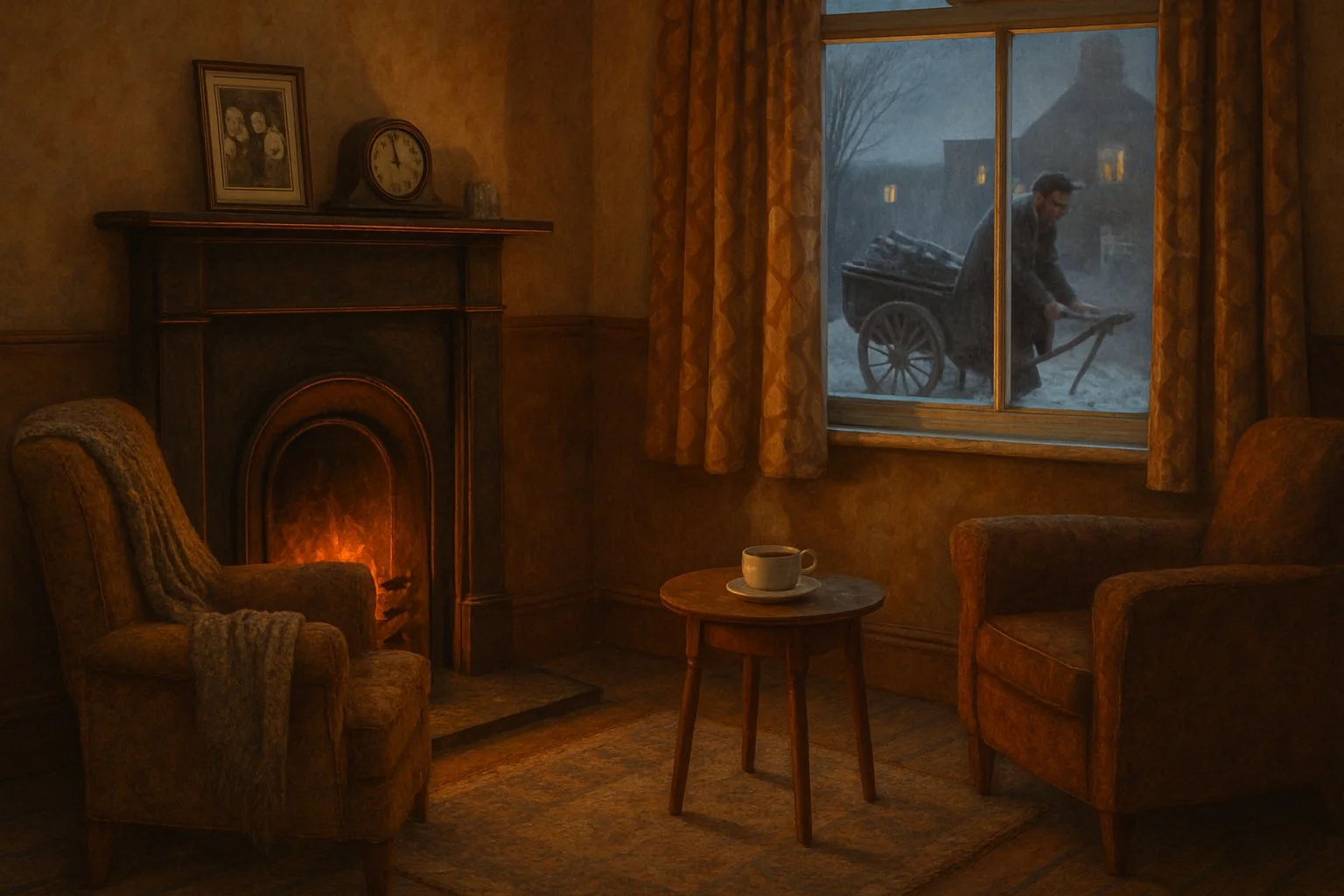
The coal fire was more than just a heat source—it was the heart of the home, the spot where families gathered, stories were swapped, and the day’s worries faded into the warmth and glow. Parents would read the evening paper, kids sprawled on the hearthrug, and even the family dog found its place near the fender.
Let’s wander back through those chilly nights, when keeping the fire alive was an art, rag-and-bone men turned household scraps into treasure, and simple pleasures shaped a generation. There’s something about that resourcefulness—making do, keeping warm, and finding joy in the smallest things—that sticks with you, isn’t there?
Life by the Coal Fire
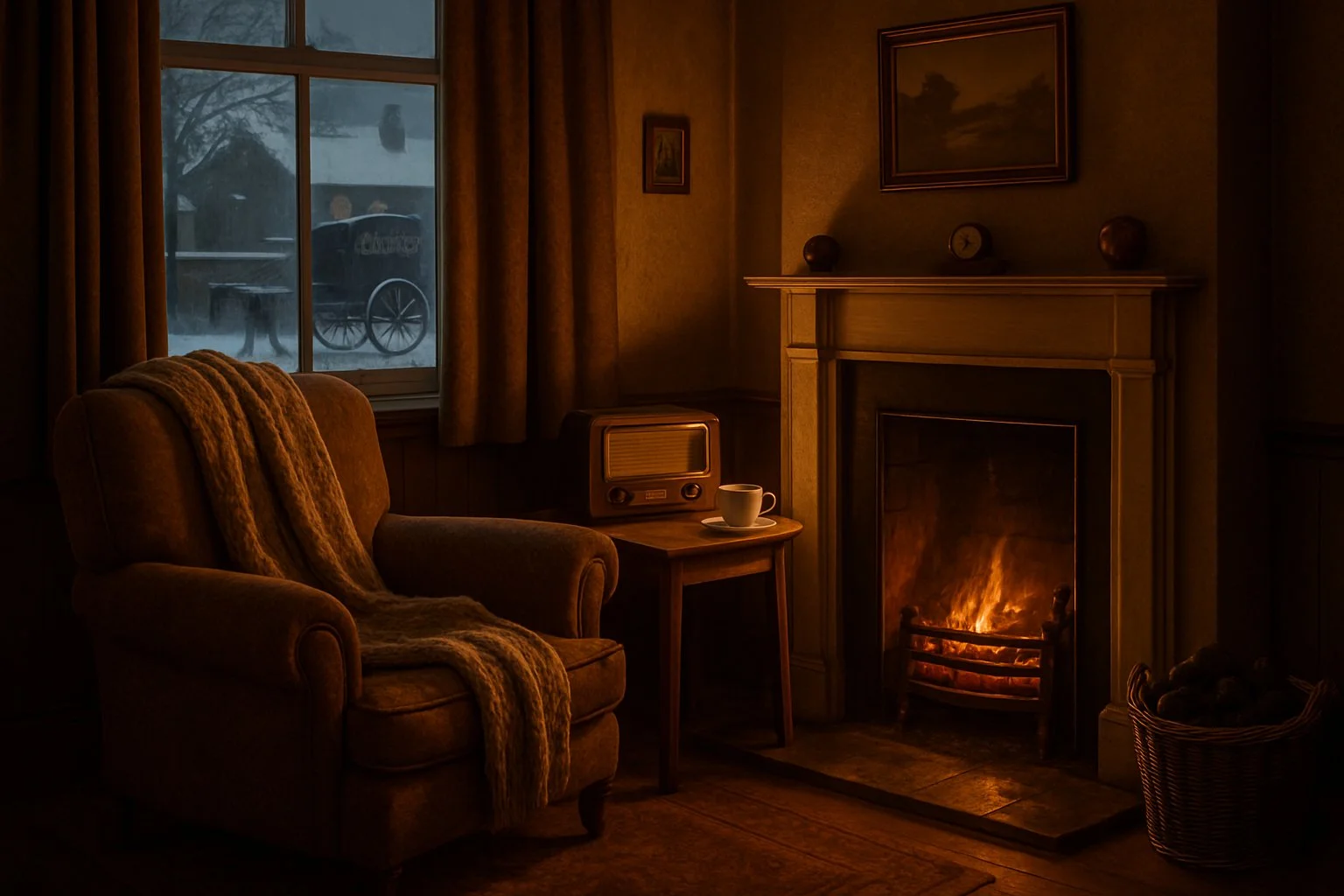
Coal fires had a way of dictating the rhythm of daily life. We built our routines around their warmth, learning little rituals for lighting, tending, and coaxing every last bit of heat out of those stubborn coals.
Warming the Home on Frosty Evenings
Evenings revolved around the coal fire’s glow. The living room was the only truly warm spot in the house, so we’d close the doors, pull up the chairs, and gather everyone in that one snug space. Bedrooms? Freezing, unless someone was poorly.
The kitchen was another story. Sometimes we’d prop open the gas oven door for a bit of extra heat—probably not the safest, but needs must when winter bit hard.
Chairs huddled around the fireplace, and we’d pile on the blankets, squeezing close to the flames. The youngest always seemed to nab the hearthrug, stretching out as close as they dared.
Maintaining and Lighting the Hearth
Getting that fire going each day took patience and a knack for the right order of things. First, we’d scoop out the cold ash with a metal bucket—messy business, that. Then came the crumpled newspaper, a layer of kindling, and a careful arrangement of coal. A match, a bit of gentle blowing, and if luck was on your side, the fire would catch.
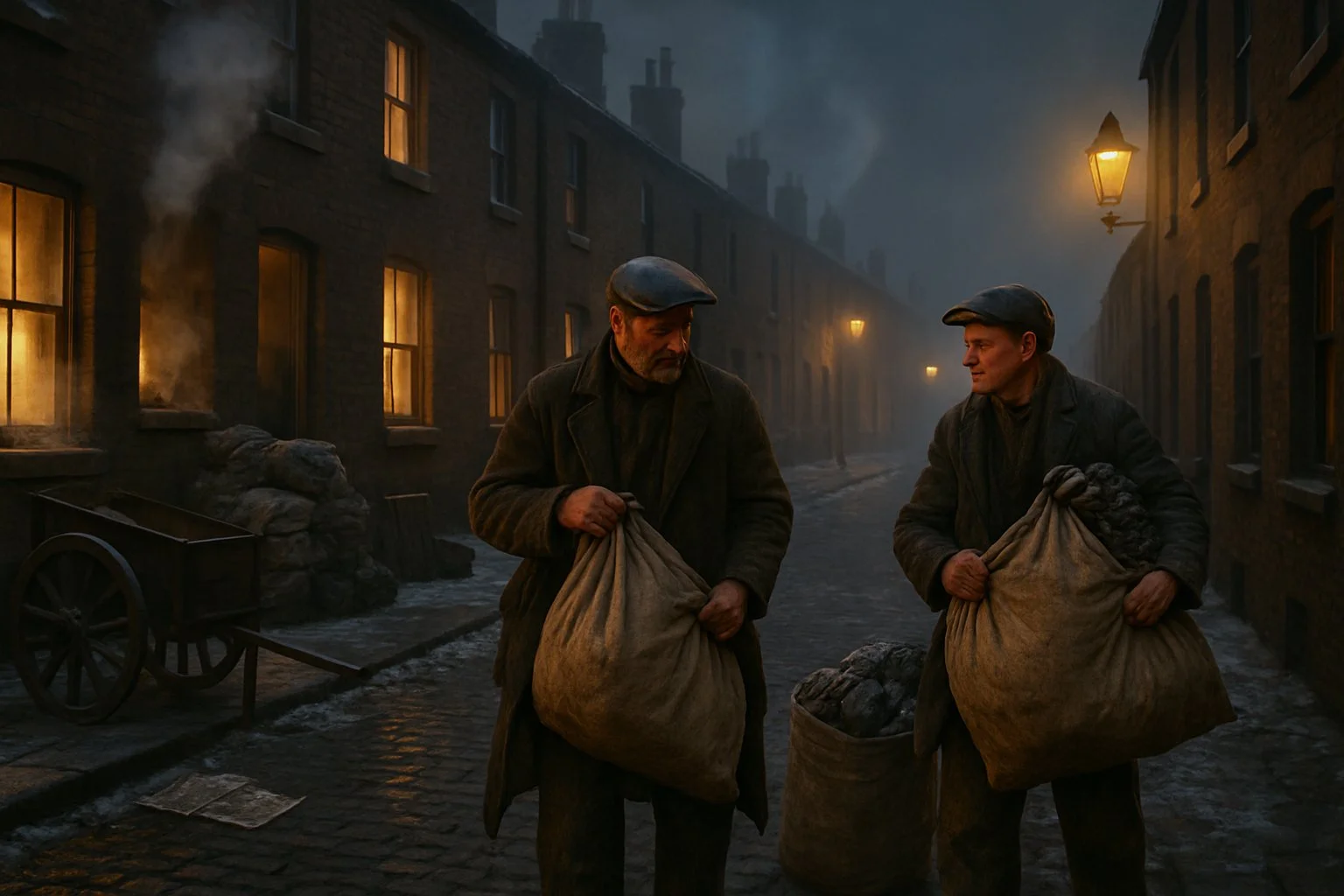
Coal men hauled heavy sacks—one hundredweight at a time—delivering them to coal holes or outside sheds. We’d keep a stash handy, ready for the evening’s tending.
Keeping the fire alive meant regular attention. Someone always had to add a shovel of coal or nudge the slack to bank it for the night. You learned to “damp down” the fire, hoping it’d still be smoldering by morning.
Coal dust got everywhere. We’d lay newspapers around the hearth and keep a rag close by for the inevitable black smudges.
Family Gatherings Around the Fire
Evenings were all about the fire’s glow. Dad would sink into his chair with the paper, Mum opposite with her knitting. Kids sprawled on the rug, playing games or scribbling homework, half-distracted by the dancing flames.
Pets knew the best spot—dogs stretched out by the fender, cats curled on chair backs, both soaking up the heat.
There was a rhythm to those nights—after tea, everyone drifted to the living room, drawn by the promise of warmth. The fire made us stick together, talking, laughing, sometimes just sitting in companionable silence.
Bedtime stories happened by firelight, parents reading aloud while kids watched the flames, letting their imaginations wander. Those moments—warm, safe, and close—left a mark that never really fades.
Rag-and-Bone Men: Echoes Through the Streets
The cry of “Any old iron!” drifted through the streets, as rag-and-bone men made their way with horse-drawn carts, collecting cast-offs and turning them into something useful. If you ever watched Steptoe and Son, you’ll know the world I’m talking about.
The Distinctive Call: “Any Old Iron!”
You’d hear them before you saw them—the clop of hooves, the rattle of a cart, and those unmistakable shouts echoing between rows of brick houses.
“Any old iron!” was the classic, but there were plenty of variations: “Rag bone!” or “Money for old rags and bones!” Sometimes they’d offer “Firewood for old rags!” or just ring a bell, their voices carrying down the street.
Those calls mattered. Without phones or much in the way of post, this was how traders let everyone know they were near. The sound became part of daily life, a signal that set housewives bustling to the door with whatever they could find.
Kids got to know the rag-and-bone men by their calls—each had his own style, a familiar voice you could pick out from down the block.
Items Traded and Their New Uses
Rag-and-bone men would take just about anything—old clothes, broken chairs, scrap metal, leftover bones from Sunday’s roast, glass bottles. Nothing was too small or too worn out.
Here’s what some of it fetched:
- White rags: 2-3 pence a pound
- Coloured rags: 2 pence a pound
- Bones: 2 pence a pound
- Brass and copper: 4-5 pence a pound
Rags got sorted and sent off to mills, where they’d be spun into recycled cloth—“shoddy,” they called it—mixed with new wool. Bones? Oddly enough, they turned up as knife handles, ornaments, even toys. Treated with chemicals, bones found their way into soap and other odds and ends.
Scrap metal was always in demand. Even tiny bits, like horseshoe nails, were worth collecting. Brass and copper fetched a decent price, and glass bottles either got reused or melted down.
Steptoe and Son: The Rag-and-Bone on Screen
Steptoe and Son brought the rag-and-bone world right into our homes in the 60s and 70s. Albert Steptoe, with his horse-drawn cart and cluttered yard, was every inch the old-school trader, while his son Harold dreamed of something grander.
The show nailed the details—the jumble of salvage, the rounds through London, the banter with regulars. It was funny, sure, but it also captured something real about scraping by, making a living from what others tossed aside.
Steptoe and Son became a staple, just as real rag-and-bone men were fading away. By the 80s, they were nearly all gone, but the show kept their spirit alive—a reminder of thrift and ingenuity, and maybe a little stubborn pride, too.
Resourcefulness and Recycling
If post-war Britain had a motto, it was “make do and mend.” We learned to stretch every penny, patch every sock, and find a new use for just about anything. Rag-and-bone men were part of that, but so was the everyday creativity that filled every home.
Make Do and Mend: A Way of Life
The “make do and mend” spirit didn’t vanish with the end of rationing. If anything, it dug in deeper. We darned socks by the fire, kept sewing kits close, and thought twice before throwing anything away.
Furniture got patched and painted. Chairs were reupholstered with whatever fabric we had. Broken crockery? Out came the glue. Shoes got new soles, and old tins became handy storage.
Nothing went to waste—not if you could find a use for it. Newspapers wrapped parcels or started the fire, and empty jars found a second life in the pantry.
Reusing and Recycling Everyday Items
Rag-and-bone men helped keep things moving—collecting rags, metal, and paper, turning them into something useful again. The rags ended up at paper mills, and the metal went off to be melted down.
We got creative at home, too. Glass jars stored jam or buttons, boxes kept drawers tidy, and tins made for decent plant pots.
Some favourite tricks:
- Food tins became plant pots
- Old sheets made dust covers
- Worn towels cut up for cleaning rags
- Shopping bags sewn from leftover fabric
Steptoe and Son made us laugh, but it also reminded us how much value could be found in a pile of old junk, if you had the eye for it.
Passing Down and Repairing Clothes
Clothes made the rounds—older siblings’ jumpers patched up for the little ones, collars and cuffs turned to hide the wear. Evenings were spent by the fire, needle in hand, making old things last a bit longer.
Rag rugging was a favourite in mining towns—old woollies and food sacks turned into bright, sturdy rugs. It was practical, but also a bit of fun, seeing what patterns you could make from scraps.
Mothers taught daughters to sew—patching, hemming, letting out seams when someone shot up another inch. You just didn’t throw things away if you could help it.
Hand-me-downs weren’t just for family, either. Neighbours shared outgrown clothes, keeping them in circulation. It was a bit of community spirit that kept waste to a minimum.
Winter Meals and Shopping Habits
Winter cooking was all about what you could get—seasonal veg, a few preserved treats, and recipes that made the most of what was on hand. Shopping was a daily affair, with local shopkeepers and delivery men making their rounds.
Seasonal Produce and Wartime Recipes
Root veg—potatoes, carrots, turnips, parsnips—were the backbone of winter meals. Cabbage showed up everywhere, sometimes in bubble and squeak, sometimes boiled alongside a meat and potato pie.
Rationing recipes stuck around long after the war. Mock cream (really just margarine and milk powder) topped off puddings. Carrot cake used less sugar than you’d like. Woolton pie—just a heap of veg under pastry—was a regular.
Preserves stretched the larder:
- Bottled fruit from summer gardens
- Pickled onions and beetroot
- Salted runner beans in old crocks
- Apple rings strung up to dry
Stews simmered for hours on the coal range, making even the toughest meat tender and filling the kitchen with warmth.
Daily Shopping and Local Deliveries
Supermarkets weren’t the norm. Most folks shopped daily—corner shops, butchers, greengrocers. You’d carry a string bag or a battered old basket, and the shopkeepers knew you by name.
Monday was for the butcher’s joint, Tuesday and Wednesday for fresh bread and veg, Thursday for baking supplies. Credit was common—shopkeepers kept little notebooks behind the counter, and you’d settle up on payday.
Deliveries were part of the weekly rhythm:
- Coal dropped off at the door
- Baker’s van with fresh loaves
- Fishmonger’s Friday call
- Greengrocer with whatever was in season
The delivery men knew every street, every house. Their voices—calling out their wares—were just another comforting thread in the tapestry of winter evenings.
Milkman and Pop Man: Bottles on the Doorstep
The milkman’s horse and cart would clatter down the street before most of us even thought about waking up. Glass bottles jostled together as he set them quietly on our doorsteps. We’d leave our empties out, maybe with a scribbled note asking for an extra pint or a bit of cream—sometimes just a scrawl barely legible in the morning cold.
Fresh milk came daily in those chunky pint bottles with their silver foil tops. In winter, the milk sometimes froze into a solid block, and the cream would bulge right up through the foil like some accidental ice lolly. It was a small thrill, honestly.
Pop men made their rounds too, hauling crates of fizzy drinks—Corona, Tizer, dandelion and burdock—right to our doors. Households with kids especially waited for them. We’d stash the empties in wooden crates, ready for collection and a bit of pocket money.
We paid in all sorts of ways—sometimes the milkman knocked on Fridays and you’d settle up, or you’d use little tokens bought from the dairy in advance. There was this unspoken trust among neighbours, a kind of gentle honesty that just worked.
No matter how rough the weather got, both milk and pop arrived like clockwork. Snow, ice, biting wind—it didn’t seem to matter much to the people (and horses) who kept us supplied.
Evening Activities in Post-War Homes
When the coal fire glowed in the hearth, it pulled everyone in. Families gathered, crowding into sitting rooms for those simple, slow pleasures that made winter nights feel almost magical. There was a rhythm to it—games, stories, bath night, and the odd bit of squabbling over who got the warmest spot.
Games, Stories, and Family Entertainment
We’d sprawl on the rug, toes toasting, and play snakes and ladders or cards while parents claimed the armchairs. The old decks of cards—edges softened from endless shuffling—came out for whist, rummy, or pontoon. Sometimes we’d bet with matchsticks or old buttons, just for a bit of drama.
The wireless was always there, a kind of invisible friend in the corner. We’d tune in for:
- Comedy shows like ITMA or Much-Binding-in-the-Marsh
- Serial dramas that kept us guessing until next week
- Music programmes with big bands and crooners
Reading aloud was a favourite too. Parents might pick up the newspaper or a borrowed library book and read while the rest of us listened, soaking in the fire’s warmth and the words.
The fire itself was hypnotic. We’d stare into its glowing heart, spotting faces, castles, or creatures flickering in the coals. I suppose kids always find magic where adults see chores.
Bath Night Rituals and Household Chores
Saturday evenings meant bath night, like it or not. We’d heat water in giant pots on the kitchen range, then lug steaming kettles to the tin bath set out by the fire. It was a production—everyone took turns, youngest first, adding more hot water as we went. Not exactly glamorous, but it worked.
We squeezed in the usual evening chores between all this:
| Task | Timing | Purpose |
|---|---|---|
| Banking the fire | Before bed | Keep coals smouldering overnight |
| Washing dishes | After tea | Clear kitchen for next day |
| Preparing clothes | Sunday evenings | Ready work attire for week |
Bath time doubled as a weekly grooming session—hair washed, then dried with a towel near the fire, hoping you’d get the warm side.
Kids’ bedtime started early in winter. We’d warm pyjamas by the fire and fill stone hot water bottles, bracing ourselves for the dash to cold bedrooms upstairs.
All these little routines—bathing, chores, the fire—wove families together in ways that feel rare now. Maybe it was the shared work, or just the comfort of knowing what came next.
Changing Times: From Post-War to Modern Day
Somewhere along the way, everything shifted. The old ways of heating and handling waste faded, and new habits took over. It’s odd, looking back, how quickly it all changed—and how a few things circled around again.
Shifts in Home Heating and Recycling
By the 1970s, central heating quietly took over British homes. Oil and electricity replaced coal, and houses were built with big windows, open plans—so different from the tight, fire-warmed rooms of before.
Coal lorries stopped coming. No more men with flat caps, no more sacks of coal dumped by the door. That whole ceremony—gone, just like that.
Gas fires and electric heating made life easier in some ways. We didn’t have to tend fires or haul coals upstairs for someone who was sick. The old rituals slipped away, replaced by a quiet, even warmth that didn’t ask much of us.
Rag-and-bone men faded too, their calls replaced by council rubbish trucks and scheduled collections. Recycling became official, not just a side hustle.
But, honestly, something went missing. That gathering around the fire, the warmth that pulled families together—Orwell wrote about it, and he was right. Central heating spread comfort, but it scattered us, too.
Revival of Traditional Practices
Funny thing—some of those old ways crept back in. Wood-burning stoves started popping up in new homes. Not the smoky, sooty monsters of the past, but sleek Ecodesign stoves that ticked all the environmental boxes.
People rediscovered the charm of real flames. That fascination Orwell described—seeing “caverns or faces or salamanders” in the fire—still has its pull. Families gather around hearths again, though now it’s a choice, not a necessity.
Vintage markets and antique fairs are bustling. Folks hunt for treasures the rag-and-bone men once hauled away. There’s a new appreciation for what older generations let go.
Modern recycling feels oddly familiar. We sort and save, just like before—even if it’s council trucks now instead of horse-drawn carts. The spirit’s the same: don’t waste what can be used again.
Environmental Lessons from the Past
The UK’s last coal power station closed in 2024, ending 140 years of coal electricity. That shift from “Coal Is King” to cleaner energy really says something about how we woke up to the mess we were making.
We sure learned the hard way. The Great Smog of 1952 hammered home coal’s dangers. After that, Clean Air Acts came in. Cities started banning domestic coal burning, and honestly, it was overdue.
I keep thinking about how old habits could teach us a thing or two. Rag-and-bone men would roam the streets, collecting what others tossed. Their knack for reusing everything feels almost foreign now, but isn’t that the heart of the circular economy? Back then, nothing went to waste. It’s a far cry from today’s throwaway habits, and maybe we’ve lost something in that shift.
Climate policy nudges us to rethink how we heat our homes. Heat pumps, hydrogen-ready gas fires—these are the new normal, slowly edging out coal. We try to balance comfort and responsibility, but I wonder if post-war families ever gave it a second thought.




Leave a Reply