
Back in the late 1970s, British kids woke up on Saturdays with a real dilemma—one that would shape their mornings and fuel endless debates in the schoolyard. Two TV programmes, airing smack at the same time, forced families to pick a side. Multi-Coloured Swap Shop on BBC1 and Tiswas on ITV—if you grew up then, you remember the rivalry. It split the nation’s youth right down the middle, and honestly, it still pops up in conversations decades later.
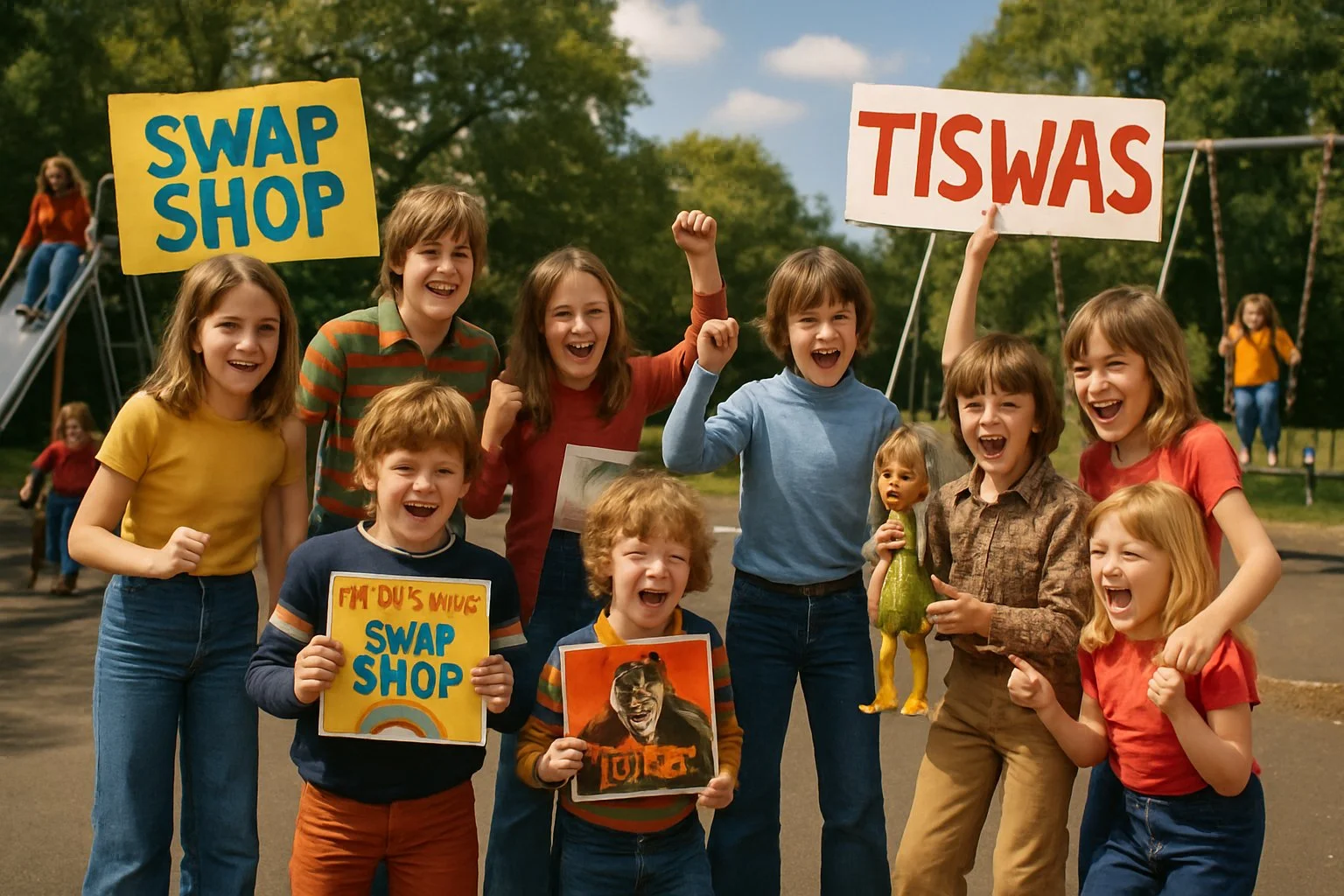
Swap Shop was the steady one: three hours live, Noel Edmonds at the helm, phone-ins, pop stars, and Keith Chegwin’s wild “Swaporama” on the road. Tiswas? That was pure bedlam. Chris Tarrant and Sally James ran a show where custard pies, water buckets, and Lenny Henry in outlandish costumes were all just part of the fun.
Your choice said something about you. Were you into the orderly, almost wholesome fun of Swap Shop? Or did you crave Tiswas’s unfiltered chaos? The rivalry set the tone for Saturday mornings and, honestly, for the way British TV would try to hook young viewers for years. The lines were drawn—every kid had to pick.
The Origins Of The Saturday Morning Rivalry

The showdown between Tiswas and Swap Shop didn’t just materialise out of nowhere. Both shows came from totally different backgrounds, and it took a while before their head-to-head battle really split British kids.
Birth Of Tiswas And Multi-Coloured Swap Shop
Tiswas actually hit screens first, way back on 5 January 1974, but only in the Midlands. It started as a kind of wild experiment—no rules, just whatever seemed fun at the time. For years, hardly anyone outside the Midlands even heard about it.
Then, in October 1976, the BBC rolled out Multi-Coloured Swap Shop nationwide. Bryan Cowgill, the Controller of Programmes, gave it the green light if the producers could nail the format. Noel Edmonds stepped in, and suddenly Saturday mornings felt different.
From the get-go, these shows couldn’t have been more different. Swap Shop went all-in on phone-ins, swapping stuff, celebrity guests, and cartoons. Meanwhile, Tiswas leaned into total mayhem—pies, water, stunts, and the sense that anything could (and probably would) happen.
Broadcasting Differences: BBC vs. ITV And ATV
The real twist wasn’t just the shows, but how you could actually watch them. The BBC broadcast Swap Shop everywhere. If you had a telly, you could tune in.
Tiswas, though, was stuck in the Midlands for ages. ATV only covered that region, so kids in London, Yorkshire, Scotland, and elsewhere had to settle for other ITV shows. It was a bit of a mess, honestly. London had Saturday Scene, Yorkshire had its own version, and Southern Television even launched The Saturday Banana, which ended up pushing Tiswas back to just the Midlands for a bit.
Tiswas didn’t get its big break until autumn 1979, after an ITV strike forced the network to finally show it everywhere. Suddenly, the whole country could tune in—and did.
Early Audience Reactions And Playground Divides
Before 1979, the rivalry was really just a Midlands thing. Kids there had to pick: Tiswas or Swap Shop? The choice said a lot about you.
Swap Shop drew in kids who liked being part of something structured. Calling in, swapping toys, talking to pop stars—it felt grown-up and a bit exciting. The show respected its audience.
Tiswas, meanwhile, was for the mischief-makers. It was messy, unpredictable, and the presenters seemed to be having just as much fun as the kids watching. It was TV that felt just a little bit naughty.
When Tiswas finally hit the whole country in 1979, the playground debates exploded. Every kid in Britain suddenly faced the same choice at 9:30am. That’s when things really kicked off.
What Made Swap Shop And Tiswas Unique?

The two shows couldn’t have taken more different paths. Swap Shop was all about structure—family-friendly, with outside broadcasts and phone-ins. Tiswas, though, was a glorious mess: custard pies, slapstick, and humour that seemed to break every rule adults ever made.
Formats And Structure Of Each Show
Swap Shop ran for three hours every Saturday on BBC One, from 1976 to 1982. It mixed up cartoons, celebrity interviews, phone-in competitions, and swaps—a real magazine of a show. Noel Edmonds held it all together in the studio, while reporters like Keith Chegwin hit the road.
Tiswas started in the Midlands in 1974 and reached London in 1977. It mostly stayed in the studio, running for about 90 minutes. The show was a jumble of sketches, comedy, and, well, a lot of mess.
The BBC show felt safe, almost like your favourite teacher running the class. Tiswas? Sometimes it felt like the teacher left the room and the kids took over.
Notable Features And Segments
Swaporama was Swap Shop’s big draw. Keith Chegwin would show up somewhere in the UK, and suddenly hundreds—sometimes thousands—of kids would be there, swapping comics, toys, and whatever else they brought along.
Tiswas made its mark with custard pies and water buckets. The Phantom Flan Flinger became a legend, surprising guests and presenters with pies to the face. “The cage” was another Tiswas staple—audience members (or the odd celebrity) would get drenched in foam or water, and everyone loved it.
Swap Shop had John Craven doing news, phone-ins for cartoons, and competitions. Tiswas thrived on physical comedy and silly sketches, with the presenters always in on the joke.
The Role Of Presenters And Key Personalities
Noel Edmonds steered Swap Shop like a friendly uncle—always in a jumper, always calm. Keith Chegwin brought the fun outside, and Maggie Philbin and John Craven rounded out the team.
Chris Tarrant led Tiswas with a wink and a grin. Sally James joined when the show expanded and quickly became a fan favourite. Lenny Henry, one of the first Black British presenters on kids’ TV, brought his own spin, and Bob Carolgees (plus Spit the Dog) became household names.
You could tell: Swap Shop’s team acted like the grown-ups in charge. Tiswas’s crew? They were just as likely to get messy as any kid watching.
Live Broadcasts And Viewer Participation
Both shows went out live, which meant anything could (and did) happen. Swap Shop leaned into phone-ins, letting kids talk directly to the studio or request their favourite cartoons. Swaporama meant kids could actually show up and take part.
Tiswas put kids right in the thick of it. The studio audience got soaked, foamed, or pied, and you never quite knew what would happen next. Mistakes and chaos weren’t just allowed—they were part of the fun.
Swap Shop’s participation felt organised; Tiswas made it physical and wild. Both gave kids the sense that they weren’t just watching—they were part of it.
The Legacy And Impact On British TV
The Swap Shop vs. Tiswas battle didn’t just fade away when the credits rolled for the last time. These shows left their fingerprints all over British children’s TV, and the careers they launched still echo today.
Influence On Later Saturday Shows
When Swap Shop wrapped up in 1982, the BBC brought in Saturday Superstore—same bones, just a bit fresher. Mike Read hosted, Keith Chegwin stuck around, and the phone-ins and studio guests carried on.
ITV fired back with No. 73 in 1982. Sandi Toksvig and Neil Buchanan played characters, mixed in comedy, music, and competitions. It borrowed Tiswas’s cheeky spirit but did its own thing, too.
Both shows proved Saturday mornings could draw massive audiences. The formula—celebrity guests, music, phone-ins, competitions, a dash of chaos—became the blueprint. Later hits like Going Live! and Live & Kicking just kept the ball rolling.
Cultural Impact And Lasting Memories
Swap Shop and Tiswas split playgrounds everywhere. You had to pick because both aired at the same time, and that loyalty ran deep. Even now, grown-ups swap stories about which side they were on.
They stood for two different visions of childhood. Swap Shop felt safe and a bit educational—classic BBC. Tiswas was wild and silly, letting kids embrace the mess. Neither was “better,” but each drew its own crowd.
Characters like the Phantom Flan Flinger and Posh Paws became icons. Millions tried (and usually failed) to get through on the phone. Before the internet, this was as interactive as TV got.
Changes In Children’s Television Viewing
Both shows proved kids would happily watch live TV for hours. Before Swap Shop, Saturday kids’ programmes were pretty limited. Suddenly, broadcasters realised young audiences deserved more.
The rivalry pushed both BBC and ITV to up their game—better presenters, more money, more respect for the audience. Standards rose everywhere.
But let’s be honest, that era’s kind of gone now. Kids watch what they want, when they want, on YouTube or Netflix. The magic of everyone tuning in, all at once, is mostly a memory. And if you were there, you probably miss it just a little.
Presenter Careers After The Shows
Noel Edmonds really became a fixture of British TV after Swap Shop wrapped up in ’82. He took the helm of The Late Late Breakfast Show and, of course, Noel’s House Party all through the ’90s. Decades later, he was still popping up—remember Deal or No Deal in the 2000s? It’s wild to think how long he stuck around.
Chris Tarrant jumped from the madness of Tiswas straight into the mainstream. He fronted Tarrant on TV and a bunch of game shows before landing Who Wants to Be a Millionaire? That run from ’98 to 2014—what a ride. Hard to believe the guy who brought Saturday morning anarchy became the face of primetime quizzes.
Sally James kept at it in children’s TV and media after Tiswas. Keith Chegwin—Cheggers to everyone—was just always there, wasn’t he? He showed up on all sorts of shows until he passed in 2017. It’s funny how their faces still bring back that Saturday morning feeling.
Funny how those chaotic, live shows seemed like perfect training grounds. Maybe that’s what made them so good—they learned to handle anything TV could throw at them, right from the start.






Leave a Reply