
Back in the early 1950s, British television offered something truly special for pre-school children and their mothers. Watch with Mother was the BBC’s first TV series aimed squarely at the youngest viewers, introducing puppet pals like Andy Pandy and Bill and Ben to living rooms all over Britain from 1952 to 1975. These short afternoon shows slotted in right after naptime, just before the bigger kids burst through the front door after school.
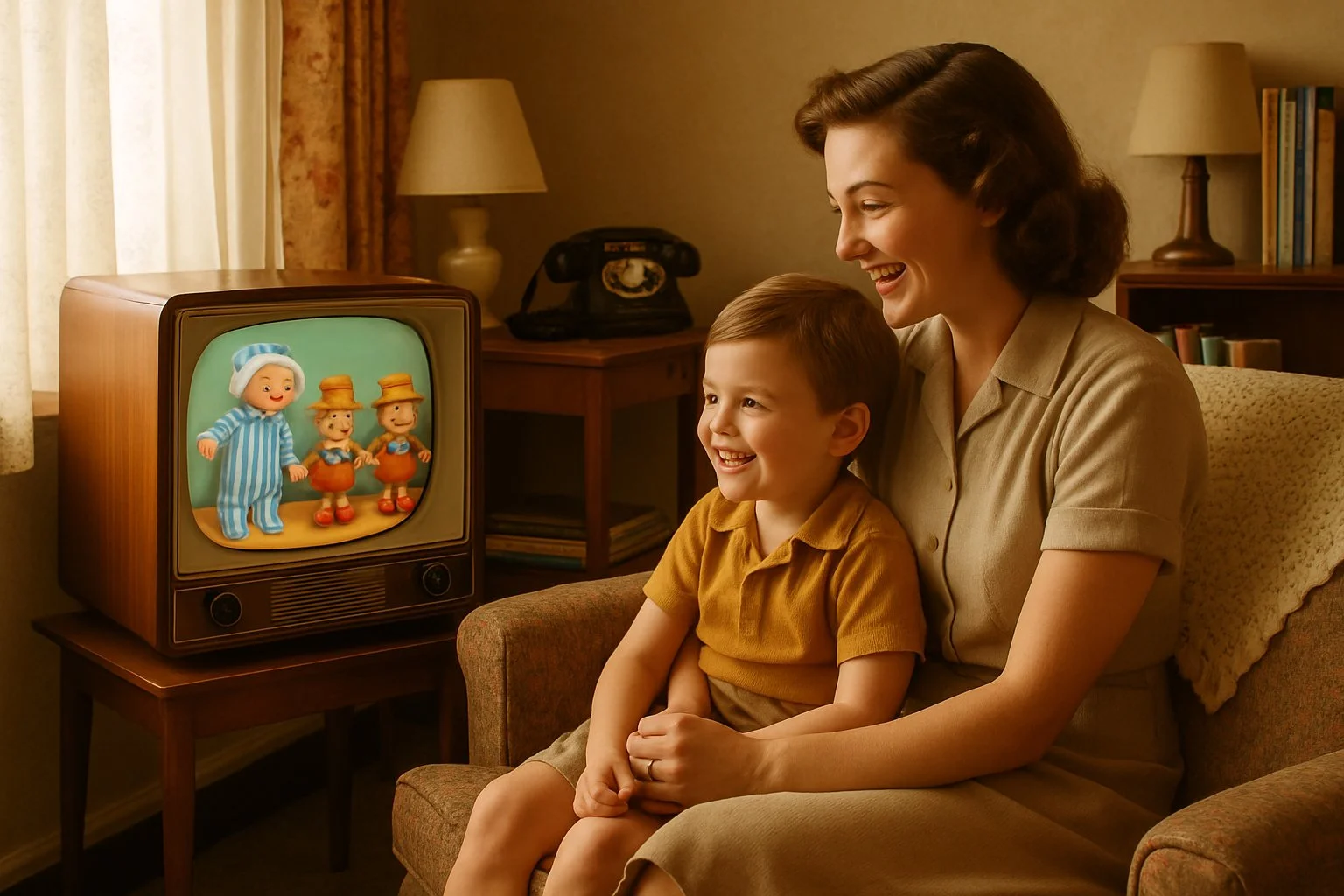
Families soon got used to a weekly routine. Andy Pandy showed up on Tuesdays, Bill and Ben on Wednesdays, and other favourites filled the rest of the week. Each show had only about 26 episodes, all shot in black and white, and the BBC just kept them on repeat in six-month cycles to save money—though honestly, the kids never seemed to mind.
What really made these shows tick was their gentle touch. The BBC, working with not much spare cash but plenty of heart, created stories and characters that soothed and entertained little ones, while mums could sit close by, maybe with a cup of tea.
How Andy Pandy and Bill & Ben Became Afternoon Favourites

In those early days, two puppet shows just stole the show for British families. Andy Pandy made his entrance in 1950, then Bill and Ben followed in 1952, and together they shaped the rhythm of so many afternoons.
Andy Pandy: The Original Star
Andy Pandy first appeared on TV screens on 11 July 1950, wearing that unmistakable blue and white striped suit—kids could spot him a mile off.
He hung out with Teddy and Looby Loo, just doing the sort of things little ones did: pushing prams, riding trikes, or pottering around the garden. The simplicity was the magic.
The BBC only filmed 26 Andy Pandy episodes, stretching their tiny budget as far as it would go. They just kept cycling those same episodes every six months, and honestly, the kids never seemed to tire of them.
Tuesdays meant Andy Pandy at 1:30 pm, after nap, before the older siblings thundered in. It was a little oasis in the day.
Bill and Ben: The Flower Pot Men Phenomenon
Bill and Ben showed up in December 1952. These two identical puppets—made from flowerpots, with chunky gloves and boots—were pure 1950s charm.
They lived at the bottom of a garden, with Weed popping up between them. And that language! Gibberish that somehow made perfect sense to any four-year-old.
Wednesdays belonged to Bill and Ben. Like Andy Pandy, there were just a handful of black-and-white episodes, repeated endlessly. But you always knew what was coming, and there was something comforting about that.
The Unique Charm of 1950s Puppet Shows
These puppet shows thrived on their simplicity. Black-and-white film, easy storylines, and just enough action for little minds to follow.
The BBC wanted parents to watch alongside their children. Even the title, Watch with Mother, was a gentle nudge: “Hey, telly’s not replacing you. It’s just a new friend.”
Repetition was more than a money-saving trick—it helped kids learn. They’d remember what came next, feel clever, and get that lovely sense of security from seeing old friends again and again.
Watch with Mother: The Making of a British Institution

The BBC’s first real foray into toddler TV came from a lot of planning and a genuine wish to reach those youngest viewers at home. The patterns they set up would shape children’s telly for years—maybe decades.
Origins and Vision for Preschool Television
Watch with Mother started as a bit of an experiment in summer 1950. Before that, TV for kids had always been a bit broader—For the Children had run since 1946, but this was something new, just for the little ones.
Freda Lingstrom and Maria Bird, both pioneers in children’s programming, dreamed up the whole thing. They took inspiration from Listen with Mother, a radio show that had kicked off earlier in 1950. TV’s afternoon slots had mostly been aimed at housewives, but now, they belonged to the children.
Andy Pandy led the way in these early trial runs, encouraging singing and dancing in front of the telly. The first four films did well enough that the BBC made more, repeating them every Tuesday afternoon under the title For the Very Young.
They picked the name Watch with Mother on purpose, keen to calm any nerves that TV might take over from proper parenting.
Classic Programming Schedule and Time Slots
By 1953, the service had bumped up to three afternoons a week, and Watch with Mother became the official title. Bill and Ben joined Andy Pandy that December, settling into the Wednesday slot.
September 1955 brought the classic five-day pattern:
- Monday: Picture Book
- Tuesday: Andy Pandy
- Wednesday: The Flower Pot Men
- Thursday: Rag, Tag and Bobtail
- Friday: The Woodentops
At first, shows aired between 3:45 and 4:00 pm—just before the older kids got home. That stuck through the ’50s and into the ’60s, though by the mid-60s, they sometimes moved to 10:30 am or 1:30 pm, or even both.
Other Memorable Programmes of the Watch with Mother Era
Andy Pandy and Bill & Ben were the kings of Tuesdays and Wednesdays, but three other shows rounded out the Watch with Mother week. The Woodentops brought family life to Fridays, Picture Book sparked little imaginations on Mondays, and Rag, Tag and Bobtail delivered gentle animal tales on Thursdays.
The Woodentops: Family Life on Fridays
The Woodentops joined the lineup in September 1955, finally making Watch with Mother a full week’s treat. The show followed a wooden family on their farm, with Mummy, Daddy, the kids, and of course, Spotty Dog—possibly the real star of the show if you ask me.
Episodes just showed family life: chores, play, and those tiny dramas that felt huge when you were little. All in black and white, just a couple dozen episodes, endlessly repeated. The Woodentops lasted well into the late ’70s, which is kind of amazing.
Fridays at 1:30 pm, right in that sweet spot between nap and teatime.
Picture Book: Creative Mondays
Picture Book did things differently. No puppets, no animation—just real people talking directly to the kids, telling stories, and showing them how to make things.
It started Mondays in 1955 and quickly became a favourite. There were paper lanterns, bush babies, and all sorts of crafty ideas. The presenters talked right to you, like a friendly auntie sharing her secrets.
Picture Book was about more than just watching—it made you want to grab some paper and scissors and join in. It’s hard not to feel a bit wistful remembering that.
Rag, Tag and Bobtail: Animal Tales
Rag, Tag and Bobtail joined the party in September 1953, airing on Thursdays. A hedgehog, a mouse, and a rabbit—simple, stop-frame animated, and endlessly endearing.
They wandered through the countryside, solved tiny problems, and discovered nature’s little wonders. Titles like “The Hazel Twig” or “Snowballs” didn’t promise much, but somehow, they always delivered.
The BBC made just 26 episodes, but thanks to their shoestring budget, those episodes stuck around for years. The gentle pace was just right for sleepy pre-schoolers.
Tales of the Riverbank and Other Favourites
Tales of the Riverbank took over Monday afternoons in December 1963. Real animals—Hammy the Hamster, GP the Guinea Pig—having miniature adventures. It was a bit of a novelty, seeing actual creatures on screen instead of puppets.
As the ’60s and ’70s rolled on, more shows joined the Watch with Mother family. Camberwick Green popped up in 1966, bringing a whole village to life on Mondays. Trumpton followed in 1967, with that same lovely stop-motion look.
Bagpuss arrived in 1974, just 13 episodes, but what a mark it left—a saggy old cloth cat and his oddball shop friends. Those new shows slowly replaced the originals as the years went by. By 1978, the Watch with Mother name faded away, replaced by “See-Saw.” But the memories? Well, those stuck around.
The Enduring Legacy of 1950s Children’s TV
The trailblazers of the 1950s set the mould for kids’ television—a mould that would shape what came after, for better or worse.
How These Shows Shaped British Childhoods
Watch with Mother became part of the daily routine for so many British families. Tuesday was Andy Pandy, Wednesday was Bill and Ben, and every day had its own little TV friend.
The stories were gentle, the lessons simple. Andy Pandy got you moving, Bill and Ben’s garden antics taught a bit of problem-solving.
The BBC wanted parents in the room, not off doing chores. Watch with Mother was meant to keep telly from becoming a babysitter, and that idea really stuck for a while.
Kids watched the same episodes again and again, and that was the point. It helped with language, memory, and gave a sense of comfort—especially in those uncertain post-war years.
Influence on Future Programmes Like Camberwick Green
Those early puppet shows paved the way for more ambitious kids’ TV in the ’60s. Camberwick Green in 1966 took what worked—a gentle pace, memorable characters—and gave it a new twist with stop-motion animation.
Many of the folks behind the ’60s and ’70s classics had cut their teeth on Watch with Mother. They kept the spirit alive: educational, but always a bit of fun. That slow, careful storytelling stayed a staple of British children’s TV for years—and honestly, I sometimes wish it still did.
The Role of Early Characters Like Muffin the Mule
Muffin the Mule actually showed up before Watch with Mother was even a thing, making his debut way back in 1946. He’d bounce around on his strings with Annette Mills at the piano, while she spun stories about his latest mischief.
Muffin drew kids in like nothing else on TV back then. The BBC, seeing how much children loved this odd little mule, felt bold enough to try more shows starring puppets and playful creatures. Maybe without Muffin’s early charm, Andy Pandy and the Flowerpot Men wouldn’t have made it past a meeting room.
Honestly, Muffin proved you didn’t need fancy effects or glossy sets—just a good story and a character kids could care about. Even with his wobbly legs and obvious strings, children adored him. That must’ve been a relief for producers, letting them focus on heart and imagination instead of technical wizardry.






Leave a Reply