
Imagine your weekly routine suddenly cut down to just three days, with the rest spent in darkness and uncertainty.
In January 1974, Britain’s government imposed a three-day working week that forced the entire nation to operate part-time, limiting businesses and households to electricity for only three consecutive days each week.
This wasn’t some planned holiday or a gentle nudge toward modern simplicity—it was a desperate measure, a scramble in response to coal miners’ strikes and a worldwide energy crunch that left even the most industrialised nation fumbling for matches in the dark.
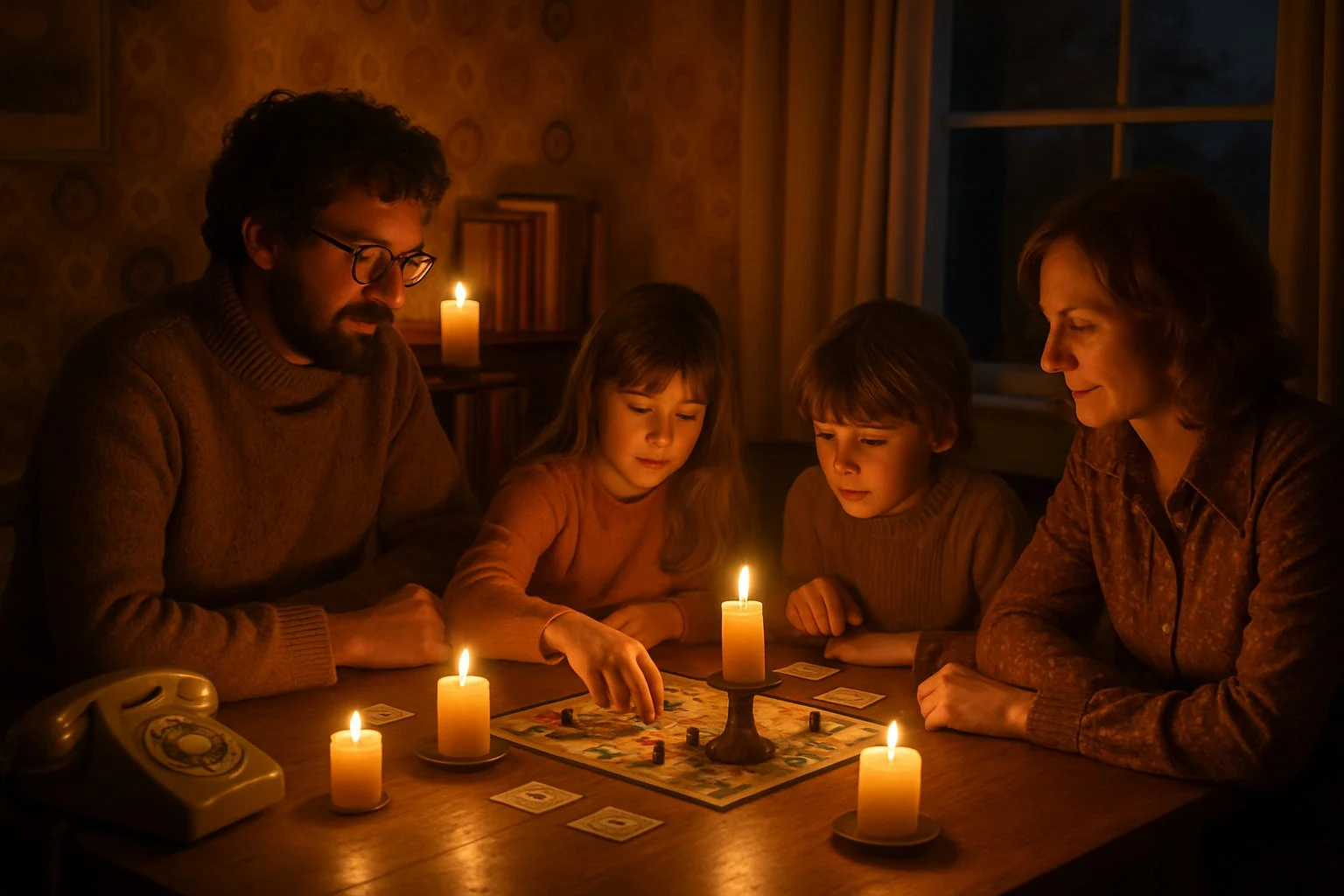
For more than two months, we lived in a country where television broadcasts cut out at 10:30pm, families clustered around candles, and board games suddenly became the highlight of the evening.
The whole thing started with a storm of labour disputes, global oil shocks, and a few political blunders that would eventually send Prime Minister Edward Heath packing.
The Three-Day Week: Origins and Key Players

The Three-Day Week didn’t just happen. It came crashing in thanks to a mess of oil shortages and homegrown labour unrest. Edward Heath’s government found itself squeezed by Arab oil embargoes and striking miners who basically held the keys to the nation’s energy.
Why the Three-Day Week Was Introduced
In October 1973, Arab oil producers announced an embargo against Israel’s Western allies during the Yom Kippur War, and oil prices shot up—almost overnight.
Britain felt the hit especially hard. We’d started swapping coal for imported oil back in the ’60s, but coal still made up a massive chunk of our energy at the start of that decade.
Right as the oil squeeze hit, miners began fighting for better pay. The National Union of Mineworkers (NUM) slapped on an overtime ban in November 1973, and coal production nosedived just when we needed it most.
Edward Heath’s government declared a state of emergency. The Three-Day Week kicked off on 1 January 1974. Businesses could only use electricity three days a week—no exceptions.
Television signed off at 10:30pm to save power. Street lights dimmed. Offices and shops shivered at a chilly 63°F (17°C).
Key Political Figures and Influencers
Edward Heath was the Conservative Prime Minister steering the ship straight into the storm. He tried to juggle the economy and the unions, but it didn’t go well.
Heath called a snap election in February 1974, asking the public, “Who governs Britain?”—the government or the unions. That gamble fell flat.
Harold Wilson took over for Labour, forming a minority government. He got right down to business, negotiating with the miners and moving to end the Three-Day Week.
Peter Walker, Trade and Industry Secretary, stood up in Parliament and insisted the government had seen this coming. He said they’d already started working on North Sea oil and nuclear energy.
Wilson didn’t go for confrontation like Heath. He struck a pay deal with the miners pretty quickly.
The Role of the National Union of Mineworkers
The NUM, led by Joe Gormley, pretty much held the nation’s power supply in their hands. Coal still ran much of Britain’s electricity in ’74.
The miners wanted big pay rises to keep up with inflation and to get some recognition for their dangerous work.
Their overtime ban in late ’73 slashed coal production by 40%, making the oil crisis sting even more.
In January 1974, the miners voted for a full strike. That really turned up the heat on Heath’s government.
When Labour came in, they offered the miners a 35% pay increase. The NUM agreed in March 1974. The Three-Day Week ended, and the country lurched back toward normal.
The Coal Crisis and Energy Shortages

Britain got hit from both sides in 1973-74: coal production tanked from industrial action, and oil prices soared. With electricity supplies stretched thin, the government had to act fast.
Coal Production and Industrial Action
The National Union of Mineworkers had grown more militant after years of stagnant wages. By 1973, miners’ pay lagged behind other industrial workers, even though coal still powered the country.
What set things off:
- Miners pushed for a 35% pay rise in late 1973
- The government stuck to modest offers, citing wage restraint
- NUM members voted overwhelmingly for action
When the union imposed an overtime ban in November 1973, coal production nearly halved. It wasn’t a full strike, but it did the trick.
Coal-fired power stations, the backbone of Britain’s electricity, ran low on fuel. The NUM’s game plan was obvious—drain the reserves before calling a full strike.
In January 1974, miners voted 81% in favour of a national strike. It began on 5 February, cutting off new coal to power stations everywhere.
Oil Crisis and Global Influences
The oil crisis in ’73 made a bad situation worse. Oil prices leapt nearly 400%—from $3 to $12 a barrel between October and March.
Arab oil producers clamped down after the Yom Kippur War. Britain dodged the worst of the embargo by keeping American forces off our bases, but the price hikes still hurt.
Switching from coal to oil for power? Not really an option. Both fuels were running short and costing a fortune.
The timing couldn’t have been worse. As the miners dug in, the world’s energy markets spun out of control.
Impact on Electricity Supply
Electricity supply buckled under the pressure. The Central Electricity Generating Board scrambled to keep the lights on with fuel stocks running low.
Emergency steps:
- Cut grid voltage by 6%
- Disconnected 10-15% of homes for up to nine hours a day
- Rationed power to essentials
By December ’73, Heath realised they had to do something drastic. Rather than risk total blackouts, he announced the Three-Day Week would start on 1 January 1974.
Commercial and industrial electricity use got capped at three consecutive days a week. The idea wasn’t just to save power—it was to stretch what little coal remained.
Even TV had to play along. BBC and ITV were ordered to shut down at 10:30 PM to save electricity.
Daily Life During the Blackouts
The three-day week turned daily life upside down. Power cuts meant families had to plan meals and chores around the electricity schedule, and schools and businesses often closed up shop early when the lights faded.
Adapting to Power Cuts at Home
Families learned fast to work around scheduled power cuts, which could last up to nine hours. Cooking became a race against the clock—if the power went at 9pm, you’d better hope dinner was already done.
Candles were gold. Most of us huddled in one room, especially if we had a gas fire. Camping gas lanterns gave off a better glow than candles for moving about.
Laundry turned into a real pain. Washing machines would grind to a halt mid-cycle, leaving soggy clothes trapped inside. Newspapers like the Glasgow Herald published power cut timetables, and we’d try to time the wash accordingly.
Shopping got weird. Some shops stayed open by candlelight, which felt almost magical, but most just shut early. Forget popping out for coffee or running errands during a blackout.
Working by Candlelight and New Routines
Office workers often got sent home early when the power died. No lifts, no typewriters, no lights—so what could you do?
Students slogged through homework by candlelight, squinting over textbooks in the flicker. Not exactly fun.
Evening entertainment got a shakeup:
- TV vanished when the power cut out
- Families dusted off board games
- Hide and seek became blackout adventures
- Radios ate through batteries
The schedule was predictable, but the hours dragged. Sometimes it just felt endless.
School and Business Closures
Schools sent us home early when the power went off. We’d walk in to cold houses and cold sandwiches—no hot meals when the cooker was dead.
Factories and businesses ran on strict three-day shifts. That meant shorter hours and lighter pay packets for a lot of families.
Places that often closed:
- Shops without backup power
- Offices in tall buildings
- Factories that needed heavy electricity
Teachers struggled to run classes without lights. Many schools just cancelled lessons instead of risking accidents in dark halls.
Community and Leisure: From Board Games to Candlelit Evenings
The power cuts of 1974 nudged families back towards simpler pleasures and tighter neighbourhoods. Blackouts became a reason to gather, swap stories, and play games by candlelight—something kind of magical, in hindsight.
Making the Best of Power Outages
When the lights snapped off, we adapted. Candles became precious, set around the sitting room to carve out little islands of warmth.
We kept torches close, though batteries were a hot commodity. Gas cookers still worked, so at least we could brew tea or cook something basic when the grid went down.
Must-have blackout kit:
- Candles and matches (never enough)
- A battery radio for news
- Torches with spare batteries
- Board games and a dog-eared pack of cards
- Books for reading aloud
You never really knew when the next blackout would hit. Some families made it into a bit of an adventure—why not, with nothing else to do?
Family Time: Board Games and Shared Activities
No television, no electric gadgets—so we remembered how to have fun together. Board games that hadn’t seen daylight in years suddenly became the main event.
Monopoly, Scrabble, and cards filled the evenings. Someone would read stories aloud, or we’d try silly voices for the characters.
Sometimes, families gathered around a piano or sang together. If the radio still had juice, we’d listen for news and music, hoping for updates on when the power would come back.
Favourite blackout pastimes:
- Whist and Rummy
- Charades and word games
- Reading stories by candlelight
- Ghost stories that felt a bit too real in the dark
- Playing whatever musical instruments were around
Those moments brought everyone together, grandparents and kids alike. Old games got passed down, and laughter filled the room.
Stories of Resourcefulness and Togetherness
Neighbours looked out for each other. We shared candles, batteries, and warm food with elderly folks who struggled with the cold.
Some streets threw impromptu gatherings in the houses with fireplaces. Everyone brought their own candles and snacks, and somehow, it felt like a party.
Kids still talk about those nights—dinners by candlelight, staying up late for games, the thrill of it all. It wasn’t easy, but it was memorable.
Turns out, you didn’t need electricity to have a good time. Conversation, laughter, and just being together beat anything on TV.
Local pubs with gas lights became community hubs. Chess matches and storytelling took over where the telly left off.
Economic and Social Impact Across Britain
The three-day week threw a wrench in the works for everyone—factory workers, office staff, families just trying to get by. Industries struggled, and families faced tough choices during some of the coldest months of the year.
Business Disruption and Unemployment
Factories and offices only ran three days a week. In some industries, production dropped by nearly 40%. Manufacturers scrambled to fill orders, but deadlines slipped.
Essential services kept running—hospitals, food shops, emergency crews. But for everyone else, electricity use was strictly rationed.
A lot of workers found themselves at home, whether they liked it or not. Some companies couldn’t pay for the extra downtime, so folks got laid off or took pay cuts.
The car industry took a beating. Ford and British Leyland scaled back, and steel production dropped since furnaces couldn’t run around the clock.
Women in essential jobs like nursing and teaching kept working as usual, but men in heavy industry saw their routines upended.
Government Measures and Media Response
Prime Minister Edward Heath’s Conservative government rolled out strict electricity controls in December 1973. Shops and factories only got power for three specific days each week, between 9am and 5pm. That felt surreal, honestly—like the world had shrunk to a few lit hours.
Television broadcasting took a hit too. BBC and ITV wrapped up their programmes earlier in the evening, leaving families with little to do but talk or read by candlelight. If you were a kid, it was either magical or maddening, depending on your mood.
The media hustled to keep everyone in the loop. Newspapers printed weekly timetables showing which neighborhoods would lose power and when. The Glasgow Herald and other local papers became lifelines, helping folks plan around the disruptions.
Posters plastered everywhere urged people to save energy at home. The government wanted everyone thinking twice before flipping a switch or cranking up the heat.
Long-Term Effects on Society
The three-day week officially ended in March 1974, but its shadow hung around for ages. People got used to keeping candles and torches close by, just in case. That whole episode left a mark—a sort of collective nervousness about energy running out.
Political consequences came fast and hit hard. Heath tried to settle things by calling a general election, asking, “Who governs Britain?” Labour squeaked by with a win, and a lot of folks blamed the chaos for tipping the scales.
Industrial relations would never be quite the same. Trade unions started flexing more muscle, and companies began poking around for other ways to keep the lights on. The whole country suddenly realized just how much it relied on coal.
Kids from that era sometimes talk about the blackouts with a weird kind of fondness—like it was all one big adventure. For the grown-ups, it was mostly shivering in cold houses and scrambling to keep work going. Still, there was something about it that brought neighbors together, even as it showed just how rickety Britain’s infrastructure really was.
Political Fallout and National Memory
The Three-Day Week rattled British politics, toppling Edward Heath’s government and bringing Harold Wilson back to No. 10. It really changed how voters saw the Tories’ approach to strikes and Labour’s ties with the unions—maybe for good.
General Elections and Policy Changes
Heath’s gamble—a snap election in February 1974—didn’t pay off. He campaigned with “Who governs Britain?” hoping voters would back him over the miners.
The results stunned everyone. The Conservatives actually got more votes (37.9% to Labour’s 37.2%), but they lost their grip on Parliament. Labour ended up with 301 seats, the Tories with 297.
Wilson’s first moves as Prime Minister:
- Called off the Three-Day Week on 7 March
- Gave the miners a hefty 35% pay raise
- Got working life back to normal from 8 March
By October 1974, Labour scraped out a tiny majority—just three seats. Wilson and his team leaned hard on their role in settling the miners’ strike to win support.
Those wild months shaped energy policy for years. When Margaret Thatcher took office in 1979, she made sure to stockpile coal before going head-to-head with the miners in 1984-85. Funny how the past never quite lets go, isn’t it?
How the Blackouts Shaped Public Opinion
The power cuts stuck in British voters’ minds—memories of kids squinting over homework by candlelight and shops closing early, all because the electricity just wasn’t there. You could almost hear the collective sigh of frustration.
Heath’s team, poring over cabinet papers, worried they’d look soft. They kept asking themselves if easing up would just embolden the miners and make them look like they’d lost their grip in the eyes of the public.
Labour tried to tap into those memories during the 1979 election. Their ads poked: “Remember the last time the Tories said they had all the answers?” A bit cheeky, really.
But honestly, that plan fizzled. By then, the Winter of Discontent had left Labour looking battered. The Conservatives came out swinging with their “Labour Isn’t Working” campaign, and, well, that one hit home. Suddenly, it was Thatcher at Number 10.
People started using “Three-Day Week” as a kind of shorthand for all the mess of the ’70s. It summed up the feeling that, no matter who was in charge, nobody seemed able to keep things running—or just keep the lights on.






Leave a Reply