
The late 1960s—what a wild, kaleidoscopic time that was. Young people all over America (and honestly, the world) just kind of shrugged off the old rules and chased after peace, love, and radical self-expression.
Hippie beads became more than just accessories; they felt like tiny badges of rebellion, a way to say “I’m not buying into all that material stuff.” And flower power? That was the softer, sweeter face of revolution, whispering about non-violence and harmony with the planet.
Haight-Ashbury’s streets buzzed with energy, massive peace protests rumbled against the Vietnam War, and a whole generation turned the world into their own psychedelic playground. It’s almost hard to believe how much they rattled the cage—youth, politics, even the way people thought about consciousness itself.
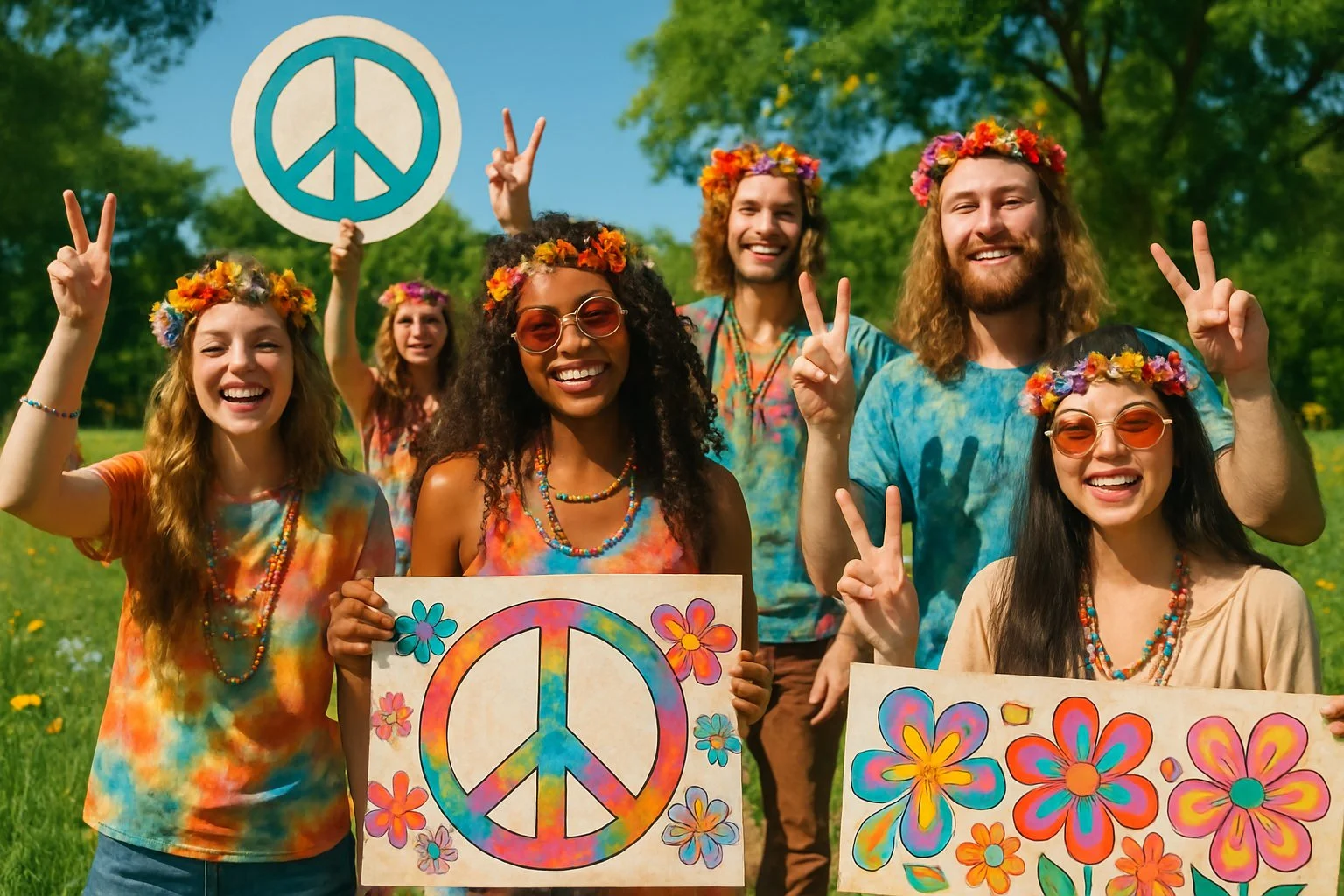
It’s kind of amazing how something as simple as a string of beads or a handful of flowers could become the uniform for a generation dead set on changing the world—armed with love instead of fists. The hippie movement? It wasn’t just about groovy clothes or trippy music. It was a whole new blueprint for living together—communes, wild art, a spiritual mashup, and a stubborn belief in social justice.
Let’s take a trip back to those days—when Golden Gate Park was a living, breathing festival, when protestors tucked daisies into rifle barrels, and when a generation honestly thought they might just turn the world upside down with peace, a few mind-bending experiences, and a rainbow of beads draped over their shoulders.
The Essence of Hippie Beads and Flower Power

Hippie beads and flower power—those were the trademarks of the 1960s counterculture. Looking back, you can see how these bright little tokens and gentle philosophies shook up the way people talked about love, peace, and freedom.
Symbolism of Beads and Flowers in Hippie Culture
Those beads? They weren’t just pretty. Each one seemed to carry a bit of hope for peace and unity. Flower-shaped pendants popped up everywhere, quietly shouting about non-violence and love.
Wearing long, colorful strands of beads was a way to say, “I don’t care about your rules.” It was about belonging to something bigger, a tribe that didn’t fit inside the usual boxes.
And flowers—well, they packed even more punch. Daisies, roses, whatever you could find, suddenly meant peace, not war. Flowers were weapons, but only in the sense that they fought with beauty.
The image of protestors slipping flowers into gun barrels? That’s the kind of thing that sticks with you. It was so simple, but it said everything: love beats hate, every time.
Origins and Popularisation of Flower Power
Allen Ginsberg, the poet, dreamed up “flower power” back in 1965 as a kind of non-violent jab at the Vietnam War. The phrase caught on like wildfire.
San Francisco, especially Haight-Ashbury, became the epicenter. That neighborhood turned into a magnet for anyone chasing peace and freedom.
By the time the “Summer of Love” rolled around in ’67, the movement exploded. Young people poured into San Francisco with flowers tucked into their hair. Scott McKenzie even sang about it, and suddenly, everyone wanted to be part of it.
Berkeley’s Vietnam protests helped the idea travel. Students everywhere started flashing flowers as their protest signs. Ginsberg’s poetic dream became something you could see and touch on the streets.
Influence on Fashion and Everyday Life
Hippie beads didn’t just change wardrobes—they kind of rewrote the rules. Out went the stiff, expensive jewelry; in came handmade, colorful strings that felt more like souvenirs from a far-off adventure than accessories.
People layered beads on their necks, wrists, even their heads. It was a way of saying no to materialism, yes to creativity. Some beads came from halfway around the world, showing off the hippie fascination with Eastern philosophy.
Flower power wasn’t just about what you wore, either. Fresh blooms showed up everywhere—on clothes, in hair, even on kitchen tables. It was like nature itself got invited to the party.
Social rituals shifted, too. Instead of stiff greetings, people started saying “peace and love.” Flowers became everyday tokens of friendship, not just romance.
Psychedelic Playground Days in Haight Ashbury

Haight-Ashbury—man, just the name brings back a flood of color and noise. In the 1960s, that corner of San Francisco transformed into a living, breathing experiment in peace, love, and mind-bending experiences.
Haight and Ashbury: The Heart of Hippie Culture
Haight and Ashbury Streets—those crossroads became the heartbeat of flower power. By ’67, the Summer of Love had packed over 100,000 people into this little slice of San Francisco.
Victorian houses turned into rainbow-painted communes. The streets filled with young people in flowing caftans, Indian beads, and flower crowns.
Sharing was the name of the game. The Diggers ran free shops—need clothes or food? Just take what you need, no cash required.
Music poured from every doorway. The Grateful Dead, the Doors, Jefferson Airplane—they all called this place home.
Barefoot, bearded residents set up their own employment agencies and food networks. Buildings got splashed with wild, swirling colors that matched the psychedelic mood.
Golden Gate Park Gatherings
Golden Gate Park—now that was our playground. Love-ins, be-ins, you name it, we gathered there to share music, poetry, and a little philosophy.
We’d hold peaceful protests out in the open, flowers front and center. The Monterey Pop Festival handed out over 200,000 flowers in just three days—imagine the scent!
Sometimes the cops tried to move us along, but we’d just smile and tuck flowers on their cars. It was all about turning confrontation into connection.
Summer days meant dancing around bandstands, sometimes even when the police bands played. We could turn any old patch of grass into a party.
Role of the Haight-Ashbury Switchboard
The Haight-Ashbury Switchboard was our lifeline. If you needed a place to crash, a bite to eat, or a little medical help, you called the Switchboard.
They kept lists of open rooms and crash pads—pretty essential when the crowds just kept coming.
It went beyond just finding a bed. The Switchboard helped people hunt down jobs, legal advice, even drug counseling.
Need to know where the next gathering was? The Switchboard had your back. It wasn’t official, but it sure felt like the heart of the neighborhood.
And when folks needed to step back from the edge—maybe get clean or find their way home—the Switchboard quietly helped them out.
The Summer of Love and Its Iconic Moments
The Summer of Love—1967. Close to 100,000 young people flooded into Haight-Ashbury, and for a little while, it felt like anything was possible. Peace, love, and a wild mix of dreamers and drifters built new communities, flipping the script on what society was supposed to look like.
1968: A Year of Countercultural Change
The Summer of Love’s energy didn’t just disappear when the calendar flipped. 1968 brought new storms—some of them pretty dark. The Vietnam War ramped up, and the movement’s optimism started to wobble.
Big moments from ’68:
- Martin Luther King Jr. assassinated in April
- Robert Kennedy gone in June
- Anti-war protests at the Democratic National Convention
- The hippie dream clashing with gritty politics
Flower power took on a sharper edge. A lot of us moved from mellow gatherings to active protest.
Drugs, once a kind of spiritual key, turned into a heavier burden for some.
And the media? They took what was real and turned it into fashion, slogans, and marketing. Suddenly, what felt authentic started showing up in department store windows.
The Gathering of Flower Children
That summer, Haight-Ashbury became a magnet for thousands of flower children. They came chasing freedom and something different from what they’d known back home.
The Human Be-In at Golden Gate Park in January ’67 drew over 20,000. That event pretty much kicked off the Summer of Love before summer even showed up.
What did flower children actually do?
- Wore handmade jewelry and the loudest, happiest clothes
- Shared food and resources in makeshift communes
- Made art and music on every street corner
- Joined protests, but always with a peaceful vibe
Music and art glued everyone together. Jefferson Airplane and the Grateful Dead were the soundtrack.
Seed bead bracelets and other handmade trinkets turned into little declarations against materialism—a nod to creativity over cash.
The Role of Transients in the Community
Thousands of transients rolled into San Francisco, hoping to live the hippie dream. Some came with nothing but a backpack and a head full of hope.
Many expected free food and a place to crash. The established hippie crowd tried to help, but it wasn’t easy.
Crash pads and communal houses sprang up all over Haight-Ashbury. Locals opened their doors to strangers who just wanted to belong.
But this flood of newcomers brought headaches:
- Overcrowded houses
- Stretched resources
- More drug problems and the usual petty crime
- Friction between old-timers and the new arrivals
A lot of these folks didn’t stick around long. Some moved on, but others dug in and became part of the scene.
And when they left San Francisco, they didn’t go empty-handed. They carried the hippie spirit—fashion, music, new ideas—back to wherever they called home.
Peace Protests and Social Revolution
The hippie era shook up the way we protested—suddenly, dissent was creative, colorful, and (most of the time) nonviolent. Flowers weren’t just for show—they became tools of peace. And the music? It was the heartbeat of a generation that wanted change.
Nonviolent Demonstrations and Peace Marches
The 1960s peace protests—wow, those were something. People started using flowers as their answer to violence, especially with the Vietnam War raging.
Allen Ginsberg dreamed up “flower power” in 1965, urging protestors to hand out flowers instead of throwing punches.
How did peaceful protest look?
- Slipping flowers into soldiers’ rifles
- Rocking daisy chains at marches
- Burning draft cards in public
- Sitting in at government buildings
That moment at the Pentagon in October ’67—thousands of protestors putting flowers in MPs’ weapons—still gives me chills. It’s the kind of image that sticks.
Huge peace marches pulled in crowds by the hundreds of thousands. The March on Washington in ’63 had over 250,000. Later, antiwar rallies got even bigger.
TV cameras caught it all—kids offering flowers to cops, not fists. It was a different kind of revolution, and the world noticed.
Music as a Tool for Protest
Music was the real megaphone for the movement. Artists didn’t just play for fun—they sang about war, freedom, and the need for change.
Bob Dylan’s “Blowin’ in the Wind” asked questions everyone was afraid to answer. Joan Baez sang at protests, her voice carrying hopes for peace and justice.
Acid rock became the soundtrack for rebellion. Bands like Jefferson Airplane and The Grateful Dead pumped out sounds as wild as the times themselves.
| Artist | Key Protest Songs | Impact |
|---|---|---|
| Bob Dylan | “The Times They Are a-Changin’” | Became anthem for change |
| Country Joe McDonald | “I-Feel-Like-I’m-Fixin’-to-Die Rag” | Anti-Vietnam War classic |
| Jimi Hendrix | “Star Spangled Banner” | Reimagined national anthem |
Woodstock ’69—now there’s a memory. Over 400,000 people, three days of rain and mud, but also peace, love, and music.
It proved that psychedelic culture and protest could fit together. Bands played, speeches rang out, and for a moment, it felt like the world might actually listen.
Artistic Expression and the Psychedelic Movement
Psychedelic art—now that was a trip. Posters for concerts and rallies swirled with color, practically vibrating off the walls.
LSD and other mind-bending substances fueled the movement, opening new doors and making people question everything.
What made psychedelic art pop?
- Eye-popping colors
- Swirling, hypnotic shapes
- Flowers, peace signs, and a whole lot of nature
- Nods to Eastern spirituality
Underground comics spread the word in vivid, irreverent ways. Robert Crumb’s characters poked fun at authority and celebrated freedom.
Murals covered city walls with peace symbols and anti-war messages. Art wasn’t just for galleries—it spilled out onto the streets.
Body painting? Absolutely. Flowers, rainbows, peace signs—people wore their beliefs right on their skin at protests and parties.
The psychedelic movement taught us that changing how you see the world can change the world itself. Art became a passport to new possibilities, somewhere far beyond war and the rat race.
Drugs, Music, and the Culture of Psychedelia
The psychedelic movement of the 1960s—what a wild, unforgettable mix that was. LSD cracked open doors of perception, acid rock blared from battered speakers, and legends like Jimi Hendrix, Janis Joplin, and George Harrison somehow became the voices of a generation desperate for something bigger, stranger, and more meaningful than what their parents had known.
LSD and Its Cultural Impact
LSD landed right at the heart of hippie culture in the mid-1960s. Suddenly, this strange little tab promised not just a new way to see the world, but maybe even the chance to remake it.
Key Effects on Hippie Culture:
- Reality and spirituality got a complete overhaul
- People shared mind-bending experiences that glued communities together
- Art, fashion, and everyday life started to look a lot weirder (and more colorful)
LSD’s influence drifted out of San Francisco’s Haight-Ashbury and just kept spreading. The Trips Festival in January 1966—now that was a scene—turned private trips into public celebrations.
Ken Kesey and his Merry Pranksters, with their infamous bus, made acid culture feel like a cross-country adventure. They convinced thousands that drugs could be more than just a party—they could be a kind of self-discovery.
The Psychedelic Shop popped up in Haight-Ashbury, aiming to clue people in about LSD. But then California outlawed the drug in October 1966, so the whole thing went underground. That only made it feel more rebellious, honestly.
Acid Rock and Psychedelic Soundtracks
Acid rock didn’t just arrive—it crashed the party and took over the speakers. Suddenly, music was all about fuzzed-out guitars, strange effects, and lyrics that tried to capture what it felt like to have your mind blown wide open.
Characteristics of Acid Rock:
- Heavy distortion and feedback that made your ears ring
- Extended solos—sometimes you’d lose track of time completely
- Surreal lyrics about dreams, visions, and the other side of reality
- Light shows that turned concerts into sensory overloads
The Monterey International Pop Festival in June 1967 shoved acid rock into the mainstream. Bands pushed the limits with new sounds—volume, effects, studio tricks you’d never heard before.
Acid rock concerts felt almost spiritual. The music and the drugs fed off each other, and for a while, it seemed like anything was possible.
Recording studios became playgrounds for the truly curious. Artists started messing with tape loops, backwards tracks, and all sorts of electronic weirdness, just trying to bottle the feeling of a trip.
Notable Figures: Jimi Hendrix, Janis Joplin, and George Harrison
Jimi Hendrix—what can you even say? He twisted guitar sounds into something nobody had ever heard. Monterey and Woodstock? Legendary. He didn’t just play; he set the stage on fire.
With songs like “Purple Haze” and “Are You Experienced?”, Hendrix somehow squeezed the chaos and beauty of an acid trip into a three-minute single. His guitar could sound like a rocket ship or a ghost, and it fit the times perfectly.
Janis Joplin brought a raw, aching soul to psychedelic music. Her voice—rough, bluesy, impossible to fake—made her the undisputed queen of San Francisco’s scene.
When she sang with Big Brother and the Holding Company, it felt like the whole Summer of Love was pouring out of her. Her early death in 1970—still hard to believe—became a symbol of the era’s highs and heartbreaks.
George Harrison took psychedelic music in a different direction. He brought Eastern sounds and ideas into The Beatles’ orbit, and suddenly millions of kids were curious about meditation and the sitar.
“Within You Without You” and his work on “Sgt. Pepper’s Lonely Hearts Club Band” gave psychedelic music a kind of legitimacy—if The Beatles were doing it, well, it had to be more than just a passing fad.
Legacy and Lasting Influence of the Peace Generation
The hippie movement didn’t just vanish after the ’60s. Its echoes still rattle around in modern activism and in the way neighborhoods like Haight Ashbury have changed (and changed again). Somehow, the ideals survived, even if the places didn’t.
From Flower Power to Modern Activism
Flower power was never just about daisies and slogans—it planted ideas that grew into today’s activist movements. You can still spot its fingerprints in how environmental protests borrow old-school peaceful resistance.
Modern climate activists picked up the hippie belief that the planet needs protecting. They march, they use symbols, and yeah, sometimes it feels like a throwback to beads and tie-dye.
Key connections include:
- Non-violent protest
- Environmental awareness
- Grassroots organizing
- Anti-war vibes
Social justice movements echo the old calls for equality and unity. The focus on love and questioning authority? That’s pure peace generation.
Young activists still wear peace signs and use art to get their point across. It’s not so different from how hippies used music, jewelry, and wild clothes to say what they believed.
Transformations in Haight Ashbury and San Francisco
Haight Ashbury today—well, it’s not the same. The neighborhood that once overflowed with young dreamers chasing another way of life now feels polished and pricey.
Head shops and communes? Mostly replaced by fancy cafés and boutiques. Property values shot up, and the artists and working-class families who gave the area its spark got squeezed out.
San Francisco as a whole has shifted, too. The city that threw open its arms for the Summer of Love now wrestles with sky-high housing costs.
A few original hippie businesses still hang on, mostly catering to tourists. Vintage shops and record stores linger as reminders—ghosts of the old counterculture.
Notable changes:
- Property prices through the roof
- Original residents pushed out
- More tourist traps than community spaces
- Real sense of something lost along the way
Cultural Reflections and Nostalgia
The hippie movement—hard to believe it’s been so many decades—still lingers in the corners of our closets, playlists, and even the ads we scroll past. Flower power pops up on shirts and festival banners, and every summer, it’s like the spirit of ’69 comes tiptoeing back.
Fashion designers can’t seem to let go of that 1960s vibe. Flowing fabrics, those wild floral prints, chunky handmade jewelry—they just keep cycling back, maybe because they remind us of a time that felt a bit freer, or at least that’s how the stories go.
Music festivals these days, with their peace signs and flower crowns, kind of chase after that communal buzz the original movement had. Sometimes it feels a little forced, but people still show up, hoping for a taste of that togetherness.
Museums and documentaries do their part too, stashing away artifacts and stories for anyone curious enough to look. They give us a window into how the peace generation rattled the status quo and offered up new ways to see the world.
But nostalgia’s got a selective memory, doesn’t it? The dreamy glow around hippie culture can gloss over the messier parts—drug use, exploitation, all the stuff that doesn’t fit on a festival poster.
Cultural elements that persist:
- Fashion trends
- Music festival culture
- Artistic expression
- Documentary preservation






Leave a Reply