
The 1960s—what a time to be a teenager in Britain. Bedrooms morphed into private music sanctuaries, thanks to those crackly little transistor radios, and Thursday nights meant crowding around the telly for Top of the Pops.
There was something about that mix—the hiss of the radio under your pillow, the flicker of the TV in a darkened room—that stitched pop music right into the fabric of growing up.
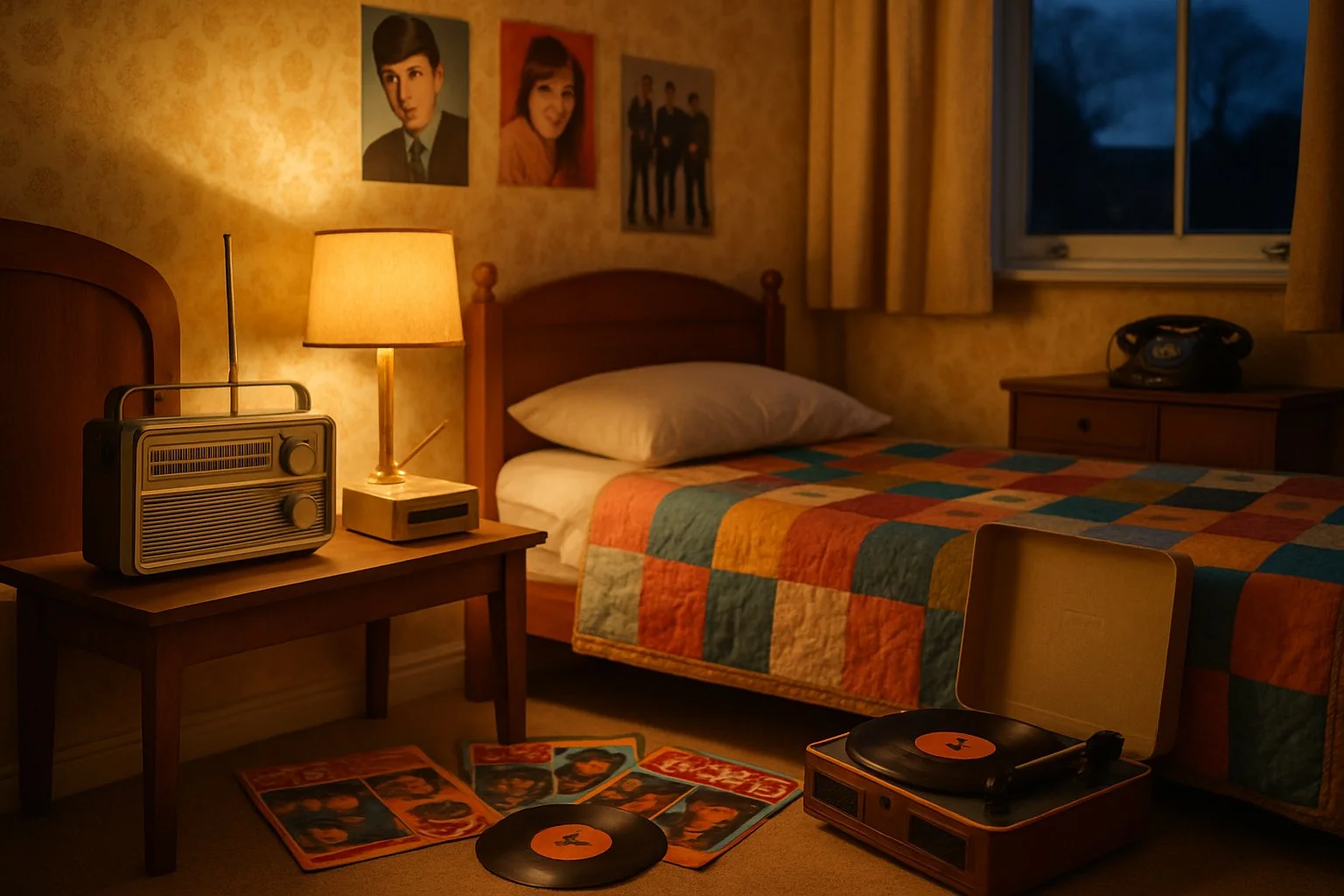
Transistor radios handed teenagers a kind of freedom we’d never really had before. Suddenly, you could dive into music on your own terms, tucked away from the rest of the house. And when Top of the Pops hit the air, it was like the whole country was invited to the same party, watching the week’s hits unfold in real time.
It’s hard not to get a bit wistful thinking about it—those nights shaped the way we fell in love with music, and honestly, I’m not sure anything since has quite matched the magic.
Transistor Radios: Soundtrack to ’60s Teen Bedrooms

Transistor radios really did change the game for British teenagers. Suddenly, your bedroom wasn’t just a place to sleep—it became your own little concert hall. You could listen to whatever you wanted, whenever you felt like it, and nobody needed to know.
The Popularity of Transistor Radios in the 1960s
In the ‘60s, transistor radios were everywhere. They were the must-have gadget—if you didn’t get one for Christmas, you probably knew someone who did. Japanese companies started flooding the market with cheap, cheerful models, and by 1963, over 10 million had sold in America. Britain was right there too, catching the wave.
Parents seemed to like them—they kept us busy and, let’s be honest, out of the way. Those radios were tiny, ran on batteries, and came in all sorts of colours. You could toss one in your bag or tuck it under your pillow.
What made them irresistible?
- Light as a feather, with plastic cases you could drop (and did)
- Batteries meant no fighting over plugs
- Built-in speaker, but that earphone jack—now that was gold
- Cheap enough for pocket money or Christmas
- Flashy colours, sometimes a bit garish (but we loved it)
Why Transistor Radios Changed Night-time Listening
Nighttime listening—now there’s a memory. The earphone was the real secret weapon. You’d sneak it under the covers, volume low, and drift off to the sound of your favourite DJ. Parents usually didn’t have a clue.
Before that, music was a family affair. Everyone sat around the big radio in the living room, and the grown-ups picked the station. Once you had your own transistor, though, you got to decide. You could tune in to Radio Luxembourg or a pirate station and discover songs your parents had never even heard of.
There was something special about those late-night hours—just you and the music, maybe scribbling down lyrics or dreaming of being on stage yourself. Sometimes you’d fall asleep with the radio still playing, batteries slowly dying by morning.
Iconic Brands and Models in British Homes
Certain brands just bring it all back. If you had a Roberts R200, you were the envy of the street—great sound, even if it cost a bit more. Bush, Ever Ready, Perdio… those names were everywhere.
| Brand | Notable Model | Key Feature |
|---|---|---|
| Roberts | R200 | Premium sound quality |
| Bush | TR82 | Compact design |
| Ever Ready | Sky Chief | Long battery life |
| Perdio | Portarama | Stylish appearance |
Japanese radios, like Sony’s, started showing up too, though they were pricier at first. Still, plenty of us had off-brand models from Hong Kong or Taiwan—maybe not as fancy, but they did the job.
And let’s not forget, we loved to personalise them. Stickers, paint, whatever made it ours.
Top of the Pops: Revolutionising Chart Music at Home

Top of the Pops—just saying the name brings back a rush of memories. When it first aired on New Year’s Day 1964, you could practically feel something shift. Suddenly, the week’s biggest hits weren’t just something you heard—they were something you saw, right there in your living room.
The Launch of Top of the Pops
That very first show, 1 January 1964, 6:35 pm—if you were there, you remember. Jimmy Savile hosted, and the line-up was stacked: Dusty Springfield, The Rolling Stones, Dave Clark Five, The Hollies, Swinging Blue Jeans. The Beatles closed it out with “I Want to Hold Your Hand.” What a way to kick things off.
The show had its rules—number one always finished the night, and only the top song could return week after week. It kept things fresh, even if it meant your favourite act sometimes missed a turn.
How Top of the Pops Made Chart Music Accessible
Top of the Pops brought the charts to life. Before that, you mostly had to imagine what your favourite bands looked like on stage, unless you could afford to buy the records or catch a rare TV spot. Now, every Thursday, you’d see the biggest stars—sometimes miming, sometimes live, but always unforgettable.
It made discovering new music easy. You’d sit there with friends or family, arguing over which song would climb next week. The show grew with us, starting with the Top 20, then Top 30, and eventually the Top 40. No need to buy every record or music paper—you just tuned in.
Why it worked:
- The weekly chart rundown was a must-see
- Live or mimed performances from the hottest acts
- Free, right in your living room
- The same time every Thursday—no guesswork
Memorable Top of the Pops Moments from the 1960s
The ‘60s were packed with moments we still talk about. The Beatles basically lived on the show for a while, and every appearance was an event. The Rolling Stones brought that wild, unpredictable energy—parents frowned, we cheered.
The Who, Dusty Springfield, Sandie Shaw—they all found a home on Top of the Pops. In 1966, the Musicians’ Union said no more miming, so we started getting real live performances, which just made it all feel more electric.
By the time the decade wound down, Top of the Pops was essential—if you missed it, you’d be out of the loop all week.
Chart-Topping Hits That Lit Up the Airwaves
Transistor radios made the charts feel personal. The biggest hits of the ‘60s weren’t just background noise—they were the soundtrack to homework, heartbreak, and daydreams. British bands were on fire, and you could feel it in every three-minute burst from your bedside table.
Defining Sounds of the British Charts
The British charts in the ‘60s had their own flavour—part American rock and roll, part pure homegrown magic. When Radio 1 arrived in 1967, it only cranked things up further.
Merseybeat led the charge, all jangly guitars and harmonies you couldn’t help but sing along to. The songs were short, catchy, and perfect for a quick dance around the bedroom.
What made them stick:
- Three-minute pop perfection
- Tight harmonies
- Unforgettable guitar hooks
- Beats you could move to
Motown made its mark, too—songs like “My Girl” and “Baby Love” floated in from across the Atlantic and fit right alongside the British hits.
Looking back, it felt like we were finally making our own stars, not just borrowing from America.
British Invasion Bands and Beat Groups
The Beatles—what can you even say? When “Love Me Do” and “Please Please Me” started spinning, everything changed. The Rolling Stones weren’t far behind, rougher around the edges, but just as compelling.
The big names:
- The Beatles
- The Rolling Stones
- The Kinks
- The Who
- Herman’s Hermits
The Kinks gave us that raw, fuzzy sound with “You Really Got Me.” The Who made every song feel like a mini-rebellion.
It wasn’t just the big two, either. The Hollies, Gerry and the Pacemakers, The Dave Clark Five—they all had their moments, and if you had a radio, you were right there for it.
Sing-Along Anthems Played in Bedrooms
Some songs just belonged in the bedroom, late at night. “Yesterday” by The Beatles—soft, melancholy, and somehow even more powerful through a tiny speaker.
Bedroom favourites:
- Slow ballads, perfect for winding down
- Lyrics you could actually follow (and maybe scribble in a notebook)
- Gentle instrumentals
- Love songs, of course
The Seekers’ “I’ll Never Find Another You” was a staple, and Dusty Springfield’s “Son of a Preacher Man”—well, it just sounded grown-up, didn’t it?
Instrumentals like “Telstar” by The Tornados made even the most ordinary night feel a little bit cosmic.
The Beatles: Dominating the Bedroom Charts
It’s impossible to talk about ‘60s bedroom listening without The Beatles. They didn’t just top the charts—they set the whole tone. With 20 number ones on the Billboard Hot 100, and countless more in the UK, their songs were the ones you waited for, night after night.
From ‘She Loves You’ to Chart Domination
When “She Loves You” hit in ‘63, it felt like the world turned upside down. The Beatles weren’t just popular—they were everywhere, all at once. Between ‘62 and ‘70, they racked up 20 number ones in America, and basically owned the British charts too.
And just when you thought it was all nostalgia, they pulled off one more trick: in 2023, “Now and Then” hit number one. Sixty years between their first and last chart-toppers—who else can say that?
We’d sit by our radios, hoping to catch the latest Beatles tune on Radio Luxembourg or one of the pirate stations. Sometimes it felt like they were singing just for us.
The Beatles’ Top of the Pops Appearances
Top of the Pops and The Beatles—what a combo. Every time they showed up, it was an event. Even if they couldn’t make it in person, we’d get a film clip or something special.
Unforgettable moments:
- Early live performances that made you feel part of something big
- Film clips when they were too busy conquering the world
- Multiple appearances in those early years
We’d drag our radios close to the TV just to catch every second, and then talk about it all week at school.
Even after they stopped touring, their music kept showing up on Top of the Pops, and somehow, it never got old.
Personal Nightly Rituals: Listening and Dreaming
For a lot of us, bedtime meant one thing: radio on, lights off, dreams on full blast. The chart rundown was a weekly highlight—you’d grab a pen and paper, ready to scribble down every new entry.
Chart Rundowns Before Bedtime
Sunday evenings, 7pm sharp—there we’d be, huddled over our radios, waiting for the countdown. Would The Beatles hold onto number one? Who’d sneak into the top ten? The suspense was half the fun.
Some of us kept detailed charts in battered notebooks, complete with coloured pencils and doodles. Others just tried to remember enough to trade stats at school the next day.
The rituals:
- Jotting down every song and artist
- Making wild guesses about next week’s movers
- Creating your own top ten, just for the fun of it
- Swapping chart gossip with friends
And when the official rundown ended, you’d keep the radio on, volume low, letting the music carry you off to sleep. Those nights—well, they’re hard to forget.
Social Impact of Shared Listening Among Friends
Transistor radios really changed bedtime for us—suddenly, it wasn’t just you alone in the dark, but a whole group of friends, each in our own rooms, all tuning in at the same time. We’d make these little pacts, promising to catch the same show, then turn up at school the next day still buzzing about what we’d heard.
Sometimes, the phone would ring mid-song. “Are you listening to this?” someone would whisper, half-awake, already debating whether that new record deserved its spot on the charts.
Sleepovers? Those were something else. We’d pile into one room, crowding around a single radio, arguing over which songs were actually any good and swapping new finds like precious secrets.
A few of us got ambitious and started “listening clubs.” Weekly meetings, votes on new releases, heated discussions about which tracks deserved the crown—looking back, those nights shaped our taste more than we realized.
All this shared listening, the late-night debates and discoveries, forged friendships that lasted. There’s something about finding a favorite song at the same time as someone else that just sticks with you.
Romantic and Rebellious Night-time Escapes
After the lights went out and the house got quiet, those little radios became our portals to something bigger—sometimes romantic, sometimes a little bit rebellious. The intimacy of radio at night, voices drifting through the static, made everything feel personal.
Love songs seemed to hit harder in the dark. I’d lie there, headphones on, imagining myself right in the middle of those ballads, spinning up stories that felt almost real.
Some DJs felt like old friends. Their voices, the dedications they read out, it was as if they were talking just to you, not the whole country.
Late-night listening offered:
- A break from whatever music our parents insisted on
- A chance to hear songs that felt a bit riskier or more grown-up
- The thrill of discovering tracks you weren’t supposed to know
- Space to let the music help you sort out whatever you were feeling
A few of us even managed to pick up pirate stations, those wild broadcasts from ships off the coast. Compared to the BBC, they felt dangerous and exciting—like you were in on a secret.
Because those radios were so easy to carry around, we created our own little hideouts: sheds, treehouses, bedrooms with the door shut tight. Anywhere could become a private concert if you wanted it badly enough.
Legacy of ’60s Chart Culture in Modern Britain
That whole chart culture from the ’60s—it never really left us, did it? The way we used to huddle around radios or crowd in front of the TV for Top of the Pops still echoes in how we stream music or binge nostalgic shows today.
Nostalgic Remembrance in Pop Culture
Everywhere you look, British media can’t help but nod back to the ’60s. TV loves to roll out those old Top of the Pops clips, like cultural comfort food.
When documentaries cover The Beatles or the Stones, they almost always show shots of teenagers glued to their transistor radios. Those images—kids caught up in the music, breaking the rules just a little—have become shorthand for youthful rebellion and discovery.
Radio programmes these days sometimes try to recapture that old magic. BBC Radio 2, especially on weekends, leans into the nostalgia, with hosts who seem to relish recreating that feeling of waiting for your favorite song to finally come on.
Music TV hasn’t let go of the old ways either. Shows like Later… with Jools Holland borrow from the Top of the Pops playbook, right down to the way they set the stage. You can almost feel Wednesday nights coming back.
Even advertisers get in on it. Modern tech ads love to toss in images of teenagers clutching old transistor radios, trying to bridge the gap between now and then. It’s a clever trick—and honestly, it still works on me.
How Transistor Radios and Top of the Pops Shaped Generations
You can trace our whole modern listening vibe straight back to the wild transistor radio days of the ’60s. The idea of having music—your music—right there with you, tucked under your pillow or stuffed in your pocket, kind of kicked off in those messy teenage bedrooms all over Britain.
Key behaviours that really took root back then:
- Chart watching as a weekly ritual (it was half entertainment, half obsession)
- Music discovery through radio shows that felt secret, almost rebellious
- Bedroom listening as a private escape from parents, siblings, everything
- Shared cultural moments sparked by everyone caring about chart positions at the same time
Top of the Pops didn’t just play music—it set the rules for what music TV could be. That show ran forever, or at least until 2006, and it shaped how generations thought about pop culture. We kind of picked up this idea that hitting the charts meant you’d made it, that you actually mattered.
Funny how streaming services now try to capture that same transistor radio intimacy. Personal playlists? They’re just a modern twist on tuning in to pirate stations, chasing after songs you weren’t supposed to find. That itch for discovering something new, for feeling like you’re part of a moment—that never left us.
Even now, the weekly chart ritual hangs on, just in digital form. People still check chart positions, still get a kick out of a new number one. Honestly, all that started in those ’60s bedrooms, with teenagers glued to their radios, waiting—maybe a little too impatiently—for their favourite song to finally come on.






Leave a Reply