
The year 1963—wow, what a turning point for music lovers everywhere.
Beatlemania turned teenage bedrooms into personal concert halls where young fans could scream along to their favourite songs without disturbing the neighbours.
What started as wild crowds at gigs soon crept into homes all over Britain and, honestly, way beyond that.
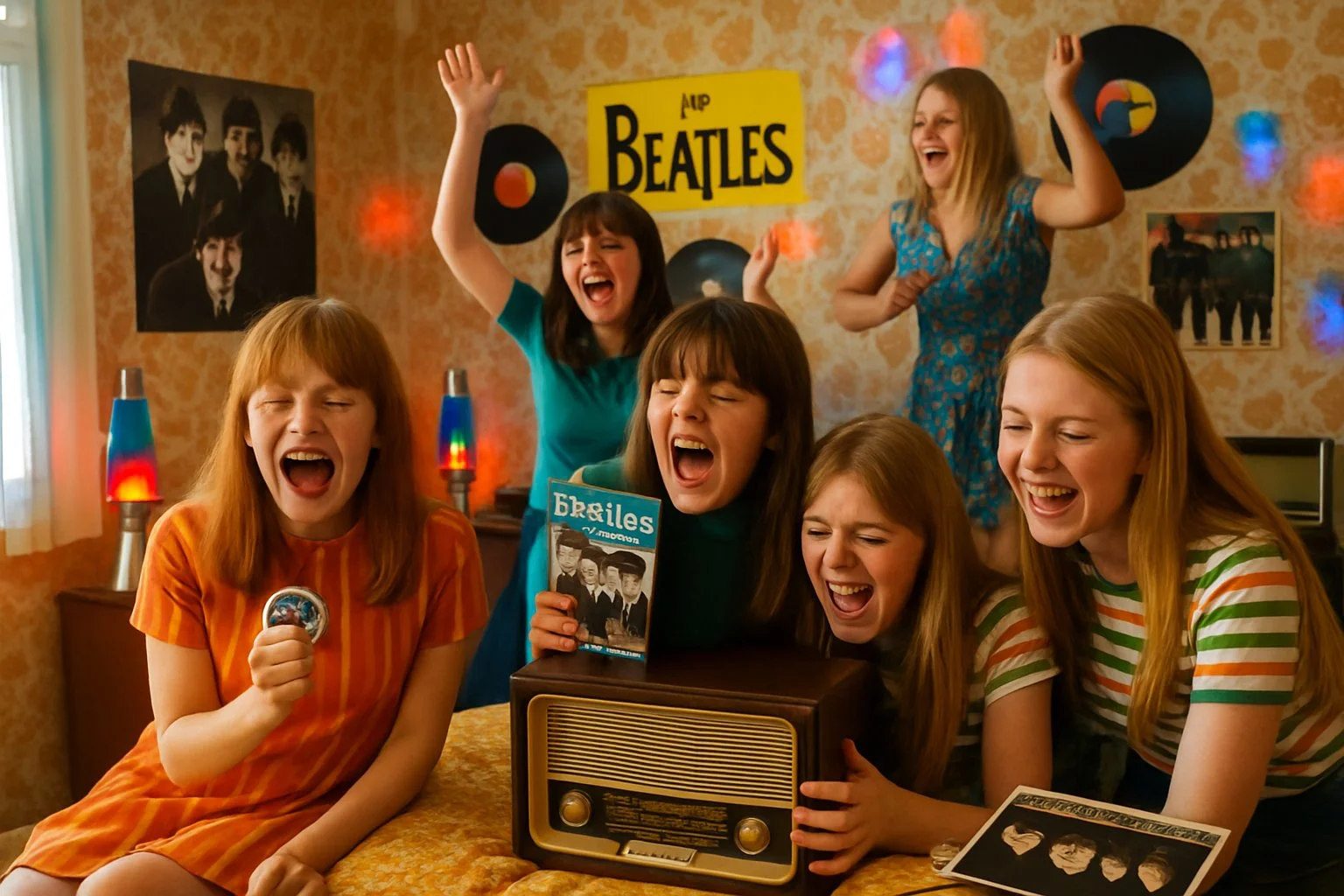
People always picture Beatlemania as just those shrieking girls at concerts, but let’s be real—the real magic happened back home. Fans brought their love for John, Paul, George, and Ringo into their bedrooms, tuning into radio shows like they were sacred rituals. Posters, records, badges—bedrooms became shrines, and the wireless made the Fab Four feel like family you invited into your lounge. Suddenly, music wasn’t just something you heard; it was something you lived.
From those early hits to their legendary TV moments, it’s wild to look back at how four cheeky lads from Liverpool flipped the world upside down. They changed how we listened to music, made private spaces feel like mini dance halls, and honestly, the connection between artists and fans was never the same after that.
The Rise of Beatlemania

The Beatles’ journey from Liverpool’s smoky cellars to international stardom started with their working-class grit, Brian Epstein’s sharp instincts, and those first EMI records that kicked off the madness we now call Beatlemania.
Origins in Liverpool
Liverpool in 1960—it was a scrappy port city, buzzing with American influences thanks to the ships rolling in. Local kids got their hands on rock and roll records before anyone else, and the city’s music scene thrived on that.
John Lennon kicked things off with The Quarrymen in ‘57. Paul McCartney came on board that same year after a fateful meeting at a church fête. George Harrison joined in ‘58, and suddenly you had three teenagers figuring out their sound together.
They cut their teeth at places like the Cavern Club, sweating it out in those brick-walled basements. The band’s name changed a few times—The Silver Beetles, then The Beatles by 1960.
Stuart Sutcliffe played bass for a bit, but left in ‘61, so Paul picked up the bass (not exactly his first choice, but someone had to do it). Pete Best drummed until ‘62, then Ringo Starr came in and, well, that was the magic lineup.
Brian Epstein’s Role
Brian Epstein first saw The Beatles at the Cavern Club in November 1961. He ran NEMS, a record shop in Liverpool, and got curious after a customer asked about a Beatles record he didn’t stock. One gig was all it took—he was hooked.
Epstein signed on as their manager by January ‘62, trading their leather jackets for sharp suits and making them show up on time (which, let’s be honest, might’ve been a miracle).
He hustled for better gigs, polished their image, and made sure the press took notice. Epstein’s belief in them never wavered, even when record labels kept saying no.
What Epstein brought to the table:
- Landed their first recording contract
- Upped their stage game
- Handled the press circus
- Managed the rocket ride to fame
He just wouldn’t take no for an answer, which, looking back, was exactly what they needed.
First Recordings and Successes
The Beatles hit EMI’s Abbey Road Studios for their first session in June 1962. George Martin, the producer, wasn’t blown away at first, but he saw a spark.
“Love Me Do” came out in October ‘62 and climbed to number 17—not a chart-topper, but it got them noticed. That little boost gave everyone a shot of confidence.
Then “Please Please Me” dropped in January ‘63 and shot straight to number one. That’s when things started to feel different.
That song just had something—a hook, harmonies, energy. Radio DJs played it nonstop, and suddenly, British teens had homegrown heroes to root for.
The screaming started around this time, too. Teenage girls, especially, went absolutely mad for them. That’s when the newspapers started using the word Beatlemania.
EMI and the Early Singles
EMI took a chance on The Beatles after George Martin decided they had potential. He tweaked their arrangements, brought in his classical know-how, and helped shape their sound.
The partnership worked like a charm. Each single just seemed to get bigger.
Early EMI singles:
- “Love Me Do” (1962) – #17
- “Please Please Me” (1963) – #1
- “From Me to You” (1963) – #1
- “She Loves You” (1963) – #1
Abbey Road became their creative playground. They felt at home there, and you can hear it in the music.
EMI’s reach was massive—they got records into every shop, fast. By the end of ‘63, Beatlemania had exploded, and their EMI singles were everywhere.
Breakthrough Hits and Global Stardom

The Beatles’ rise from Liverpool kids to global icons happened so fast it’s almost dizzying. Between ‘63 and ‘66, they cranked out hit after hit, pushed boundaries in the studio, and inspired a level of devotion that, frankly, you just don’t see anymore.
The Impact of ‘Please Please Me’
“Please Please Me”—that’s the one that really lit the fuse in early ‘63. It hit number two in the UK, and suddenly, everyone was paying attention.
The harmonies were fresh, and John’s vocals with Paul’s backing just sounded different from anything else on the radio. British teens finally had something of their own, not just American imports.
Why it mattered:
- #2 on the UK charts
- First big radio breakthrough
- Set the Beatles’ sound in stone
- Got them on TV for the first time
It wasn’t just a song—it was a sign that things were changing.
‘She Loves You’ and Iconic Choruses
“She Loves You”—those “yeah, yeah, yeahs” are still stuck in our heads, aren’t they? That single dropped in autumn ‘63 and just took over.
It spent four weeks at number one, sold over a million copies, and even parents couldn’t help but hum along (even if they rolled their eyes at the haircuts).
The stats:
- 4 weeks at #1 in the UK
- Fastest seller of ‘63
- Over 1.3 million copies out the door
- Media couldn’t get enough
Radio DJs ran out of words to describe what was happening. The Beatles had cracked the code—simple lyrics, wild harmonies, and choruses everyone could shout.
‘I Want to Hold Your Hand’ Revolution
“I Want to Hold Your Hand”—now that was the one that broke America wide open. February ‘64, and suddenly, British pop was on top of the world.
American teens went nuts for it. The song’s sweetness, the melody—it just worked. Radio stations couldn’t play it enough, and the Beatles started stacking up chart positions like it was nothing.
In the US:
- #1 for 7 weeks
- 5 million sold in America
- Got them on Ed Sullivan
- British Invasion officially on
That song didn’t just make them stars in the States—it opened the door for every British band that followed.
Chart Success and 1966 Milestones
By ‘66, the Beatles had done what no one thought possible. They’d dominated singles charts, put out mind-bending albums, and changed pop music for good.
Between ‘63 and ‘66:
- 11 UK #1 singles in a row
- 20 #1 hits worldwide
- “Revolver” topped album charts everywhere
- First group to hold all top 5 US chart spots at once
Their last live shows in ‘66 were pure madness—the crowds were so loud, the band couldn’t even hear themselves. “Paperback Writer” and “Yellow Submarine” showed they were still pushing boundaries, never content to just repeat themselves.
Looking back, ‘66 feels like both the peak and the start of something new. The Beatles were done with touring, but in the studio, they were just getting started.
The Ed Sullivan Show Phenomenon
When The Beatles hit American TV in February ‘64, it was like nothing anyone had seen before—73 million people tuned in. That broadcast didn’t just make them famous; it changed the whole game.
A Televised Sensation in February 1964
They landed at JFK on February 7th, 1964, and 5,000 fans were already waiting. Brian Epstein had lined up three Ed Sullivan Show slots for them (for a steal, honestly).
On February 9th, there it was: the moment. 73 million Americans watched them play “All My Loving,” “Till There Was You,” and “She Loves You.” Only 728 people got into the studio, but tens of thousands tried.
George Harrison came down with strep throat before rehearsals, so their road manager Neil Aspinall had to fill in at practice. The show flashed cheeky captions on the screen—John’s read “SORRY GIRLS, HE’S MARRIED.” Classic.
What they played:
- “All My Loving,” “Till There Was You,” “She Loves You”
- Later: “I Saw Her Standing There,” “I Want to Hold Your Hand”
- 73 million viewers (that’s just wild)
A week later, they did it again from Miami, and nearly 70 million people tuned in.
Influence on American Audiences
After Ed Sullivan, The Beatles sold 2.5 million records in the US in just a month. By April, they owned the entire top five of the Billboard Hot 100.
The fans’ screams drowned out the music—Paul later joked you couldn’t hear John’s mic at all. Loads of future rock stars say that night changed their lives—Billy Joel, Tom Petty, Bruce Springsteen, Gene Simmons… the list goes on.
Nancy Wilson from Heart put it best: “The lightning bolt came out of the heavens and struck my sister Ann and me the first time we saw The Beatles on The Ed Sullivan Show.”
Critics mocked the haircuts and called it a fad, but it didn’t matter. The Beatles brought some much-needed joy to America after the dark days following JFK’s assassination.
Setting Off the British Invasion
The Ed Sullivan Shows kicked off the British Invasion, plain and simple. After seeing what The Beatles could do, US labels scrambled to sign every British band they could find.
The Rolling Stones, The Kinks, Herman’s Hermits—they all followed in the Beatles’ footsteps. American radio stations started begging for British records, and Capitol Records rushed out “I Want to Hold Your Hand” weeks ahead of schedule.
Getting on Ed Sullivan became the golden ticket for British acts. The show turned TV into the main way new music reached the masses, and honestly, its influence lasted well into the ‘70s.
British bands that followed:
- The Rolling Stones
- The Animals
- The Kinks
- Herman’s Hermits
- Petula Clark
- Dusty Springfield
Screaming Fans and Concert Crazes
Beatles concerts? Absolute pandemonium. The screams were louder than the music itself—security couldn’t keep up, fans fainted left and right, and the press snapped photos of every wild moment. If you were there, you’ll never forget it.
Frenzied Crowds and Fainting Episodes
When The Beatles hit the stage, we saw scenes that felt brand new in British entertainment. The screaming kicked off the second John Lennon, Paul McCartney, George Harrison, and Ringo Starr showed their faces.
Concert Atmosphere:
- Fans screamed so wildly, the band barely heard themselves play
- Young women fainted left and right during performances
- Audiences tossed personal items onto the stage
- Many fans just wept through the whole show
Sometimes, the intensity got a bit scary. At their last gig at Candlestick Park in San Francisco, 25,000 fans whipped up such a frenzy, the band struggled to make it through the set.
Medical staff rushed around at Beatles concerts. St. John Ambulance volunteers scrambled to help fans who fainted or got crushed in the crowd.
It wasn’t just teenage girls, though they were everywhere. Fans of all ages got swept up in the wild, swirling excitement of Beatlemania.
Security Challenges at Live Shows
Concert security had never tangled with anything like a Beatles crowd. Old-school crowd control? It just fell apart against that tidal wave of devotion.
Security Measures Included:
- Police cordons wrapped around venues
- Backstage areas locked down tight
- Multiple escape routes mapped out for the band
- Barricades thrown up between audience and stage
At the London Palladium, hundreds of fans swarmed the theatre entrance. Police formed human chains just to get the band in and out safely.
The crowds simply outnumbered the security. Mounted police sometimes showed up hours before the concerts, just to keep order as fans gathered.
Venues started hiring extra security just for Beatles nights. Some theatres even toyed with banning the group—safety worries, property damage, you name it.
Memorabilia and Devotion
Beatles merchandise exploded into a £200 million industry between ’64 and ’70. Fans snapped up anything with the band’s faces or logo.
Popular Items Included:
- Beatles wallpaper and bedding
- Lunch boxes and school bags
- Clothing and accessories
- Candy and bubble gum cards
Fans built shrines in their bedrooms, plastering every wall with Beatles posters. Some kept stacks of clippings, ticket stubs, even random trinkets the band might’ve touched.
Devotion didn’t stop at stuff. Fans wrote thousands of letters to each Beatle every week. Some trekked across the country just to stand outside a recording studio, hoping for a quick glimpse.
It felt like nothing in British pop culture had ever hit this fever pitch before. The whole world of rock ‘n’ roll marketing took notes from this wild chapter.
Media Coverage of Fan Hysteria
The word “Beatlemania” first landed in the Daily Mail back on 21st October 1963. Vincent Mulchrone used it after witnessing the madness at the London Palladium.
TV and radio coverage just cranked up the hysteria. The Ed Sullivan Show? Supposedly watched by 400 million people around the world.
Media Focus Areas:
- Screaming fans at airports and hotels
- The economic boost from Beatles visits
- Social commentary on youth culture
- Medical reports about fainting fans
Newspapers didn’t really know what to make of it. Some old-school journalists rolled their eyes and called it all teenage nonsense, but a few realized something genuinely new was bubbling up.
We saw reporters hanging around hotels, documenting every bit of the chaos—from wild hairstyles to the latest fashion.
Honestly, the media circus became part of the magic. Kids wanted in on anything that made headlines everywhere.
Bedroom Discos and Home Listening
Back then, kids turned their bedrooms into little dance halls, and the radio brought Beatles music right into every home. Teenagers started treating their rooms like shrines to this new rock ‘n’ roll energy.
Radio Play and the Rise of the Wireless
The wireless was our ticket to Beatlemania in the early ‘60s. Radio Caroline and BBC Radio spun Beatles hits all day, letting everyone join in, no matter where they lived.
We’d huddle around transistor radios, waiting for “Please Please Me” or “She Loves You.” When a favorite came on, up went the volume and we’d dance in our rooms—sometimes alone, sometimes with friends.
Radio DJs became mini-celebrities, hyping up every new Beatles track. They just got it: we needed every single song. For families who couldn’t swing concert tickets, the wireless was a lifeline.
We lugged portable radios everywhere—while doing homework, at the bus stop, even under the covers after lights out. Those crackling radio waves made the Beatles’ sound the soundtrack to our lives.
Teen Parties and DIY Dance Floors
Our bedrooms turned into makeshift discos where we tried out dance moves and threw little listening parties. Furniture got shoved aside to clear space for rock ‘n’ roll.
After school, friends would drop by to hear the latest Beatles album on the record player. We’d play tracks on repeat, memorizing every lyric and guitar riff. Those gatherings felt more special than any formal dance.
Popular party activities included:
- Copying Beatles dance moves from TV
- Singing along to whole albums
- Air guitar battles during solos
- Debating what the lyrics really meant
The music blared just enough to feel like a party, but not enough to bring parents storming in. We’d hang scarves and dim the lights, trying to set the mood.
Collecting Records and Beatles Memorabilia
Those bedrooms became shrines—records, posters, memorabilia everywhere. We’d prop up album covers like art, especially the wild ones from “Yellow Submarine” or “Sgt. Pepper’s.”
Common bedroom decorations included:
- Beatles posters on every wall
- Lyrics painted on a dresser or desk
- Record sleeves lined up for display
- Bright, themed furnishings
We spent pocket money on 45s and handled LPs like they were gold. Each new record was a treasure, played until we knew every note.
It was a personal Beatles museum, really. We’d show off our latest finds to friends, proud of every bit we’d collected. Those spaces just radiated our love for the band that changed everything.
Cultural Impact of Beatles Mania
Beatles Mania upended British society between 1963 and 1966, changing everything from what we wore to what we listened to. Four lads from Liverpool set off ripples that went way beyond catchy tunes.
Fashion, Hairstyles, and Catchphrases
The Beatles completely rewrote the rules for how young people dressed and talked. Their famous “mop top” haircuts became the look every teenage boy wanted.
Before these four showed up on TV, most lads kept their hair short and tidy. Suddenly, barbers everywhere found themselves snipping longer, shaggier styles to copy the band.
Their matching bespoke suits and chunky Cuban heel boots didn’t hurt, either. Young men started showing up in:
- Collarless jackets
- Slim-fit trousers
- Pointed boots
- Turtlenecks
“Yeah yeah yeah” from “She Loves You” slipped into everyday chatter. You’d hear Beatles catchphrases in playgrounds, bus stops, everywhere.
Influence on Youth Culture
Beatles Mania handed teenagers a kind of cultural power they’d never had before. Suddenly, young people became the center of attention.
The whole thing was mostly female-led—screaming girls drove the energy at concerts and public appearances. It shook up old ideas about how young women were “supposed” to act.
Parents and older folks usually brushed off the fans’ passion as silly, but that only made the connection between fans and the band even tighter.
The Beatles played 292 times at Liverpool’s Cavern Club between 1961 and 1963. That set the stage for youth-focused music venues all over Britain.
Every girl seemed to pick a favorite Beatle—John, Paul, George, or Ringo. That personal touch made it feel like you belonged to something bigger.
Changing Musical Tastes
The Beatles flipped the script on what people wanted from pop music. Before them, most acts just sang other folks’ tunes or stuck with whatever the big songwriters handed over.
That Lennon-McCartney duo? They pumped out hit after hit, stuff like “She Loves You” and “I Want to Hold Your Hand,” with those catchy hooks and harmonies you couldn’t shake off if you tried.
Their “Merseybeat” thing—kind of a wild blend of rock ‘n’ roll, rhythm and blues, and old pop standards—felt brand new and, honestly, a little rebellious at the time. A lot of musicians picked up on it and ran with it.
By the time 1966 rolled around and they played their last concert at San Francisco’s Candlestick Park, they’d already shaken up what people thought music could be.






Leave a Reply