
Teenage rebellion got a whole new look in 1950s Britain, when working-class lads swaggered down the streets with slicked-back quiffs and sharp Edwardian jackets. T
hese “Teddy Boys” weren’t just tagging along with fashion—they were carving out Britain’s first real youth subculture, bold as brass and proud of it.
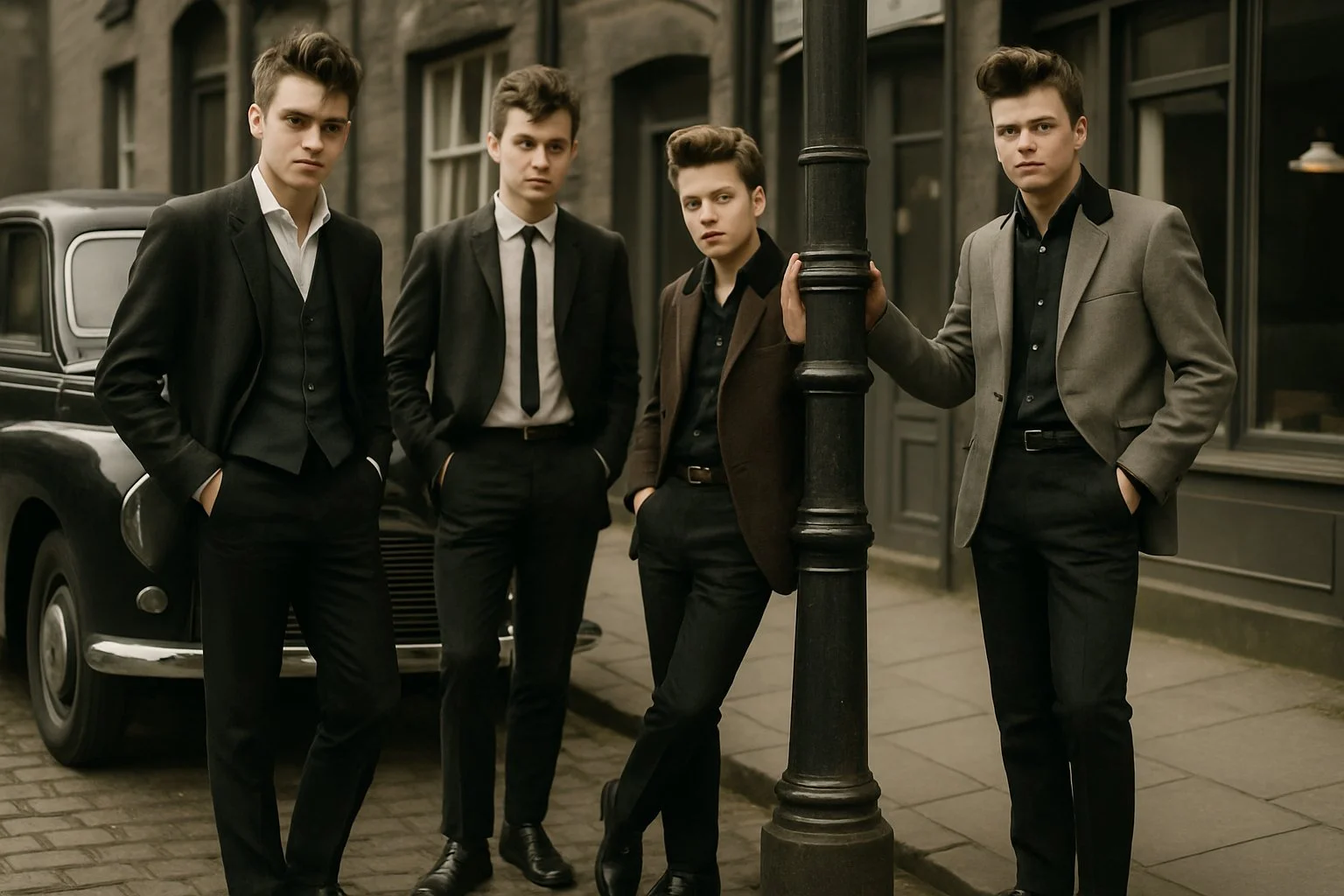
Let’s wander back and see how these young rebels used those towering quiffs and drape suits to catch a sweetheart’s eye—and, much to their parents’ horror, to shake up the old order. Teds didn’t just look different; they danced to rock and roll, built tight-knit communities, and set the stage for decades of teenage rebellion.
From dance halls to chilly street corners, they upended the rules about what it meant to be young. The story’s a mash-up of American rock and roll and British working-class swagger, and it’s how a whole new kind of teenage identity took root—one that was stylish, a bit cheeky, and always up for a bit of trouble.
The Emergence of Teddy Boys and the Quiff
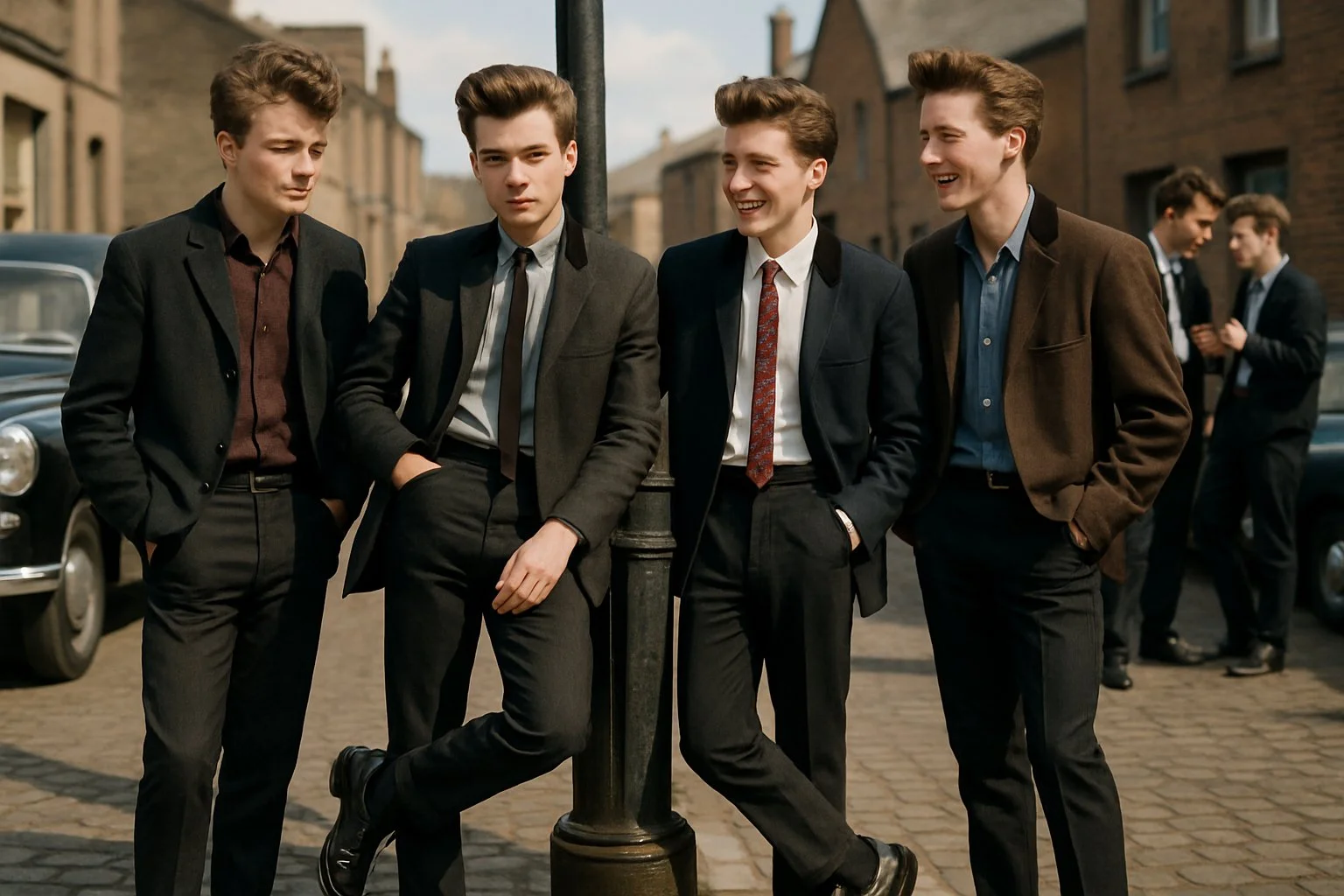
Teddy boy culture sprang up in working-class London in the early 1950s—suddenly, Britain had a youth subculture all its own. Teenagers started wearing those eye-catching quiffs and Edwardian-inspired suits, turning heads and ruffling plenty of feathers.
Origins in Post-War Britain
You can trace the Teddy boy phenomenon right back to the bombed-out streets of postwar London. These lads came from neighborhoods still picking up the pieces after the Second World War.
The movement spread like wildfire out of London. Most Teds had working-class roots, and the old jobs their dads did were starting to disappear.
Why did Teds pop up when they did?
- Teens finally had a bit of spending money
- Society was shifting after the war
- Young people wanted to stand out
- American movies and music were everywhere
The “Teddy” bit? That came from the Edwardian-style jackets they wore—pretty posh stuff for kids from the East End.
Young people didn’t want to be carbon copies of their parents. They grabbed onto this wild new look that mixed old British fashion with a brash, modern attitude.
The Rise of the Quiff Hairstyle
The quiff—now that was the showstopper. In the 1950s, you’d see a whole range of them strutting about.
The Tony Curtis cut had a curled quiff up front and a neat crew cut on top, all held together with a thick layer of grease.
The Boston was slicked straight back, squared off at the neck—looked sharp, almost formal.
But the classic quiff? That was the real deal:
- Grease piled high at the front
- Sides combed back till they shone
- The infamous “Duck’s Arse” (D.A.) at the back
- Needed constant upkeep and a fair bit of patience
Keeping up a quiff took time and pocket money. All that Brylcreem and those regular trims showed you were serious about being a Ted.
Rebellion and Youth Identity
For these teenagers, the quiff was more than just a hairdo. It was a big, shiny “up yours” to the old guard.
Adults mostly saw Teddy boys as troublemakers. Those unmistakable hairstyles made them easy targets for grumbling neighbors and the local bobby.
The quiff stood for:
- Independence from what grown-ups expected
- American cool crashing into British tradition
- Working-class pride—looking sharp, no matter your wage
- Belonging—if you had the quiff, you were part of the gang
The newspapers loved a good scare story about Teds. Their look, especially those quiffs, made them a convenient “problem” for society to fret about.
Wearing a quiff took guts. It told other kids you were in on something new, something exciting.
For a lot of teenagers, slicking up their hair meant joining Britain’s first real youth movement. It tied them to rock and roll and a whole new way to be young.
Romance and First Crushes Among 1950s Teenagers

The 1950s flipped the script on teenage romance. Suddenly, rock’n’roll was blaring, Hollywood stars were everywhere, and young people started handling love their own way.
Changing Attitudes to Dating
Dating got a lot more relaxed in the ‘50s. Teenagers finally had a say in who they fancied—no more waiting for Mum or Dad to play matchmaker.
Old rules started to crumble:
- Couples could go out without a chaperone peering over their shoulder
- Seeing more than one person before “going steady” was fine
- Teens actually had a bit of cash for a milkshake or a dance
Coffee bars and milk bars popped up as the places to be. You could grab a booth, sip a Coke, and chat away from prying eyes. The jukebox was always spinning.
“Going steady” became a thing. Maybe you’d swap rings or wear matching jumpers—serious, but not too serious.
Music and the Social Scene
Rock’n’roll gave young love its own soundtrack. Songs like “Heartbreak Hotel” and “Blue Suede Shoes” seemed to know exactly what teens were feeling.
Where did teens hang out?
- Dance halls with big bands
- Record shops (don’t forget the listening booths)
- Youth clubs with weekend dances
- Church socials—yes, really
Elvis’s music hit like a bolt of lightning. His songs put words to all those tangled-up feelings. Johnny Cash wasn’t far behind, especially for teens who wanted something a bit deeper.
Dancing let couples get close without raising too many eyebrows. The jive and rock’n’roll were a world away from stiff old ballroom steps.
Record players at home meant you could set the mood for a date—just the right song, maybe a little slow dance in the living room.
Influence of Cinema and Icons
The movies—well, they taught teens how romance ought to look. Kids watched the big screen and tried to copy what they saw.
Big influences:
- Rebel Without a Cause—who didn’t want that kind of wild, doomed love?
- Rock Around the Clock—music and romance, all in one go
- Magazines full of star gossip and dreamy photos
Elvis was the ultimate heartthrob. He had danger and charm, a combo that made plenty of girls swoon and left the local boys scrambling to keep up.
Boys watched James Dean and tried to master that brooding stare. If you could pull off mysterious, you were halfway there.
Pop magazines ran agony aunt columns and stories about first kisses. They helped teens navigate the new dating game—awkward, thrilling, and sometimes a bit confusing.
Signature Rebel Styles and Influences
Teddy Boys made sure everyone noticed them, thanks to sharp fashion, bold hair, and a love for American tunes. Their look was all about mixing Edwardian flash with working-class grit, and rock’n’roll pulsed through it all.
Teddy Boy Fashion Trends
Spotting a Ted was easy—just look for the long jacket with a velvet collar. Those drape coats hung down past the hips, straight out of King Edward VII’s era.
You’d see drainpipe trousers, tight as could be, paired with chunky brothel creepers or beetle crushers.
The Ted kit:
- Edwardian jackets, extra long
- Bootlace ties (skinny and sharp)
- Slim drainpipes
- Crepe-soled shoes
- Waistcoats, sometimes with a watch chain for flair
Working-class lads swiped the look after Savile Row tailors made those suits for the rich. Teds twisted posh fashion into something rebellious.
Some added blue suede shoes for a bit of rockabilly swagger. Mixing smart jackets with casual shoes—classic Ted, never too predictable.
The Role of the Quiff in Self-Expression
Nothing screamed “Ted” like a towering quiff. Keeping it perfect took real effort.
Brylcreem was the secret weapon. Lads would spend ages in front of the mirror, comb in hand, sculpting that perfect wave. Sideburns? The longer, the better.
How to build a proper quiff:
- Wash and towel dry
- Slap on the Brylcreem
- Comb the front up high
- Smooth the sides with care
- Add more product—can’t have it droop
The bigger the quiff, the more you stood out. It was a badge of honor, a way to say you weren’t just another face in the crowd.
Music, Dance, and Nightlife
Rock’n’roll kept the Ted scene buzzing. American stars like Bill Haley could start a riot just by showing up on the cinema screen.
Rockabilly and hillbilly tunes set the mood. Teds flocked to coffee bars with Bakelite jukeboxes, always chasing the latest American sounds.
Dancing was everything. The jive and those wild rock’n’roll moves fit the music perfectly. Teds showed off at dance halls and even cabaret clubs.
Where Teds hung out:
- Coffee bars, jukebox blaring
- Dance halls
- Cinema queues
- Street corners, rain or shine
- Fairgrounds
Music gave Teds their edge. The wild beat matched their sharp suits and their don’t-care attitude.
British and American Cultural Crossroads
American rock and roll lit the fuse for the Teddy Boy movement, but British bands made it their own. Media on both sides of the pond shaped how teens saw themselves, for better or worse.
Impact of American Music
Elvis Presley shook things up for British teens. His music and style hopped the Atlantic, and suddenly kids in drab postwar Britain wanted to break free.
Radio and imported records brought rock and roll to Britain. We got a dose of Johnny Cash too—his country twang mixed right in with the new sound. For teens stuck in a world of rationing and rules, this music offered a taste of something wild.
American influences:
- Elvis’s look and attitude
- Rock and roll dance crazes
- Bootlace ties and other fashion bits
- Country music from Johnny Cash and friends
The cinema played its part. Films with rock and roll sparked real riots in British theaters. Teens saw themselves in those American stories.
American music gave Teds their theme song—fast, loud, and impossible to ignore.
British Musicians and the Teddy Boy Look
British musicians jumped on the Ted bandwagon fast. Cliff Richard was one of the first with his quiff and moody image.
Bands started wearing drape jackets and skinny trousers on stage. They knew looking like a Ted helped them connect with their fans.
The Ted style spread through the music scene—London clubs, dance halls, you name it. British acts borrowed from the Americans but put their own spin on things.
Before The Beatles took over, plenty of British stars still rocked the Teddy Boy look. Even John Lennon sported a quiff in his early days—hard to imagine now, but true.
British rock and roll had its own vibe. The bands kept the Ted swagger but sang about local life.
Transatlantic Media and Teenagers
Newspapers and magazines couldn’t get enough of the Teddy Boys. American media painted them as wild, while British papers loved a good scare story.
Media buzz included:
- Wild headlines about Ted “gangs”
- Magazine spreads on the latest looks
- Radio shows spinning rock and roll
- Newsreels showing off youth culture
American teens read about British Teds, and styles bounced back and forth across the ocean.
TV started putting young people and their music in the spotlight. Suddenly, Teddy Boy culture wasn’t just a London thing—it was everywhere.
The media whipped up plenty of worry. Parents fretted that their kids would turn into rebels—American or British, didn’t matter.
Icons, Media, and the Mainstreaming of Rebellion
Teddy Boys took a beating in the press through the ‘50s, but their style slowly seeped into the mainstream. Rock and roll helped, and TV started showing characters who looked a lot like Teds.
From Scandal to Soap: Popular Media
Newspapers went wild after a 1953 murder involving a Ted gang. When cinemas erupted during Rock Around the Clock in 1955, the headlines screamed about “riots.”
But TV started to soften things, just a bit. Soap operas here and there featured Ted-inspired characters, moving away from the old “dangerous hoodlum” stereotype.
Coronation Street (which kicked off in 1960) captured the working-class spirit Teds embodied. Instead of monsters, it showed real people.
Rock and roll films spread the Ted look far and wide. American flash and British attitude blended into something unforgettable.
Notable Teddy Boy Icons
You don’t really hear about famous Teddy Boys from the 1950s. The whole thing was more about regular, working-class kids than any big-name celebrities.
Still, the style left its fingerprints all over later music scenes. Early rockers borrowed a lot from Ted fashion—those quiffs and razor-sharp suits, you know? They turned into music history in their own right.
The Beatles even started out with a bit of a Ted vibe. Think about those leather jackets—they definitely had that rebel edge.
Writers like William Burroughs looked across the ocean and noticed these shifts in youth culture. He captured how British subcultures started nudging American trends.
Most Ted icons? They were just local legends. Folks who set the pace for fashion on their own turf, not by chasing after stars.
Moves Toward Mainstream Culture
By the early ’60s, Ted style had crept into high street shops. Suddenly, you could spot watered-down drape jackets hanging in department stores.
The musical Grease—even though it’s set in the States—clearly swiped a bunch from those 1950s rebel looks. That kept the Ted-inspired vibe alive on stage and screen.
Fashion designers started sneaking Ted touches into their collections. Quiffs even became okay for office jobs, believe it or not.
The 1980s and ’90s saw proper Ted style making a comeback. Groups like The Edwardian Drape Society clung to the original 1950s looks, keeping the flame burning.
These days, Ted influences pop up in rockabilly music and vintage shops. What started as rebellion somehow turned into a kind of respectable nostalgia.
Evolving Legacy: Teddy Boys in Later Decades
The Teddy Boy movement didn’t just fade away after the ’50s. Instead, it bounced back in waves and kept shaping British youth culture—through punk, mod, and all sorts of modern scenes.
Surviving Fashions and Revivals
The 1970s kicked off a full-on Teddy Boy revival across Britain. Young folks started digging up the drape jackets and quiffs their parents used to wear.
This all happened right as punk was exploding. Teds and punks sometimes clashed in the streets, each group fiercely protective of its turf.
But it wasn’t only about the clothes. Rock and roll music came roaring back too. Bands dusted off those 1950s sounds and played them loud.
Teddy Boy clubs popped up in cities like London and Manchester, spinning original rock and roll records late into the night.
The revival drew in two kinds of people: some were original Teds reliving their youth, others were teenagers just discovering the style for themselves.
By the 1980s, things had quieted down. Still, a handful of die-hard Teds kept the culture flickering in local scenes.
From Punk and Mod to Modern Youth Scenes
Punk definitely borrowed a few tricks from the Teddy Boys. That working-class attitude? Pure Ted.
A lot of punk bands wore drainpipe trousers—straight out of the 1950s Ted playbook.
The Swinging Sixties mods, too, leaned on Ted style. They loved sharp tailoring and that obsessive attention to detail.
You can spot echoes in the beatniks as well. Both groups pushed back against the mainstream, each with their own dress codes.
Modern rockabilly scenes still pay tribute to Teddy Boy fashion. Clubs around Britain host nights where people show up in full Ted gear.
Even now, bands like The Jam tip their hats to Ted culture. Paul Weller’s sharp suits, for example, really channel that old-school obsession with looking just right.
Influence on Future British Subcultures
Teddy Boys really set the stage for British youth movements, didn’t they? They took fashion and turned it into a kind of badge—something you wore to show you weren’t just following the rules.
Look at what came after: punk, skinheads, goths. Each group picked up that idea—using clothes to draw a line in the sand, to say, “This is who we are.” The Ted way of mixing music and style just stuck around. It’s almost funny how every youth scene since then has mashed those two together, whether they admit it or not.
Teddy Boys put working-class youth culture on the map. They made it clear you didn’t need money to have style, just attitude and maybe a good tailor if you could swing it.
That quiff? It’s stubborn. Rockabilly fans, a few punks, indie musicians—someone’s always trying it out. It’s like the hairstyle just refuses to fade away.
Even now, British kids get the Ted vibe. The drape jacket still whispers rebellion, a little nudge against authority and boring dress codes.
And you know, those old-school hair products never really left the shelves. Brylcreem and the rest—people still reach for them when they want that vintage edge. Some things just hang on, don’t they?




Leave a Reply